
Talk to us
08045811615
Talk to us
08045811615
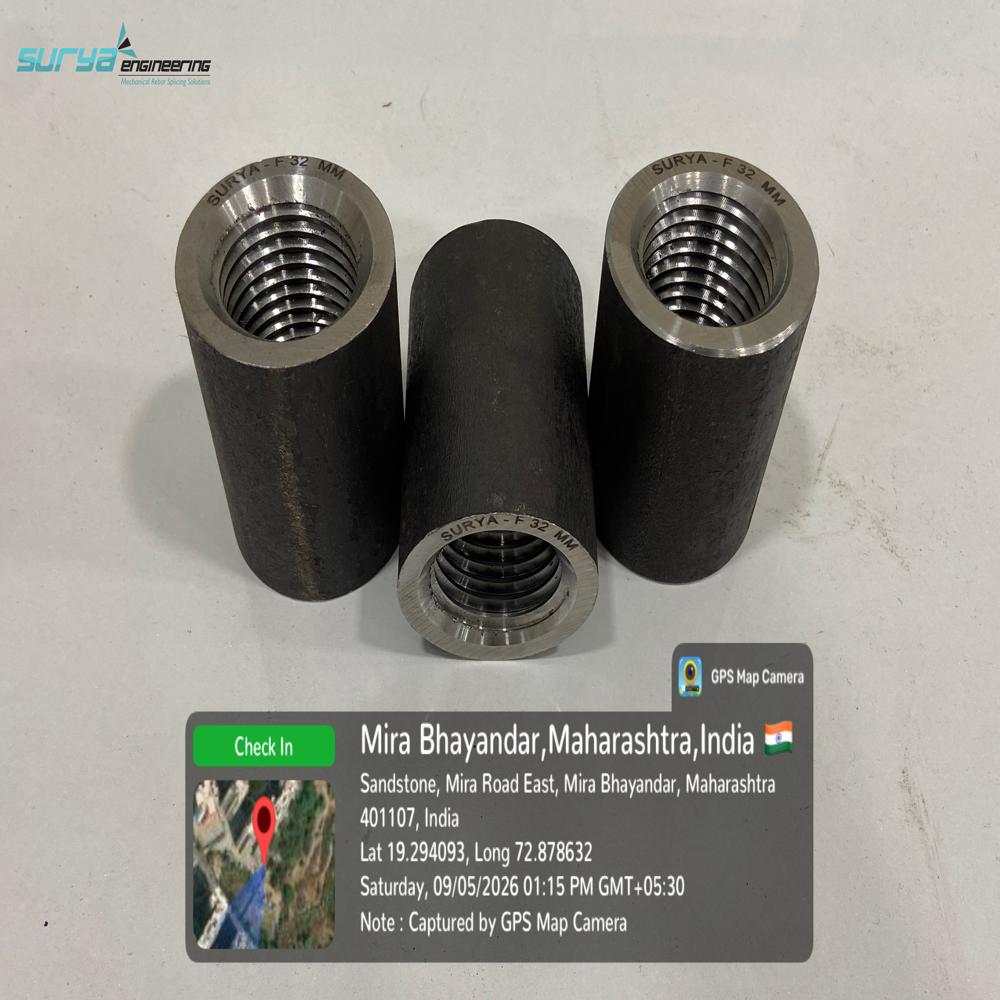
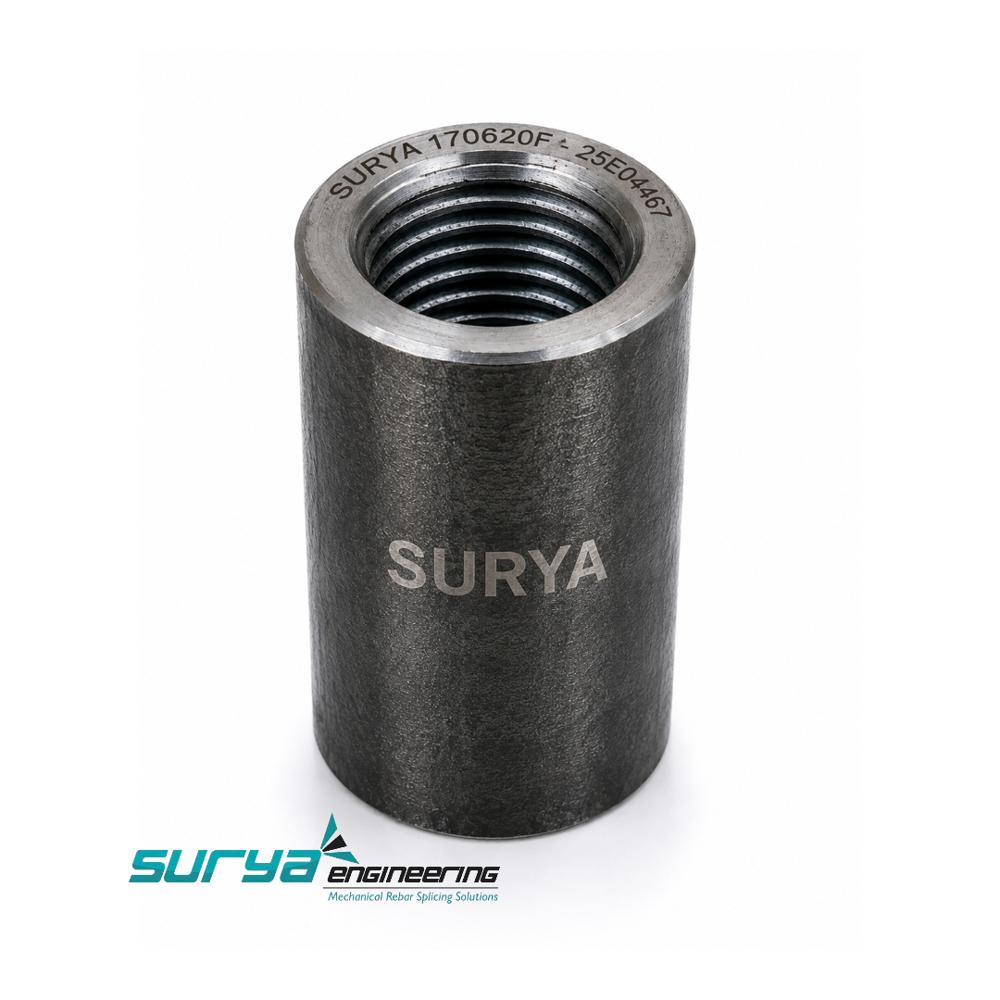
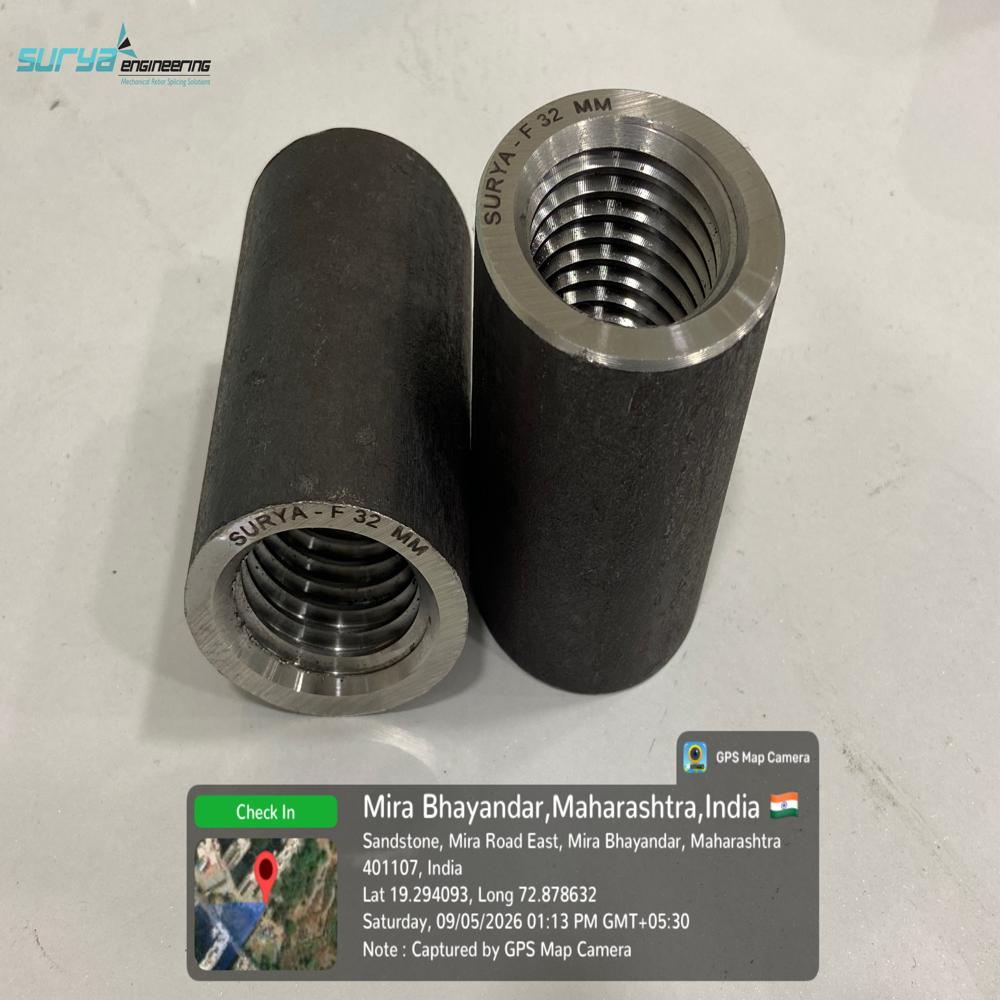
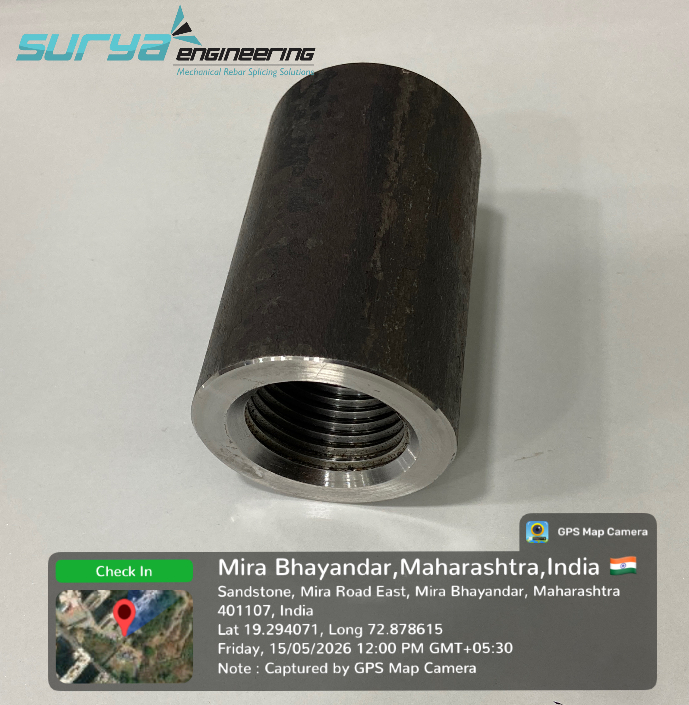
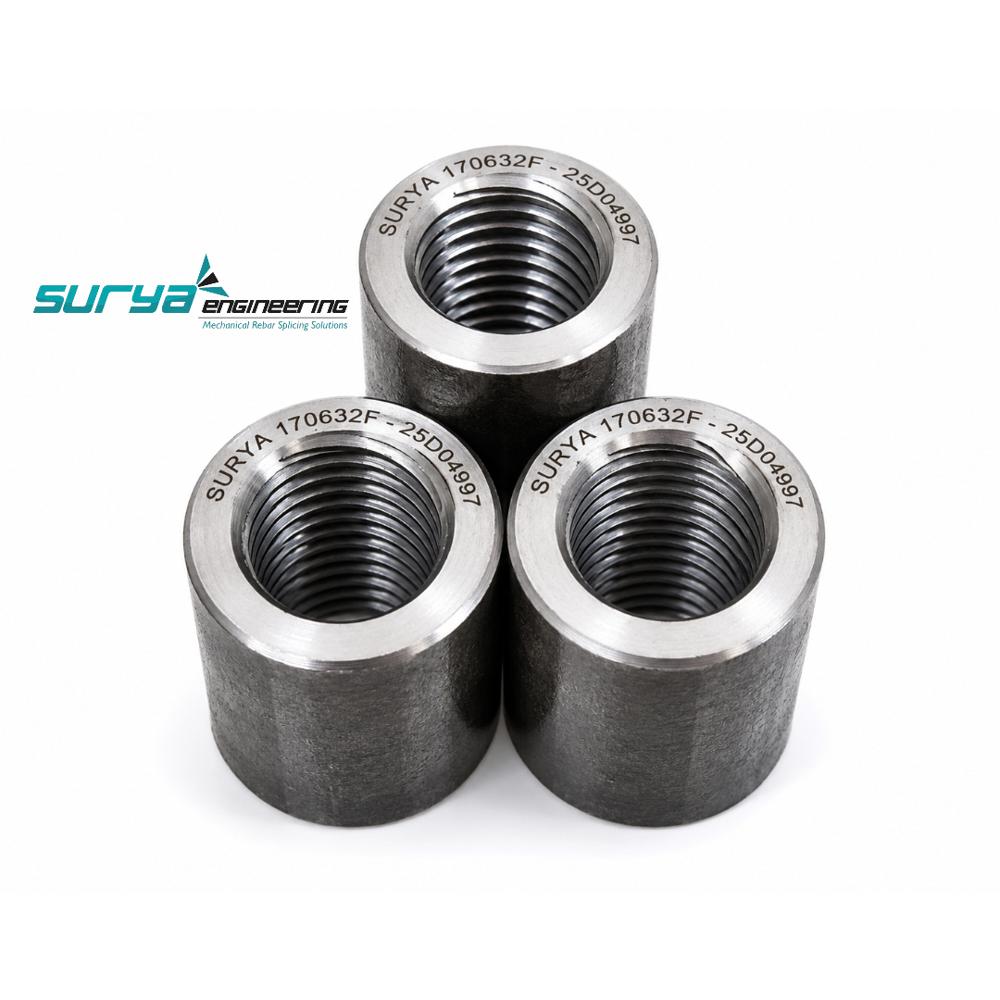
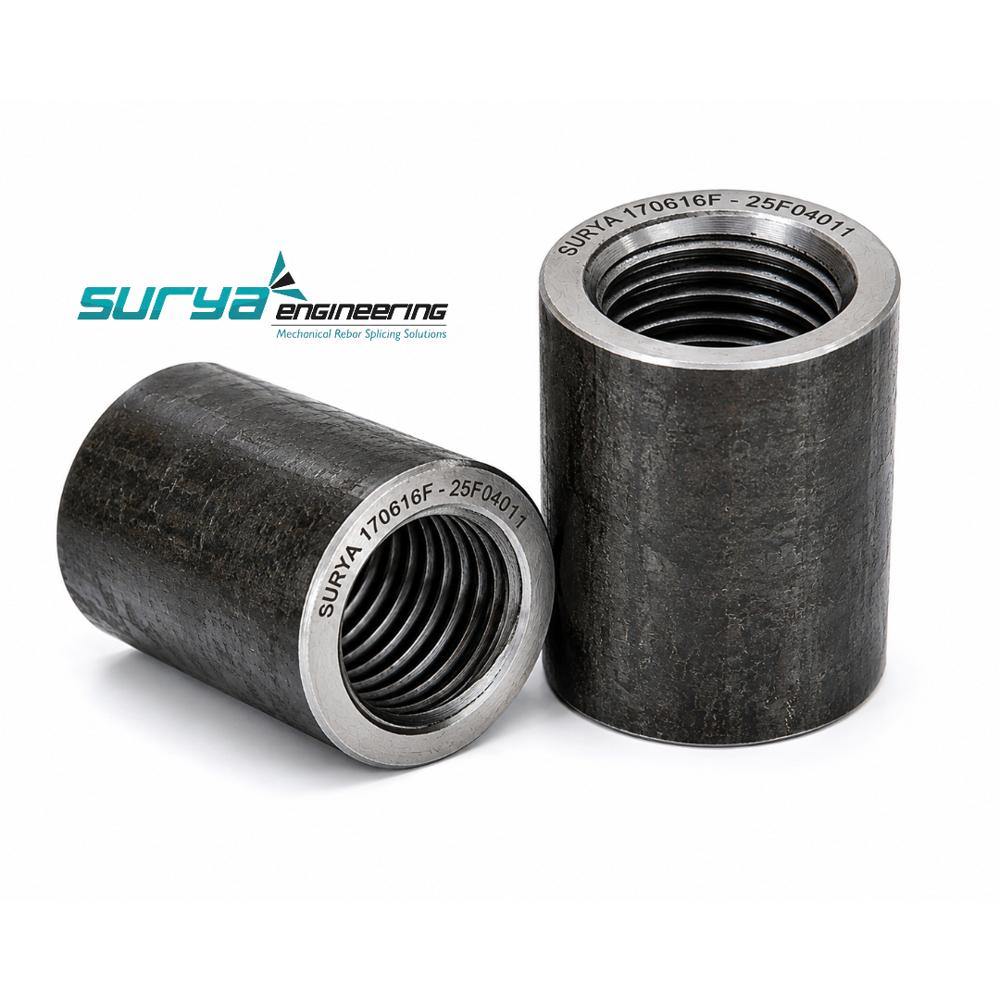

Surya Engineering is a manufacturer and supplier of Rebar Couplers and Mechanical Rebar Couplers in Mumbai, Maharashtra, India, providing reinforcement bar connection solutions for RCC construction and infrastructure projects across India.
A Rebar Coupler, also called a Mechanical Rebar Coupler or Reinforcement Coupler, is used to mechanically join two reinforcement bars and provide load transfer across the connection. Mechanical splicing can be an alternative to conventional lap splicing where project design and applicable standards permit it.
A Rebar Coupler is a mechanical connection device used to join two reinforcement/TMT bars end-to-end. Instead of overlapping two bars over a lap length, a suitable coupler connects the bars mechanically.
Depending on the coupler design, the connection may use parallel threads, tapered threads, crimping, injected sleeves or shear bolts. The appropriate system depends on the reinforcement diameter, bar grade, structural requirement and installation conditions.
Mechanical splicing is particularly useful for large-diameter reinforcement because it can help reduce reinforcement congestion and support faster construction. BIS also notes these advantages for mechanical splicing applications.
A Mechanical Rebar Coupler is a specially designed connector that joins two reinforcement bars and transfers the required forces across the splice without relying on a conventional lap joint.
Why is a Mechanical Rebar Coupler Used?
In conventional RCC construction, reinforcement bars are often joined using lap splicing. As bar diameter and reinforcement density increase, lap joints can consume additional steel and create congestion.
A mechanical rebar coupler can be used to:
- Connect reinforcement bars end-to-end
- Reduce reinforcement congestion
- Minimize overlapping reinforcement where permitted
- Connect large-diameter reinforcement
- Extend existing reinforcement
- Improve construction flexibility
- Support faster reinforcement installation
- Provide mechanical load transfer
- Help in areas with restricted working space
- Simplify reinforcement continuity in suitable applications
The final selection and use of a mechanical splice should always be based on the structural engineer's design and applicable project specifications.
Classification of Rebar Couplers
Under IS 16172:2023, reinforcement couplers are classified by their type and class. BIS grouping guidelines identify the following coupler types:
1. Parallel Threaded Coupler
The reinforcement bars are prepared with parallel threads and connected through a threaded coupler.
2. Upset Parallel Threaded Coupler
The bar ends are specially prepared/upset before threading to provide the required connection configuration.
3. Tapered Threaded Coupler
Uses tapered threads to mechanically connect the reinforcement bars.
4. Crimped Sleeve Coupler
The sleeve is mechanically crimped around the reinforcement bars to create the connection.
5. Injected Sleeve Coupler
A sleeve and suitable injected material are used to establish the mechanical connection.
6. Shear Bolting Coupler
Uses specially designed bolts to grip and connect the reinforcement bars. MBT/Rebar Bolted Couplers fall within this type of mechanical coupling technology where applicable.
IS 16172:2023 also identifies Class H and Class L couplers as part of its classification system.
Applications of Mechanical Rebar Couplers
Mechanical rebar couplers are suitable for many reinforced-concrete and infrastructure applications.
Building Construction
- Residential buildings
- Commercial buildings
- High-rise buildings
- RCC structures
Infrastructure
- Bridges
- Flyovers
- Metro projects
- Railway projects
- Tunnels
- Infrastructure foundations
Structural Components
- RCC columns
- Beams
- Shear walls
- Foundations
- Retaining walls
- Pile reinforcement
- Raft foundations
Special Applications
- Precast construction
- Construction joints
- Reinforcement extension
- Repair and rehabilitation
- Strengthening projects
- High-density reinforcement zones
How to Install a Mechanical Rebar Coupler?
The exact installation process depends on the type of coupler. A general installation procedure is:
Step 1 Check the Reinforcement Bar
Confirm the bar diameter, grade and condition before installation. The reinforcement should be free from excessive dirt, oil or other material that could interfere with the connection.
Step 2 Prepare the Bar
Prepare the reinforcement according to the particular coupler system.
For example:
- Threaded couplers require the specified thread preparation.
- Bolted couplers require correct bar positioning inside the coupler.
- Crimped systems require the specified crimping procedure.
Step 3 Position the Coupler
Place the coupler on the first reinforcement bar according to the manufacturer's installation instructions.
Step 4 Connect the Second Bar
Insert or connect the second reinforcement bar into the opposite side of the coupler.
Step 5 Align the Bars
Check that the reinforcement bars are correctly aligned and positioned.
Step 6 Complete the Mechanical Connection
Depending on the design, complete the connection by:
- Tightening threads
- Tightening shear bolts
- Crimping the sleeve
- Following the specified injection process
Step 7 Inspect
Check the completed splice before concrete placement.
Important: Coupler installation should always follow the manufacturer's approved installation procedure, project drawings and structural engineer's requirements.
IS Standard for Rebar Couplers in India
The key Indian Standard for mechanical reinforcement couplers is:
IS 16172:2023
Reinforcement Couplers for Mechanical Splices of Steel Bars in Concrete Specification
The standard covers requirements and tests applicable to reinforcement couplers used for mechanical splicing of reinforcement bars conforming to IS 1786. It applies to tension and tension-compression couplers meeting the required performance criteria.
IS 16172:2023 is the first revision and is currently listed by BIS as an active standard.
Important Related Standards
IS 1786 High Strength Deformed Steel Bars and Wires for Concrete Reinforcement.
IS 1608 (Part 1):2022 Metallic materials Tensile testing at room temperature, referenced by IS 16172:2023.
Rebar Coupler Testing
Quality testing is important because a mechanical splice must achieve the required structural performance.
Depending on the applicable coupler type and requirements, testing and inspection can include:
- Static tensile testing
- Mechanical performance testing
- Dimensional inspection
- Workmanship and finish
- Verification of coupler and reinforcement compatibility
- Applicable performance requirements under IS 16172:2023
The BIS product manual for IS 16172:2023 identifies static tensile testing and workmanship & finish among the tests used in its inspection/testing scheme.
For a particular project, the required test frequency, acceptance criteria and coupler class should be confirmed against the current BIS requirements and project specification.
Advantages of Mechanical Rebar Coupler
1. Reduces Reinforcement Congestion
Mechanical splicing can reduce the amount of overlapping reinforcement at splice locations.
2. Suitable for Large-Diameter Bars
Mechanical splicing can be particularly beneficial where large reinforcement bars make lap splicing difficult.
3. Efficient Use of Reinforcement
A mechanical connection can reduce the reinforcement overlap required by conventional lap splicing, subject to design.
4. End-to-End Connection
The bars can be mechanically connected to provide continuity through the splice.
5. Construction Flexibility
Different coupler technologies can be selected according to the application.
6. Useful in Restricted Areas
Some coupler systems are suitable for locations where conventional bar handling is difficult.
7. Suitable for Infrastructure Projects
Mechanical couplers are widely applicable to demanding RCC and infrastructure construction.
8. Faster Reinforcement Work
Appropriate coupler systems can simplify and speed up reinforcement connection compared with some conventional methods.
9. Useful for Existing Reinforcement
Certain mechanical couplers can be used where new reinforcement needs to be connected with existing reinforcement.
Rebar Coupler Manufacturer in Mumbai, India
Surya Engineering manufactures and supplies Rebar Couplers and Mechanical Rebar Couplers in Mumbai, Maharashtra for construction and reinforcement applications.
Our mechanical coupling solutions are intended for applications such as RCC buildings, columns, beams, foundations, bridges, infrastructure projects, precast construction and reinforcement extension.
Surya Engineering serves customers in Mumbai and across India, supporting construction requirements in locations including:
Mumbai | Navi Mumbai | Thane | Pune | Ahmedabad | Surat | Vadodara | Delhi | Noida | Bengaluru | Hyderabad | Chennai | Kolkata | Jaipur | Indore | Nagpur | and Pan-India
For a specific project, coupler type, bar diameter and class should be selected according to structural design and applicable standards.
Why Choose Surya Engineering for Rebar Couplers?
Surya Engineering focuses on providing mechanical reinforcement coupling solutions for India's construction industry.
Our focus includes:
- Mechanical Rebar Couplers
- Reinforcement Bar Couplers
- TMT Bar Coupling Solutions
- Mechanical Splicing Systems
- Construction & Infrastructure Applications
- Pan-India Supply
Our objective is to provide reliable reinforcement connection solutions that help contractors, builders, engineers and infrastructure companies manage modern RCC reinforcement requirements.
Frequently Asked Questions Rebar Coupler
What is a Rebar Coupler?
A Rebar Coupler is a mechanical connector used to join two reinforcement bars and transfer forces across the splice.
What is a Mechanical Rebar Coupler?
A Mechanical Rebar Coupler connects reinforcement bars through a mechanical system such as threads, bolts, crimping or sleeves, depending on the coupler design.
Why are Rebar Couplers used?
They are used to provide mechanical reinforcement splices, reduce reinforcement congestion and provide an alternative to conventional lap splicing where permitted by structural design.
What is the Indian Standard for Rebar Couplers?
The principal Indian Standard is IS 16172:2023 Reinforcement Couplers for Mechanical Splices of Steel Bars in Concrete Specification.
What reinforcement bar standard is referenced?
IS 16172:2023 covers couplers for reinforcement bars conforming to IS 1786.
Where are Mechanical Rebar Couplers used?
They are used in RCC buildings, high-rise structures, bridges, flyovers, metro projects, foundations, columns, beams, shear walls, precast construction and infrastructure projects.
Are mechanical couplers better than lap splicing?
They can offer advantages such as reduced congestion and efficient end-to-end mechanical connection, but the appropriate solution depends on the structural design, bar diameter, coupler class, project requirements and applicable standards.

Price:
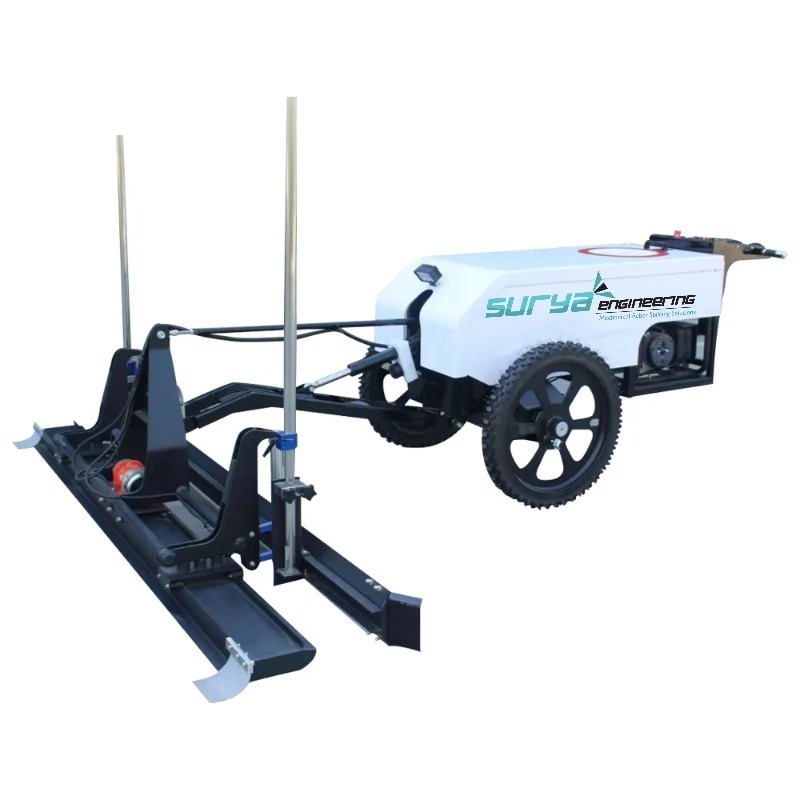
Price 550000 INR / Unit
Minimum Order Quantity : 1 Unit
Material : Stainless Steel
Usage : Industrial and Commercial Concrete Flooring
Diameter : Screed Width 2.5 6 meters (adjustable)
Application : Concrete Floor Leveling
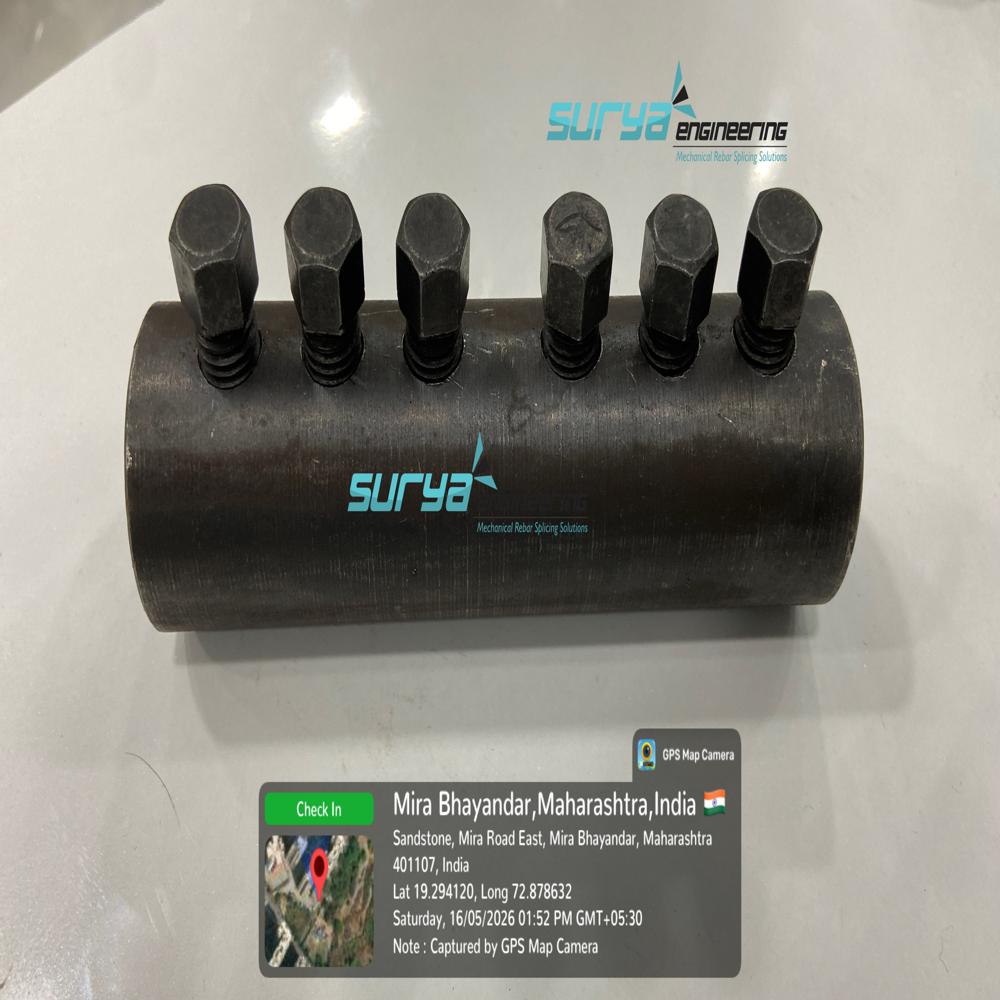
Price 120.0 INR / Piece
Minimum Order Quantity : 100 Pieces
Material : MS
Usage : Coupler
Diameter : 16 mm Millimeter (mm)
Application : Construction
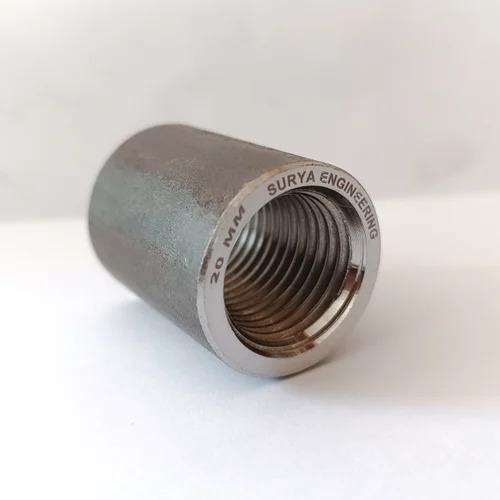
Price 18.0 INR / Piece
Minimum Order Quantity : 1000 Pieces
Material : Mild Steel
Usage : Rebar coupler
Diameter : 32 mm Meter (m)
Application : Construction
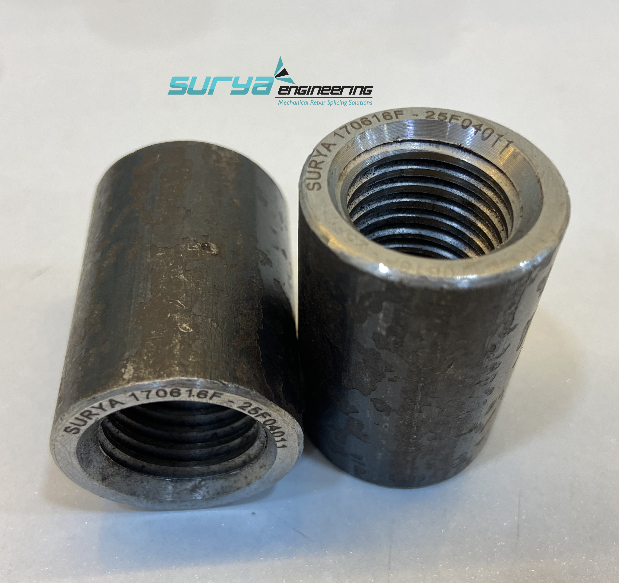
Price 20.0 INR / Unit
Minimum Order Quantity : 10 Units
Material : EN8D Carbon Steel / Mild Steel As per IS 16172
Usage : Industrial, Commercial, Residential Construction
Diameter : 16mm, 20mm, 25mm, 32mm, 40mm Millimeter (mm)
Application : Rebar Splicing, RCC Construction, ColumnBeamSlab, Bridges, Metro Projects






 Send Inquiry