
Talk to us
08045811615
Talk to us
08045811615
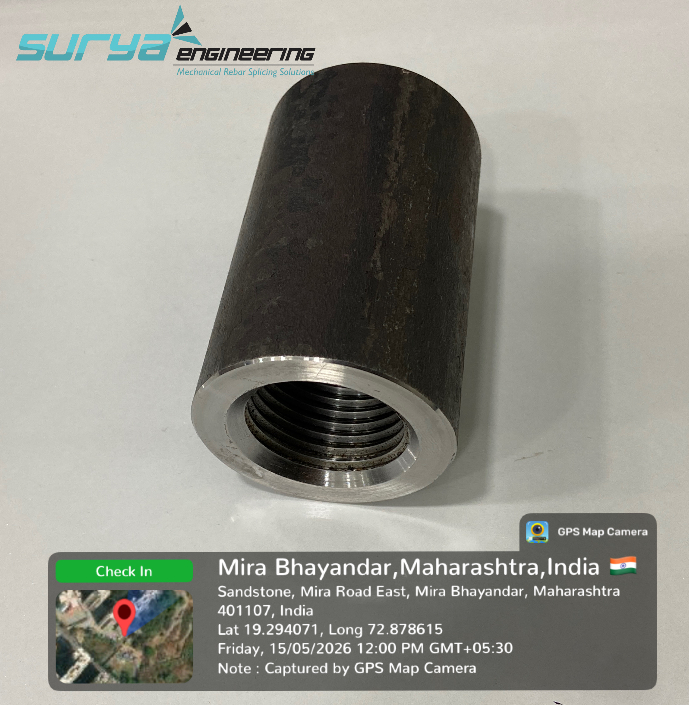
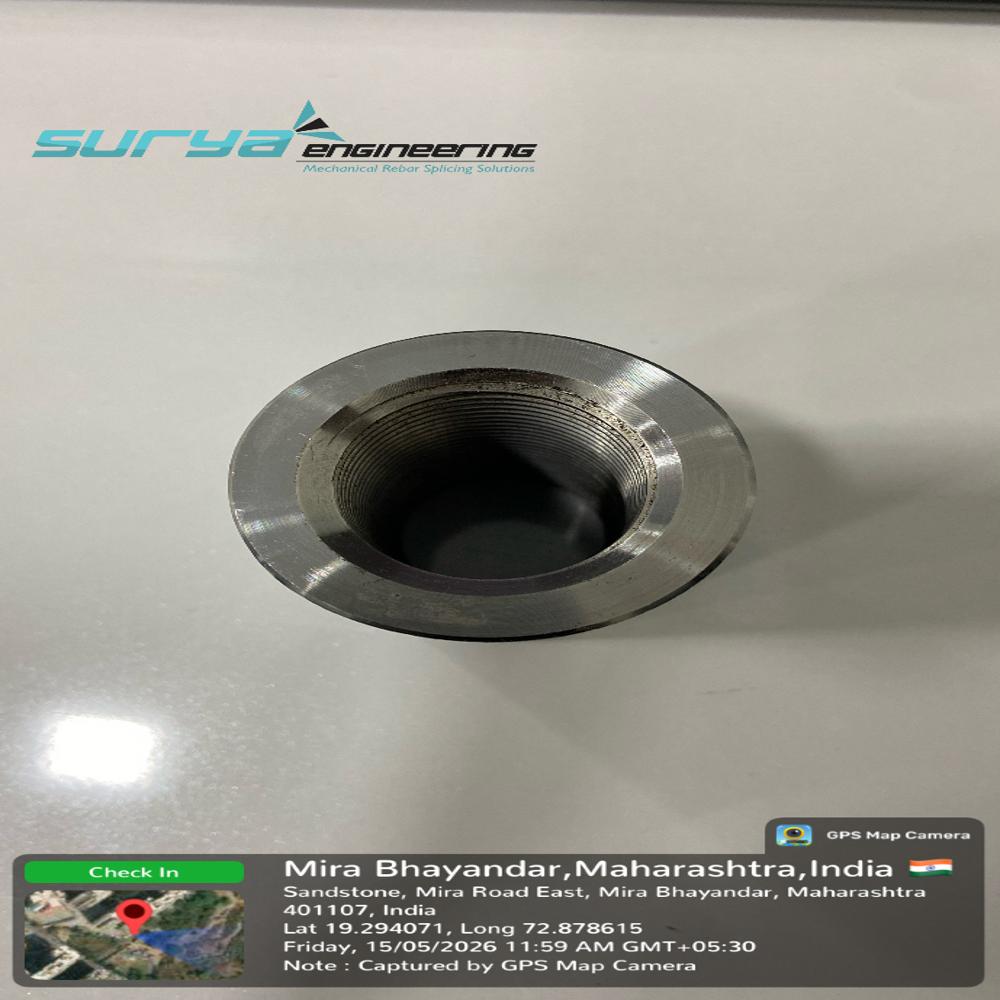
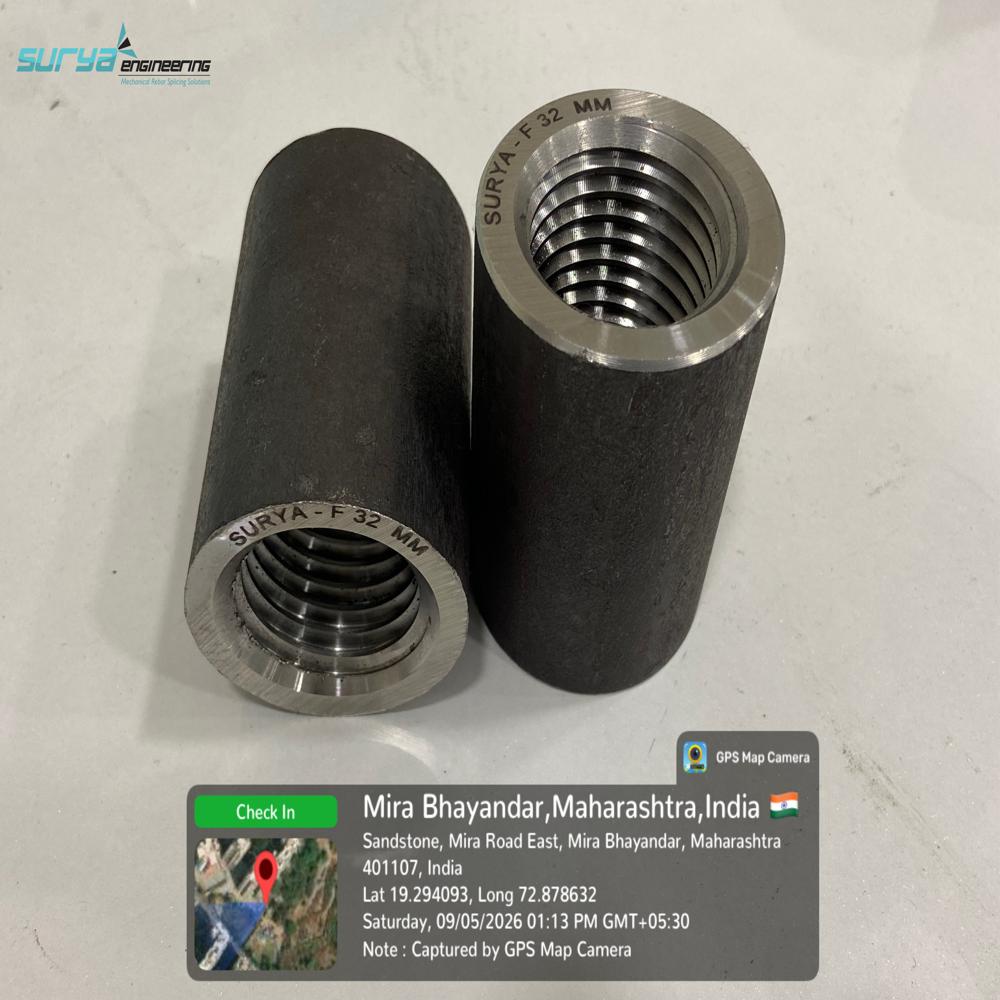
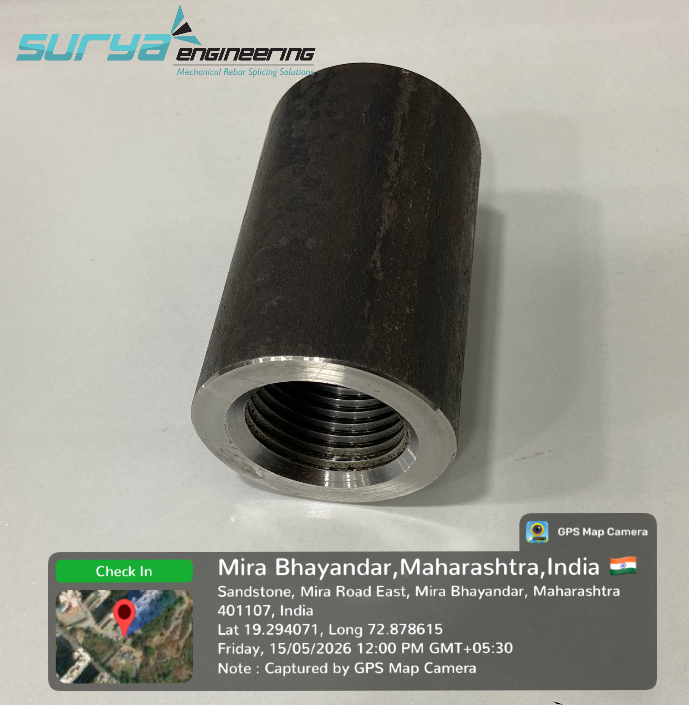
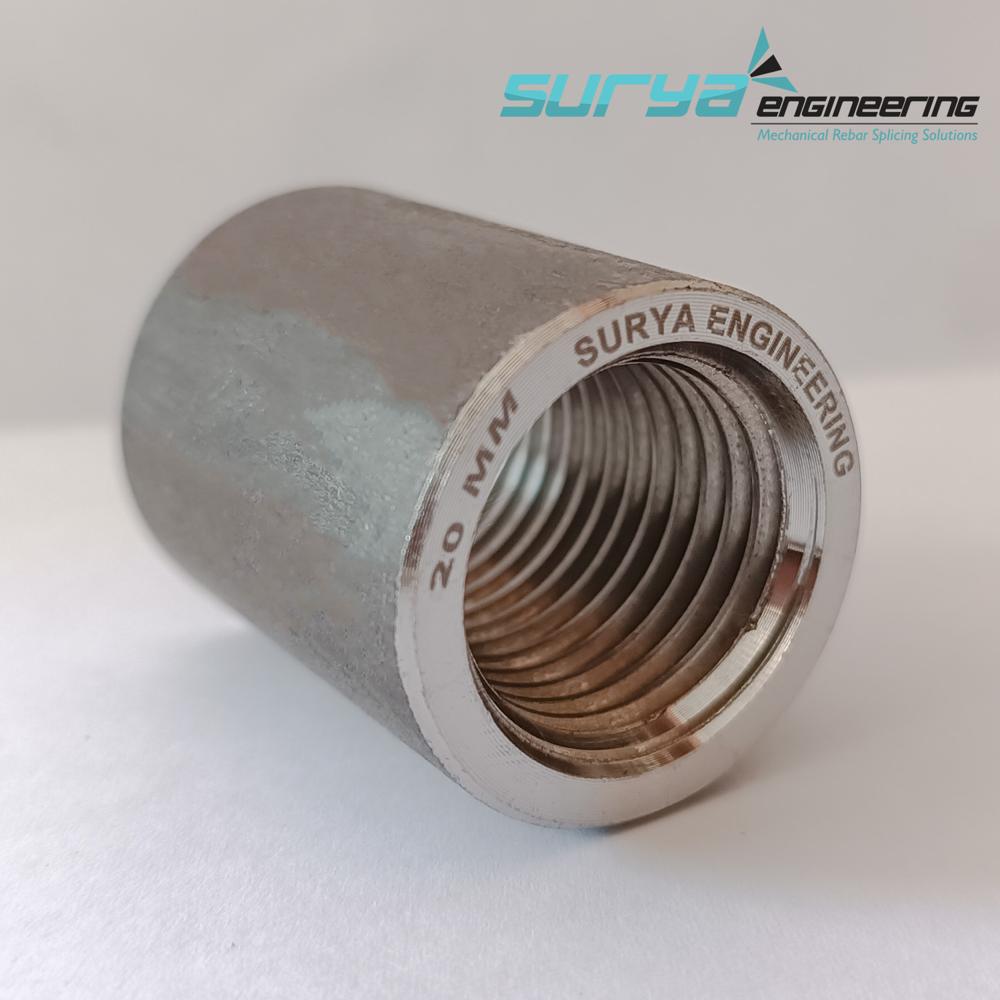
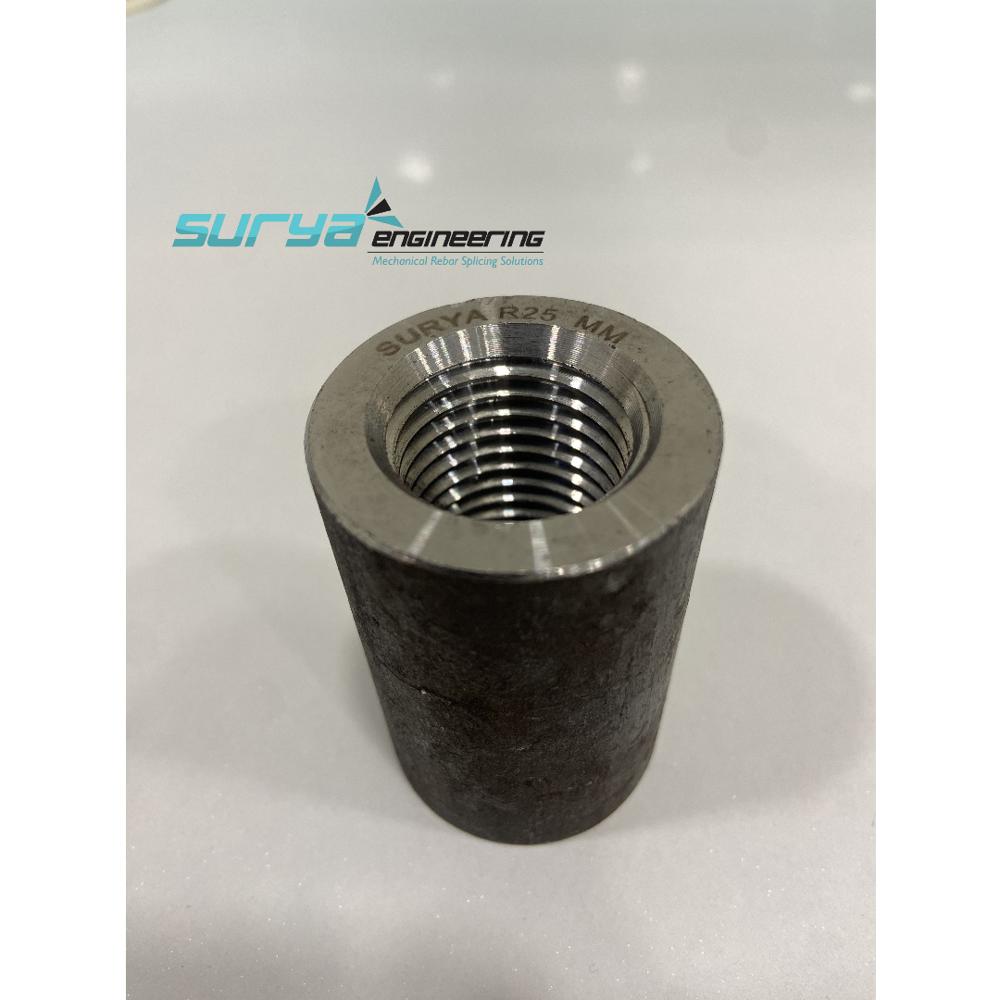

A rebar coupler is a high-strength mechanical splicing device designed to join two reinforcing steel bars (TMT bars) end-to-end. Instead of relying on the surrounding concrete to transfer loads between overlapping bars, a coupler creates a direct, mechanical, continuous steel connection that acts as a single, uninterrupted bar.
Eliminates Congestion: Overlapping bars double the steel volume at critical joints (like column-beam junctions). This creates dense cages where concrete cannot flow, leading to honeycombing and structural voids. Couplers maintain a clean, slim steel profile.
Massive Steel Savings: Lap splices require an overlap of 40 to 50 times the bar diameter ($40d$ to $50d$). On large-diameter bars (20mm to 40mm), this results in meters of wasted steel. Couplers eliminate this waste entirely.
Structural Superiority: High-quality couplers provide a "Bar-Break" connection. This means the mechanical joint is stronger than the rebar itself; under extreme load, the rebar will snap before the coupler yields.
Parallel Thread Couplers (Standard): The rebar end is threaded to match the inner threads of the coupler sleeve. Requires the bar to be rotated into place.
Cold-Forged Parallel Thread Couplers: The rebar end is hydraulically upset (enlarged) before threading. This ensures the threaded core area is thicker than or equal to the nominal bar diameter, guaranteeing a full bar-break.
Taper Thread Couplers: Uses cone-shaped threads. They are fast to install but require precise torque calibration.
MBT / Bolt-Shear Couplers: Features internal structural grip-lines and heavy-duty locking bolts. The bolts are tightened until their heads shear off, locking the bar in place. No threading or bar rotation required.
High-Rise Commercial & Residential Towers: Particularly in land-scarce, vertically growing cities like Mumbai.
Mass Transit Infrastructure: Metro rail pillars, flyovers, viaducts, and bridge piers across PAN India.
Heavy Industrial Structures: Nuclear power plants, marine structures, and massive concrete dams where structural failure is not an option.
In India, mechanical splices must strictly comply with IS 16172:2023 (Reinforcement Couplers for Mechanical Splices Specification). To be certified, couplers must pass these rigorous tests:
Static Tensile Test: The mechanical splice must achieve a minimum tensile strength equal to $1.25$ times the specified characteristic yield strength ($f_y$) of the reinforcing bar.
Slip Test: Under a specific tensile stress, the total permanent elongation (slip) across the coupler splice must not exceed $0.1 \text{ mm}$.
Cyclic Tensile Test: The joint is subjected to 100 cycles of alternating tension loading to ensure it can survive prolonged seismic activity.
High-Cycle Fatigue Test: Critical for bridges and railways; the splice must endure up to 2 million cycles of stress without cracking.
In Indias hyper-accelerated infrastructure landscape, building tall is no longer just an architectural choiceits a geographical necessity. But as buildings rise higher, the structural stress on concrete columns intensifies. Traditional lap splicing is no longer viable for high-stakes projects. Enter Surya Engineering, Mumbai's leading manufacturer of high-performance, IS 16172:2023 certified rebar couplers.
With over 12 years of core manufacturing expertise, we provide heavy-duty mechanical splicing solutions that keep India's mega-structures standing tall, safe, and cost-effective.
The Surya Engineering Advantage: Why PAN India Contractors Trust Us
Headquartered in the industrial heart of Mumbai, Maharashtra, Surya Engineering isn't just a supplierwe are structural partners. Our products are engineered to solve real on-site challenges:
End-to-End Traceability via UIN System: Every single coupler manufactured at our Mumbai facility is laser-engraved with a Unique Identification Number (UIN). This allows project managers to instantly track the raw material grade, manufacturing batch, and quality-check clearance on-site.
100% Bar-Break Guarantee: Our cold-forging and parallel-thread couplers are engineered to exceed the tensile capacity of Fe 500, Fe 550, and Fe 600 grade TMT bars. The bar breaks; our joint holds.
PAN India Supply Logistics: From landmark sky-rises in South Mumbai to massive metro projects in Delhi NCR, Bangalore, Hyderabad, and Gujaratour robust supply chain ensures timely delivery directly to your batching plant or site yard.
Seamless Installation Procedure
Installing Surya Engineering parallel-thread couplers is straightforward and requires no skilled labor:
Preparation: Cut the rebar ends flat using a cold-cutting saw (do not use gas cutting).
Forging & Threading: Upset the rebar end using a Surya Cold Forging machine, then cut the parallel threads using our automatic threading machine.
Engagement: Screw the coupler onto the first bar manually until tight.
Final Locking: Bring the continuation bar to the opposite end of the coupler. Use a calibrated pipe wrench or torque wrench to tighten the connection until no more threads are visible.

Price:
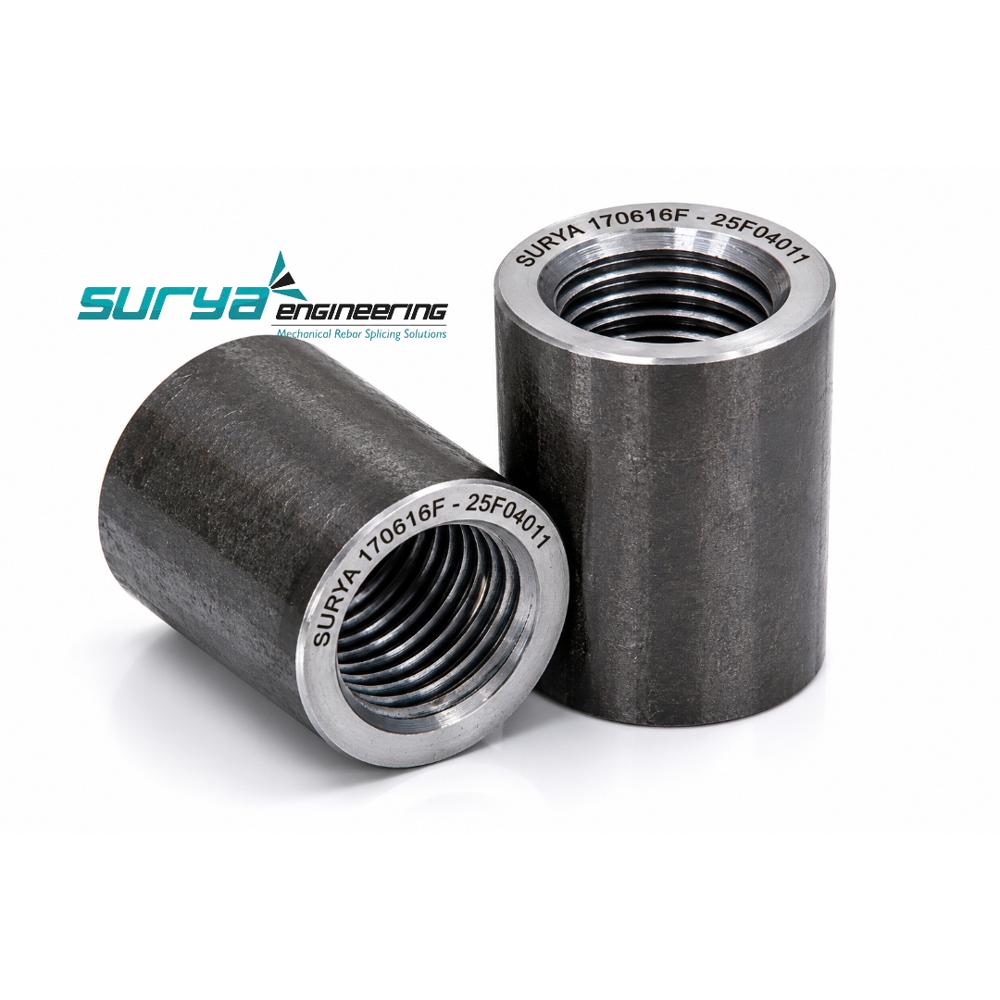
Price 50.0 INR / Piece
Minimum Order Quantity : 1000 Pieces
Surface Treatment : Black Oxide / AntiCorrosion Coating
Height : 16 40 Millimeter (mm)
Color : Black Oxide / Natural Steel Finish
Material : HighGrade Carbon Steel (EN8D / Alloy Steel)
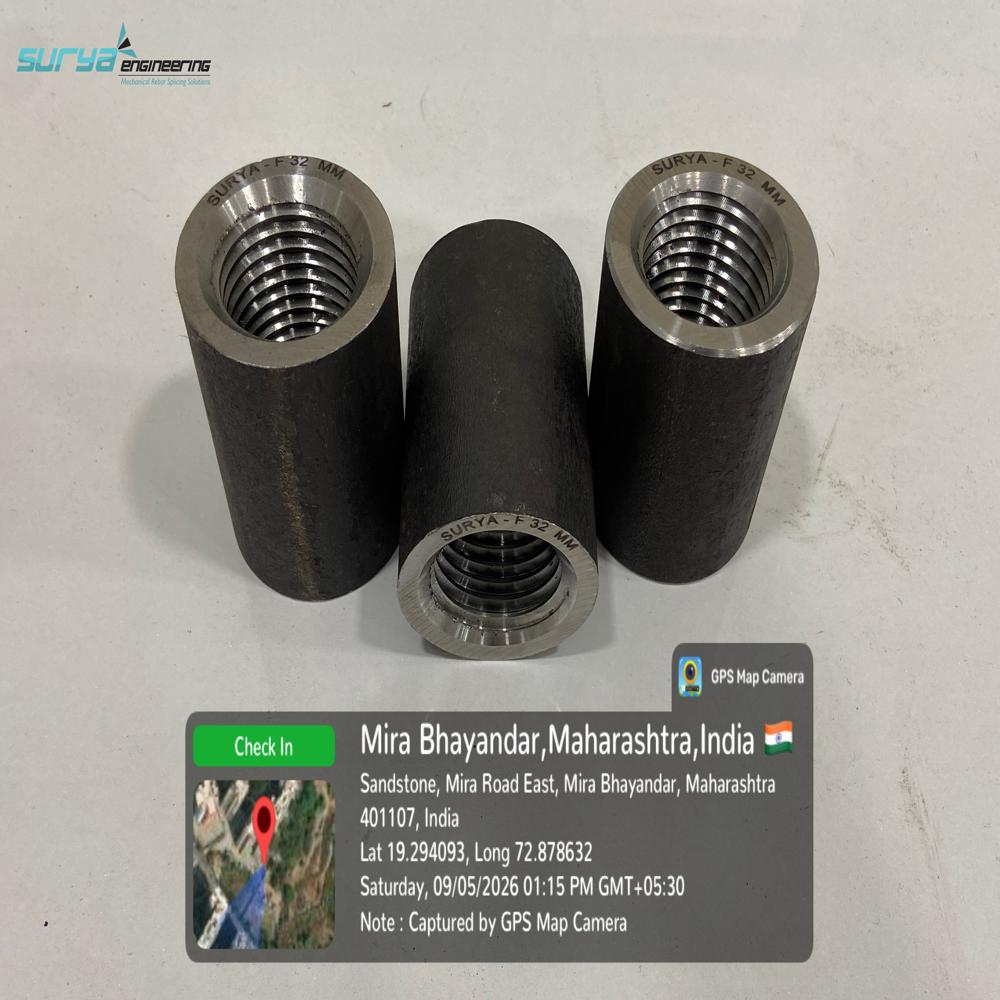
Price 90.0 INR / Piece
Minimum Order Quantity : 10 Pieces
Surface Treatment : heat Threatment
Height : 12 Millimeter (mm)
Color : Black
Material : EN8D
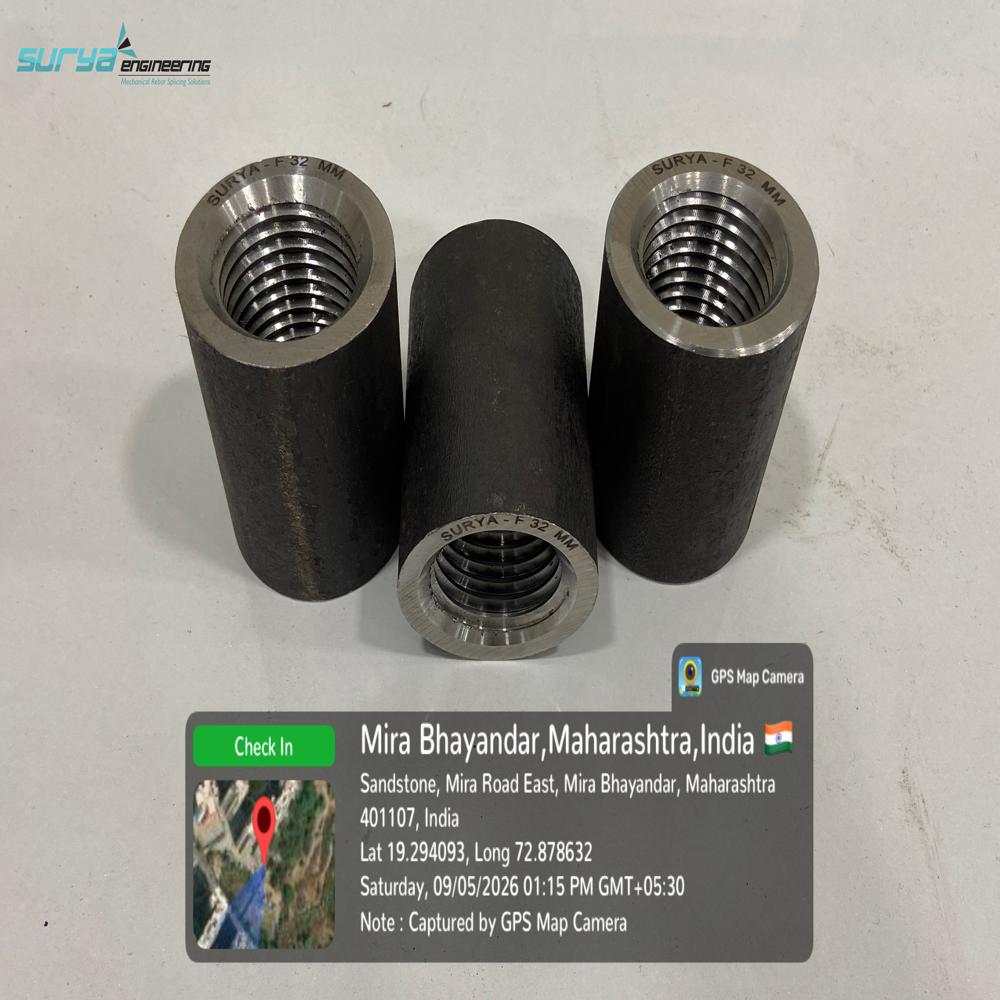
Price 130.0 INR / Piece
Minimum Order Quantity : 10 Pieces
Surface Treatment : Protective / AntiCorrosion Treatment
Height : 16 Millimeter (mm)
Color : Steel / Manufacturer Standard
Material : HighStrength Steel
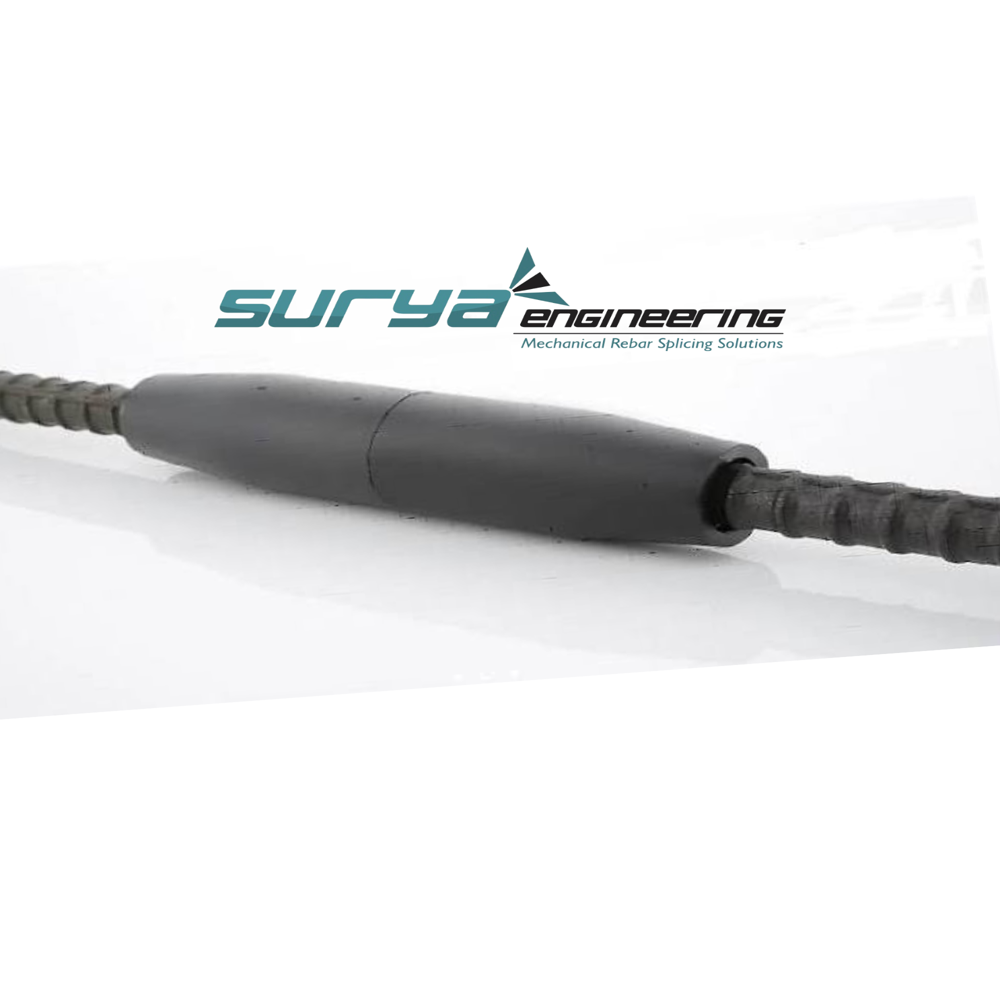
Price 120.0 INR / Piece
Minimum Order Quantity : 100 Pieces
Surface Treatment : heat Treatment
Height : 12 Millimeter (mm)
Color : Black
Material : EN8D





 Send Inquiry