
Talk to us
08045811615
Talk to us
08045811615
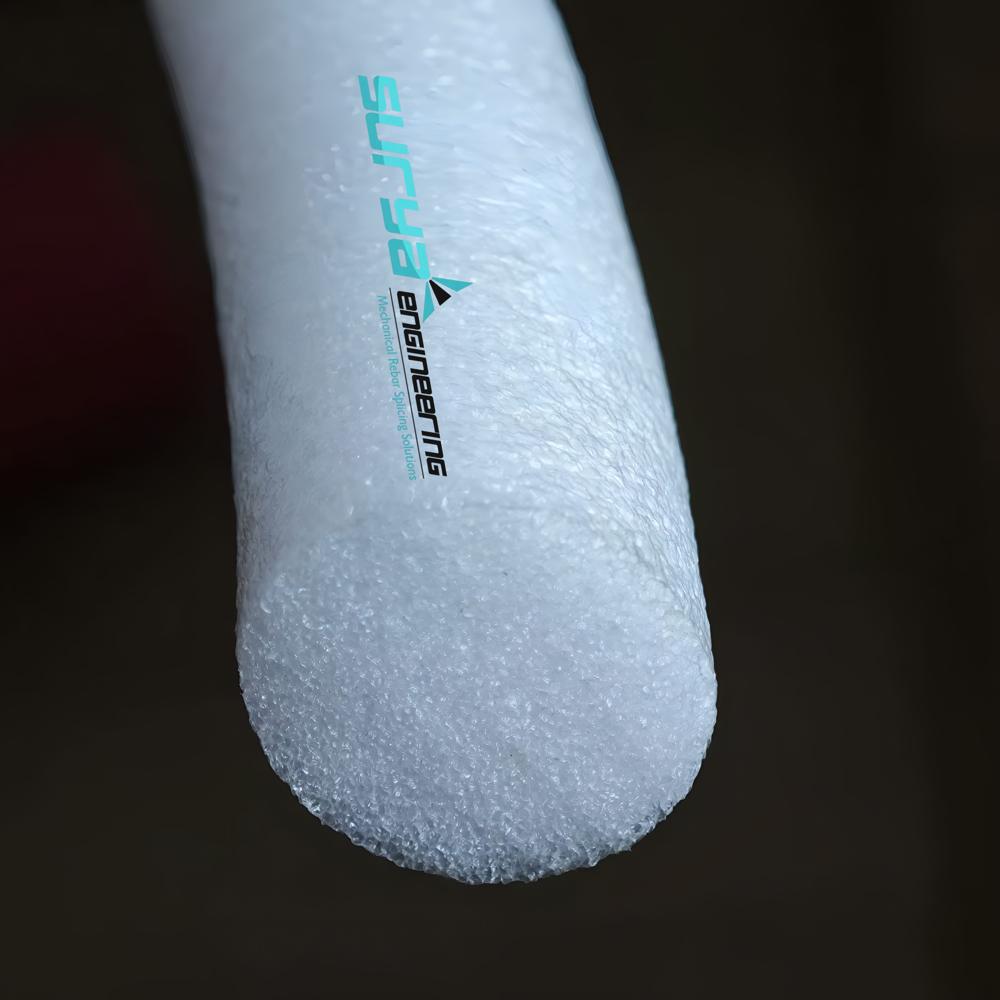
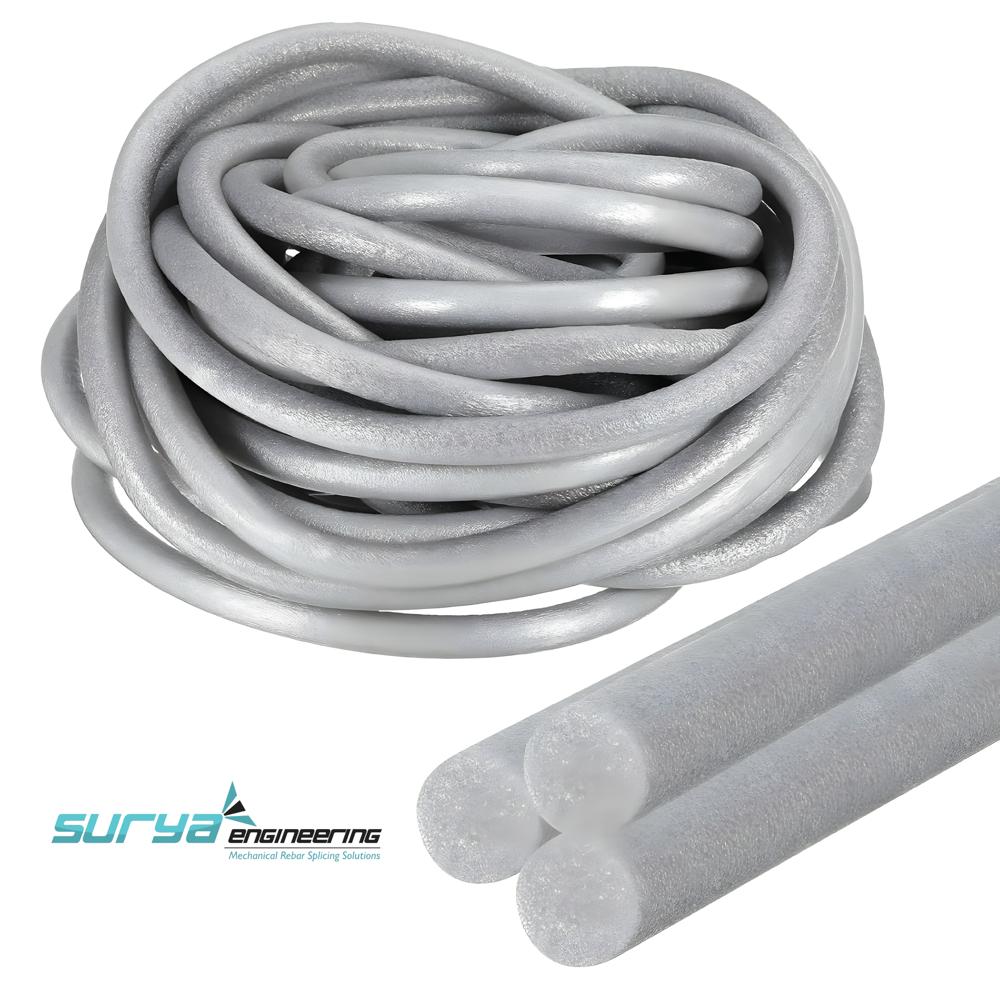
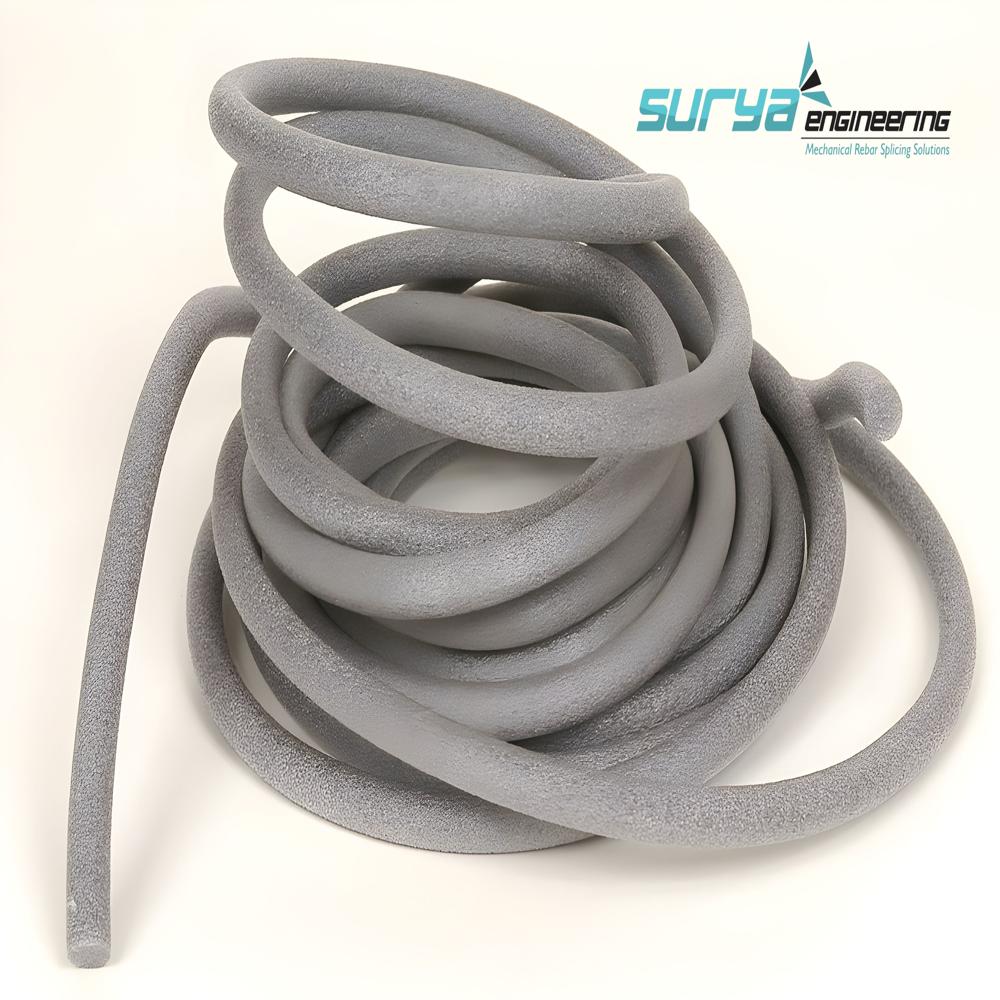
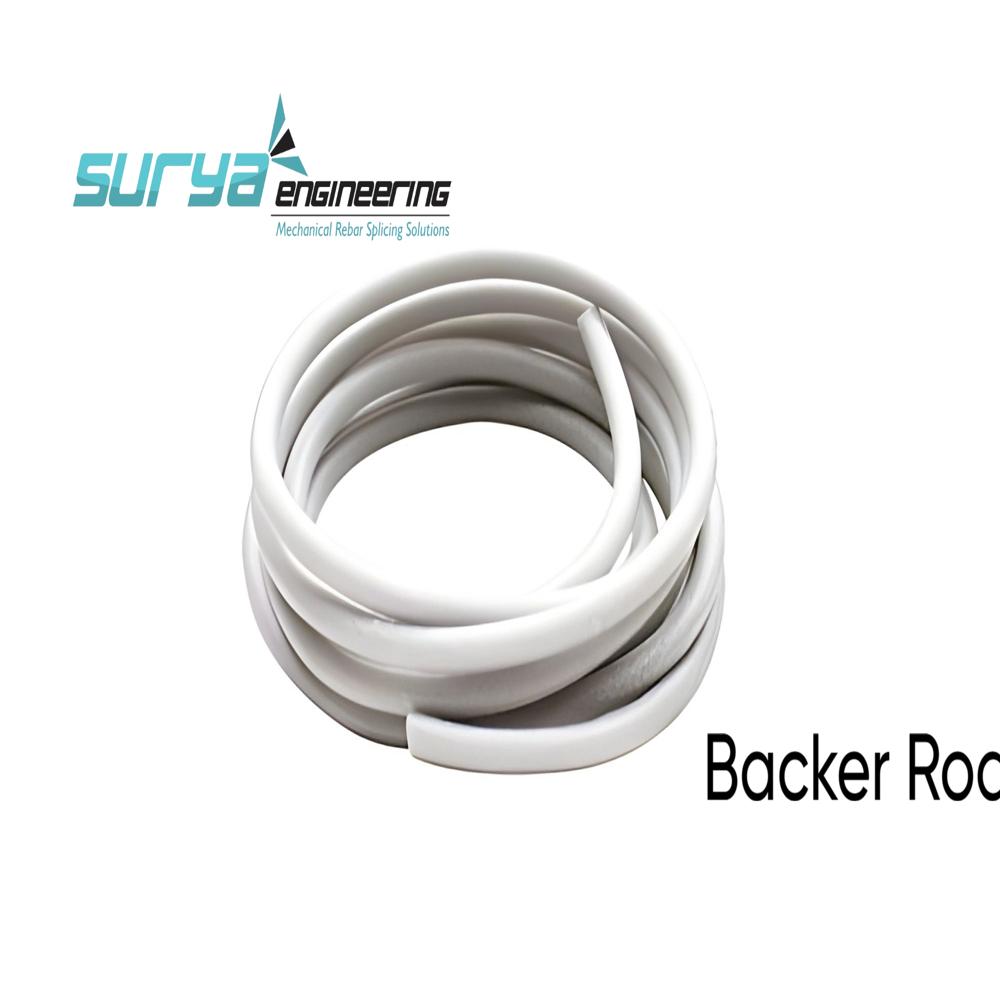
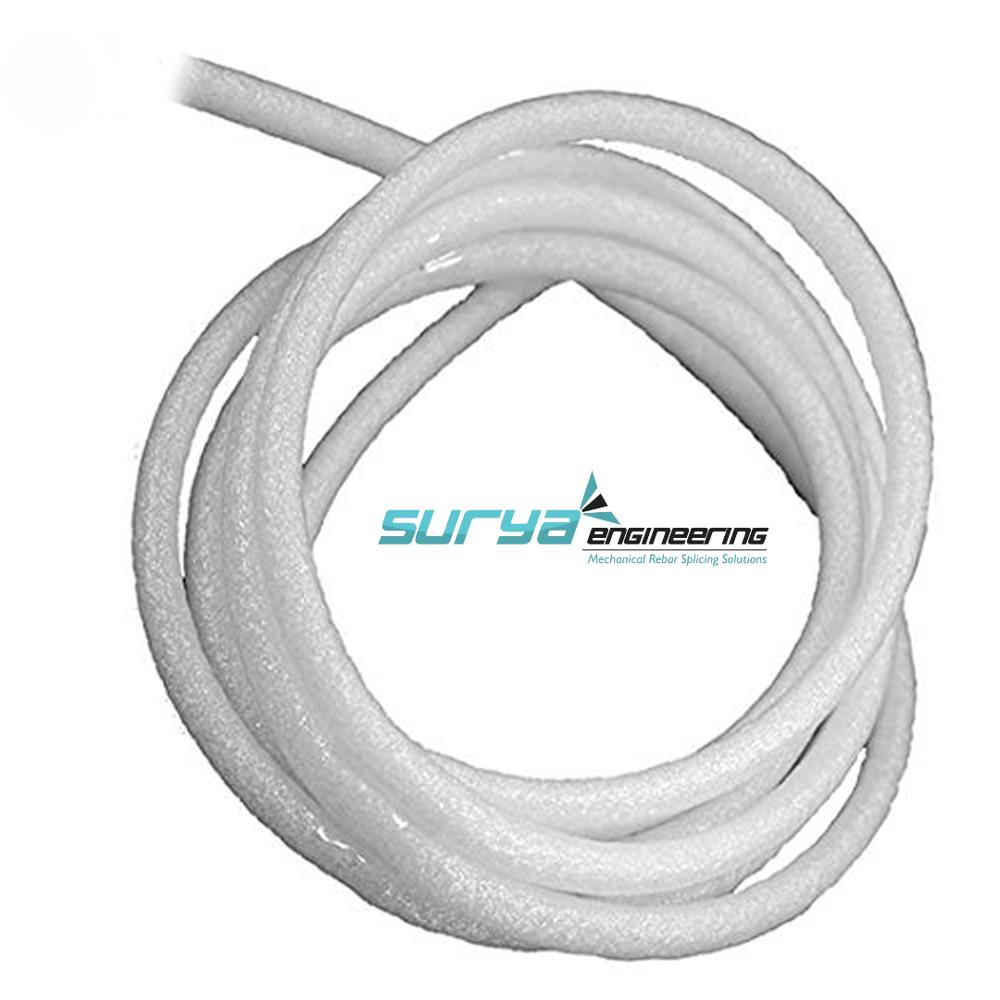
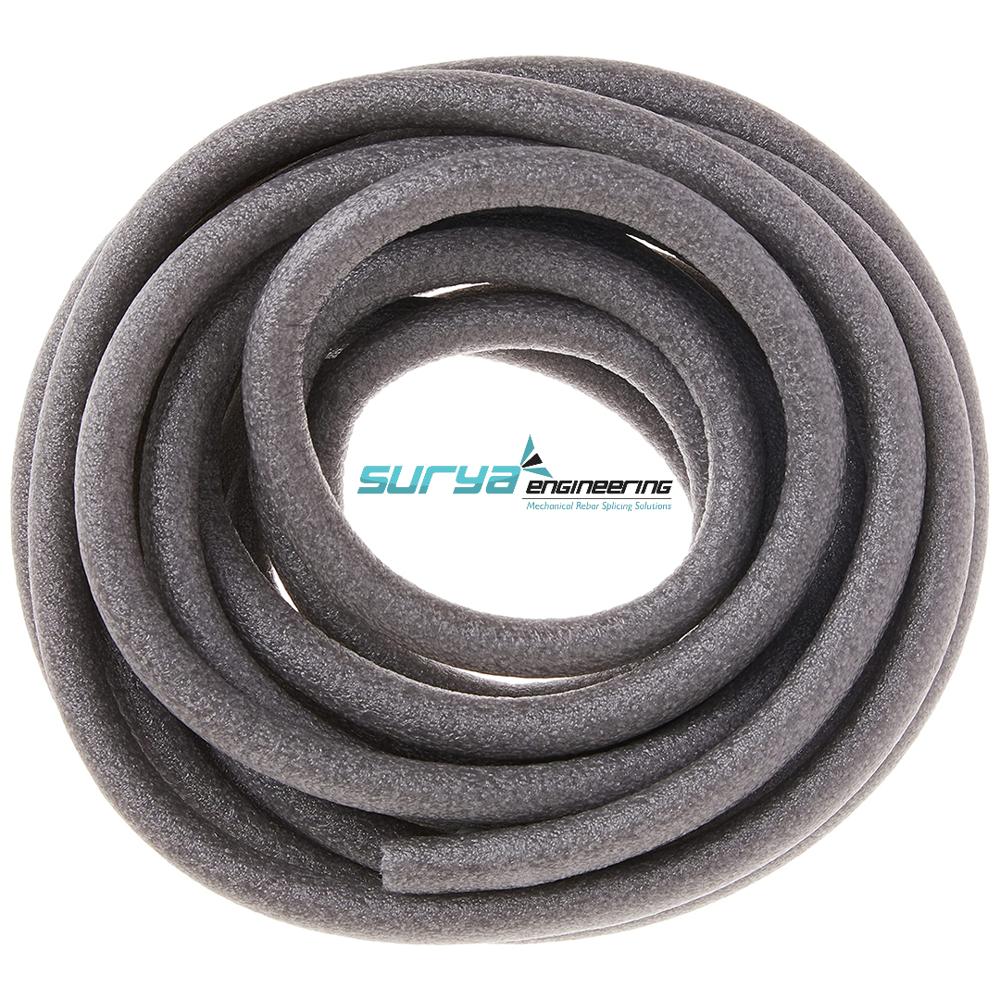

When sealing expansion joints, control joints, or window perimeters, filling deep joint gaps completely with expensive liquid sealant is both costly and structurally flawed. Sealant applied directly to the bottom of a deep joint bonds to three sides, causing severe stress concentration that tears the joint compound as the concrete expands and contracts.
Backer Rods (also known as joint backing foam) solve this by filling joint depth, controlling sealant thickness, and creating a classic hour-glass sealant profile that allows maximum elasticity without cohesive failure.
A Backer Rod is a flexible, compressible foam rope inserted into concrete construction joints, precast panel gaps, curtain walls, or pavement expansion joints before applying a cold-applied liquid sealant (such as polyurethane, silicone, or polysulfide).
It acts as a depth gauge and bond breaker, preventing three-sided adhesion so the sealant can stretch freely in two directions as joint widths fluctuate.
The main purpose of a backer rod is to control the depth and shape of sealant in a joint.
It can help:
This makes backer rod an important but often overlooked component of professional joint sealing.
A lot of people think backer rod is just a filler something to take up space so you don't waste caulk. And sure, it does that. But its real job is much more important.
When you apply sealant into a deep joint without a backer rod, the sealant sticks to the bottom and both sides of the gap. That's called three-sided adhesion. The problem? Sealants need to stretch and compress as temperatures change and buildings move. When they're stuck on three sides, they can't move freely, which means they crack, pull away, and fail prematurely.
A backer rod acts as a bond breaker. It sits at the bottom of the joint so the sealant only sticks to the two side walls, not the bottom. That two-sided bond allows the sealant to flex and move with the building, dramatically extending its lifespan.
The other big job? Creating the right hourglass shape. When sealant is applied over a properly installed backer rod, it forms a thin spot in the middle and thicker bonds at the sides. That shape maximizes adhesion while giving the sealant room to stretch. It's a small detail that makes a huge difference.
Oh, and it also saves you money because you're filling the deep part of the joint with cheap foam instead of expensive sealant.
Concrete naturally expands, contracts, and shrinks because of temperature changes, moisture changes, drying, and other factors. Joints are provided to accommodate or control this movement.
When a flexible sealant is installed in a joint, it needs enough space to move with the joint. If the sealant is applied too deeply or bonds incorrectly to the bottom of the joint, its ability to accommodate movement can be affected.
A properly sized backer rod for concrete joints helps control the sealant geometry and can reduce unnecessary three-sided adhesion.
Backer rods are available in different materials and structures depending on the application.
Closed-cell polyethylene foam is widely used for concrete and construction joint applications. It has low water absorption compared with open-cell materials and provides a firm backing for many sealants.
Open-cell foam is more compressible and may be used for certain sealant applications. However, its suitability depends on the sealant manufacturer's requirements and the joint environment.
Bi-cellular products combine characteristics of open-cell and closed-cell foam. They can be used where a balance between compressibility and sealing performance is required.
The right backer rod should always be compatible with the sealant and joint design.
Not all backer rods are the same. There are three main types, and choosing the wrong one is a surprisingly common mistake.
This is the dense, firm option with a smooth outer "skin". It's made from polyethylene foam with sealed cells that don't absorb water. That makes it the go-to choice for:
The downside? It's less compressible, so installation takes a bit more effort. And if you puncture the skin during installation, trapped gases can escape and cause bubbles in your sealant a problem known as outgassing.
This one is softer, more compressible, and easier to stuff into tight spots. It's made from polyurethane foam with interconnected cells that allow air to pass through.
That permeability is actually a feature: it lets moisture-curing sealants cure from the inside out, not just from the top down. Open cell is great for:
Irregular or damaged joints
Indoor applications
Vertical joints where water pooling isn't an issue
But here's the catch: do not use open cell in horizontal joints or anywhere water might sit. It wicks moisture like a sponge, which can travel up and ruin your sealant from underneath.
This is the best of both worlds a closed-cell exterior with an open-cell interior. It compresses easily like open cell but resists moisture like closed cell. It's a solid choice for flat work where you want easy installation without the wicking risk.
Correct installation makes a significant difference to joint-sealing performance.
A typical installation process includes:
The exact joint depth, backer rod size, and sealant configuration should be based on the project specification and sealant manufacturer's recommendations.
Concrete expansion and movement joints need to accommodate changes in the dimensions of adjoining concrete sections.
A backer rod for expansion joints provides a controlled backing for the sealant and helps prevent the sealant from filling the full depth of the joint.
The combination of the backer rod and flexible sealant allows the joint to maintain a more controlled sealing configuration as the concrete moves.
Construction joints can also require sealant where protection against water, dust, chemicals, or other environmental exposure is needed.
A backer rod can help establish the required sealant depth and provide support during sealant application.
However, not every construction joint requires a backer rod. The requirement depends on the joint design and the selected sealant system.
A common mistake is to think that a backer rod replaces joint sealant. It does not.
Backer Rod: Provides backing and controls sealant depth.
Sealant: Provides the actual flexible sealing function at the exposed surface.
Both components can work together as part of a properly designed joint-sealing system.
Backer rod and joint filler serve different purposes.
A backer rod is typically a flexible cylindrical material used behind sealant.
A joint filler may be a sheet or compressible material installed in a joint to accommodate movement or separate concrete sections, depending on the application.
The correct product depends on the type of joint and the construction detail.
Backer rods are commonly used in:
Industrial floors often contain numerous joints that need to withstand traffic, cleaning, temperature changes, and regular movement.
A backer rod for industrial concrete floors can help control sealant depth and provide support for the joint sealant. This is particularly useful where forklifts, pallet trucks, machinery, and other equipment regularly operate around jointed floor areas.
The backer rod size and sealant system should be selected according to the joint dimensions and expected operating conditions.
If you're purchasing backer rod for a project, don't look only at the price per roll.
Check:
This helps avoid the common problem of buying a backer rod that looks suitable but does not match the joint or sealant system.
Surya Engineering supplies Backer Rod for concrete joints, construction joints, expansion joints, flooring, and other sealing applications. For contractors and construction companies, selecting the right diameter and material is important to achieve a properly controlled sealant joint.
If you are looking for a Backer Rod manufacturer or supplier in India, share your joint width, required sealant type, application, and quantity. This makes it easier to select a suitable backer rod for your project.

Price:





 Send Inquiry
 English
 Spanish
 French
 German
 Italian
 Chinese (Simplified)
 Japanese
 Korean
 Arabic
 Portuguese