About Stainless Steel Fiber Used in Concrete to Reinforce Building Structure
Stainless Steel Fiber Used in Concrete to Reinforce Building Structure
Stainless Steel Fibers for Concrete Reinforcement are specially manufactured, small, high-strength metallic fibers designed to improve the mechanical performance, durability and crack resistance of concrete structures.
These fibers are mixed directly into fresh concrete to create a reinforced concrete composite. Once distributed throughout the concrete mixture, stainless steel fibers help control crack development, improve post-cracking behaviour and provide additional resistance against impact, abrasion and repeated loading.
Unlike conventional reinforcement, which is generally installed in the form of steel bars or welded wire mesh, steel fibers are distributed throughout the concrete volume. This provides reinforcement in multiple directions and helps control cracks at different locations within the concrete.
Stainless steel fibers are particularly useful in applications where concrete is exposed to demanding environmental conditions, mechanical stress, moisture, chemicals or temperature variations.
For construction projects requiring improved concrete performance, stainless steel fibers can be an effective supplementary reinforcement solution when properly designed and specified.
What Are Stainless Steel Fibers?
Stainless steel fibers are thin, elongated metallic elements manufactured from corrosion-resistant stainless steel. They are available in different lengths, diameters, shapes and surface profiles depending on the intended application.
Their primary purpose is to improve the tensile behaviour of concrete, especially after cracks begin to develop.
Concrete is naturally strong under compression but relatively weak under tension. When tensile stress exceeds its capacity, cracks can develop. Stainless steel fibers help bridge these cracks and transfer stress across the cracked concrete section.
This crack-bridging mechanism helps:
-
Control crack width and propagation.
-
Improve post-cracking load-carrying capacity.
-
Increase toughness and energy absorption.
-
Improve resistance to impact and dynamic loading.
-
Reduce the risk of sudden brittle failure.
-
Improve resistance to abrasion and surface damage.
How Stainless Steel Fibers Work in Concrete
When stainless steel fibers are added to concrete, they become distributed throughout the concrete matrix.
As the concrete experiences loading, microscopic cracks may begin to form. The fibers crossing these cracks help hold the concrete together by transferring tensile forces from one side of a crack to the other.
The mechanism works in the following stages:
-
Crack Formation: Tensile stresses develop within the concrete and initiate small cracks.
-
Fiber Bridging: Stainless steel fibers crossing the cracks resist separation.
-
Load Transfer: Fibers transfer tensile forces across the cracked sections.
-
Crack Control: Fiber pull-out or deformation helps limit crack opening and propagation.
-
Improved Toughness: The concrete can sustain additional deformation and absorb more energy after cracking.
The effectiveness depends on fiber geometry, length, aspect ratio, dosage, bond characteristics and concrete mix design.
Types of Stainless Steel Fibers
Different fiber shapes are designed to provide different bonding and reinforcement characteristics.
A. Straight Stainless Steel Fibers
Straight fibers have a simple, uniform shape and are used in specialized concrete applications where fiber distribution and material characteristics are important.
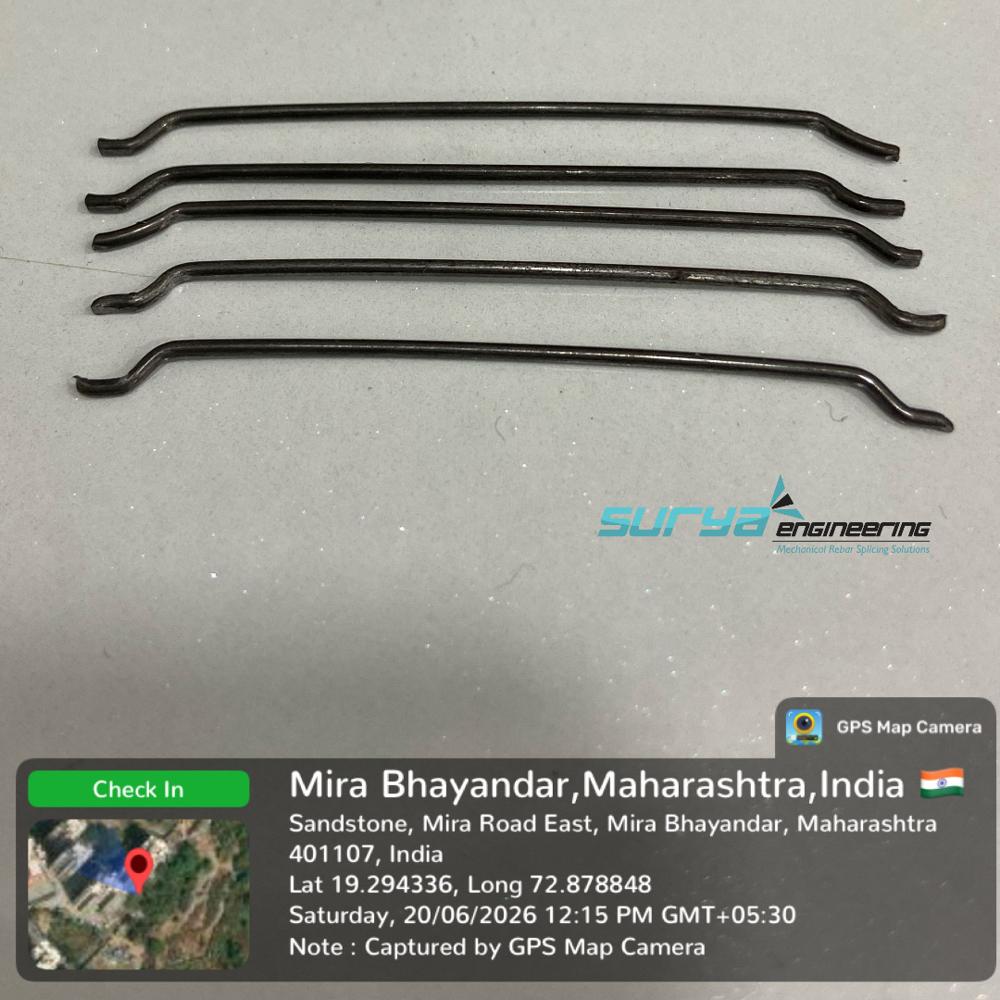
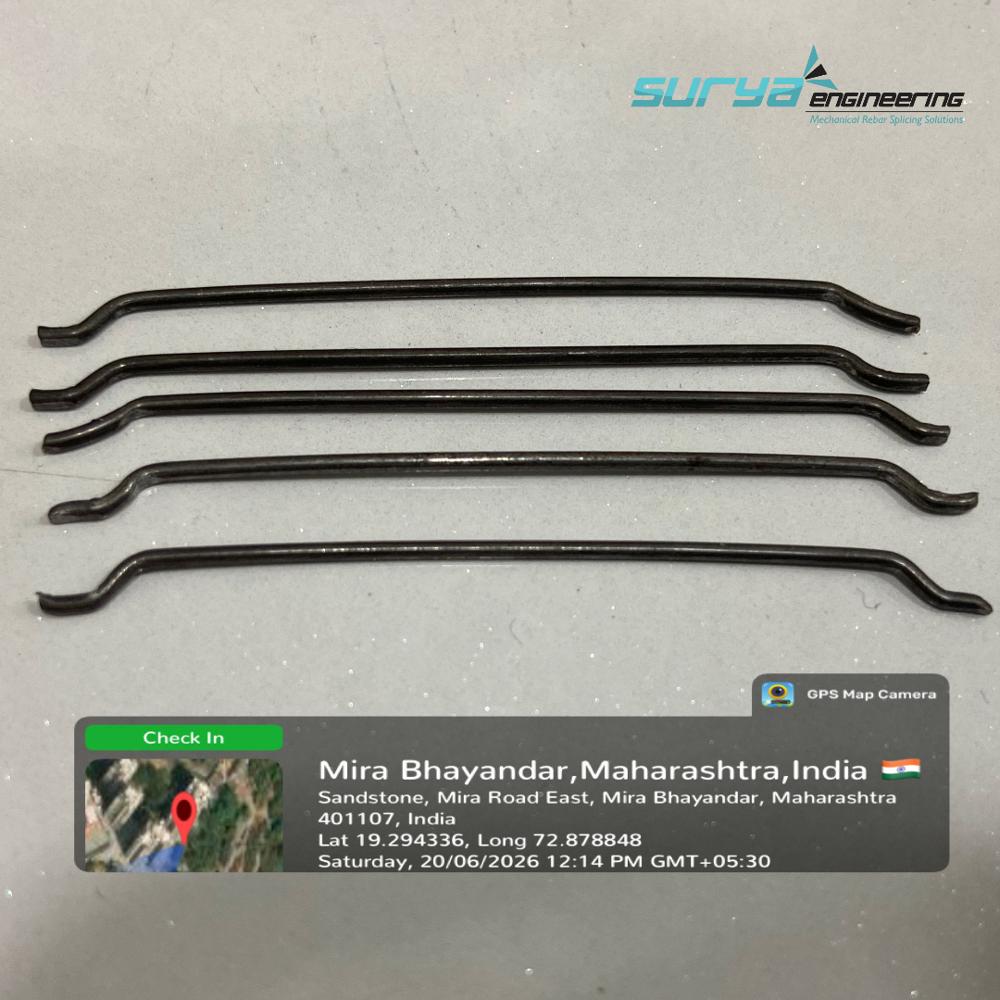
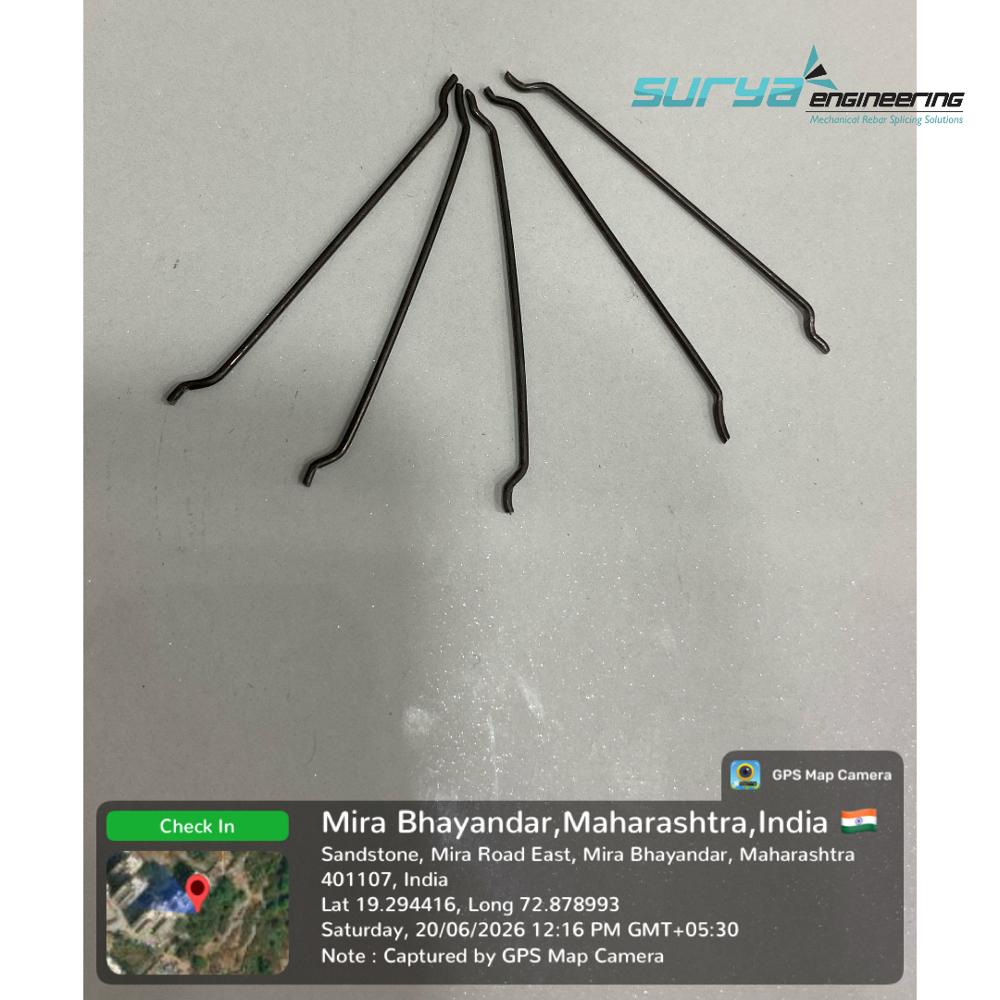
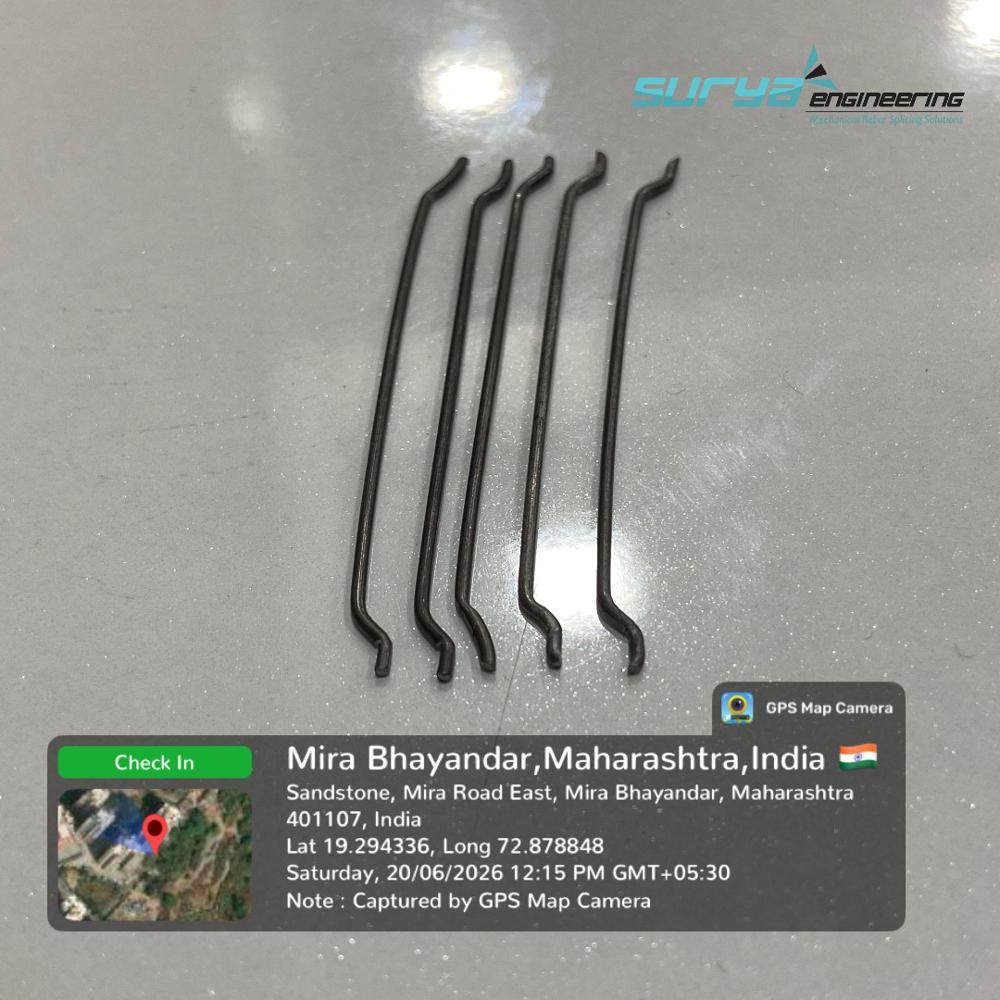
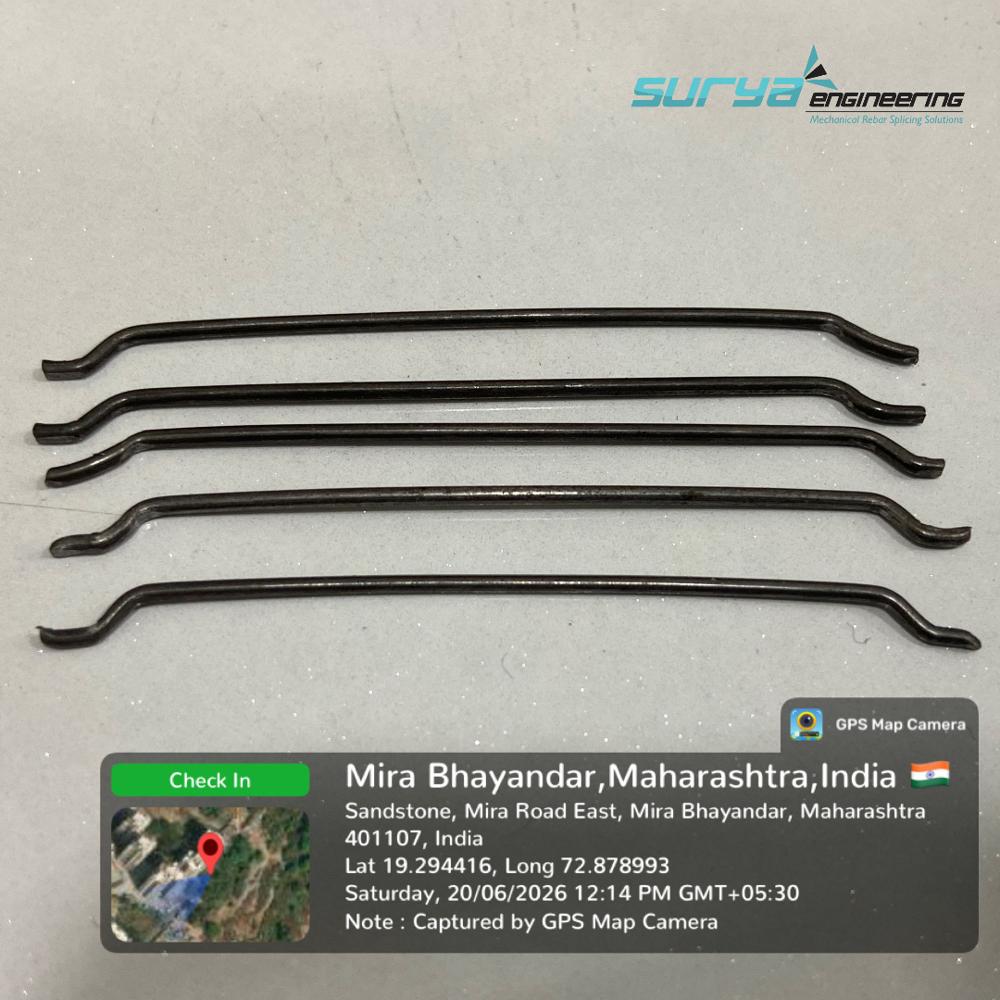
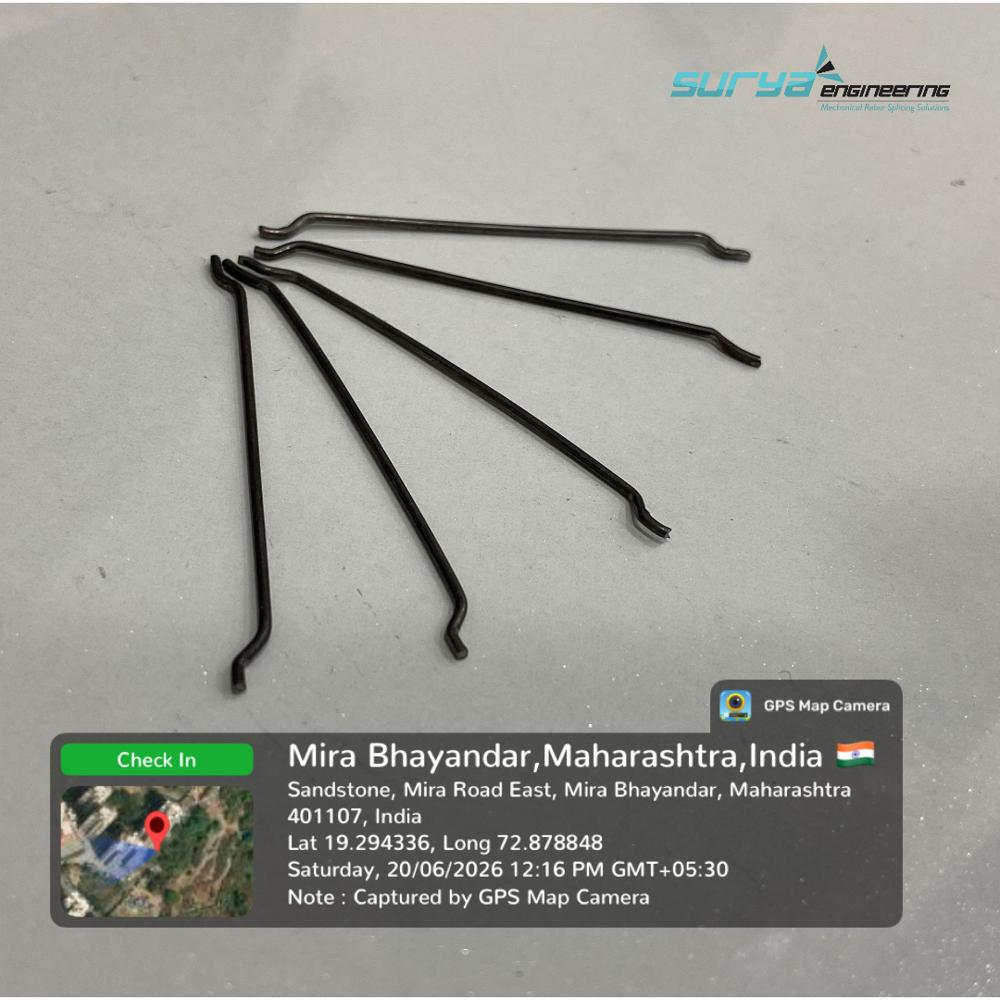
B. Hooked-End Stainless Steel Fibers
Hooked-end fibers have small hooks at their ends that provide mechanical anchorage within the concrete.
Benefits:
-
Improved mechanical bonding.
-
Better resistance to fiber pull-out.
-
Improved post-cracking performance.
-
Enhanced toughness under loading.
C. Crimped Stainless Steel Fibers
Crimped fibers have a wave-like or corrugated shape that helps improve mechanical interaction with the surrounding concrete.
Benefits:
-
Improved mechanical interlocking.
-
Better resistance to pull-out.
-
Improved crack-bridging performance.
D. Twisted Stainless Steel Fibers
Twisted fibers have a specially formed geometry designed to provide additional mechanical anchorage and resistance against extraction from the concrete matrix.
Note: The actual fiber shape, stainless steel grade and dimensions should be selected according to the manufacturer's product specifications and project requirements.
Key Features and Benefits
1. Corrosion Resistance
Stainless steel provides better resistance to corrosion than ordinary carbon steel in many environments. This makes stainless steel fibers useful in concrete exposed to moisture, chlorides and other aggressive conditions. The appropriate stainless steel grade must be selected according to the exposure environment.
2. Improved Crack Resistance
Stainless steel fibers bridge cracks within the concrete and help control crack opening, reducing the development of wider cracks under loading.
3. Enhanced Tensile Performance
Concrete has relatively low tensile strength. Stainless steel fibers contribute to tensile load transfer across cracks and improve the concrete's post-cracking performance.
4. Higher Impact Resistance
Fiber reinforcement helps concrete absorb energy during impact and repeated loading, making it useful in industrial floors and heavy-duty construction applications.
5. Improved Flexural Toughness
Fibers help concrete retain load-carrying capacity after cracking. This can improve its ability to withstand bending and deformation.
6. Three-Dimensional Reinforcement
Unlike conventional reinforcement bars placed in specific directions, fibers are distributed throughout the concrete mixture, providing reinforcement across multiple directions.
7. Long-Term Durability
When the appropriate stainless steel grade, fiber dosage and concrete mix are selected, stainless steel fibers can contribute to durable concrete performance in demanding environments.
Applications of Stainless Steel Fibers in Construction
Stainless steel fibers can be used in several construction and infrastructure applications.
1. Industrial Flooring
Industrial floors are exposed to heavy machinery, forklifts, material handling equipment and continuous movement. Stainless steel fibers can help improve crack control, toughness and resistance to mechanical damage.
2. High-Rise Building Construction
In suitable engineered concrete applications, stainless steel fibers can contribute to crack control and post-cracking performance in selected building components.
3. Tunnel Construction
Fiber-reinforced shotcrete is used in tunnel construction to provide additional toughness and improve the performance of sprayed concrete linings. Stainless steel fibers may be selected where corrosion resistance is an important consideration.
4. Bridges and Infrastructure
Bridges and infrastructure structures can experience repeated loading, moisture exposure and environmental deterioration. Stainless steel fibers can be considered in suitable concrete applications where enhanced crack control and durability are required.
5. Precast Concrete Components
Stainless steel fibers can be incorporated into selected precast concrete products to improve toughness and resistance to handling-related damage.
6. Marine and Coastal Construction
Concrete structures near seawater are exposed to chloride-rich environments. Suitable stainless steel fibers may provide an advantage where corrosion resistance is required, subject to grade selection and structural design.
7. Heavy-Duty Concrete Structures
Industrial platforms, loading areas, concrete pavements and other structures exposed to demanding mechanical conditions can benefit from fiber reinforcement.
7. Stainless Steel Fibers vs Conventional Steel Reinforcement
|
Feature
|
Stainless steel fibers
|
Conventional steel bars
|
|
Form
|
Small metallic fibers
|
Long reinforcement bars
|
|
Distribution
|
Throughout concrete
|
Specific designed locations
|
|
Crack control
|
Distributed crack bridging
|
Reinforcement across designed sections
|
|
Corrosion resistance
|
Depends on stainless grade
|
Depends on steel grade and protection
|
|
Installation
|
Mixed into concrete
|
Placed and fixed before pouring
|
|
Main purpose
|
Toughness and crack control
|
Structural reinforcement
|
|
Design requirement
|
Fiber dosage and residual strength
|
Bar size, spacing and anchorage
|
Important: Stainless steel fibers should not automatically be considered a complete replacement for conventional reinforcement bars. Their use as primary or supplementary structural reinforcement must be established through structural calculations, testing and applicable design standards.
8. How Are Stainless Steel Fibers Added to Concrete?
Stainless steel fibers are generally introduced during the concrete batching and mixing process.
The following steps help achieve proper fiber distribution:
-
Concrete Mix Preparation: Prepare the concrete mix according to the approved mix design.
-
Fiber Measurement: Measure the required fiber quantity based on the specified dosage.
-
Controlled Addition: Add fibers gradually into the concrete mixer to prevent fiber balling and uneven distribution.
-
Mixing: Continue mixing until the fibers are distributed uniformly throughout the concrete.
-
Quality Inspection: Check workability, fiber distribution and fresh concrete properties.
-
Concrete Placement: Place, compact and finish the concrete using the approved construction procedure.
The fiber addition rate, mixing sequence and mixing duration should follow the fiber manufacturer's recommendations and the approved concrete mix design.
9. Important Technical Specifications
The performance of stainless steel fibers depends on their physical and mechanical properties.
|
Technical parameter
|
Description
|
|
Material
|
Stainless steel
|
|
Fiber shape
|
Straight, hooked, crimped or twisted
|
|
Fiber length
|
Depends on product design
|
|
Fiber diameter
|
Depends on product design
|
|
Aspect ratio
|
Length-to-diameter ratio
|
|
Tensile strength
|
Depends on stainless steel grade and manufacturing process
|
|
Corrosion resistance
|
Depends on stainless steel composition
|
|
Fiber dosage
|
Determined by structural design and mix requirements
|
|
Application
|
Concrete reinforcement and crack control
|
Important technical considerations:
-
Fiber length and diameter influence bonding and distribution.
-
Aspect ratio influences fiber anchorage and pull-out behaviour.
-
Tensile strength affects the fiber's ability to resist tensile loading.
-
Fiber dosage influences residual flexural performance and workability.
-
Stainless steel grade determines the corrosion resistance appropriate to the exposure conditions.
Exact technical values should be obtained from the product manufacturer's technical datasheet rather than assumed to be universal.
10. Relevant Quality Standards
When selecting stainless steel fibers for concrete reinforcement, the following standards and guidance documents are relevant:
-
ASTM A820/A820M: Specification covering steel fibers for fiber-reinforced concrete, including dimensions and mechanical properties. Stainless steel products should also have their specific material composition verified.
-
EN 14889-1: European standard covering steel fibers for concrete, including definitions, specifications and conformity.
-
ASTM C1116: Standard specification covering fiber-reinforced concrete and shotcrete classifications.
-
ASTM C1609: Test method used to evaluate the flexural performance of fiber-reinforced concrete, including residual strength.
These standards cover different aspects of the fiber material and concrete performance. Project specifications should identify the applicable requirements.
11. Why Choose Stainless Steel Fibers for Concrete Reinforcement?
Stainless steel fibers offer a practical reinforcement option for construction projects where improved crack control, concrete toughness and corrosion resistance are important.
Their ability to distribute throughout the concrete mixture helps provide multidirectional crack bridging without requiring every fiber to be individually positioned during reinforcement installation.
For industrial flooring, infrastructure, precast components and specialized structural concrete, they can help improve concrete performance when selected and incorporated correctly.
Surya Engineering Construction Engineering Solutions
Surya Engineering focuses on providing construction engineering products and solutions for modern infrastructure and building requirements. Stainless steel fiber reinforcement is a product category that can be positioned around durability, crack control and improved concrete performance.
Frequently Asked Questions (FAQs)
Q1. What are stainless steel fibers used for in concrete?
Stainless steel fibers are used to improve crack control, toughness, impact resistance and post-cracking performance in concrete structures.
Q2. Do stainless steel fibers prevent concrete cracks?
They do not completely prevent cracking. Instead, they help control crack formation, width and propagation by bridging cracks within the concrete.
Q3. Are stainless steel fibers corrosion-resistant?
Yes. Stainless steel generally offers better corrosion resistance than ordinary carbon steel. However, actual performance depends on the stainless steel grade and environmental exposure.
Q4. Can stainless steel fibers replace reinforcement bars?
In certain specifically designed applications, steel fibers can replace some conventional reinforcement. However, they cannot automatically replace reinforcement bars in structural columns, beams, slabs or other load-bearing members.
Q5. Can stainless steel fibers be used in industrial flooring?
Yes. They can improve crack control, toughness and resistance to mechanical loading in appropriately designed industrial concrete floors.
Q6. How are stainless steel fibers mixed into concrete?
They are gradually introduced into the concrete mixer during batching and mixed until a uniform distribution is achieved.
Q7. Are stainless steel fibers suitable for marine construction?
They can be suitable for selected marine applications because of their corrosion resistance, provided the stainless steel grade and concrete design are appropriate for the exposure conditions.



 Send Inquiry

 Send Inquiry
 Send SMS

 English
 Spanish
 French
 German
 Italian
 Chinese (Simplified)
 Japanese
 Korean
 Arabic
 Portuguese
