About MBT Rebar Coupler Manufacturer
What is an MBT Rebar Coupler?
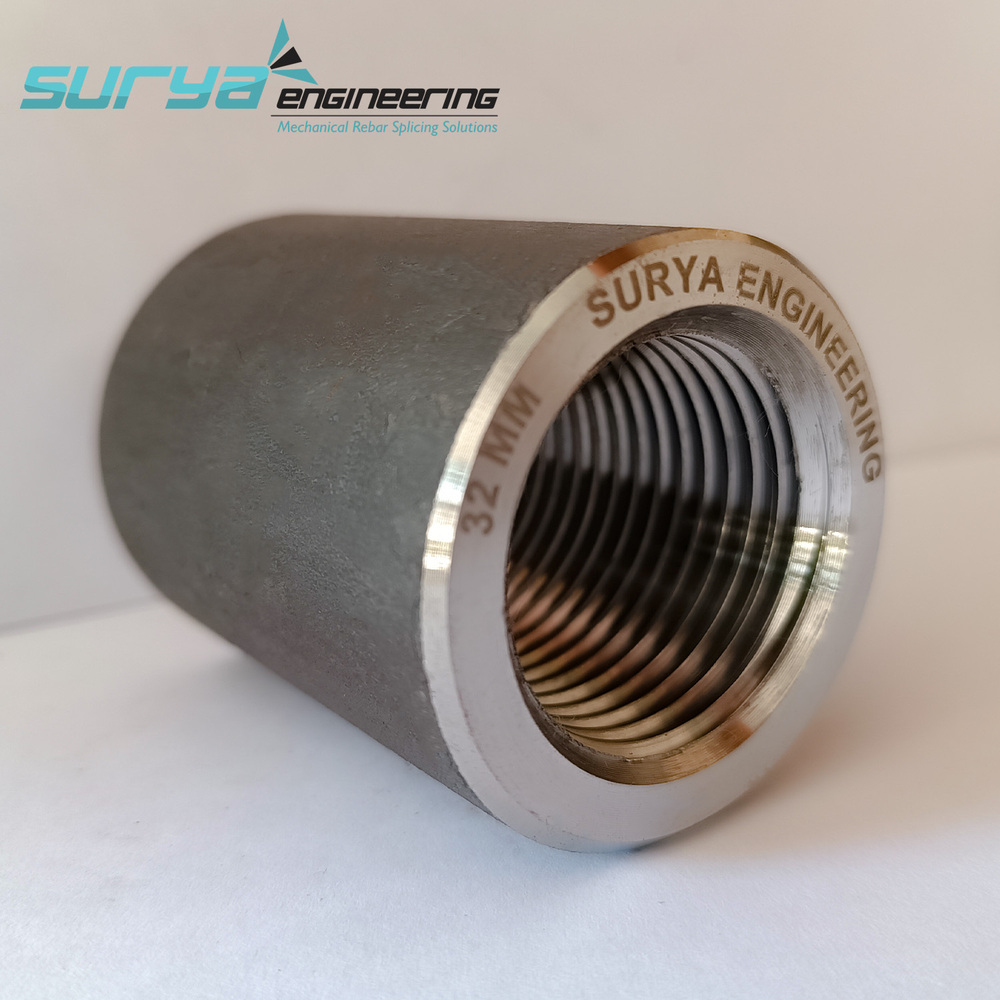
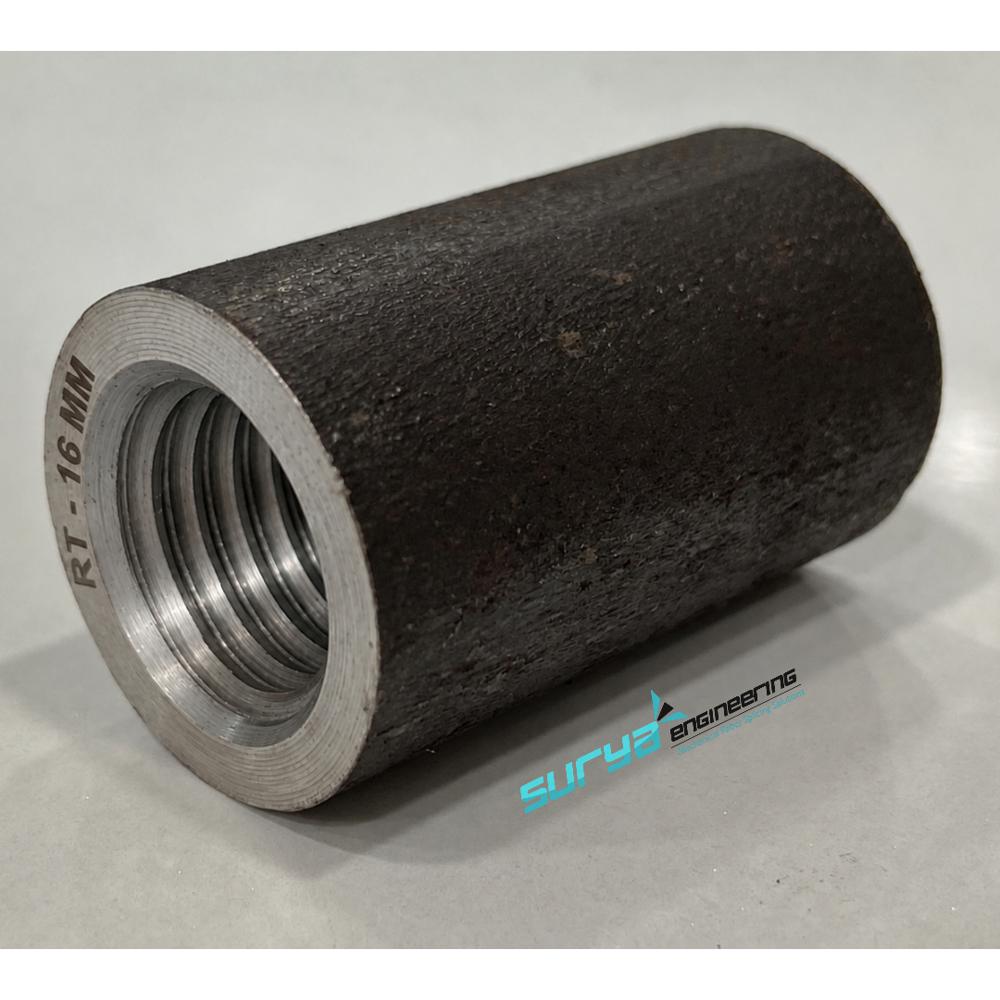
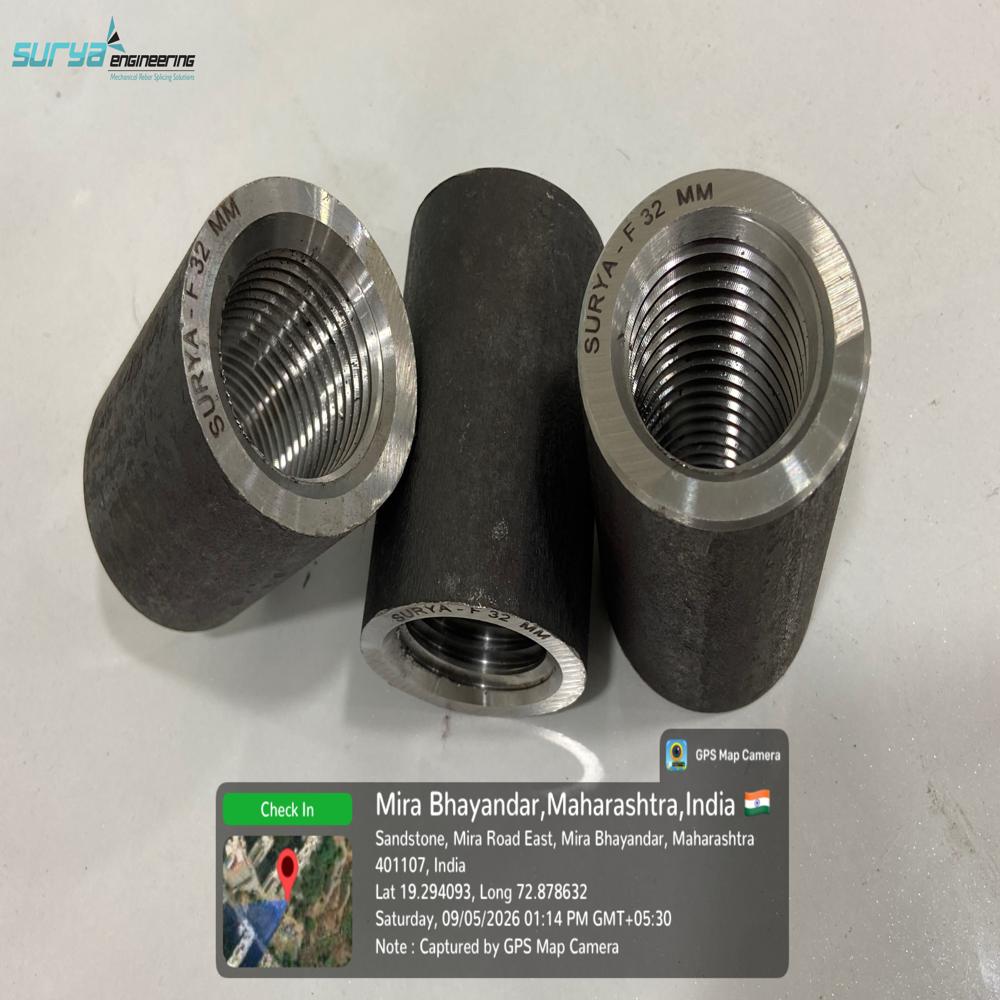
An MBT rebar coupler is a high-strength bolted rebar coupler designed for joining bars where the ends are not threaded. It features a seamless steel sleeve with a series of lock-shear bolts.
As these bolts are tightened, they grip the rebar securely. Once the specific torque is reached, the bolt heads shear off, leaving a perfectly installed connection that can be verified at a glance.
Why Use MBT Rebar Couplers?
The MBT Rebar Coupler is the most efficient "no-thread" solution for joining reinforcement bars. It is specifically used to save time and ensure structural integrity in challenging site conditions.
Technical Specifications
MBT couplers are engineered to exceed the performance of the rebar itself. Key specifications typically include:
| Field Name |
Specification for 16mm Bar |
Specification for 25mm Bar |
Specification for 32mm Bar |
Specification for 40mm Bar |
| Material |
EN8D / Grade 8.8 Steel |
EN8D / Grade 8.8 Steel |
EN8D / Grade 8.8 Steel |
EN8D / Grade 8.8 Steel |
| Diameter (External) |
42.2 mm to 42.5 mm |
54.0 mm |
71.0 mm |
81.0 mm |
| Length |
150 mm to 160 mm |
200 mm to 258 mm |
250 mm to 312 mm |
300 mm to 484 mm |
| Weight |
1.25 kg to 1.30 kg |
1.90 kg to 3.00 kg |
6.50 kg |
11.30 kg to 11.50 kg |
| Bolt Quantity |
6 Bolts |
8 to 12 Bolts |
10 to 12 Bolts |
14 to 18 Bolts |
| Load Capacity |
10,000 kg |
10,000 kg |
10,000 kg |
10,000 kg |
Classification and Types
MBT couplers are classified based on their application and the structural load they are designed to handle:
A. Standard Series (Type 1)
Designed for standard tension and compression applications. These are commonly used in beams and slabs where the load is relatively predictable and static.
B. High-Performance Series (Type 2)
These are longer and feature more bolts. They are designed for "plastic hinge" regions in seismic zones, where the connection must withstand extreme stress and fatigue loading.
C. Continuity/Transition Series
Used to join rebars of different diameters (e.g., a 25mm bar to a 32mm bar). This is a specialized MBT sleeve designed to transition the load safely between the two sizes.
D. Headed Anchors
A variation of the MBT system used as an alternative to "L" or "U" hooks at the end of a rebar. It provides an "end-stop" to simplify reinforcement in congested areas.
Key Advantages :
- No Threading Required: Saves time and eliminates the need for expensive threading machines on-site.
- Ideal for Repair/Retrofit: Perfect for connecting new rebar to existing "starter bars" that are too short for a lap splice.
- Visual Inspection: Because the bolt heads shear off at the correct torque, an inspector can verify the installation simply by looking at it.
- Versatility: Works with all types of rebarwhether they are deformed, round, metric, or imperial.
Application and Usage
The Application of MBT couplers is diverse, spanning the entire breadth of civil engineering. They are primarily utilized in heavy construction where the density of reinforcement makes lap splicing impossible due to "rebar congestion." This congestion prevents the proper flow of concrete and the effective use of vibrators, leading to voids and structural weaknesses. By using MBT couplers, the cross-sectional area of the steel at the splice location is minimized, facilitating better concrete compaction.
Specific Usage scenarios include:
- Bridge and Highway Infrastructure: Used in the construction of massive piers and abutments where high-diameter bars are standard.
- Column Splicing in High-Rise Buildings: Facilitates the vertical extension of reinforcement without the need for staggering laps, which is often required by codes like IS 456-2000.
- Repair and Remedial Work: Ideal for joining new reinforcement to existing bars that have been damaged or cut too short during demolition.
- Precast Concrete assembly: Allows for the rapid connection of modular elements where bar rotation is not possible.
PAN India Sales, Service, and Dealer Network
| Region |
Key Cities and Distribution Hubs |
| West |
Maharashtra: Mumbai, Pune, Thane
Gujarat
Goa.
|
| North |
Delhi NCR, Jaipur, Udaipur, Kota, Jodhpur, Ludhiana (Punjab), and various locations across Haryana and Rajasthan. |
| South |
Bangalore, Mangalore, Mysore, Hubli, Gadag, Chennai, Coimbatore, Hyderabad, Vijayawada, Vizag, and Chittoor. |
| East |
Kolkata, Patna, Raipur, Rourkela, and parts of the North East. |
| Central |
Indore, Bhopal, and Gwalior. |


 Send Inquiry




 Send Inquiry

 Send Inquiry
 Send SMS

 English
 Spanish
 French
 German
 Italian
 Chinese (Simplified)
 Japanese
 Korean
 Arabic
 Portuguese
