
Talk to us
08045811615
Talk to us
08045811615
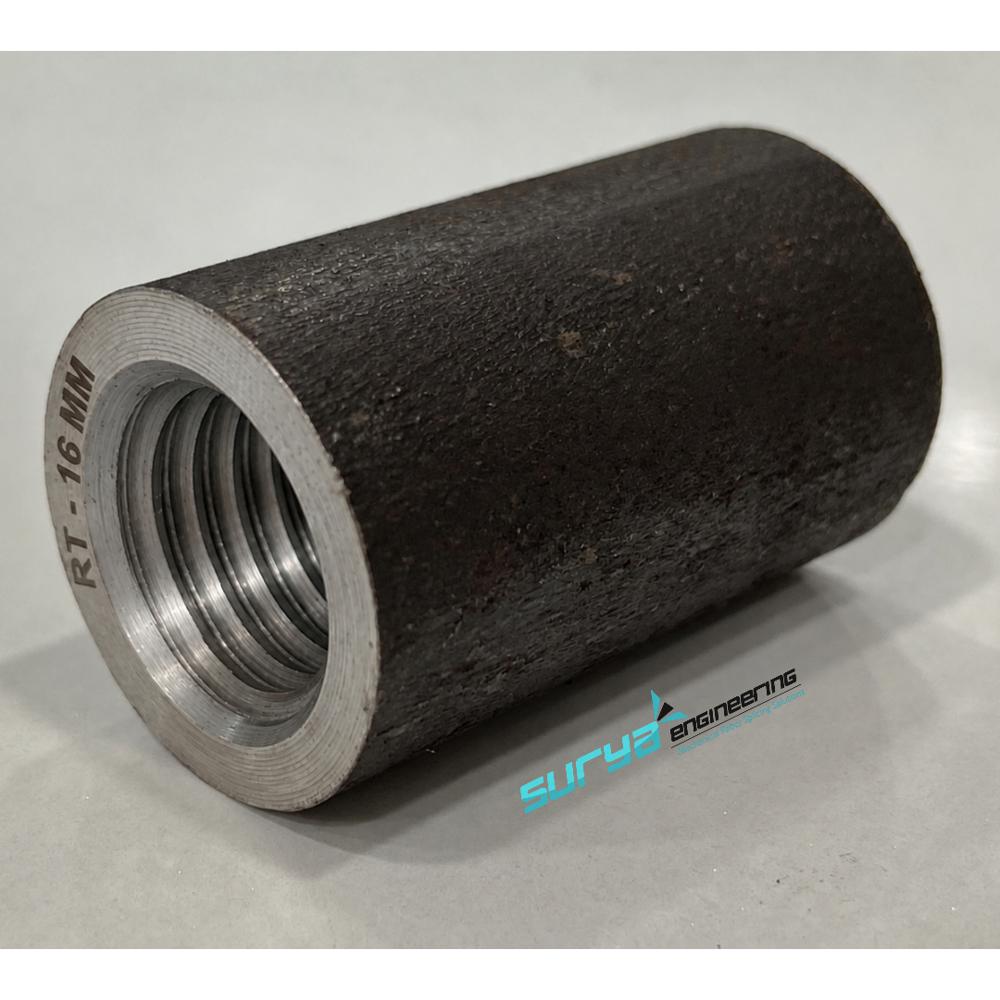
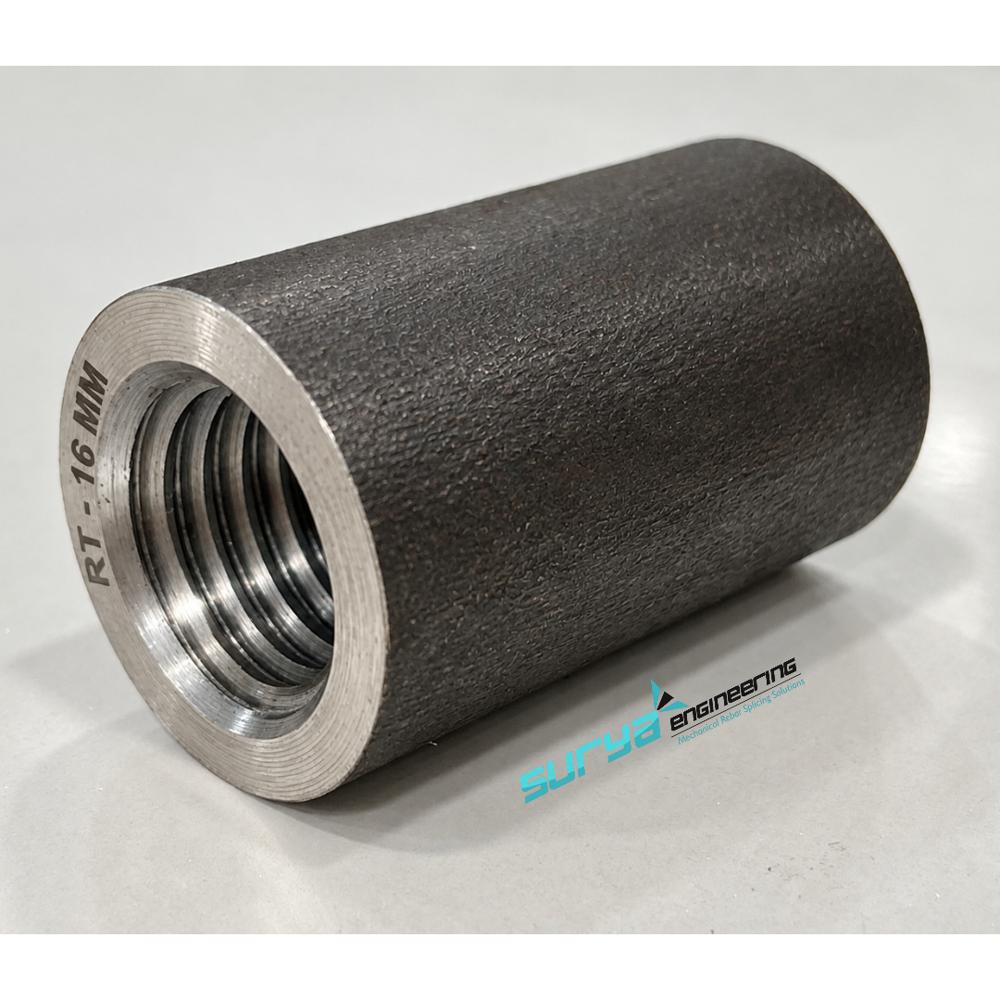
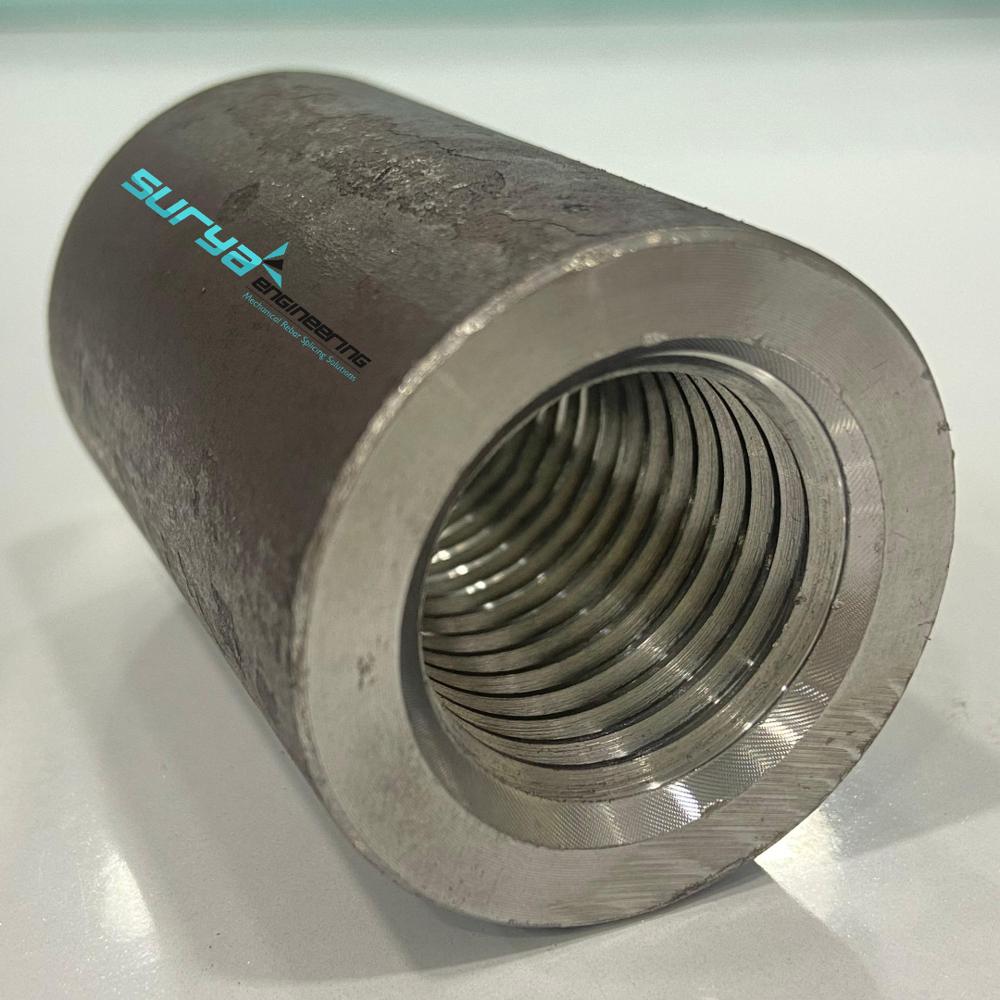
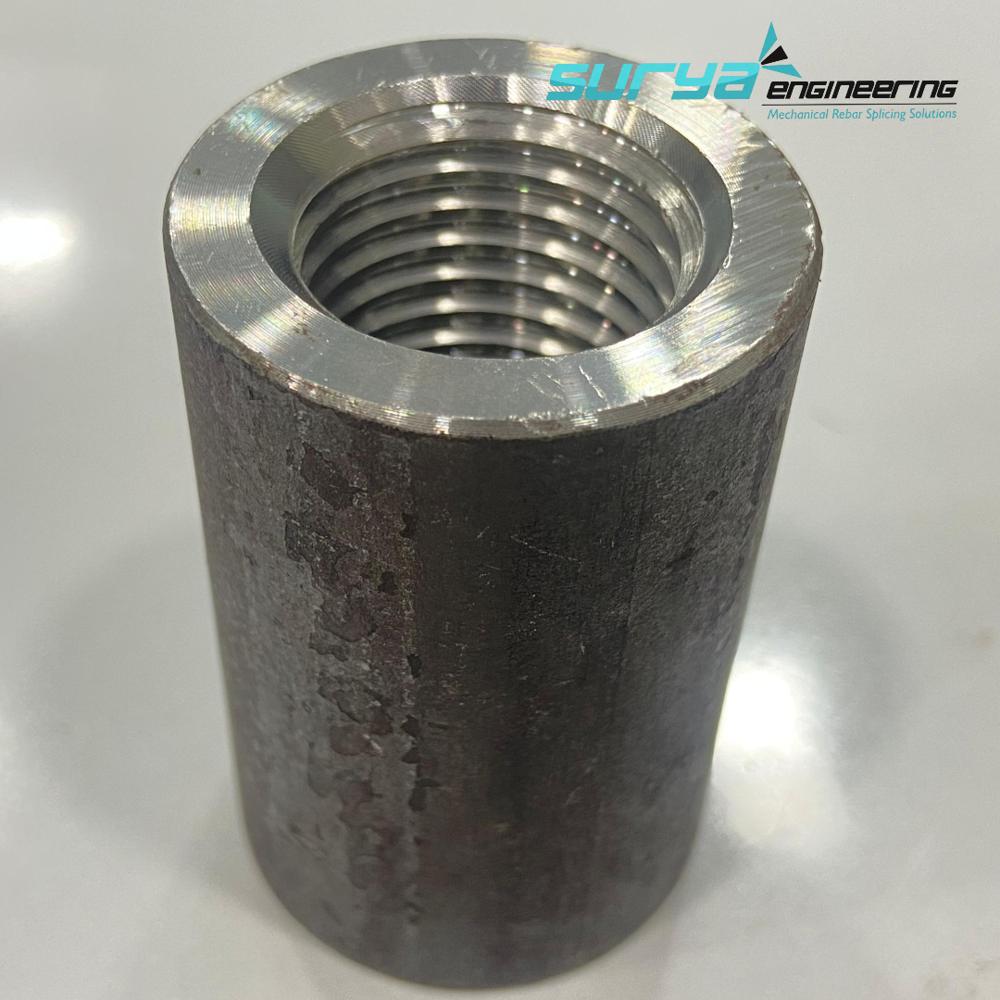
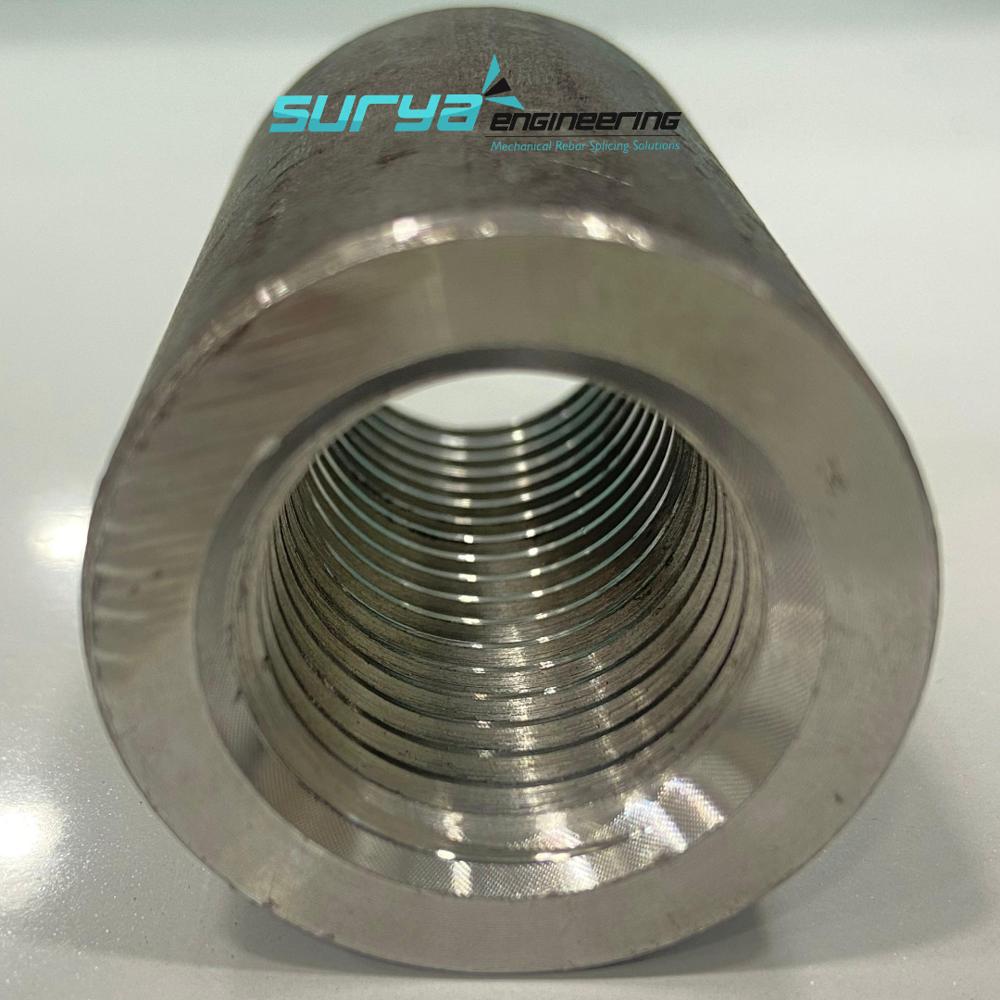
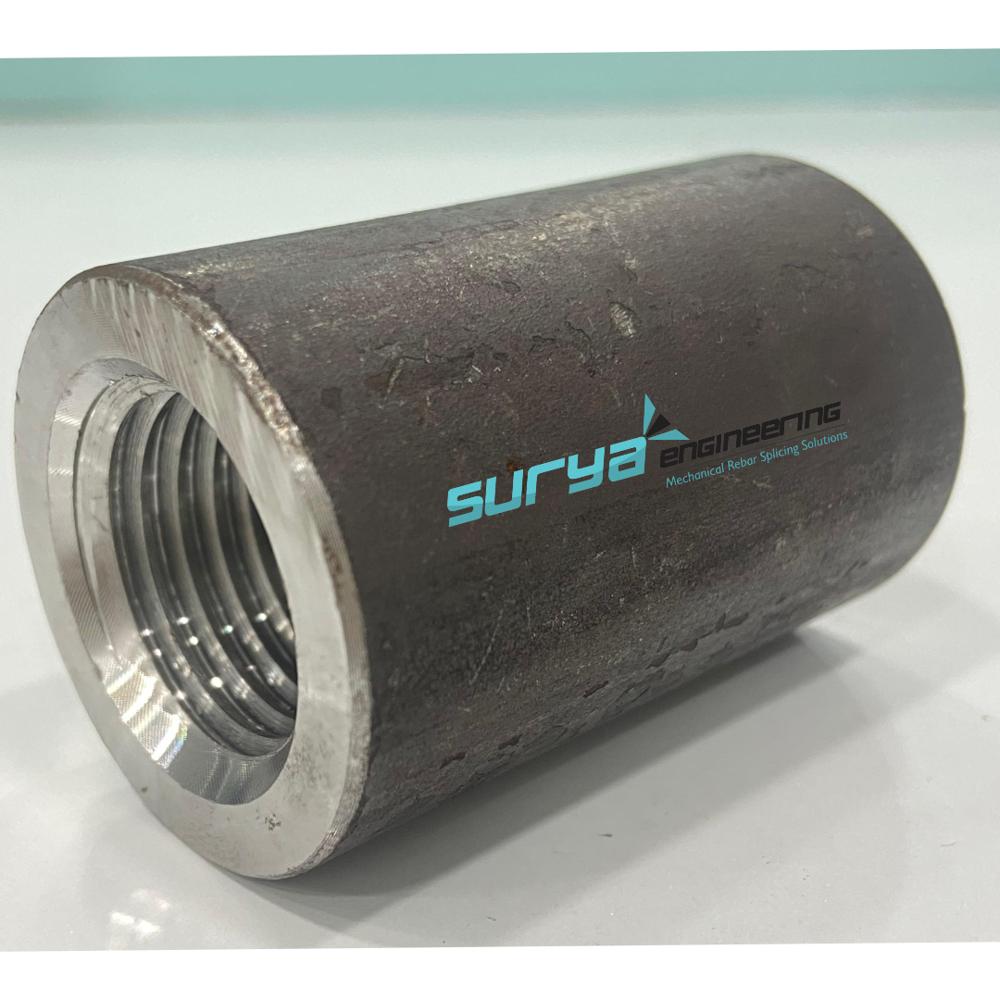

A Taper Threaded Rebar Coupler is a mechanical splice used to connect two reinforcing steel bars (TMT rebars) end-to-end using tapered threads. The internal threads of the coupler match the external tapered threads prepared on the rebar ends, allowing the bars to be screwed into the coupler to create a mechanical connection. This system provides an alternative to conventional lap splicing and helps maintain reinforcement continuity in reinforced concrete structures.
Taper threaded rebar couplers are used in construction projects where efficient reinforcement joining, reduced steel congestion, and consistent installation are important. The connection's performance depends on thread accuracy, proper engagement, coupler material, rebar properties, and compliance with the project's structural specifications.
The name Taper Threaded Rebar Coupler comes from the two main features of its connection system: Taper Threaded and Rebar Coupler.
in simple word: It is called a Taper Threaded Rebar Coupler because it connects reinforcing steel bars using matching threads with a tapered profile.
The taper threading process gradually reduces the thread diameter along the prepared rebar end. The matching internal threads inside the coupler allow the rebar to engage securely when tightened. Correctly prepared threads and proper installation help establish the intended mechanical connection between two reinforcing bars.
Mechanical Connection: Joins two reinforcing bars without relying on a conventional lap length.
Reduced Steel Congestion: Helps minimize overlapping reinforcement, especially in heavily reinforced columns, beams, walls, and foundations.
Space Efficiency: Supports more organized reinforcement arrangements in congested structural sections.
Installation Efficiency: Allows bars to be connected through a defined threading and tightening procedure.
Consistent Thread Engagement: Precision-manufactured threads help achieve a repeatable connection when correctly produced and installed.
Design-Based Performance: Couplers can be specified to meet the tensile strength, ductility, and other performance requirements of a project when appropriately tested and qualified.
Taper threaded rebar couplers are commonly used in:
High-rise buildings and commercial construction
RCC columns, beams, and shear walls
Bridge piers, abutments, and infrastructure projects
Raft foundations, pile foundations, and retaining walls
Precast concrete elements
Industrial buildings and reinforced concrete structures
Projects with congested reinforcement or restricted lap-splice space
For India, the key reference is IS 16172:2023 Reinforcement Couplers for Mechanical Splices of Steel Bars in Concrete. It explicitly includes tapered threaded couplers.
According to the standard and applicable requirements, testing can include:
Tensile strength
Disengagement testing for threaded couplers
Percentage elongation
Slip testing
Cyclic tensile testing
Low-cycle and high-cycle fatigue testing, as applicable
A mechanical sleeve that joins two reinforcing bars. Depending on its design, it may use threads, bolts, pressing, or another approved connection method.
Main purpose: Connect two rebars.
Preparation: Depends on the coupler design.
Best for: General reinforcement connections when the selected system meets project requirements.
In a common cold-forged system, the rebar end is enlarged under pressure before parallel threads are cut or formed. This helps preserve the required thread-root section and can support a high-strength connection.
Main purpose: Prepare a suitable bar end for a threaded splice.
Equipment: Cold-forging machine and threading equipment.
Best for: Projects requiring a qualified, high-performance mechanical splice.
Uses straight, parallel threads rather than tapered threads. The prepared ends screw into a matching internally threaded sleeve.
Main purpose: Join rebars through matching parallel threads.
Preparation: Threading machine; bar-end enlargement may or may not be required.
Best for: Standardized threaded connections where accurate thread dimensions and engagement are essential.
A product name generally used for a connection system designed to simplify or speed up rebar joining. The exact mechanism depends on the manufacturer's design; it may use a special locking or engagement arrangement.
Main purpose: Reduce connection time and simplify assembly.
Preparation: Depends on the specific system.
Best for: Projects where installation speed or restricted working space is important, provided the system meets structural requirements.
|
Feature |
Standard coupler |
Cold forged |
Parallel threaded |
One touch |
|---|---|---|---|---|
|
What the name describes |
General product |
Bar-end preparation process |
Thread geometry |
Quick-connection design |
|
Thread type |
Depends on model |
Often parallel |
Parallel |
Depends on model |
|
Bar-end enlargement |
Depends on model |
Usually yes in the common upset system |
Optional |
Depends on model |
|
Installation speed |
Varies |
Requires preparation |
Requires threading |
Designed for quick assembly |
|
Strength |
Must be tested |
Must be tested |
Must be tested |
Must be tested |
|
Equipment |
Depends on design |
Forging and threading equipment |
Threading equipment |
Depends on system |
Rebar Preparation: Cut the reinforcing bar end as required for the specified threading system.
Taper Threading: Machine the rebar end using compatible taper-threading equipment.
Thread Inspection: Check thread dimensions, cleanliness, and condition according to the manufacturer's specifications.
Coupler Engagement: Screw the prepared rebar into the coupler to the required engagement depth.
Final Tightening: Tighten the connection using the specified installation procedure and tools.
Quality Verification: Inspect the completed splice and perform any required testing or verification under the project quality-control plan.
Unlike lap splicing, which transfers forces between overlapping rebars through bond with the surrounding concrete, a taper threaded coupler transfers forces mechanically through the prepared threads and coupler body. It can reduce reinforcement overlap and congestion, although the appropriate connection method must be selected according to structural design requirements.
Before selecting a taper threaded rebar coupler, verify the following:
Compatible rebar diameters and steel grades
Taper thread profile, pitch, and engagement length
Coupler material and dimensional tolerances
Required tensile strength and ductility
Applicable testing standards and project specifications
Installation torque or tightening requirements, where specified
Corrosion protection requirements for the intended environment
Surya Engineering provides rebar connection solutions for construction and infrastructure applications. Selecting the correct taper threaded rebar coupler helps ensure compatibility with the reinforcement system and the project's installation requirements. Buyers should confirm available bar sizes, thread specifications, material details, and test documentation before placing an order.

Price:
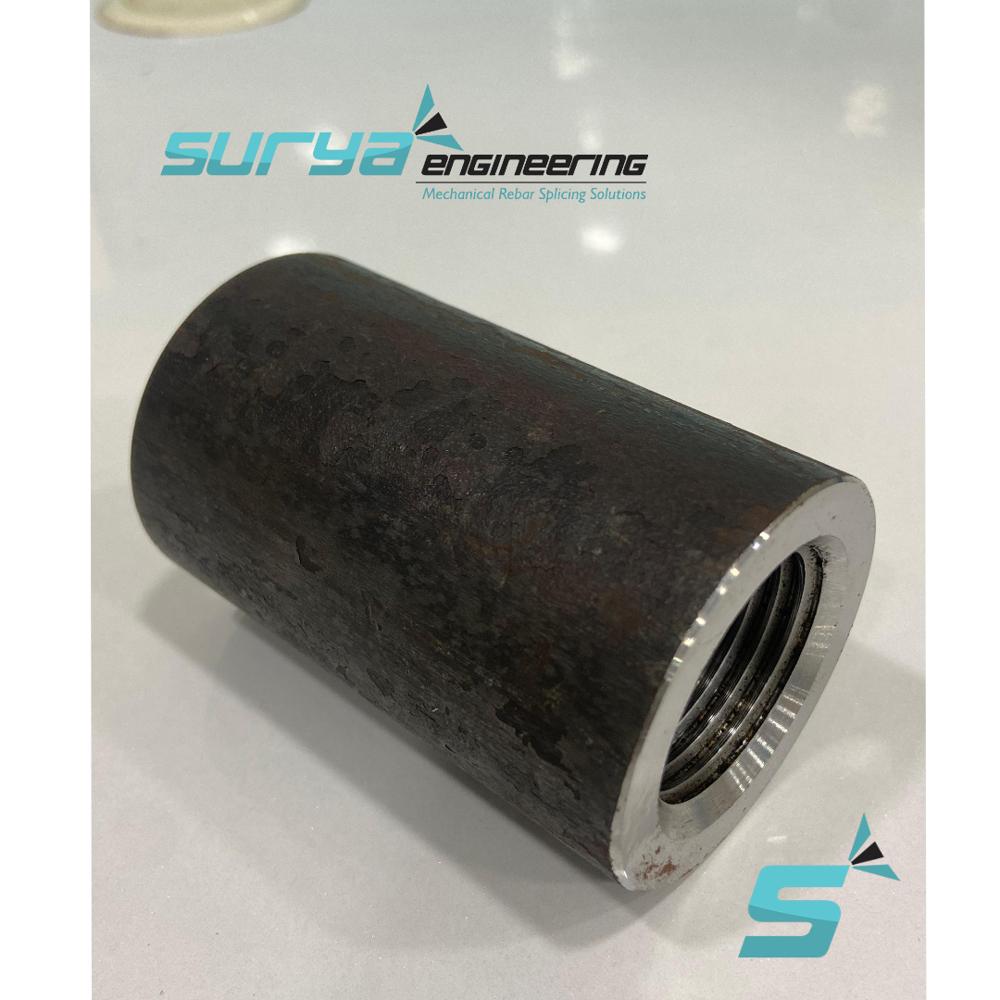
Price 80.0 INR / Piece
Minimum Order Quantity : 50 Pieces
Application : Tmt bar coupler
Surface Treatment : heat treatment
Color : Black
Material : EN8D

Price 40.0 INR / Piece
Minimum Order Quantity : 1000 Pieces
Application : Construction
Surface Treatment : Hot Dipped Galvanized
Color : Black
Material : EN8D
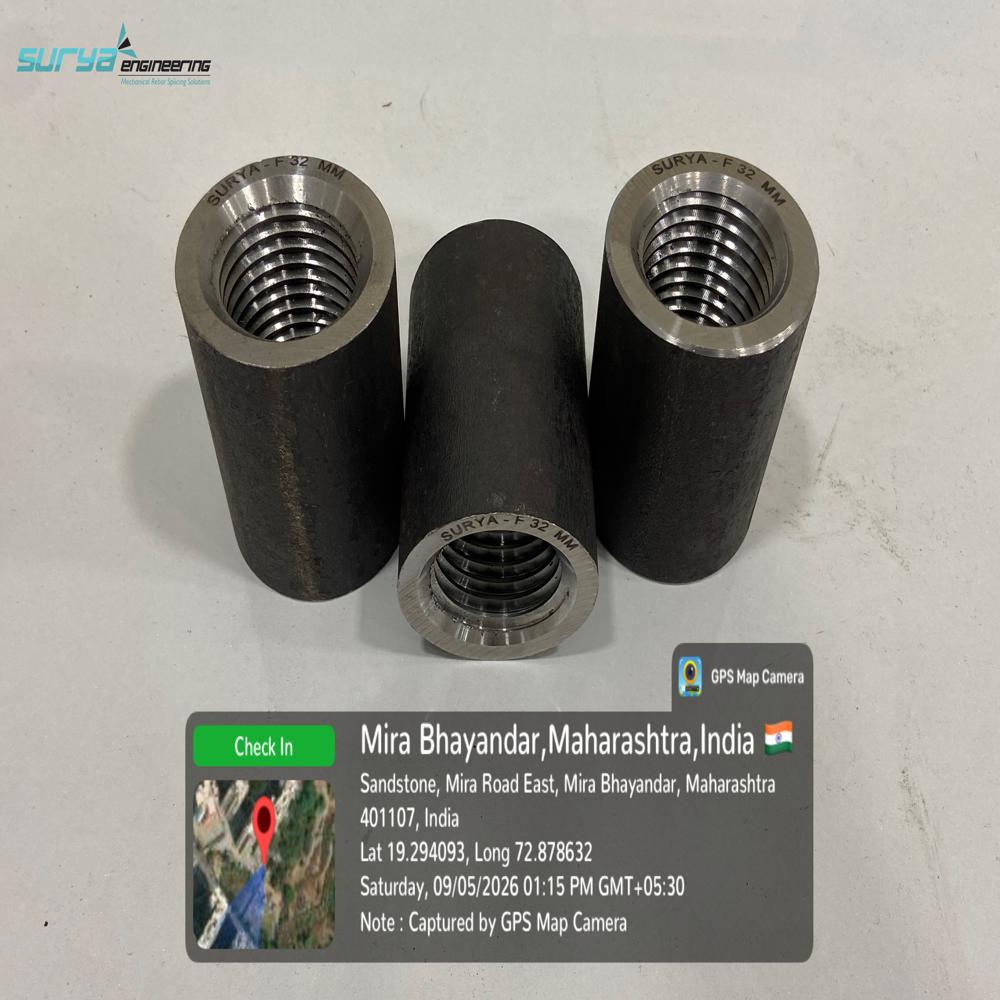
Price 100.0 INR / Piece
Minimum Order Quantity : 100 Pieces
Application : Mechnical Rebar Coupler
Surface Treatment : Heat Treatment
Color : Black, Sliver
Material : EN8D





 Send Inquiry
 English
 Spanish
 French
 German
 Italian
 Chinese (Simplified)
 Japanese
 Korean
 Arabic
 Portuguese
