Materials: Armor joints are typically made of high-strength steel. Manufacturers use grades such as S275 (mild steel) or S355, and option of stainless steel (e.g. SS304/SS316) for corrosive environments. The top strips and divider plate are often cold-drawn steel (e.g. S275JR to EN 10277). Surface treatments include hot-dip galvanizing (typically 85m Zn coating) or paint. Insert dowels are steel plate (612mm thick) also zinc-coated or stainless, and shear studs are usually 10mm dia.
Movement capacity: Most systems allow significant joint movement. For example, Isedios ArmourJoint permits up to 20mm longitudinal slide plus 30mm gap. Suryas Heavy Duty type lists total movement ranges of 120160mm (i.e. 6080mm). This accommodates typical concrete shrinkage and thermal expansion in large slabs.
Application: Armour joints are specified wherever slab edges would otherwise be vulnerable to impact. They are common in FM2 (Superflat) floors per TR34, high-bay warehouses, heavy manufacturing plants, cold storage, commercial docks, and anywhere forklifts, pallet jacks or trucks operate. They are also used on bridge approach slabs and dock areas where horizontal movement and heavy loads coincide. Compared to simple dowelled joints or plain construction joints, armour joints prevent edge spalling and maintain slab alignment under traffic.
Technical Specifications
Armour joints are specified by their geometry and components. Below are typical values and ranges (actual specs vary by product and project):
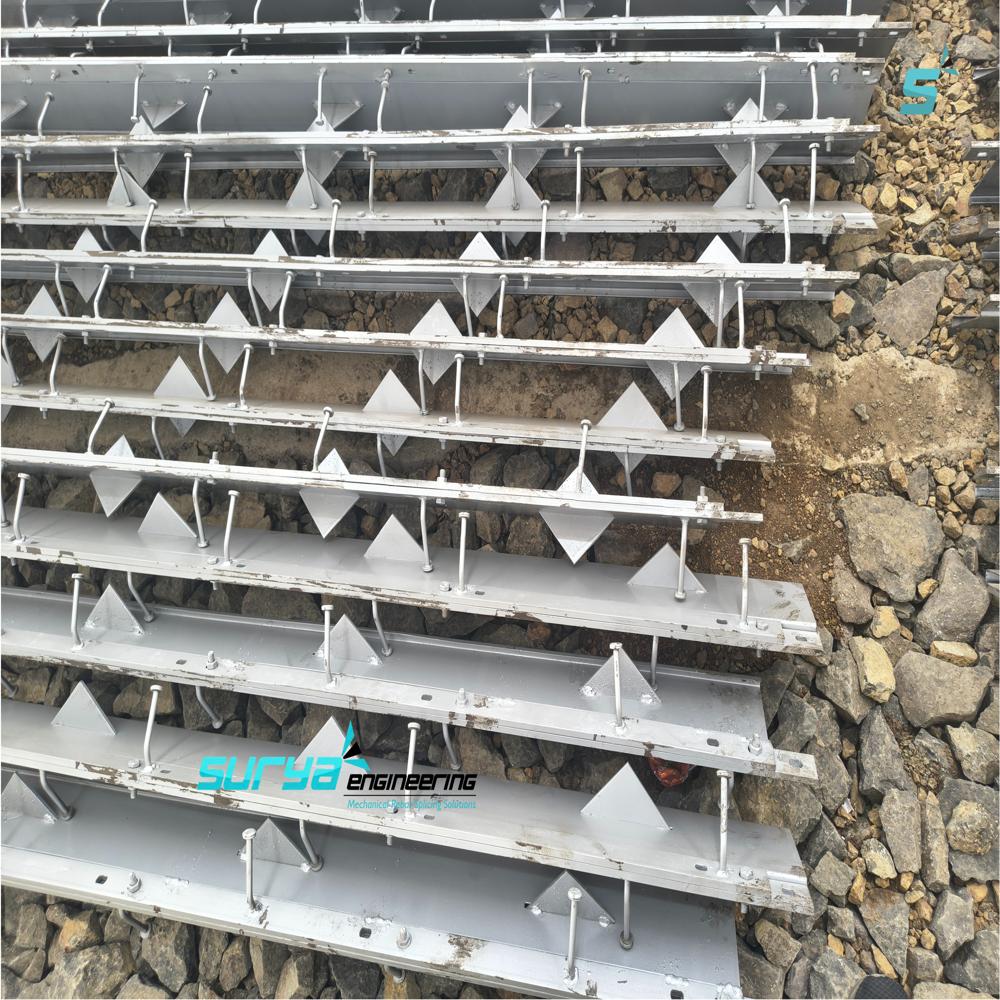
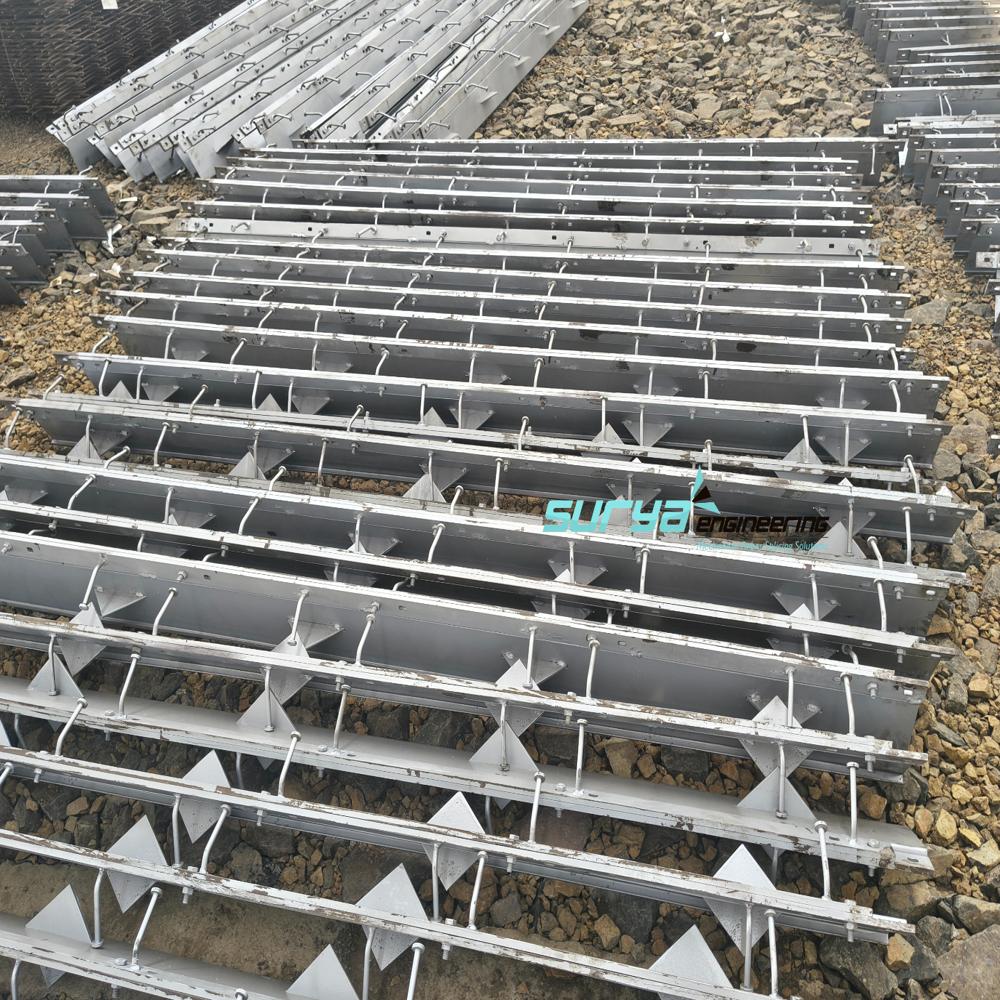
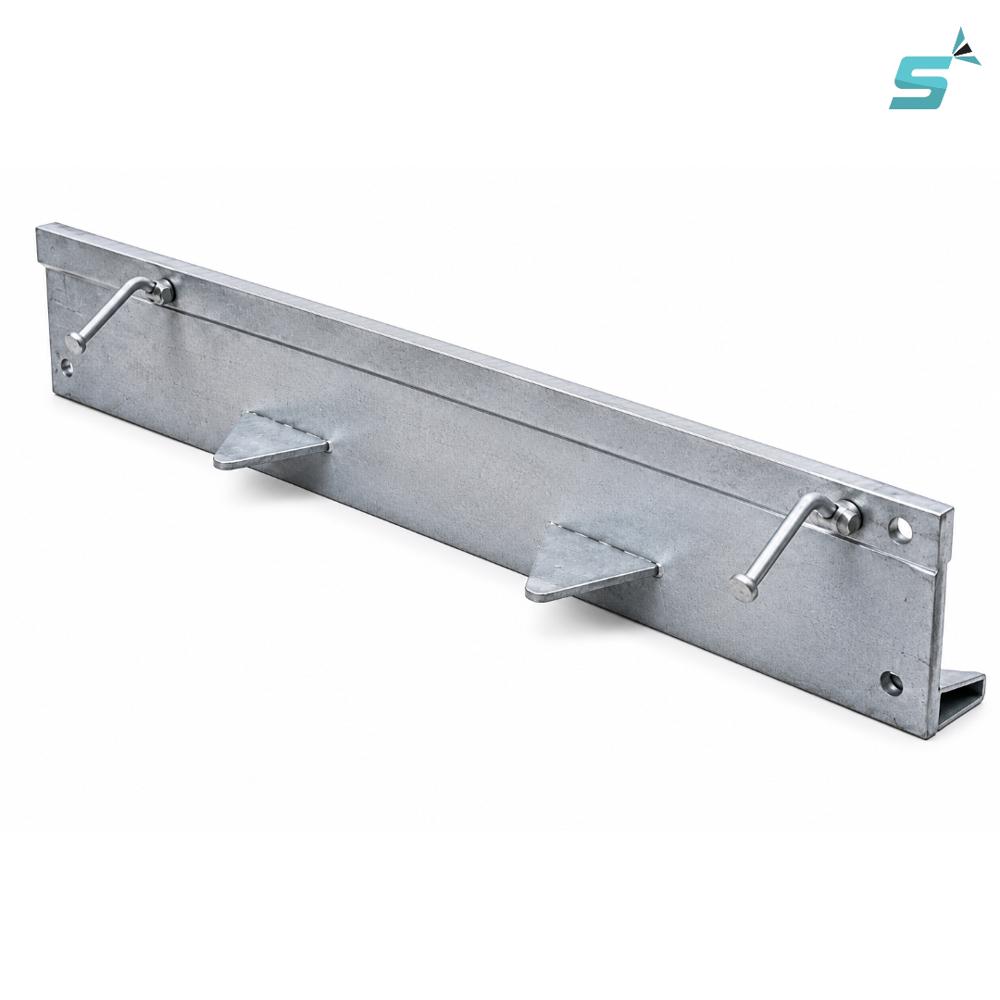
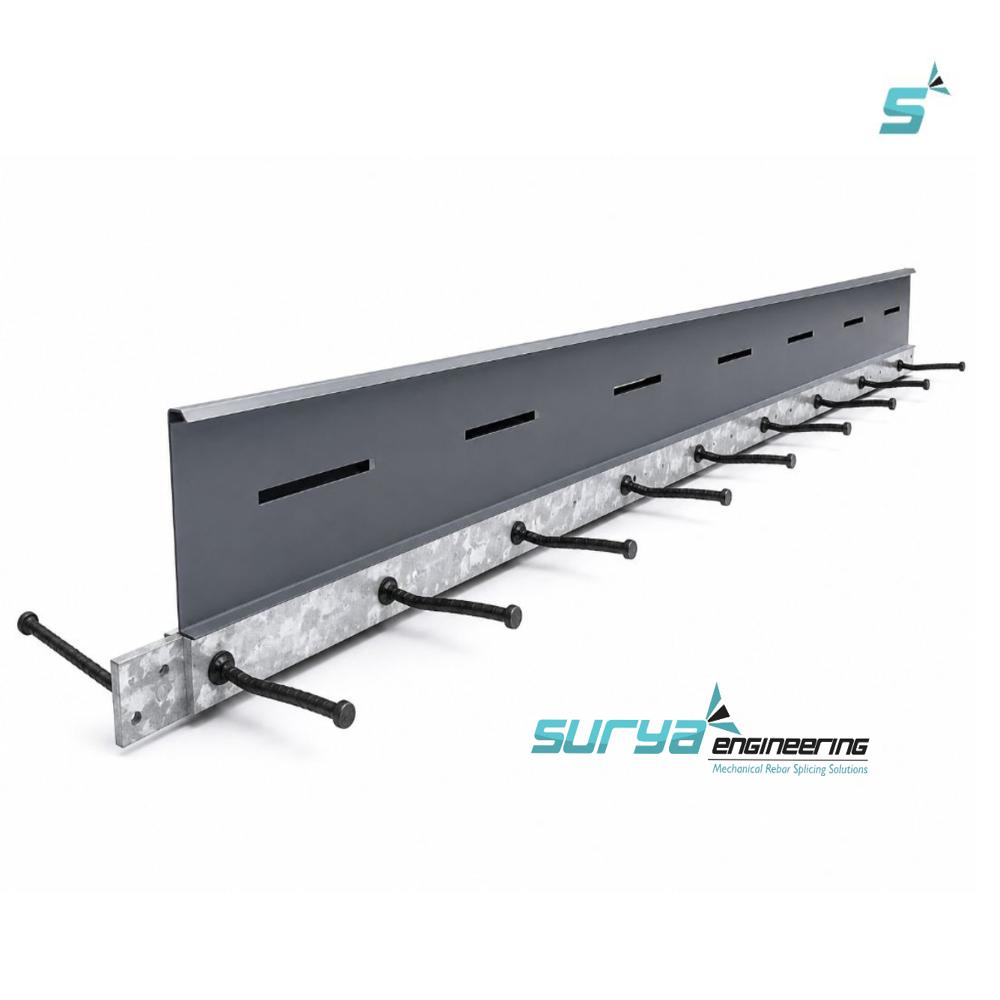
- Top Strip Plates: Usually 4010mm (40mm depth, 10mm thick) cold-drawn steel (S275JR or better). (Some systems use 3010 or other sizes for lighter duty.) The top plates are cut into bar strips (often 3m long) and pre-welded with shear studs. The Isedio product declares a straightness tolerance of 1mm per 1m.
- Shear Studs: Studs (EN ISO 13918 type SD1/SD3) are typically 10mm diameter, 100mm long welded through the top strip. These anchor the plate in the concrete. Stud coating is typically zinc (85m min by EN ISO 1461) or stainless steel for harsh conditions. Isedios CE datasheet lists 10mm stud dia and 85m galvanizing. Stud welds are factory-inspected (e.g. ultrasonic or magnetic testing) to ensure quality.
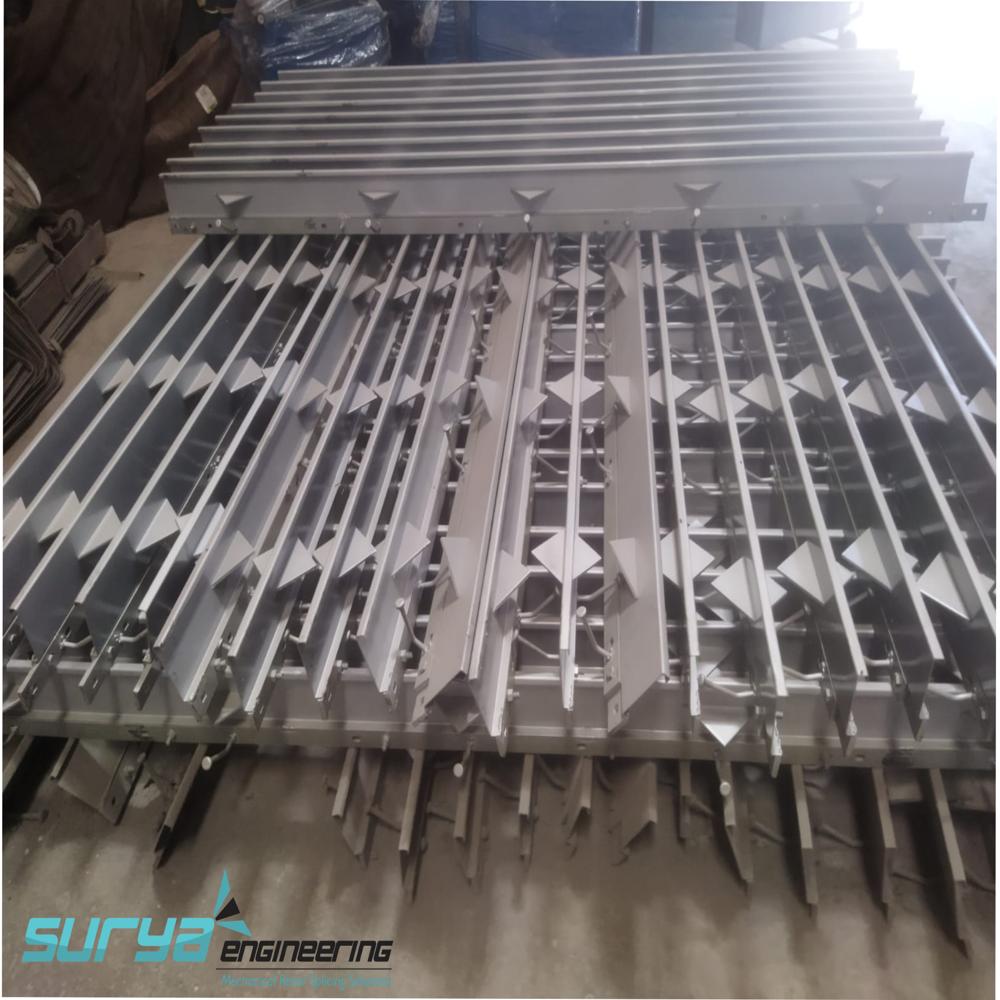
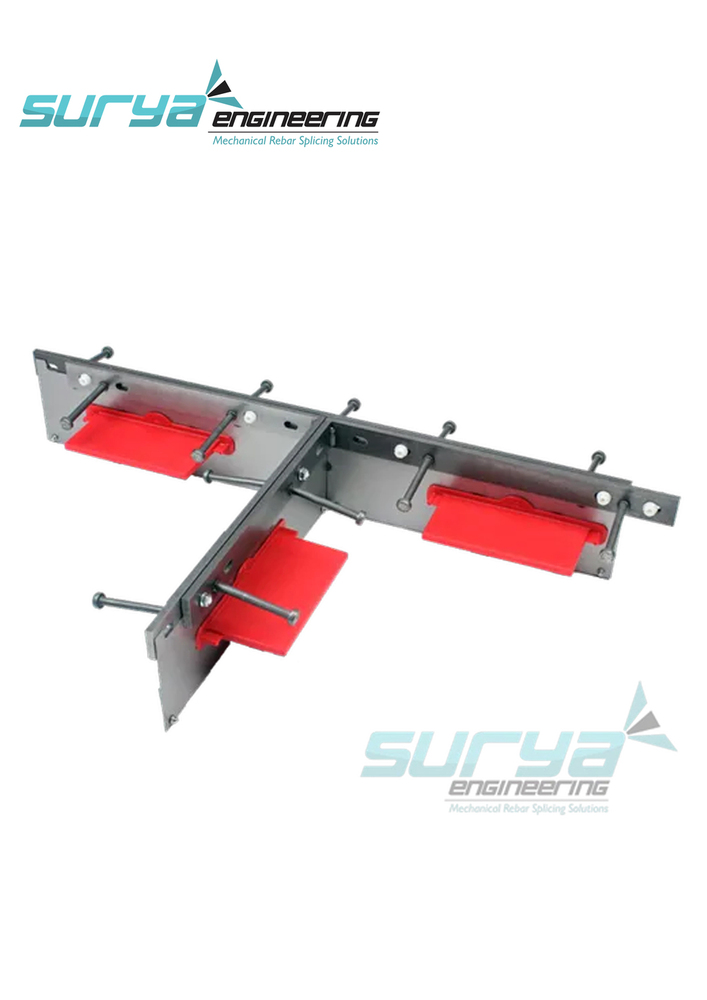
- Divider Plate: A vertical divider/centre plate (usually steel 3mm thick) holds the two top strips apart during pouring. It acts as a form, supporting the top strips and plate dowels before the concrete is poured. The plate is also usually galvanized or stainless.
- Plate Dowels: These are steel bars or plates (612mm thick) that span the joint. For example, Isedio offers 6mm, 8mm or 12mm thick dowel plates in lengths 135150mm embedded in each slab. Typical spacings are 428600mm (i.e. 57 dowels per 3m length). The dowels usually have asymmetric (leaf) shapes to allow sliding with longitudinal shear transfer. Materials are S275/S355 steel or stainless (yield 225355N/mm).
- Lengths and Tolerances: Standard joint lengths are 3,000mm (12mm), to fit typical slab segments. Straightness is held to 0.5mm (top strip). Longer or shorter lengths can be welded on site from multiple sections if needed.
- Joint Width/Depth: The slab leaf thickness or arris height can be 50300+mm; common concrete floors are 100300mm thick, which armour joints accommodate. The joints steel section often extends just at the slab surface (with a 510mm reveal). Some systems are adjustable in depth e.g. up from 90mm slab with 3050mm adjustment. Joint widths (gap) are typically 2060mm, filled by compressible filler or sealant (the armour covers the gap).
- Load/Shear Capacity: Armour joints are designed to transfer very heavy loads. They essentially act like embedded shear keys; their capacity equals the steel cross-section and concrete embedment. While not always given as a single number, they must meet forklift load-transfer classes in TR34. For instance, Permabans joints meet Class H (5+tonne forklift) specifications. Practically, a 10mm stud in 25MPa concrete can resist 2030kN of shear, and 612mm plate dowels add further capacity. Manufacturers often test joints by running loaded forklifts over them. Surya claims their joints completely surpass TR34 load transfer.
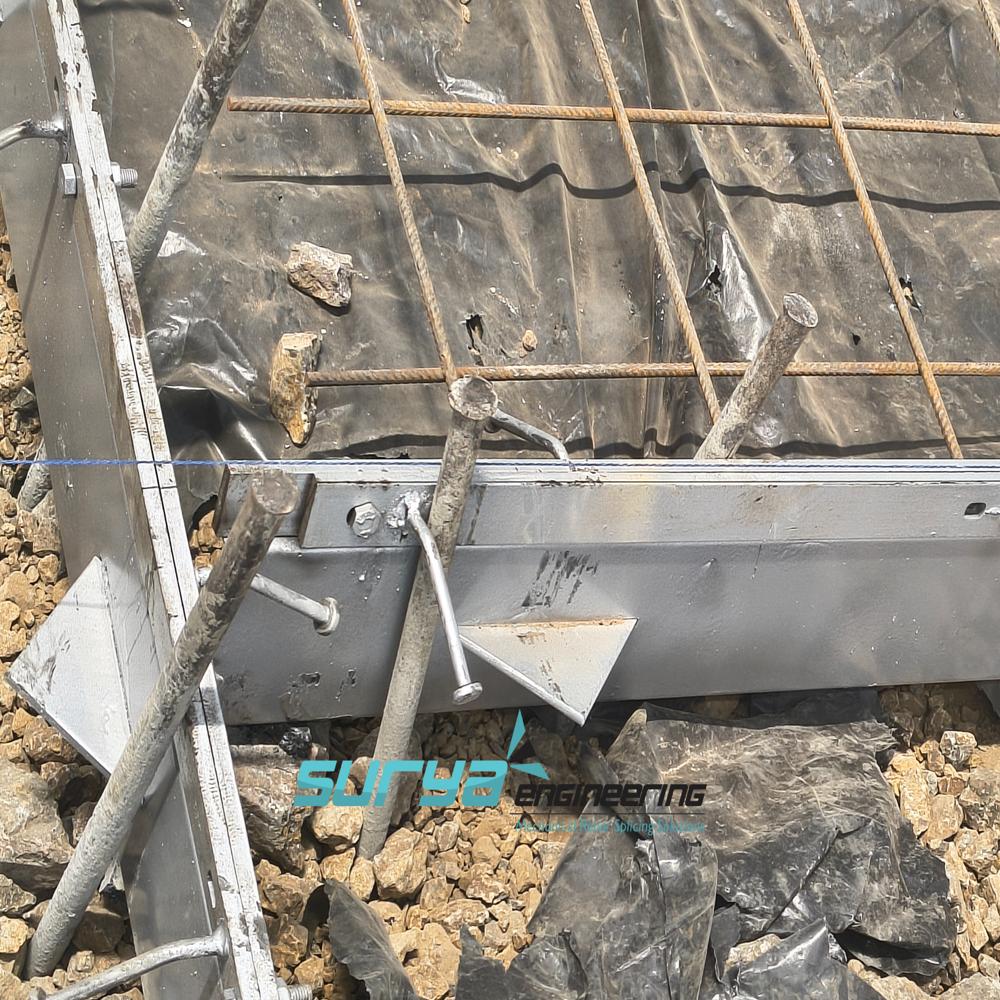
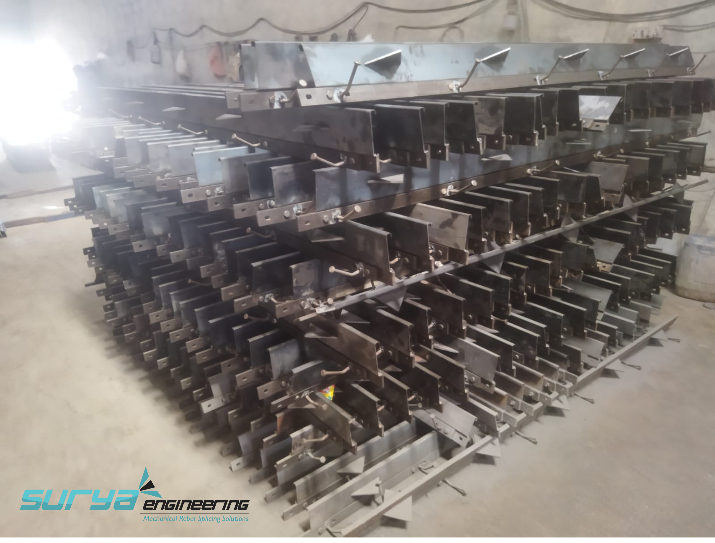
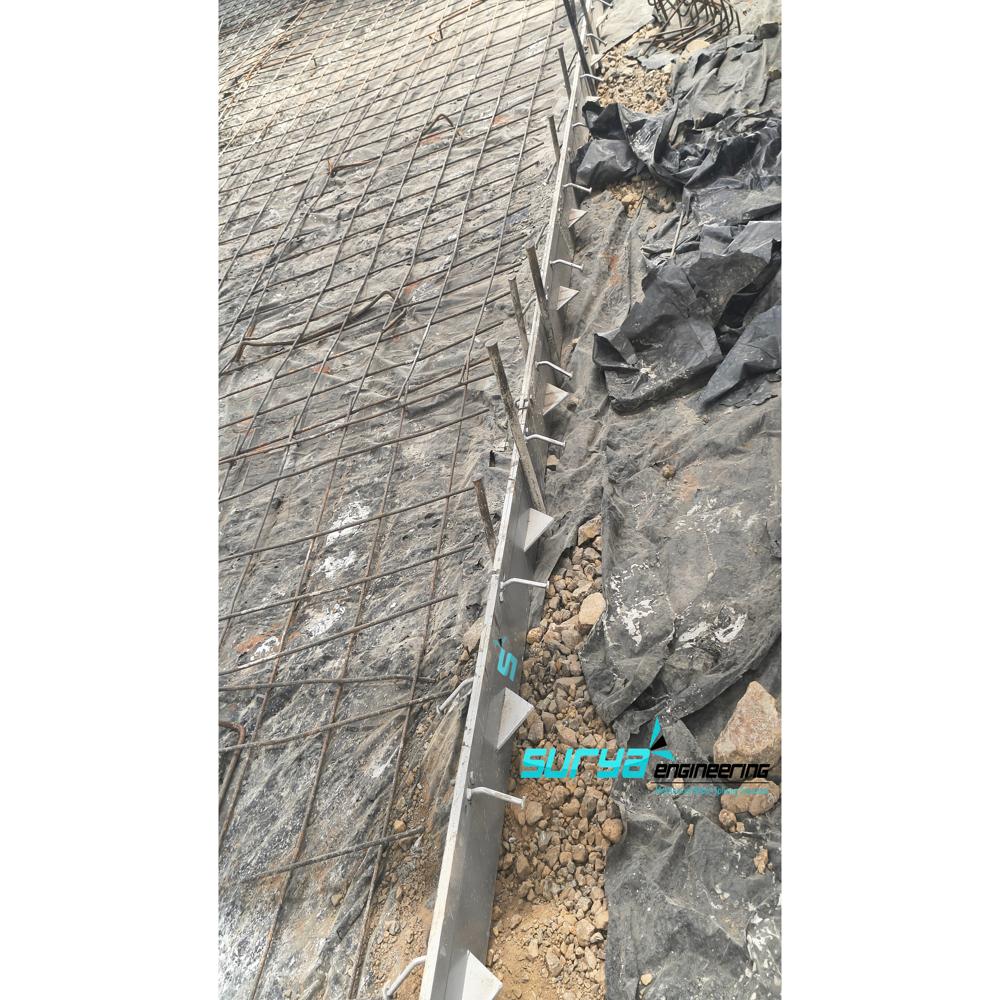
Figure: A heavy-duty armour joint embedded in a concrete slab, with steel top plates protecting the slab edge. The joints 4010mm cold-drawn steel strips (shown here) are anchored by 10mm shear studs into the concrete.
- Corrosion Protection: Steel parts are usually hot-dip galvanized or coated to prevent rust. Typical zinc thickness is 85m (twice the usual IS standard), suitable for industrial environments. Stainless steel versions (SS304/SS316) are offered for food/freezer or chemical facilities. Sealants (nitrile or elastomeric gaskets) may protect minor gaps. With proper galvanizing, service life is expected decades (often the life of the floor).
- Thermal Properties: The metal plates will conduct heat; Isedios data notes steel 45W/mK vs concrete 1.7, but this is usually negligible for floors.


 Send Inquiry




 Send Inquiry

 Send Inquiry
 Send SMS

 English
 Spanish
 French
 German
 Italian
 Chinese (Simplified)
 Japanese
 Korean
 Arabic
 Portuguese
