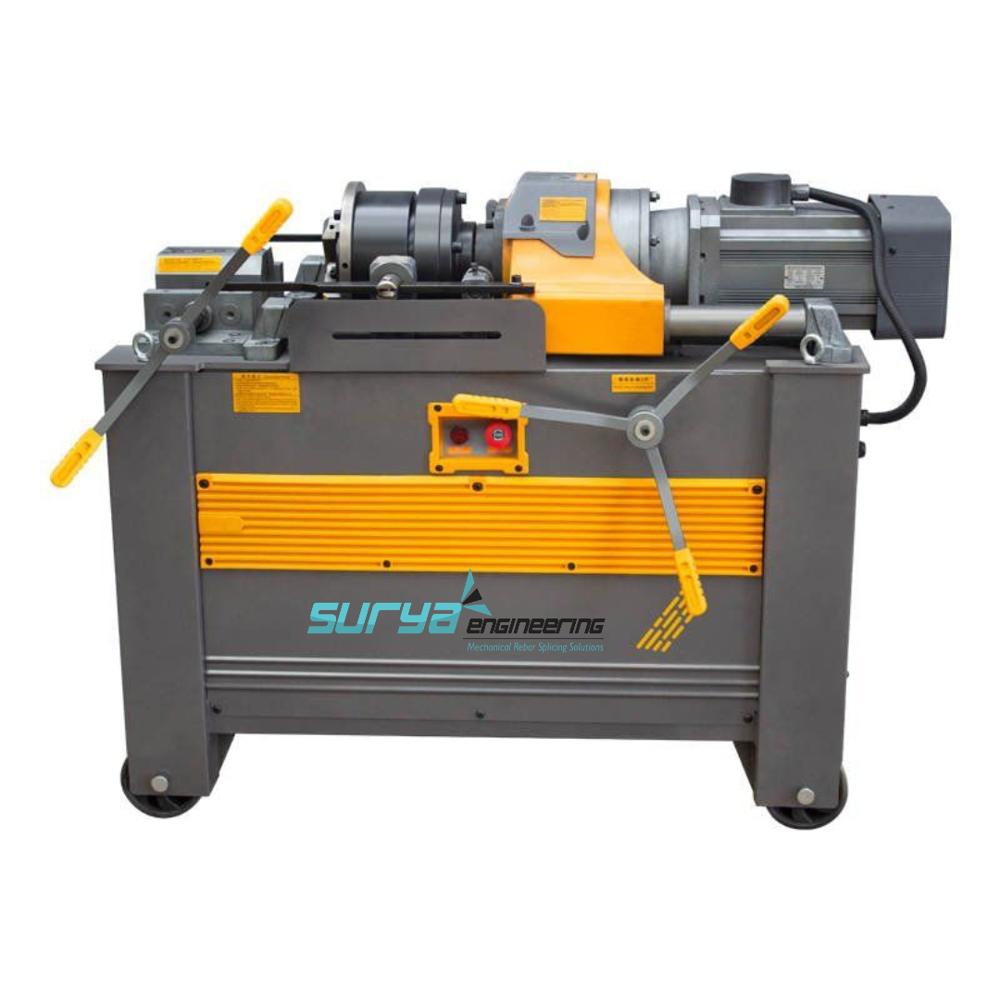
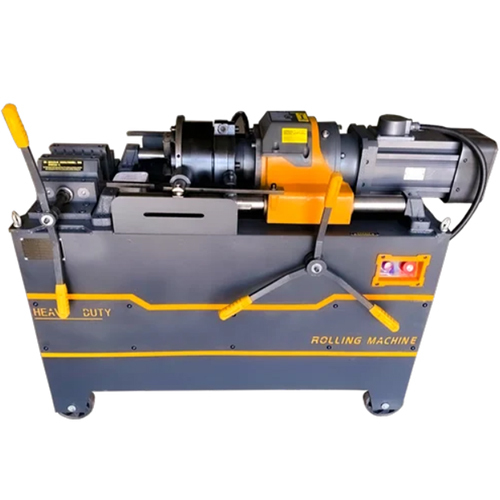
BST Rebar Threading machine
What is a BST Rebar Threading Machine?
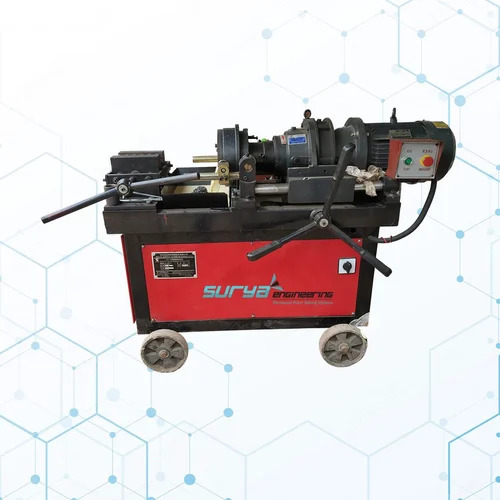
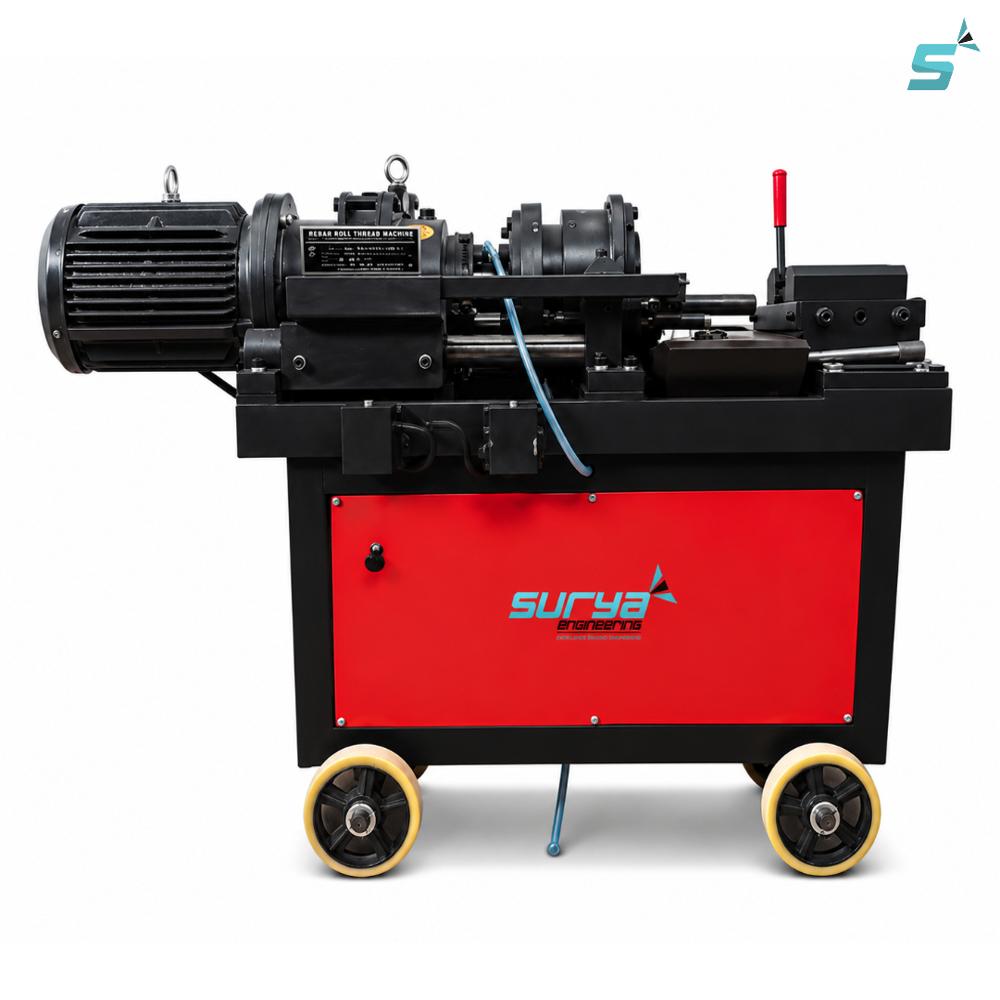
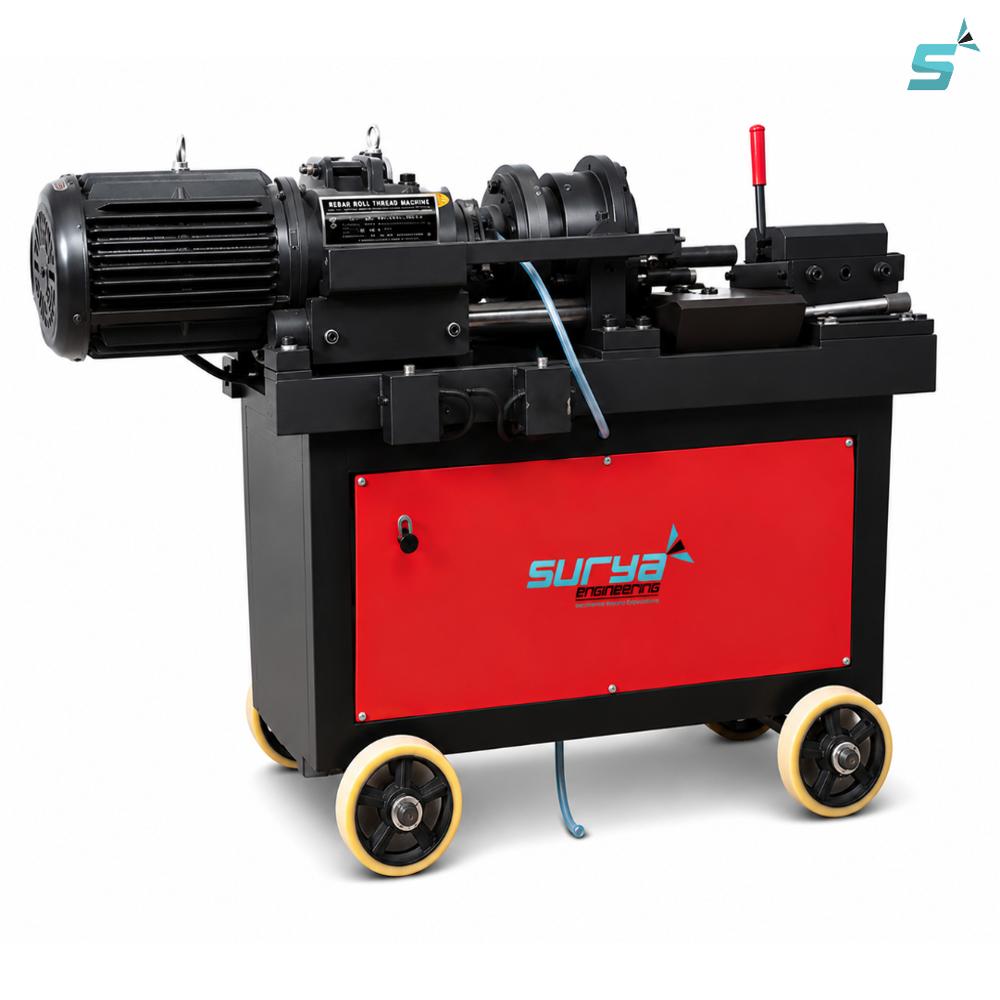
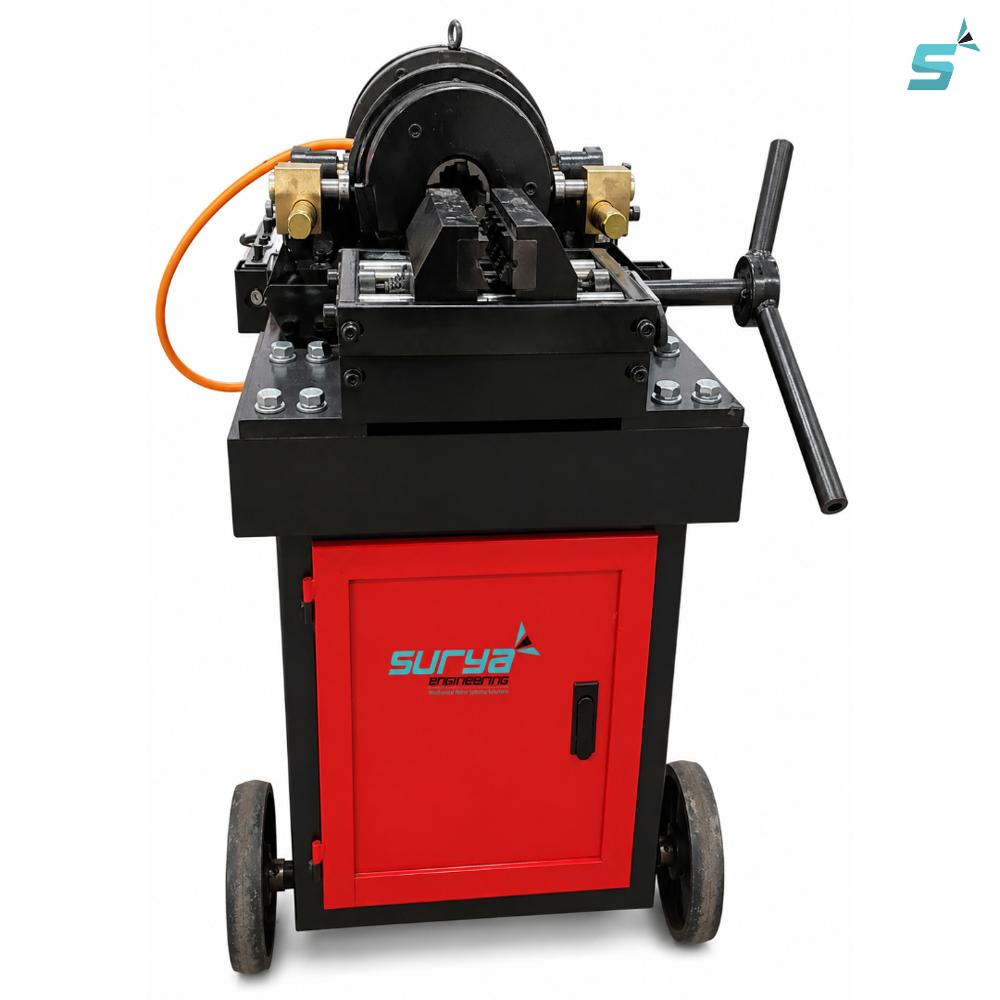
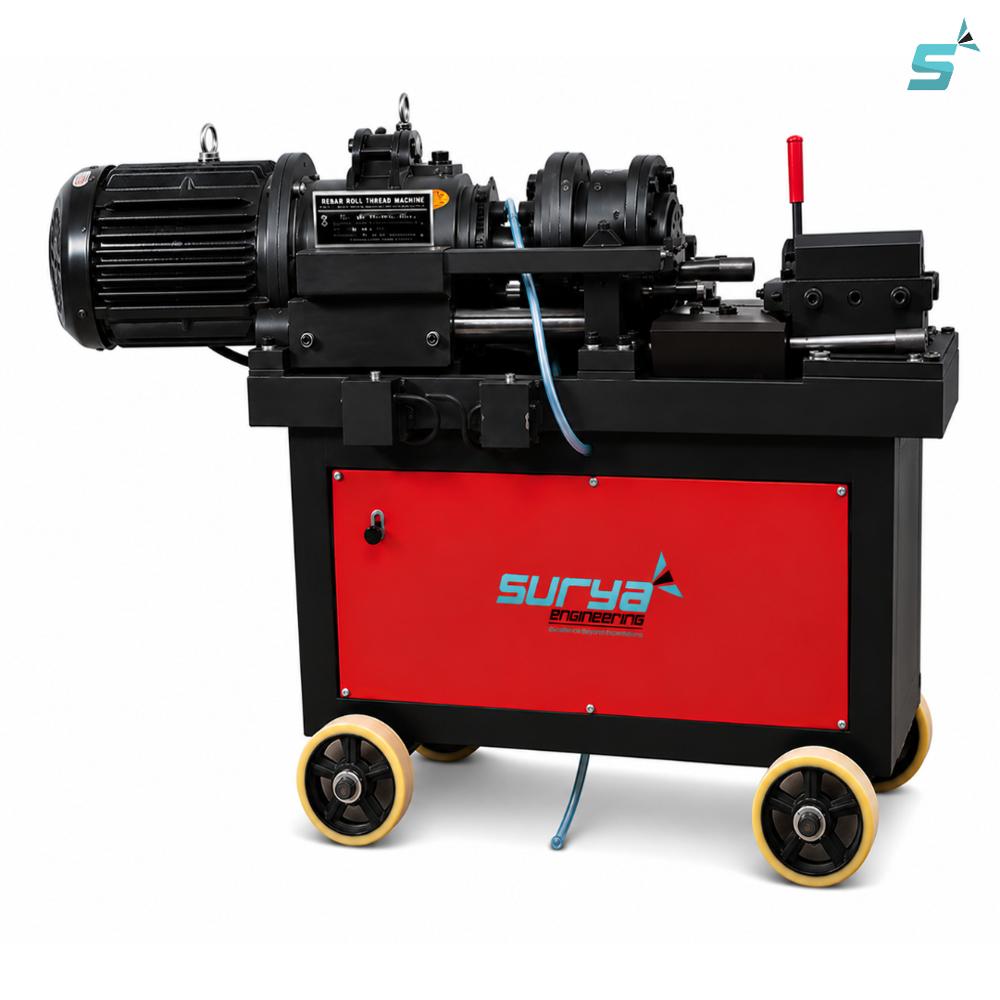
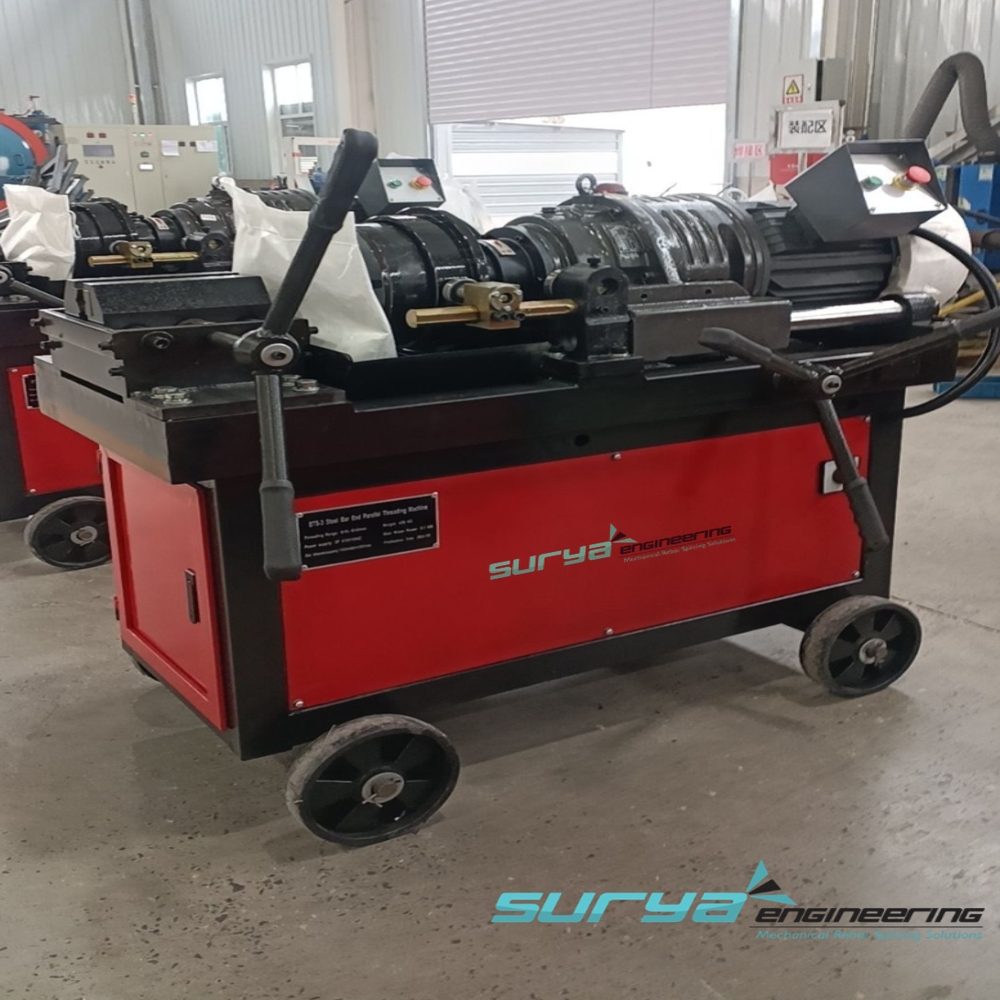
It is a specialized bar-threading machine that cuts parallel threads on the ends of reinforcement bars. These threads mate with internally threaded couplers to join rebars end-to-end. The cut-thread (chaser-type) process uses hardened steel dies (chasers) inside a rotating head to remove metal and form precise threads. A BST/BTS machine typically clamps a straight rebar, feeds it into the thread head, and cuts the thread in one cycle.
Surya Engineering (India) describes its BTS/BST Chaser Machine as precision rebar threading equipment for coupler manufacturing and reinforced concrete construction. RM Engineers similarly notes that a BST bar-threader is used for mechanical splicing in construction projects (bridges, metro, buildings). In practice, these machines are used wherever coupler-spliced rebar is required: large infrastructure projects (bridges, tunnels, flyovers), high-rise buildings, metro rail, precast plants, foundations, etc..
Key uses: On-site fabrication of threaded bars for couplers, in rebar processing yards, factory coupler production lines, and large construction sites. They allow mechanical splicing with couplers instead of long lap splices, improving structural continuity and reducing congestion.
Major manufacturers: In India, BST machines are offered by Surya Engineering, RM Engineers, Mitro Industries, and others, usually labeled as BTS/BST Chaser Machines. Global suppliers focus on cold-rolling (rib-peeling) threaders (e.g. YG Machinery, Landis/Lanco). This report covers BST chaser types and compares with roll-thread alternatives.
Technical Specifications
| Parameter |
BST Chaser Machine (Typical Spec) |
| Bar diameter range |
16 40 mm (many models) |
| Thread type |
Parallel (cut) metric threads (e.g. M202.5, M243.0, etc) |
| Max thread length |
100 120 mm (subject to model) |
| Motor power |
4 5.5 kW (Crompton/Indian brands) |
| Spindle speed |
40 62 RPM (nominal) |
| Power supply |
380415 VAC, 3-phase, 50 Hz (some 230 V 1-ph models exist for small motors) |
| Machine weight |
300600 kg (varies by model) |
| Dimensions (LWH) |
Roughly 13007001300 mm (e.g. 13507301310 mm) |
| Operation |
Semi-automatic (bar is manually clamped; one-button cycle) |
| Tooling |
Hardened alloy-steel thread chasers (sets for each bar size); replaceable. |
| Lubrication/Coolant |
Typically oil- or coolant-assisted cutting (many designs have an integrated oil bath or mist). Assumed standard cutting fluid. |
| Accuracy/Tolerance |
High precision (threads must match coupler tolerance; typical chaser accuracy 0.1 mm). |
| Bar-end prep |
Square cut end recommended; remove any distorsions before threading. |
| Output/capacity |
2060 bars/hour per machine (operator-dependent; e.g. 15 s/thread 240 bars/8h continuous; in practice 50150 bars/shift). Estimate based on typical 15s cycle. |
| Thread inspection |
Go/No-Go gauges, pitch/dim inspection to verify threads meet coupler spec. |
-
Thread quality: Chaser cutting yields high-precision threads with very good surface finish. Consistent profiles minimize coupler fit issues. However, rolling threads (cold forming) produce even higher strength threads (material is work-hardened). According to one industry report, cold-rolled threads can have 2040% higher tensile/fatigue strength than the original bar. Cut threads from a BST machine, while slightly lower-strength, still meet 125% yield requirements for Type 2 splices if properly done.
-
Tool (Chaser) life: Hardened chasers last for many hundreds of bars if used correctly. Surya Engineering lists long chaser life as an advantage. In practice, tool life depends on steel grade, lubrication, and care. Manufacturers suggest routine resharpening or replacement only after extensive use. Assumption: Expect several thousand threads per chaser set under normal use.
-
Maintenance: These machines are built for heavy-duty use and require only routine maintenance. Maintenance tasks include lubricating gears, replenishing cutting oil, and inspecting chasers. Removal of metal chips after each shift is needed. Compared to thread-rolling machines, chaser units have fewer complex parts and lower tooling cost.
-
Failure modes: Common issues include chaser breakage if the bar is mis-aligned, backlash in feed, or chaser out-of-position. Overloading the motor (e.g. attempting to thread an out-of-spec bar) can trip breakers or burn the motor. Lack of coolant can cause accelerated tool wear or bar surface heat damage. Regular inspection of chaser sharpness and alignment mitigates failures.
-
Warranty: Warranty terms vary by manufacturer. Small equipment often carries a 612 month limited warranty. (We assume a standard 1-year parts warranty unless otherwise specified.)
Installation & Operation
-
Site requirements: A flat, firm concrete floor is needed to support the 0.50.6 ton machine. The machine base may have bolt-holes for anchoring (to prevent movement/vibration). Provide a nearby 3-phase power outlet (380415VAC, 50Hz) with 1632 A capacity, depending on motor size (46kW). For example, the Mitro BST machine uses 3-phase 415V, 5060Hz.
-
Foundation: While heavy, most BST machines do not require a special foundation; they are placed on the floor. However, vibration isolation pads or bolts can enhance stability. Ensure the operator has sufficient clearance for the clamp and thread head.
-
Setup & Bar Prep: Prior to threading, cut the rebar to the required length (e.g. using a bandsaw or cold saw) with a square end. Remove any deformations (e.g. shear hoof) by grinding or facing. This ensures the thread starts evenly.
-
Operation flow: The typical cycle is:
- Clamp bar in chuck: Secure bar in the machines chuck or V-block.
- Rotate chasers: Start the machine; chaser head rotates and cuts the threads on the bar end.
- Retract and release: Machine stops automatically after the set length. Unlock and remove bar.
- Inspect thread: Use Go/No-Go gauges or a coupler test-fit to verify thread quality and depth.
Compliance & Standards
BST machines themselves are typically not subject to a specific global standard, but they must meet general machinery safety directives (e.g. CE marking in EU, OSHA guidelines in US). Key related standards pertain to the threads/couplers, since the machine must produce threads compatible with them:
-
ISO/ASTM/IS standards for couplers: Many coupler manufacturers design their threads to ISO metric coarse series and test performance per standards like ISO 15835 (mechanical coupler fatigue test, 2 million cycles) and ISO 17660 (for welded couplers). In India, mechanical couplers often follow IS 16172:2023 (tied to high-strength rebar grades). The BST machine must therefore be set up to cut the correct pitch/diameter for these standards (e.g. M243.0 for 24mm rebar). RM Engineers explicitly states their machine is for threads conforming to IS 16172.
-
Thread tolerances: Precision is critical threads must meet the coupler manufacturers tolerance for pitch, diameter, and profile. After threading, operators use thread measurement gauges to confirm the threads are within spec (typically 0.1mm and proper thread engagement). A Go/No-Go gauge test (pass on Go, fail on No-Go) is standard.
-
Electrical compliance: Ensure the motor and wiring meet local electrical codes (voltage, earthing, breaker). Many machines use IEC-standard motors.
Surya Engineering supplies a full range of rebar threading machines from heavy-duty stationary thread rolling machines to portable field-use threading machines. Our machines produce clean, precise parallel and taper threads on TMT, HYSD and MS bars, compatible with all major rebar coupler systems.
FAQ's of BST REBAR THRTEADING MACHINE:
Q: How does the BST REBAR THREADING MACHINE enhance construction processes?
A: The BST REBAR THREADING MACHINE streamlines threading operations, delivering high torque and precision for rebar diameters up to 40mm, reducing manual labor and boosting site efficiency.
Q: What are the main features that distinguish this machine from others?
A: Key features include a semi-automatic control system, robust heavy-duty steel construction, high torque motor, broad threading capacity (16-40mm), and a durable coated finish, making it highly reliable for tough environments.
Q: Where can the BST REBAR THREADING MACHINE be effectively utilized?
A: This machine excels at construction sites, fabrication yards, and infrastructure projects, and is also suitable for industrial workshops needing consistent, accurate thread cutting on reinforcing bars.
Q: When can I expect the delivery and installation of my order?
A: Delivery times are prompt upon payment approval, with scheduling optimized based on location and order volume. Detailed timelines are provided in the formal quotation when you order today.
Q: What is the process for obtaining a quotation for the BST REBAR THREADING MACHINE?
A: To receive a personalized quotation, simply contact our sales team with your requirements. We will assess your needs, provide an official valuation, and guide you through the purchase and post-sale support.

 Send Inquiry





 Send Inquiry

 Send Inquiry
 Send SMS

 English
 Spanish
 French
 German
 Italian
 Chinese (Simplified)
 Japanese
 Korean
 Arabic
 Portuguese
