
Talk to us
08045811615
Talk to us
08045811615
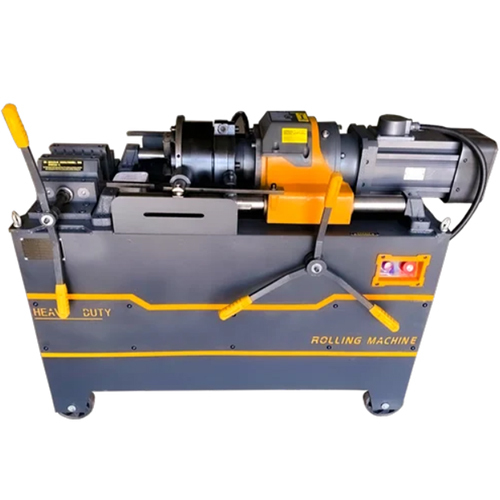
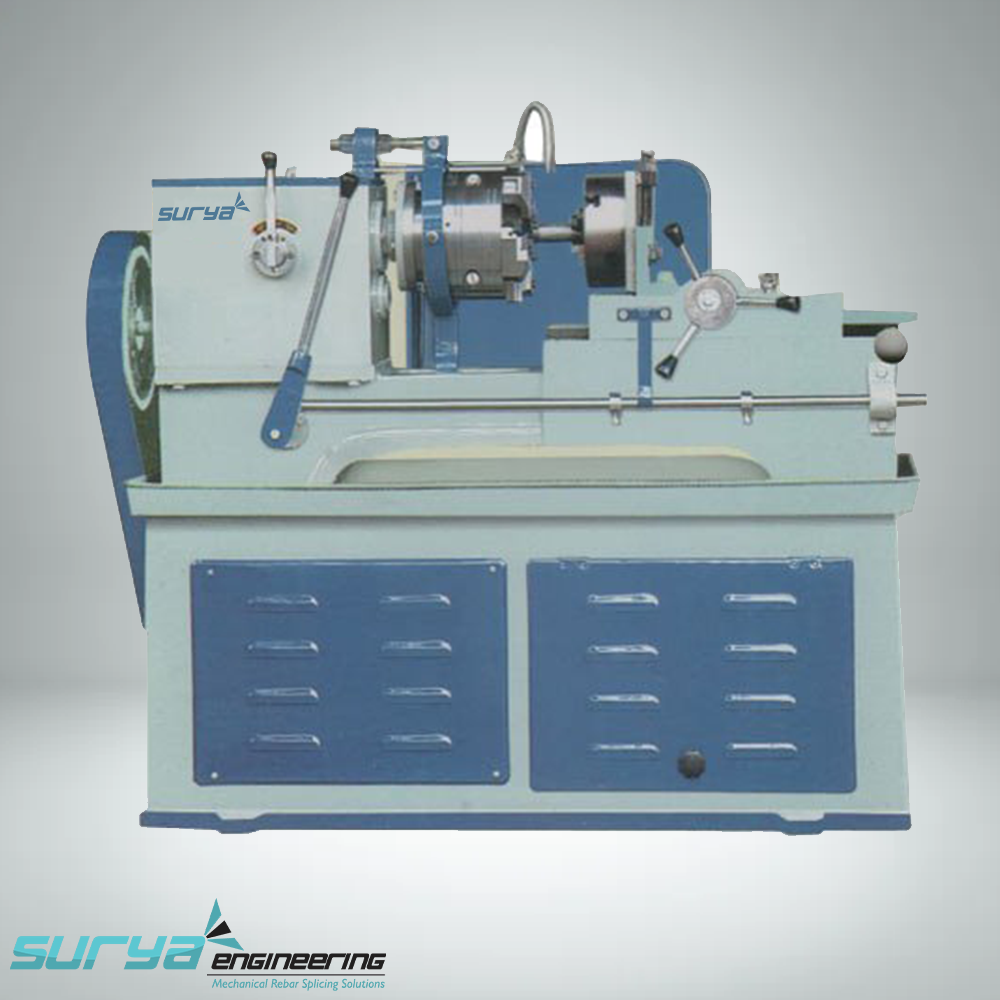
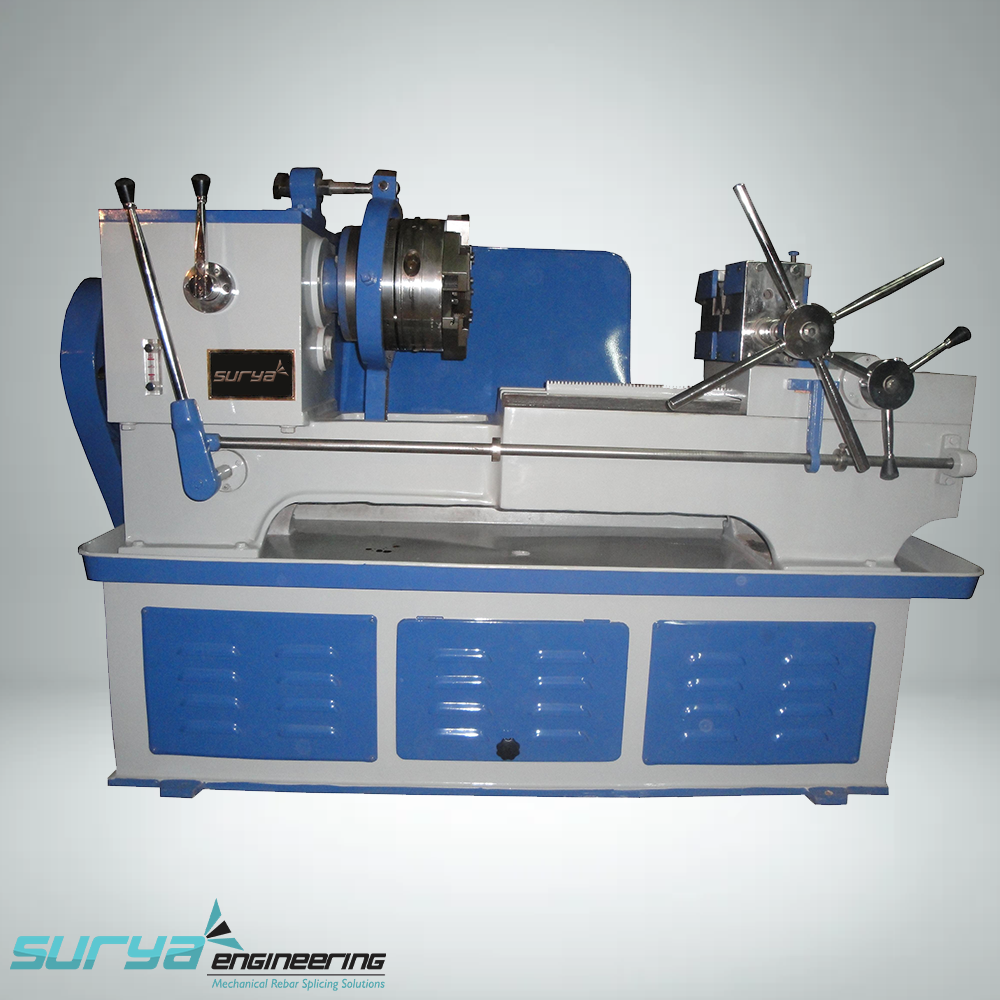
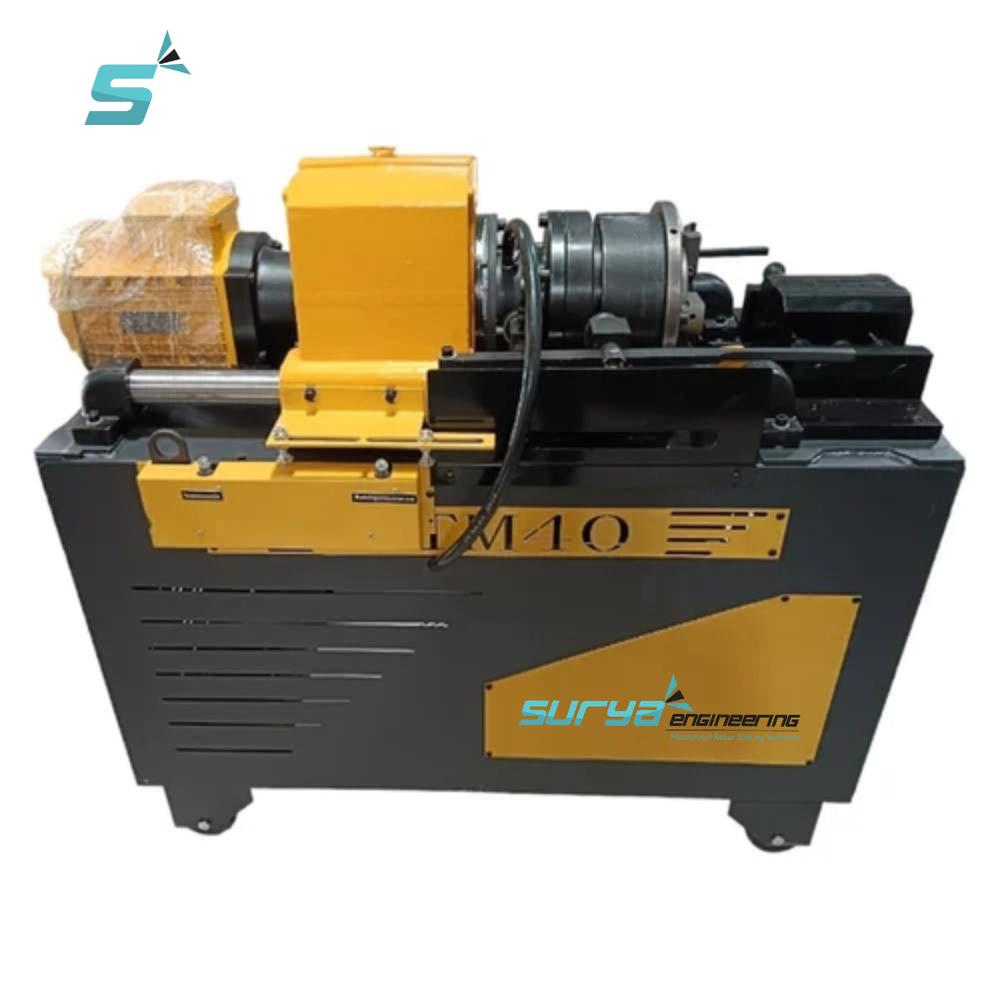
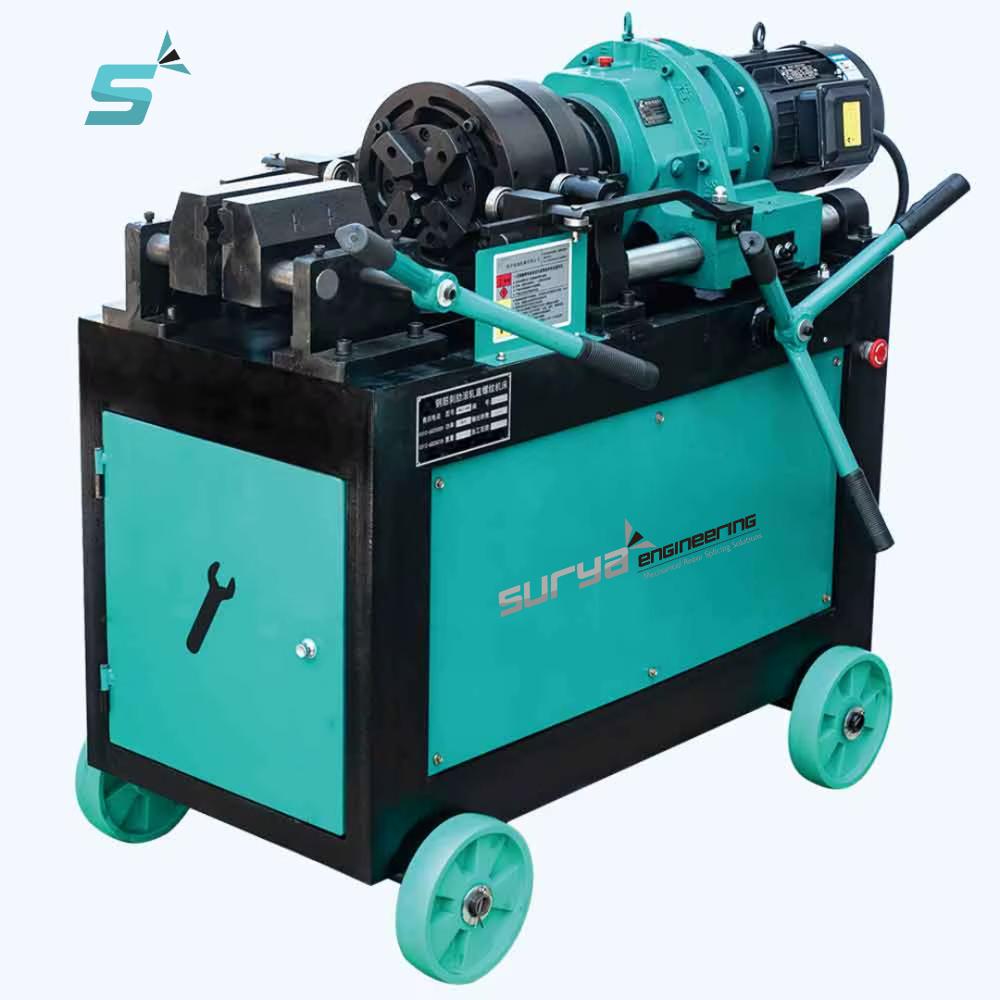
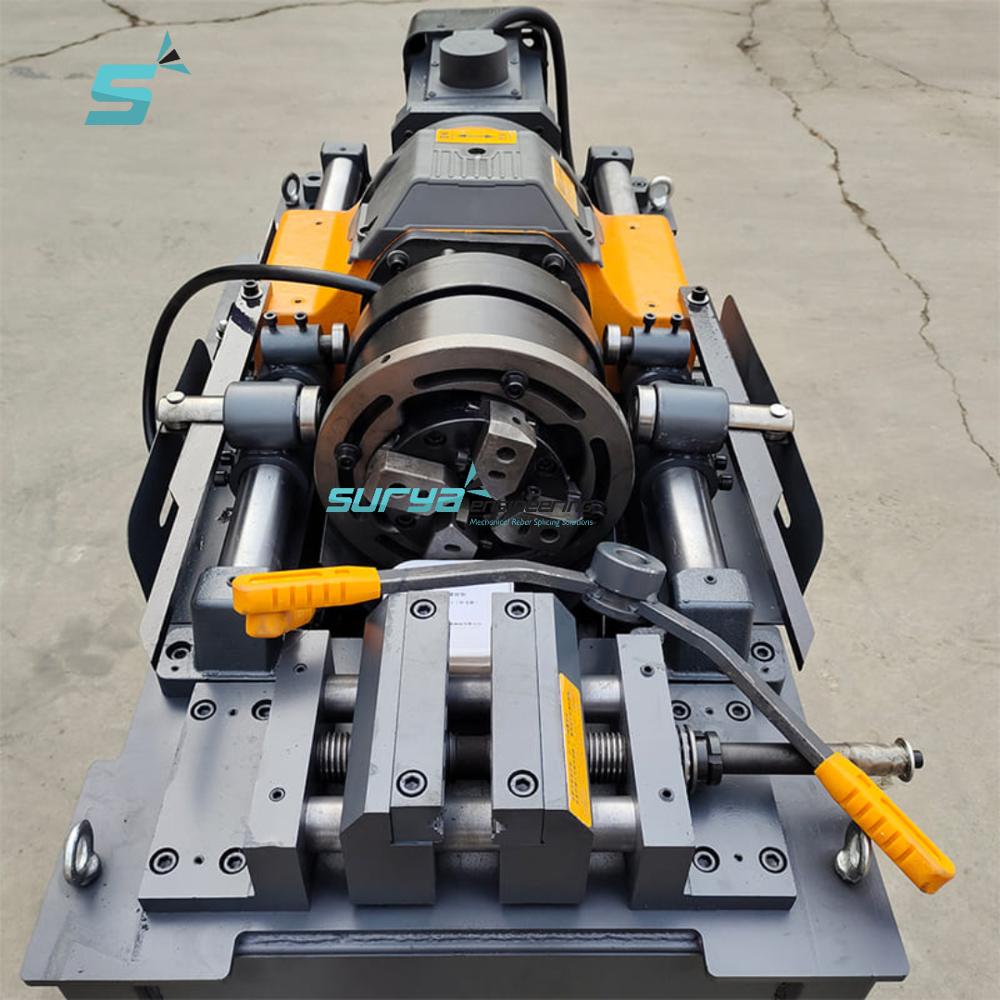
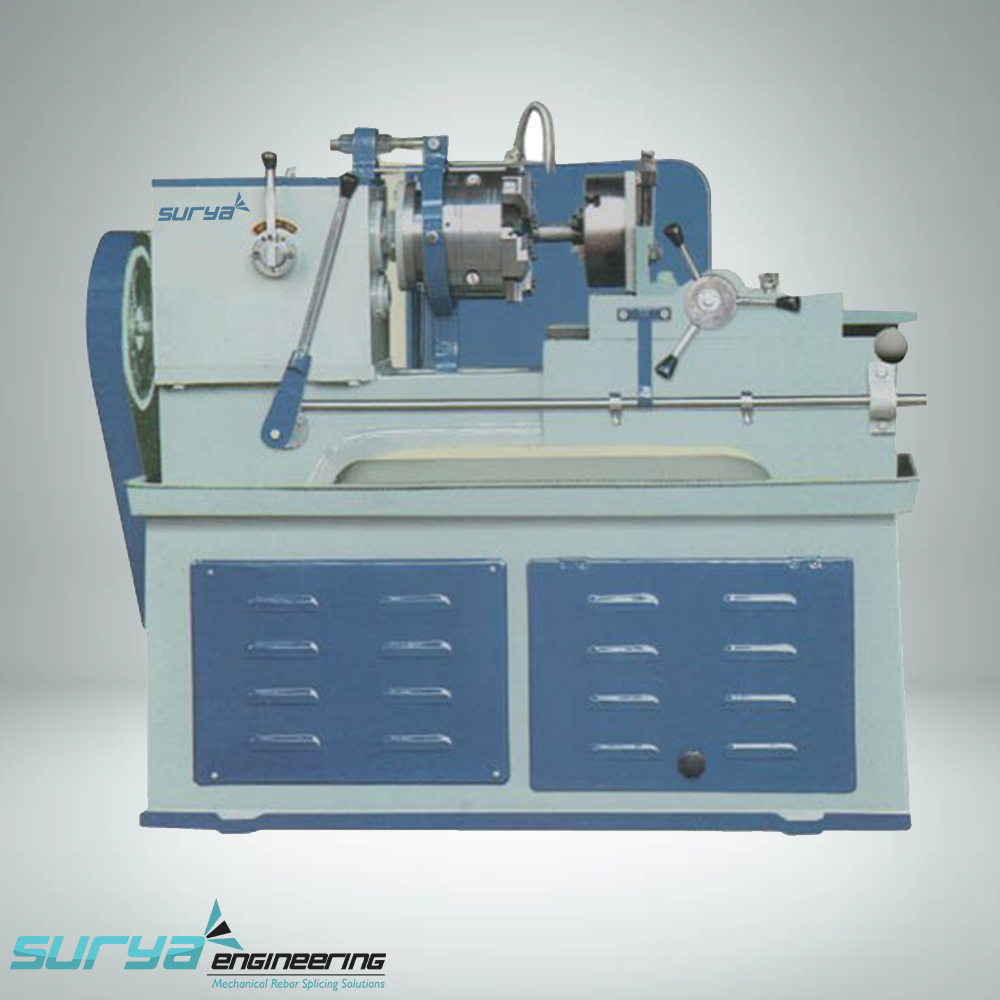
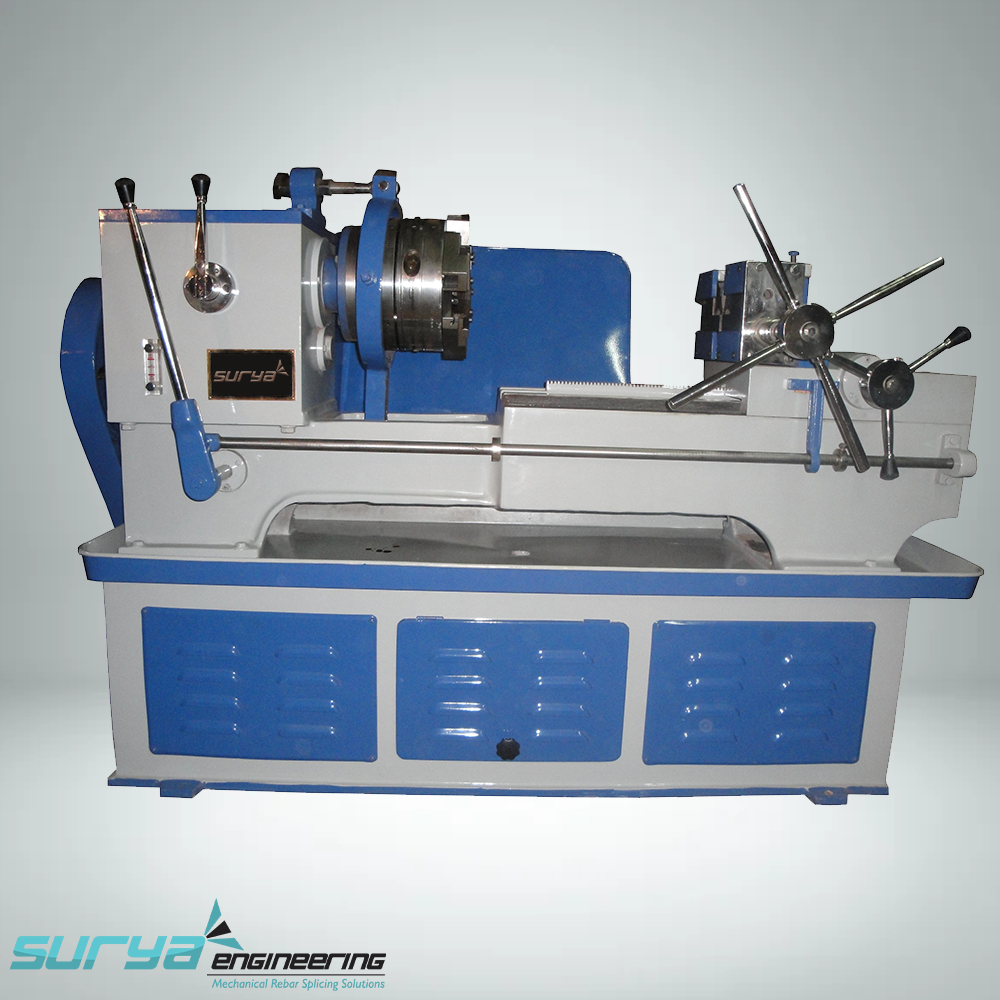
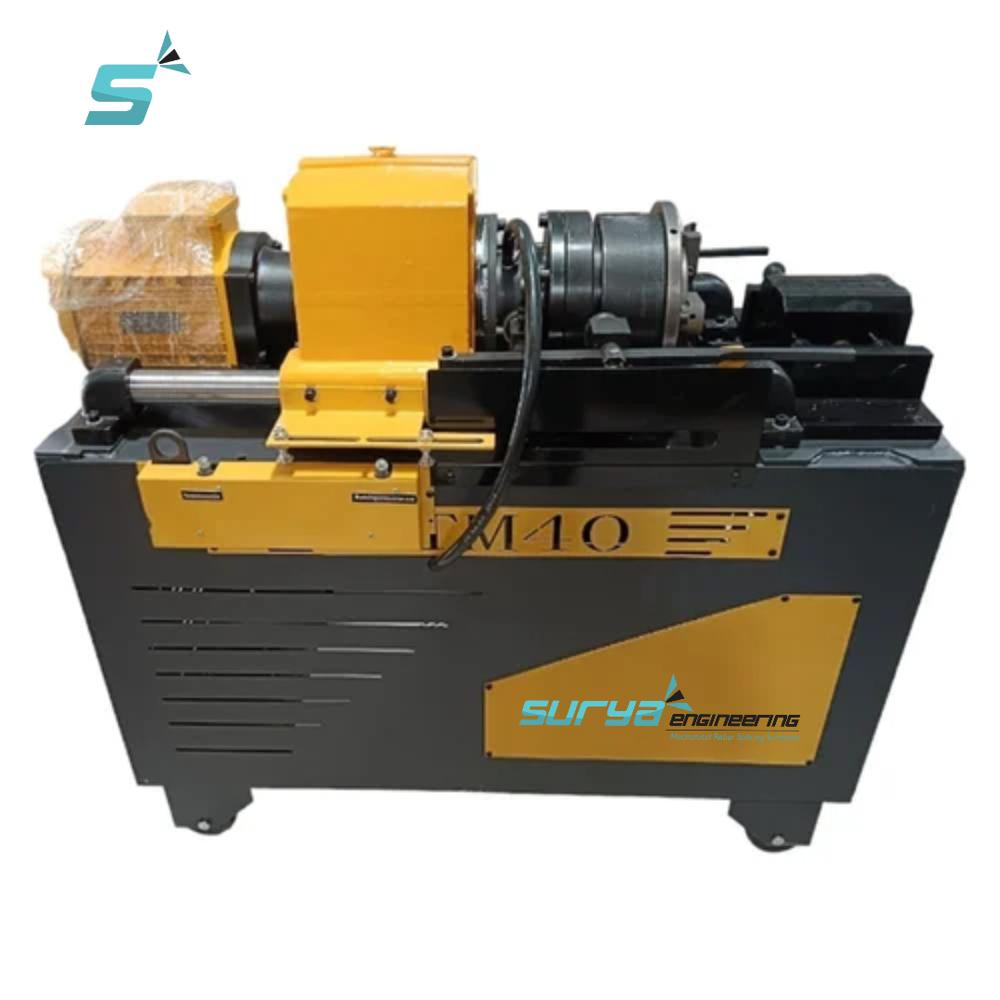
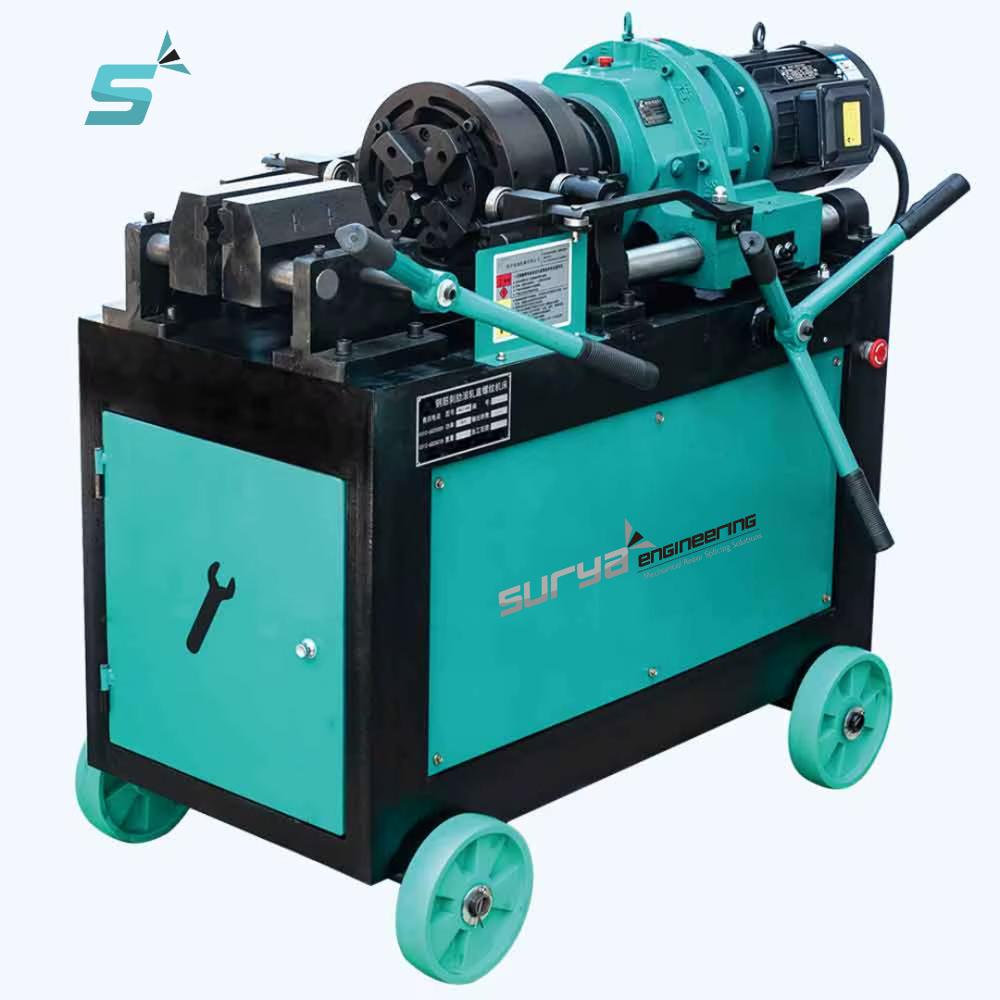
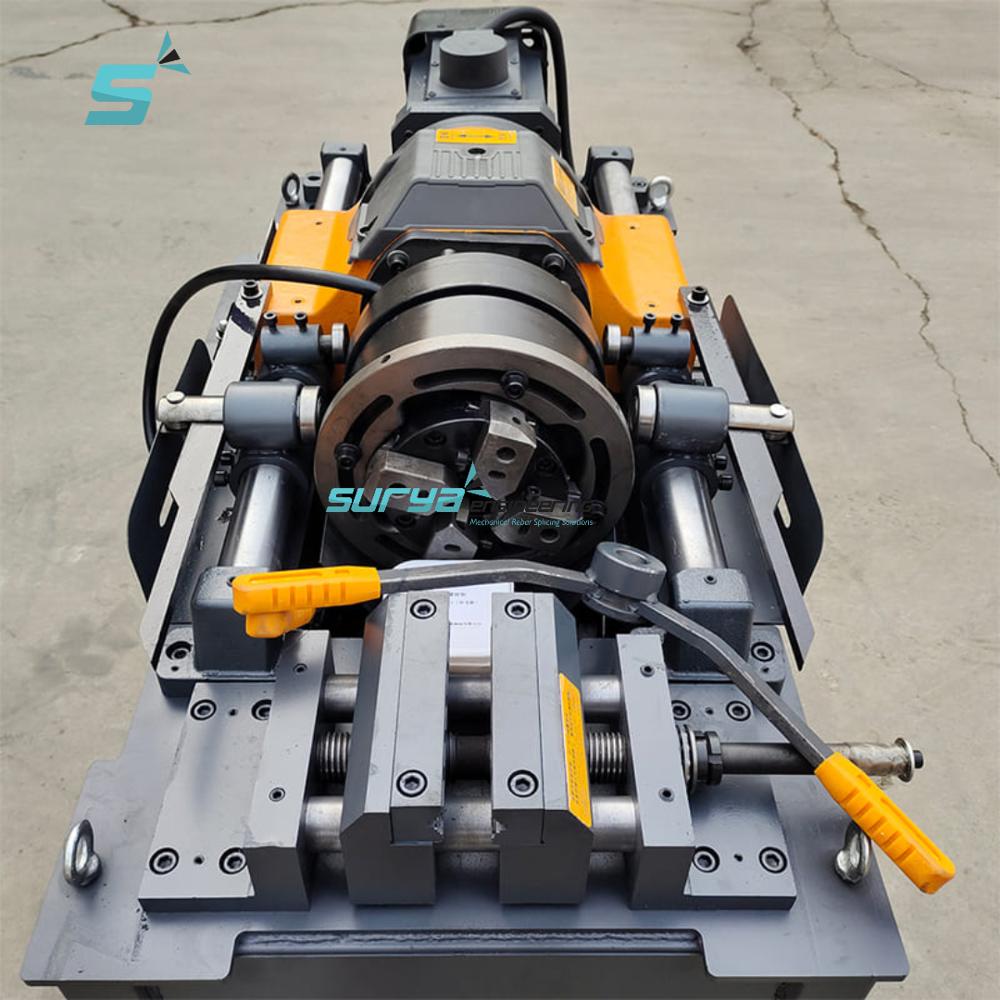

This machine creates threads by reshaping, not cutting, the metal, preserving the rebar's grain structure for superior strength.
The Process: Most machines first strip the ribs from the rebar end to create a smooth surface. Then, hardened steel rollers apply extreme pressure to plastically deform the metal into a precise thread profile.
The Mechanism: The process uses one or more reciprocating or rotating dies to displace metal along the bar. This "cold forming" method results in a superior finish, stronger internal grain structure, and greater fatigue resistance than traditional cutting methods.
These machines vary based on the die arrangement and scale of operation:
By Die Configuration
Flat-Die: Uses two flat dies moving linearly relative to each other. It's simple and cost-effective for small to medium production runs or specialized profiles.
Circular Die (2-Roll): Uses two rotating cylindrical dies. This is the most common industrial configuration for rebar, available in high-speed "through-feed" (for unlimited lengths) or precise "plunge-feed" models.
Planetary (Rotary) Die: Uses a central rotating die and a stationary segmented die. Best for extremely high-volume production, offering high speed and lower die costs per part.
By Level of Automation
Semi-Automatic: Requires operator intervention for loading/unloading; suitable for smaller workshops or intermittent use.
Automatic: Handles loading, threading, and ejection automatically to boost efficiency and consistency.
Fully Automatic (CNC): Integrates rebar cutting, rib stripping, and threading into one production line, often with robotic arms for material handling and sorting.
Superior Strength: Produces a thread that is typically stronger than the parent rebar material (e.g., achieving full-tension splices where the bar breaks before the joint).
Enhanced Efficiency & Safety: A mechanical splice can be installed much faster than welding, eliminates fire hazards, and requires less skilled labor.
Reliability & Cost-Effectiveness: The cold rolling process ensures consistent, high-precision threads, reducing on-site rework and false starts. High-volume machines can produce 300-500 threads per hour.
The primary use is creating mechanical splices in reinforced concrete for:
Large Construction: High-rise buildings, bridges, tunnels, stadiums, and industrial foundations.
Manufacturing: Threading bars for anchor rods or mechanical parts in heavy machinery manufacturing.
Critical Infrastructure: Projects requiring ISO-certified safety standards and superior seismic performance.
Specifications vary by model, but a typical machine (like the HGS-40B) would have the following core parameters:
When selecting a machine, keep these three factors in mind:
Types of Thread Rolling Systems: The decision between flat die, cylindrical die, and planetary largely dictates the speed, scale, and suitability for your application.
Rebar Compatibility: Ensure the machine can handle the required diameter (e.g., 16-40mm) and steel grades (e.g., HRB335 to HRB600).
Operational Environment: Choose between portable models for on-site use and stationary ones for dedicated workshop production.

Price:
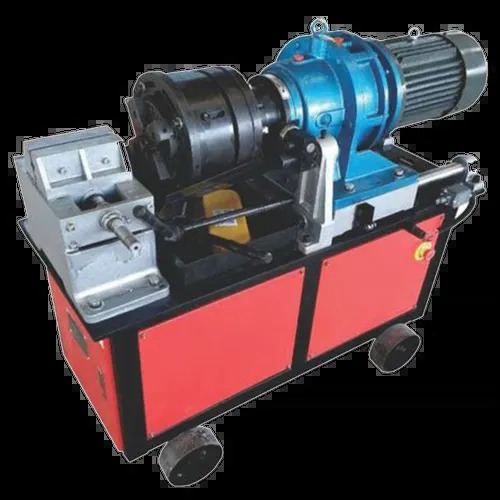
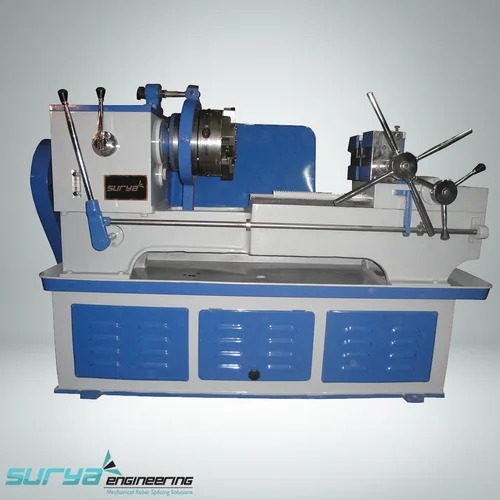
Price 300000 INR / Piece
Minimum Order Quantity : 1 Piece
Capacity : 1640mm
Voltage : 415 volts
Automatic : Other, SemiAutomatic
General Use : Threading of TMT Rebars
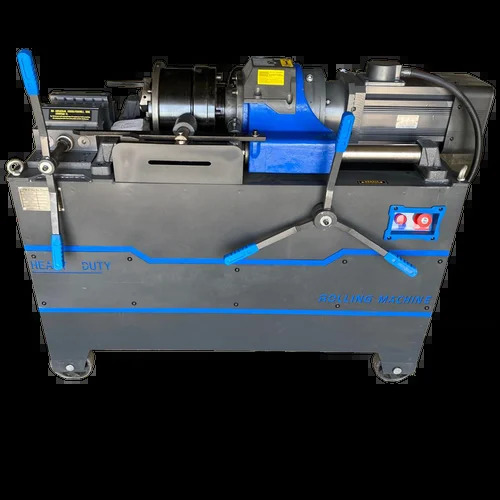
Price 250000 INR / Piece
Minimum Order Quantity : 1 Piece
Capacity : 12mm40mm
Voltage : 415 Volts
Automatic : Other, Semi Automatic
General Use : Thread cutting on TMT bar
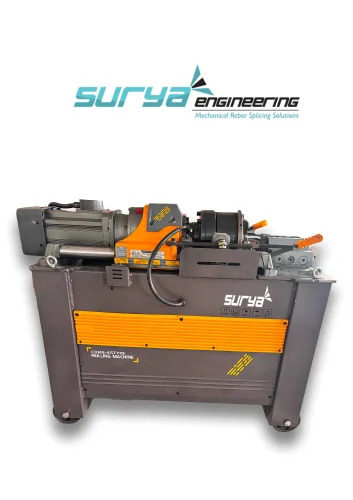
Price 92000 INR / Piece
Minimum Order Quantity : 1 Piece
Capacity : 16mm 40mm
Voltage : 415V
Automatic : Other, SemiAutomatic
General Use : Threading of TMT rebars
Price 75100 INR / Unit
Minimum Order Quantity : 1 Unit
Capacity : 80mm
Voltage : 415V
Automatic : Other, SemiAutomatic
General Use : Rebar Threading





 Send Inquiry