About Bolted Coupler
What is a Bolted Type Coupler?
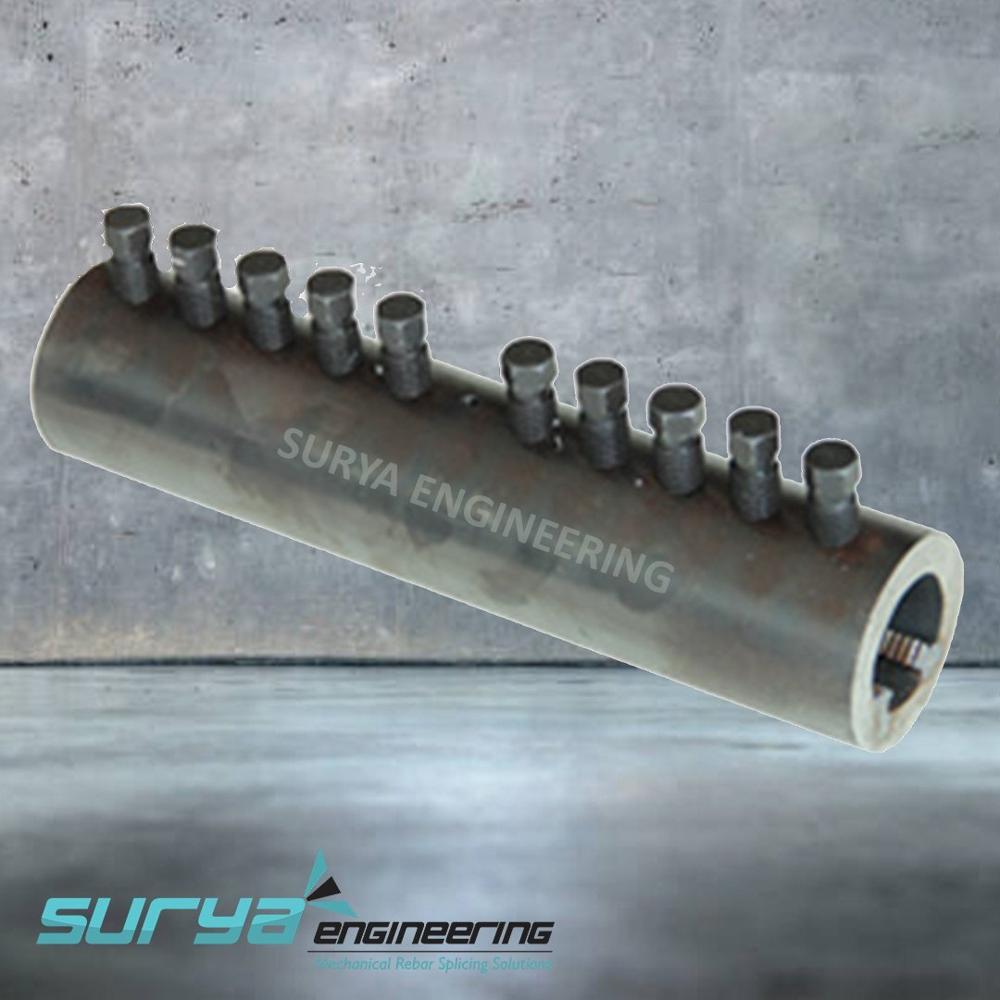
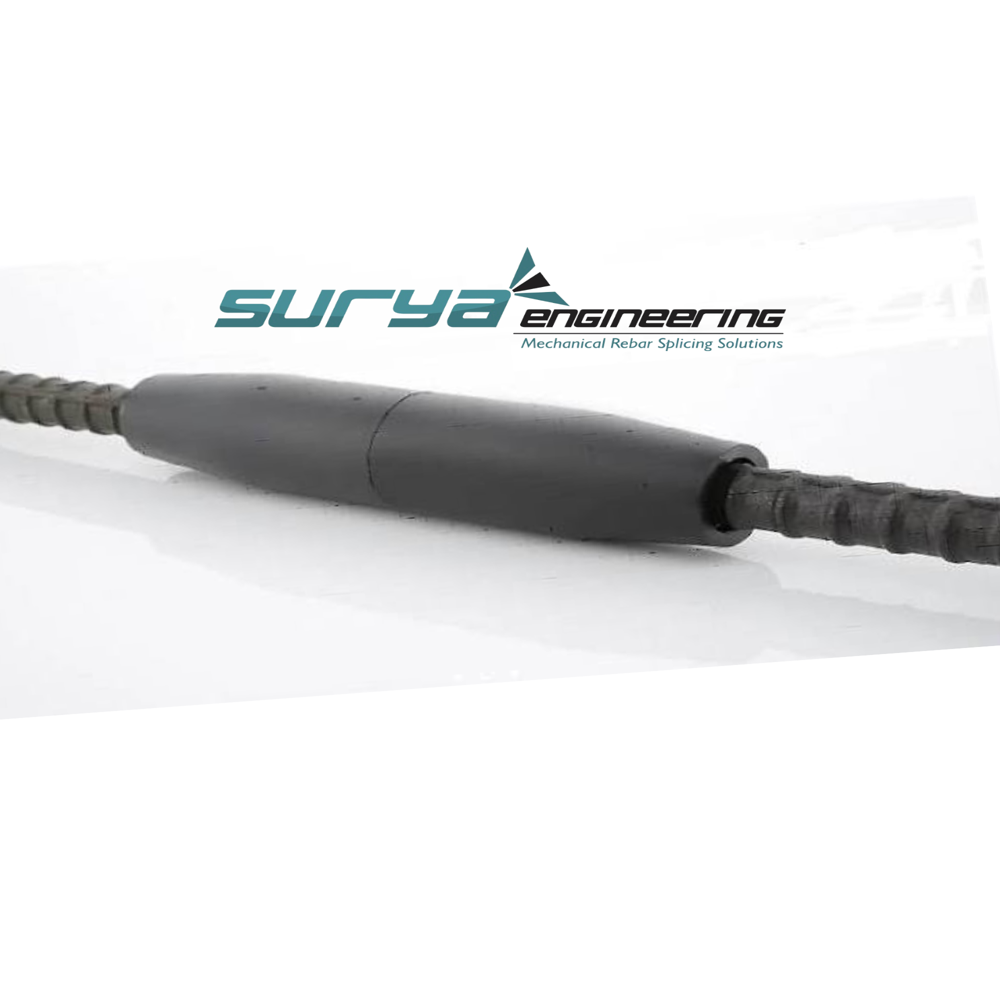
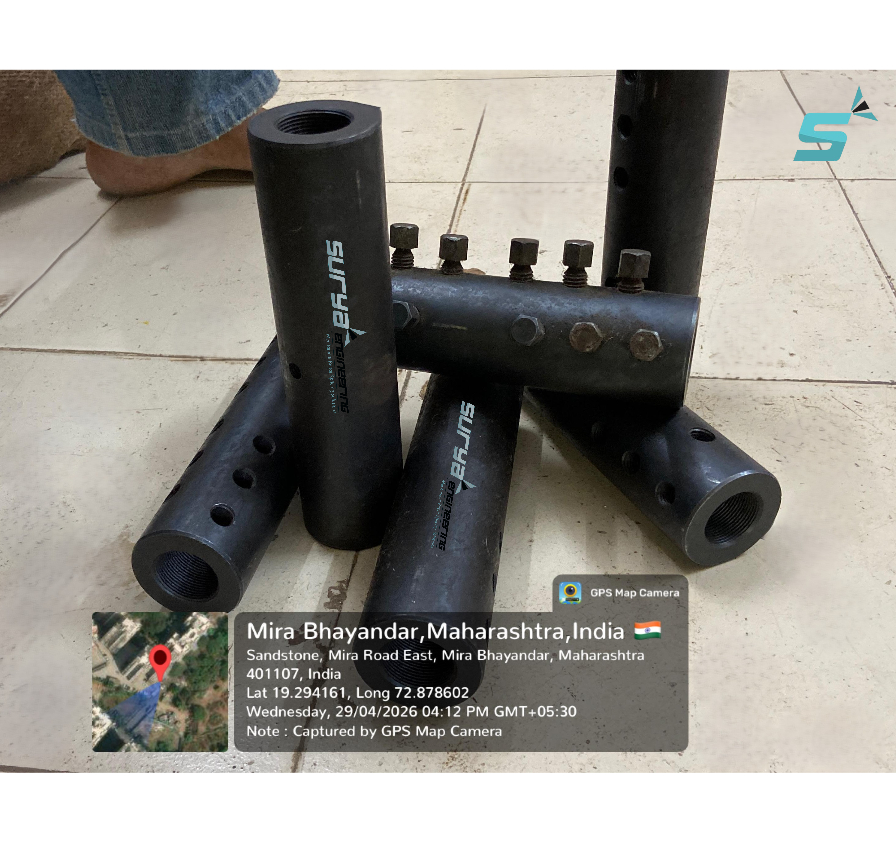
A Bolted Type Coupler is a mechanical rebar connection system used to join two reinforcement bars (rebars) using high-strength locking bolts. Unlike threaded couplers, bolted type couplers do not require threading or welding. The steel bars are inserted into the coupler sleeve, and bolts are tightened to create a strong and secure connection.
Bolted type couplers are commonly used in construction, bridges, tunnels, metro projects, high-rise buildings, industrial structures, and infrastructure projects where lap splicing is difficult or impractical.
These couplers are also known as Mechanical Bolted Couplers or MBT (Mechanical Bolted Type) Couplers in the construction industry.
Surya Engineering Manufactures in India.
Why is Bolted Type Coupler Used?
Bolted type couplers are used to provide a strong, reliable, and efficient rebar connection without affecting the strength of reinforcement bars.
Main Reasons for Using Bolted Type Couplers
1. No Rebar Threading Required
The coupler works directly on reinforcement bars without threading machines.
2. No Welding Process
Eliminates welding risks and heat damage to steel bars.
3. Faster Construction
Quick bolt tightening helps reduce project timelines.
4. Ideal for Congested Areas
Suitable where rebar rotation is not possible.
5. Better Structural Strength
Provides mechanical locking for strong reinforcement continuity.
6. Reduces Steel Consumption
Helps reduce overlapping steel and material wastage.
7. Suitable for Repair and Retrofit Work
Can be installed where existing rebars cannot move.
Technical Specifications of Bolted Type Coupler
Typical specifications may vary depending on project requirements and manufacturer standards.
|
Parameter
|
Specification
|
|
Material
|
High-strength alloy steel
|
|
Rebar Diameter Range
|
12 mm to 40 mm
|
|
Connection Type
|
Mechanical bolted locking
|
|
Surface Finish
|
Zinc coated / anti-corrosion coating
|
|
Bolt Material
|
High tensile steel bolts
|
|
Installation Method
|
Torque tightening
|
|
Strength Capacity
|
Equal or greater than parent rebar
|
|
Usage
|
Reinforcement bar joining
|
At Surya Engineering, bolted type couplers are designed for precision, durability, and high structural performance.
Classification of Bolted Type Couplers
1. Standard Bolted Coupler
Used for connecting rebars of the same diameter in general RCC construction.
2. Transition Bolted Coupler
Used to connect different diameter rebars.
3. Position Bolted Coupler
Used where rebars cannot rotate due to site conditions.
4. Repair Coupler
Used for:
- Damaged reinforcement replacement
- Structural retrofitting
- Repair projects
5. Anti-Corrosion Bolted Coupler
Special coated couplers for harsh environments such as:
Application
|
Application Sector
|
Typical Use Case
|
Primary Driver
|
|
High-Rise
|
Column vertical splicing
|
Congestion reduction / Optimized size
|
|
Bridges
|
Widening / Seismic retrofitting
|
Ease of field installation / Fatigue resistance
|
|
Nuclear
|
Reactor containment walls
|
Absolute reliability / Documented performance
|
|
Metro/Tunnels
|
Segmental pours
|
Formwork protection / Safety
|
|
Precast
|
Element-to-element connection
|
Tolerance for misalignment
|
Installation Process of Bolted Type Coupler
Step 1: Rebar Surface Cleaning
Ensure rebars are free from dust, rust, oil, or debris.
Step 2: Insert Steel Bars
Insert reinforcement bars into both sides of the coupler.
Step 3: Proper Alignment
Align rebars to ensure center positioning.
Step 4: Tighten Locking Bolts
Use a torque wrench to tighten bolts according to recommended torque values.
Step 5: Inspection
Verify bolt tightness and proper fitment.
Step 6: Final Quality Check
Perform mechanical inspection before concrete pouring.
|
Parameter
|
Requirement for Large Bars (#8-#18)
|
|
Impact Wrench
|
1-inch drive, high-quality pneumatic
|
|
Operating Pressure
|
100 psig
|
|
Delivered Air Flow
|
185 cfm
|
|
Air Hose Diameter
|
3/4 inch to 1 inch
|
Testing Standards for Bolted Type Coupler
Bolted type couplers are tested to ensure structural safety and performance.
Indian Standard
- IS 16172:2023 Mechanical splicing of reinforcing bars
International Standards
- ACI 318 Building Code Requirements for Structural Concrete
- BS 8110 Structural use of concrete
- ISO-based quality practices depending on manufacturer and project
|
Test Type
|
Objective
|
Load Range
|
Standard Reference
|
|
Static Tensile
|
Ultimate strength
|
$125\% - 150\% f_y$
|
ASTM A1034, IS 16172
|
|
Slip Test
|
Plastic movement
|
$0.6 f_y$ cycle
|
ISO 15835, IS 16172
|
|
Cyclic Tensile
|
Seismic behavior
|
$5\% - 90\% f_y$
|
ACI 318, IS 16172
|
|
Low-Cycle Fatigue
|
Dynamic resilience
|
10,000 cycles
|
ISO 15835, HKBD
|
|
High-Cycle Fatigue
|
Long-term durability
|
2 million cycles
|
ASTM A1034, BS 4449
|
Related Testing Standards you can find out more on Surya Engineering
website:- https://suryaengineering.net/
Advantages of Bolted Type Coupler
Fast Installation
No Threading Required
Strong Mechanical Joint
Reduces Reinforcement Congestion
Cost Effective
Suitable for Difficult Locations
Improved Safety
High Durability
About Surya Engineering
Surya Engineering is a trusted engineering solutions provider specializing in industrial machinery, construction equipment, dust control systems, and fabrication machinery. The company focuses on delivering high-performance and durable industrial equipment designed for modern construction and manufacturing industries.
PAN India Supply & Service Network
West India (Regional Hub)
Maharashtra: Mumbai (HQ), Pune, Nagpur, Nashik, Aurangabad, Thane.
Gujarat
Goa
North India
Delhi NCR
Haryana.
Punjab
Rajasthan
Uttar Pradesh
South India
Karnataka
Tamil Nadu
Telangana
Andhra Pradesh
East India
West Bengal
Bihar
Jharkhand
Odisha
Chhattisgarh
Central India
Madhya Pradesh


 Send Inquiry




 Send Inquiry

 Send Inquiry
 Send SMS

 English
 Spanish
 French
 German
 Italian
 Chinese (Simplified)
 Japanese
 Korean
 Arabic
 Portuguese
