A BIS Certified Rebar Coupler is an ISI-Marked mechanical splice device used to join two reinforcement bars (TMT bars) end-to-end, manufactured and tested as per Indian Standard IS 16172 : 2014 - Reinforcement Couplers for Mechanical Splices of Bars for Concrete Reinforcement - Specification.
It is the only type of coupler legally accepted for Government, PWD, CPWD, NHAI, Metro, Railways, Nuclear and High-rise projects in India where mechanical splicing is specified.
Normal locally-made couplers have no guarantee of strength, thread accuracy, steel quality or slip performance. A BIS Certified coupler guarantees:
Types of BIS Certified Couplers
All types are covered under IS 16172, but most common BIS licence is for Parallel Thread Rolled Coupler.
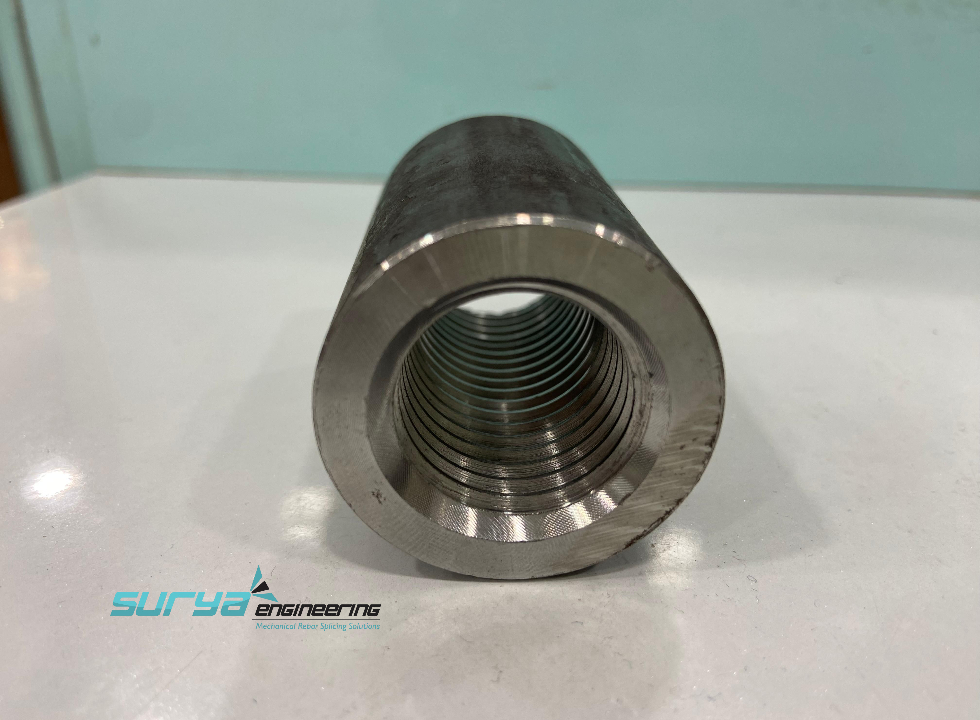
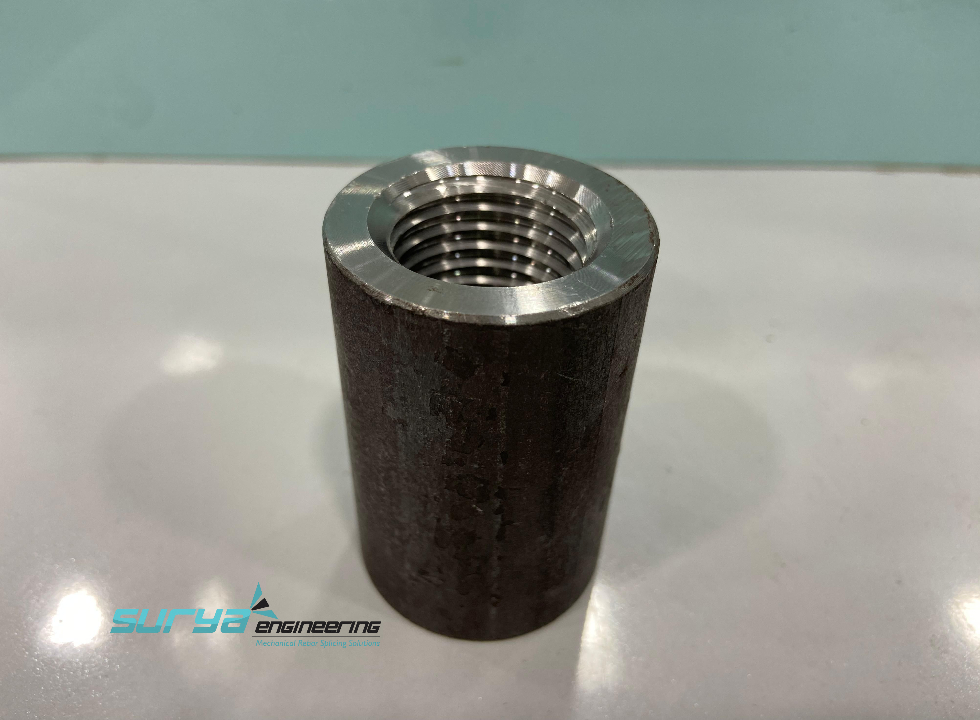
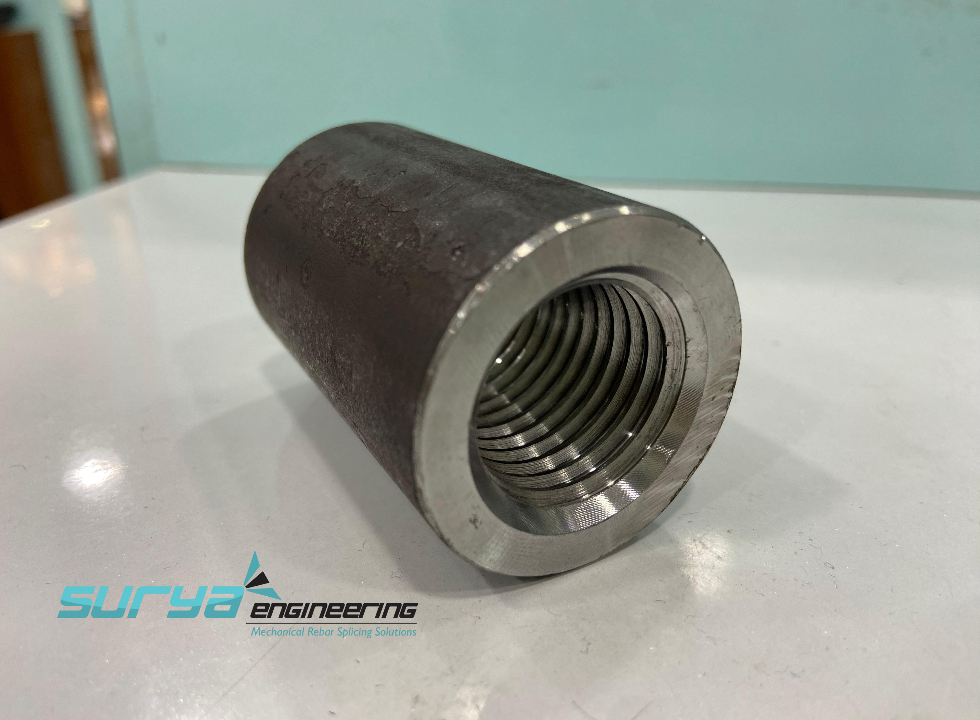
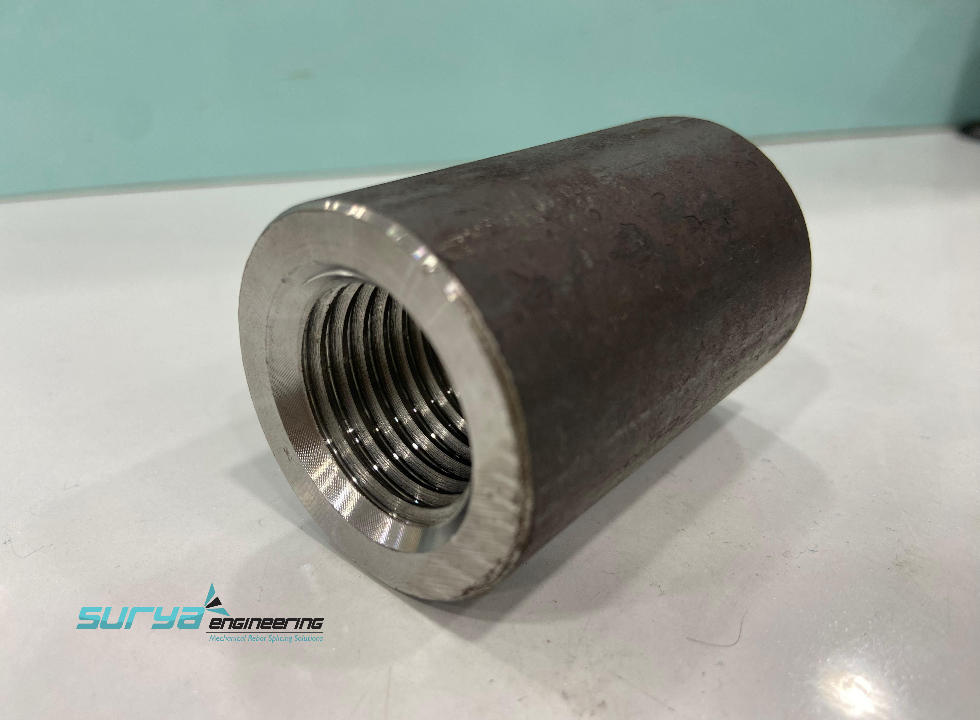
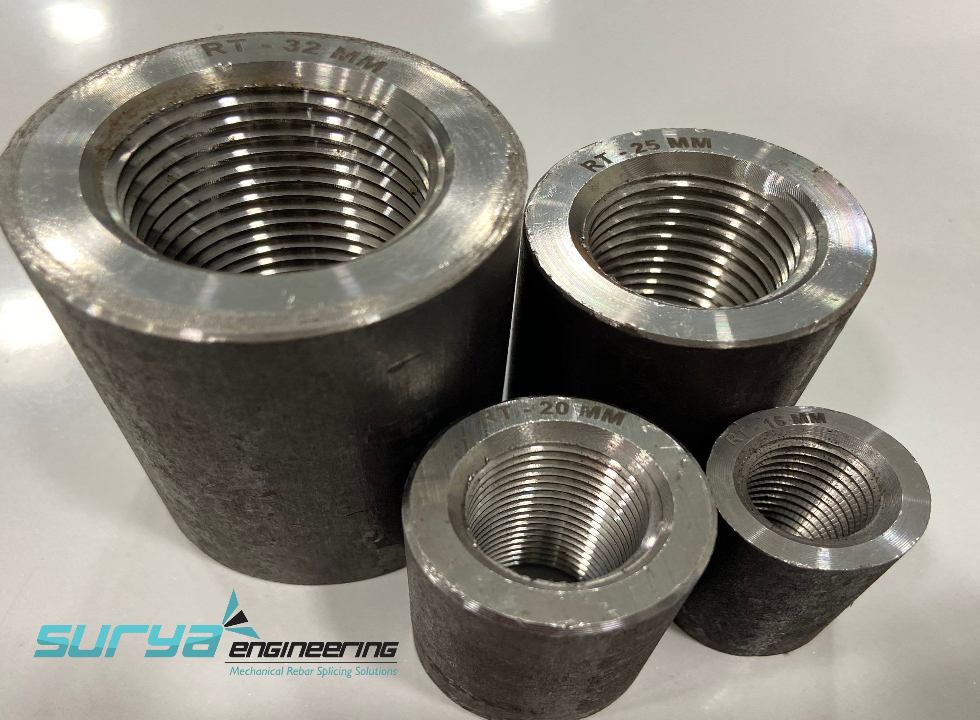
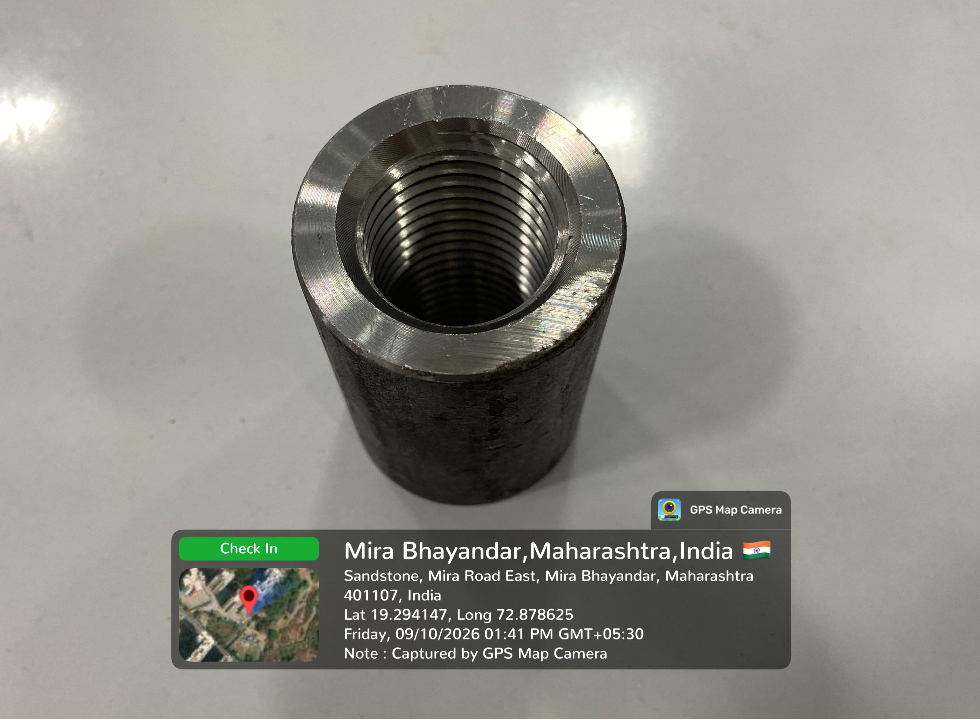
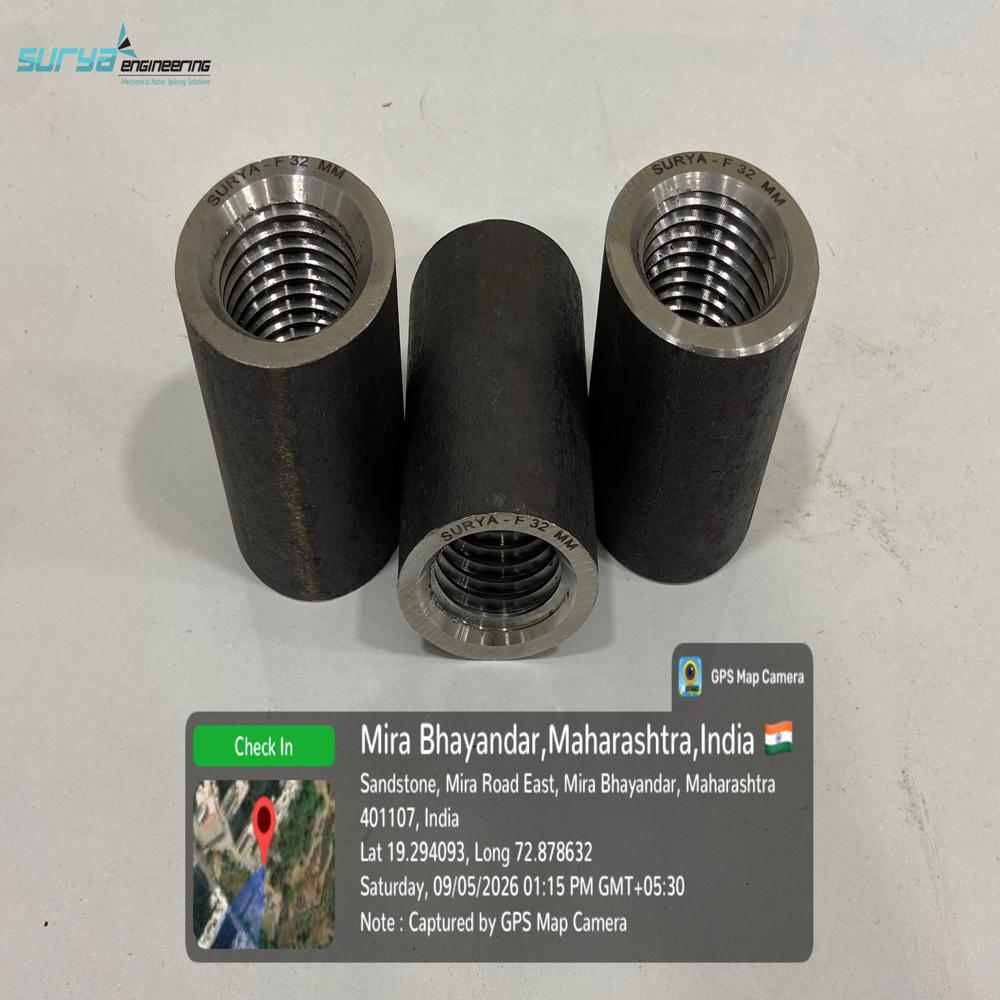
1. Standard Parallel Thread Coupler (Roller / Cold-Rolled) - Most Used
Bar end is rib-peeled and cold-rolled to form parallel threads. Coupler with internal parallel threads connects both bars. For 16mm to 40mm. No bar diameter reduction, no weakening.
2. Taper Threaded Coupler
Tapered threads for easy alignment. Older technology, less common now.
3. Upset / Hot Forged Enlarged End Coupler
Bar end is upset (enlarged by forging) then threaded. Core diameter increases, best for 32mm to 50mm heavy bars, nuclear / bridges.
4. Transition / Reducer Coupler
To join two different diameters e.g. 25mm to 20mm, 32mm to 25mm.
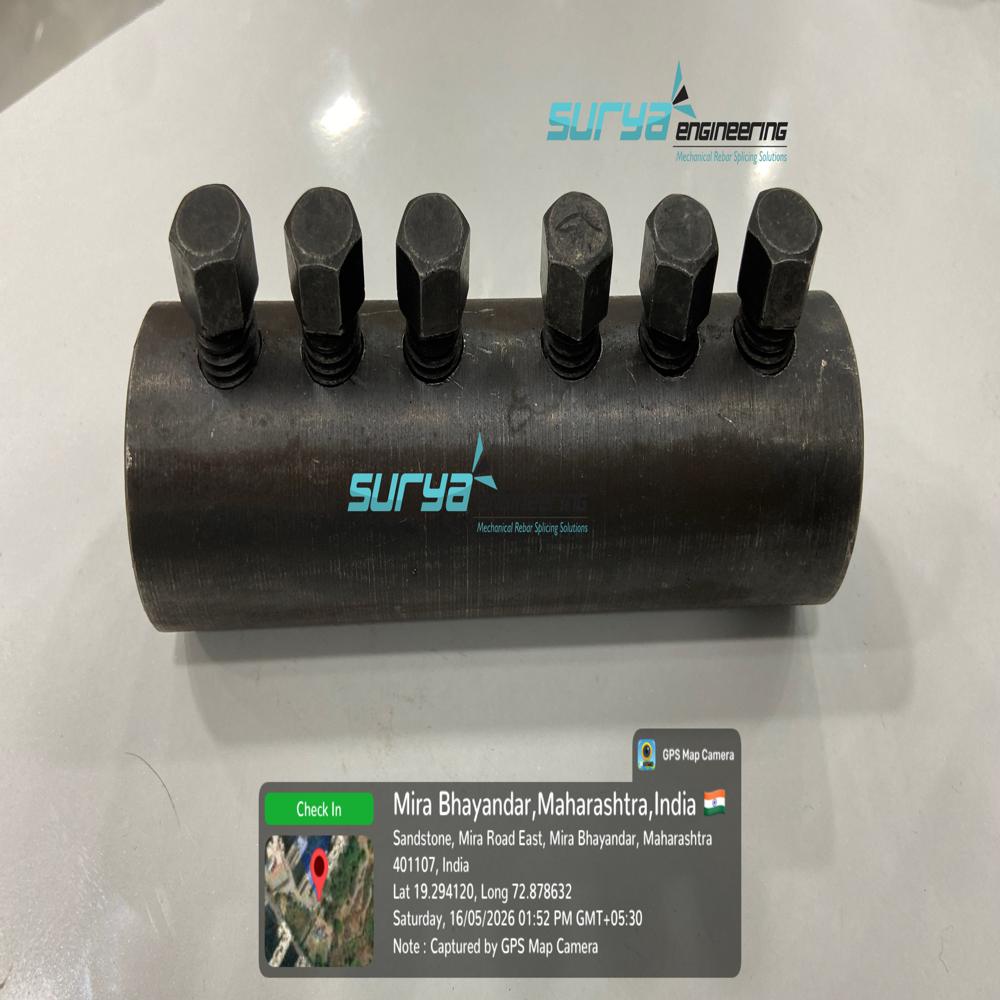
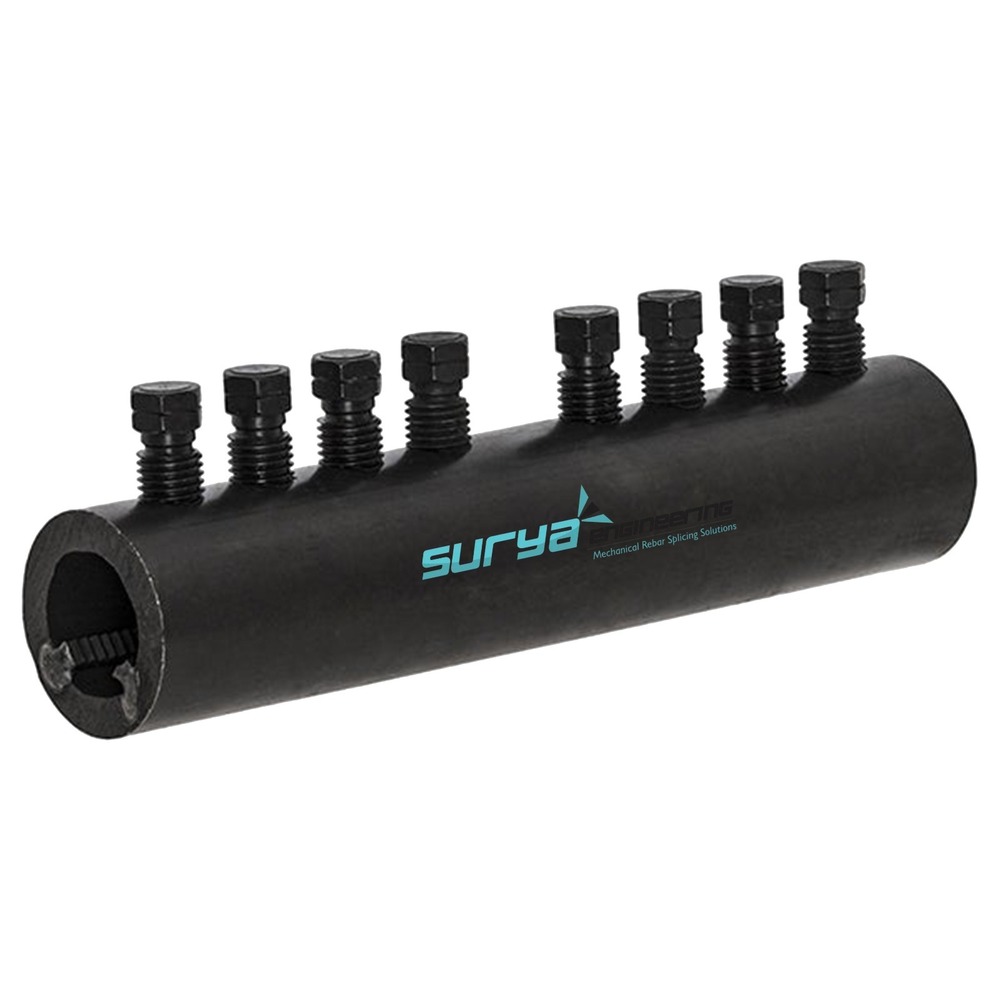
5. Position Coupler ( Bolt + Locknut )
When both bars cannot be rotated - e.g. joining to existing column, beam-column junction, precast segment. One side is extended thread with locknut.
6. Weldable / End-Anchor Coupler
One end threaded, other end welded to plate / structural steel. Used as end anchorage instead of 90-degree bend.
7. Headed Bar Coupler
Acts as anchor head to replace development length / bent hooks in congested pile caps, footings.
Raw Material and Manufacturing Process
A genuine BIS coupler is NOT cut from pipe.
Material: High-tensile carbon / alloy steel bars - Grades like C45, EN8D, 16MnCr5, IS 2062 E350 or equivalent. Min. UTS 600-700 N/mm2, higher than TMT bar.
Process in BIS factory:
- Cut seamless round bar to length
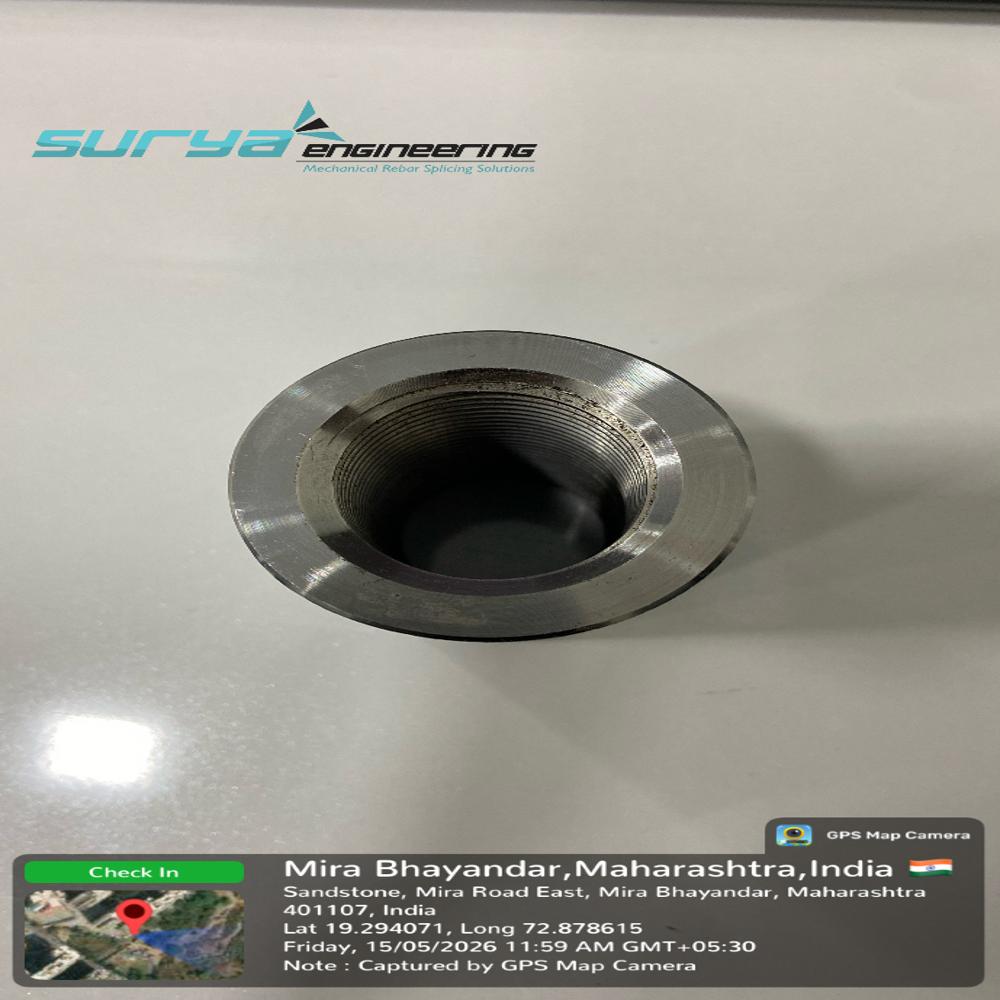
- CNC drilling + chamfering + internal threading with gauges
- 100% Go / No-Go thread gauge checking
- Rust preventive oil coating + plastic caps
- Laser / Punch marking: Size, Brand, IS 16172, ISI Logo, CM/L No., Batch No.
- Batch testing: Tensile, Slip, Dimensional, Chemical
Outer Diameter is normally 1.45 to 1.6 x bar dia. Length is 2D + 10-15mm.
Typical dimensions:
| Bar Dia |
Coupler OD (approx) |
Coupler Length (approx) |
Tightening Torque |
| 16 mm |
24-26 mm |
48-50 mm |
100-120 Nm |
| 20 mm |
29-31 mm |
56-60 mm |
160-180 Nm |
| 25 mm |
37-39 mm |
66-72 mm |
220-250 Nm |
| 28 mm |
41-43 mm |
74-80 mm |
260-280 Nm |
| 32 mm |
47-49 mm |
84-90 mm |
300-340 Nm |
| 36 mm |
52-55 mm |
95-100 mm |
360-400 Nm |
| 40 mm |
59-62 mm |
105-110 mm |
400-450 Nm |
Technical Requirements as per IS 16172:2014
A lot must pass all these to get ISI Mark:
a) Visual & Dimensional: No cracks, pits, damaged threads. Thread profile checked with Go / No-Go gauges.
b) Chemical Composition: C, S, P, Sulphur & Phosphorus within limits, Carbon Equivalent (CE) controlled for weldability.
c) Static Tensile Test (Most Important):
The coupler + 2 bars assembly is pulled in UTM to failure.
Acceptance: Ultimate tensile strength shall not be less than the actual UTS of the parent unspliced bar, and in no case less than the specified characteristic UTS of the grade (e.g. > 565 MPa for Fe500D). Failure shall occur outside the coupler zone / in the parent bar. In practice, good BIS couplers achieve 125% of yield (Type-2 splice as per ACI 318).
d) Slip Test:
After loading to 70% of specified yield strength, measured permanent slip between bar and coupler shall be < 0.10 mm. This ensures no cracking in concrete.
e) Cyclic / Fatigue Test for Seismic:
For structures in Seismic Zone III and above, couplers are subjected to high-cycle and low-cycle reversed loading. No failure / excessive slip allowed.
f) Splice Performance Grade:
Manufacturers declare couplers suitable for Fe500D, Fe550D up to specified bar elongation (minimum 12-16%).
Sampling at site as per standard practice: 2 specimens per 500 couplers per dia / per lot sent to NABL lab for tensile + slip test before mass use.
Installation Methodology at Site
BIS certification is for coupler body, but joint strength depends 100% on correct bar threading.
- Bar Cutting: Cut bar at 90 degrees with chop saw, not gas cutter.
- Rib Peeling: Peel ribs for length = half coupler + 2-3 threads using rib-peeling machine.
- Cold Rolling: Cold-roll parallel threads using approved threading machine. No material removal, grain flow is strengthened.
- Checking: Check with Go/No-Go ring gauge. Go should pass fully, No-Go should not pass more than 2 turns.
- Protection: Put plastic cap immediately to protect threads from dust/rust.
- Joining: Screw bars into coupler manually, then tighten with torque wrench / pipe wrench to specified torque. There should be zero exposed threads (max 3-4 mm tolerance / half thread).
- Staggering: As per IS 456 / IS 13920, mechanical splices should be staggered - not more than 50% bars spliced at one section in columns, maintain clear spacing >25mm for concrete flow.
Entire threading must be done by supplier-trained operator. Reputed suppliers give machine on rent + operator + gauge free with coupler supply.
Advantages Over Lapping
- Saves 20-30% Steel: No lap length (50D) and no wastage. For 32mm bar, lap = 1.6m saved per joint.
- Reduces Congestion: Especially in columns, shear walls, pile caps, beam-column joints. Concrete can flow easily, better honeycomb-free concreting.
- Load Path Continuity: Lap transfers load via concrete bond, coupler transfers steel-to-steel. Better for seismic, cyclic, fatigue loads.
- Faster Construction: No extra shutter size for lapped bars, easy shuttering, easy for precast and higher lifts.
- Eco-friendly & Cost Saving: Despite coupler cost Rs. 40 to Rs. 180/pc depending on dia, net saving after steel + labour saving is 15-25% in large dia >20mm.
- Mandatory for >36mm: Lapping of 36mm and 40mm bars is practically not allowed due to congestion - couplers are the only solution.
Lap vs Coupler:
| Parameter |
Lap Splice (50D) |
BIS Coupler Splice |
| Steel consumption |
High |
Low, saves 2-5 kg per joint |
| Congestion |
Very high |
Single bar line |
| Seismic performance |
Poor, bond failure |
Excellent, Type-2 |
| Quality control |
Visual only |
Measurable torque + lab test |
| Cost for 16mm |
Cheaper |
Costly |
| Cost for 25mm+ |
Costly |
Cheaper overall |
Thumb rule in India: Use couplers for 20mm dia and above. Continue lapping for 8,10,12,16mm unless congestion is high.
Where It Is Used?
High-rise towers, metro piers, bridges, dams, power plants, refineries, pile foundations, diaphragm walls, precast connections, radiation-shield structures, industrial heavy foundations, retaining walls.
Surya Engineering is +15 years trusted Manufacturer and Suppliers in Rebar Coupler

 Send Inquiry




 Send Inquiry

 Send Inquiry
 Send SMS

 English
 Spanish
 French
 German
 Italian
 Chinese (Simplified)
 Japanese
 Korean
 Arabic
 Portuguese
