About Orange PVC Coated Footstep Rungs
What is an Orange PVC Coated Footstep Rung?
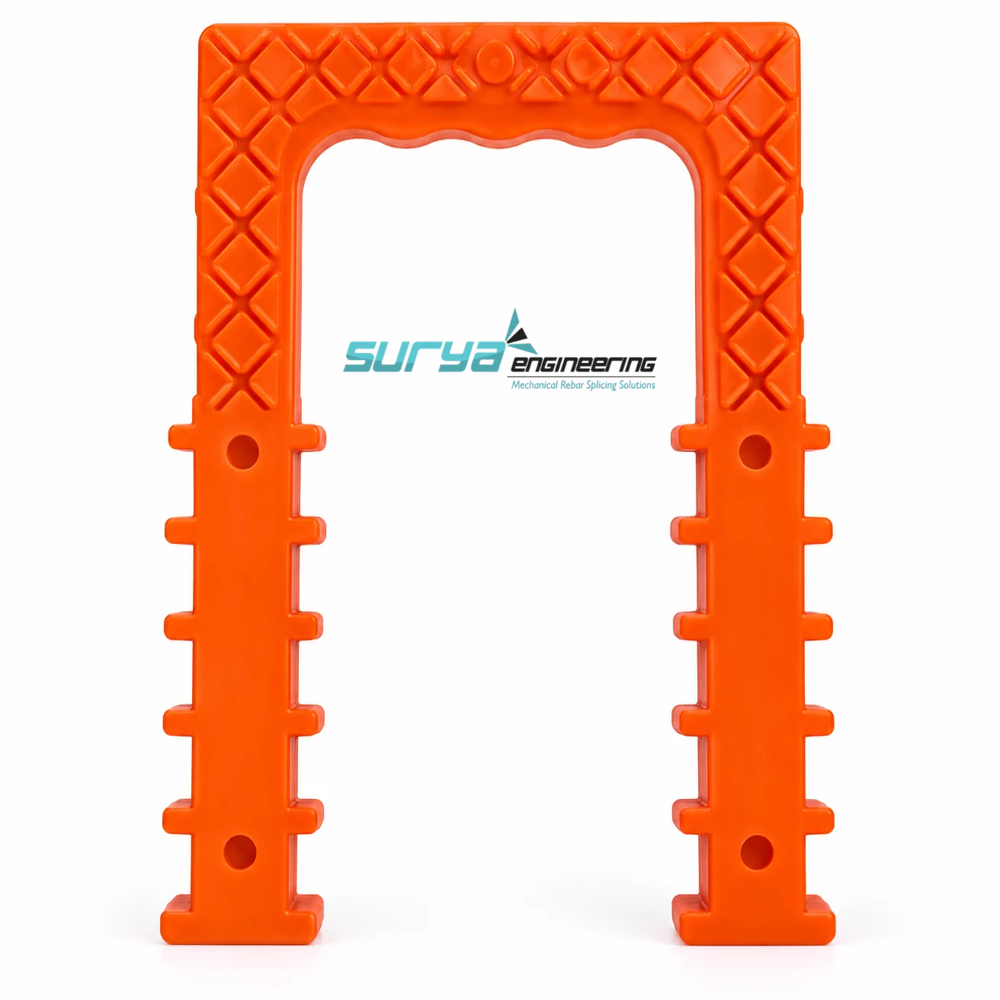
An Orange PVC Coated Footstep Rung is a high-visibility safety step designed for climbing into deep underground shafts, precast concrete structures, and water storage utilities.
It is engineered using a clever dual-layer design:
-
The Structural Spine: The core consists of a high-tensile 10 mm to 16 mm TMT Reinforced Steel Bar (conforming to IS 1786), which gives the step its heavy load-bearing power.
-
The Protective Shield: The steel core is completely enclosed via advanced injection molding inside a 3 mm to 6 mm thick outer layer of Virgin Grade Polypropylene (PP) or PVC Plastic.
Why Orange? The choice of bright, international safety orange is deliberate. Underground chambers are pitch black. The high-visibility orange pigment catches low ambient flashlight beams instantly, giving workers distinct, confident foot placement.
Why is it Used?
Underground municipal systems like sewage grids and wastewater treatment networks are hostile environments filled with high humidity and aggressive gases like hydrogen sulfide ($H_2S$).
-
100% Corrosion Immunity: Unlike uninsulated metals, the plastic jacket acts as an absolute waterproof barrier, preventing chemical rusting.
-
Defeats Internal Rotting: Traditional metal rungs look fine on the outside but rust internally until they snap. Encapsulated rungs completely eliminate internal oxygen exposure.
-
Advanced Anti-Slip Design: The top stepping surface is molded with integrated 2 mm deep chequered or ribbed anti-skid treads to provide grip even when covered in mud or slime.
Product Classifications
Surya Engineering builds steps categorized by shape, sizing, and load configurations:
| Classification Parameter |
Standard Range Details |
| By Shape Profile |
U-Shape (Standard), X-Shape, Anchor Footsteps, and Precast Insert-type Rungs |
| Core Reinforcement |
10 mm, 12 mm, or 16 mm heavy Fe-500 grade steel rods |
| Standard Dimensions |
260 mm 165 mm 25 mm up to 400 mm 250 mm variants |
| Coating Thickness |
Standard 3 mm to ultra-heavy 6 mm virgin plastic shell |
| Weight Classes |
Light-duty (Utility shafts) vs Heavy-duty (Deep municipal mainlines) |
Major Infrastructure Applications
-
Municipal Sewerage Networks: Safe entry into deep municipal mainlines and stormwater channels.
-
Effluent & Sewage Treatment Plants (ETP / STP): Resists industrial chemicals, acids, and alkalis.
-
Drinking Water Reservoirs: Virgin plastic ensures zero toxic leaching or paint peeling into clean water.
-
Telecommunication & Power Shafts: The thick plastic shell acts as an electrical insulator, protecting technicians from underground current leaks.
Standard Installation Methodology
To ensure that the step supports its rated weight capacity, follow this precise installation sequence:
1.Marking and Spacing:Layout Planning.Map out your vertical ladder path on the curing concrete wall. Ensure a uniform vertical spacing of 250 mm to 300 mm between successive steps.
2.Precision Hole Drilling:Creating the Anchor Cavity.Using a rotary hammer drill fitted with a 22 mm to 25 mm concrete drill bit, create parallel holes to a minimum depth of 115 mm.
3.Chamber Cleaning:Debris Removal.Use a wire brush or hand blower to completely clean out concrete dust and loose debris from the drilled cavities.
4.Chemical Anchor Grouting:Bonding Application.Fill 60% of the hole volume with a high-strength epoxy structural resin or a specialized non-shrink cementitious grout.
5.Insertion & Curing:Final Seating.Push the step legs firmly into the holes using a rubber mallet until the rung stands perfectly flush against the wall line. Allow the chemical grout to cure fully before any load testing.
Official IS Testing Standards
Surya Engineering products are tested to meet and exceed national benchmarks like IS 10905 (for plastic-encapsulated footsteps) and structural criteria adapted from IS 5455:
-
Vertical Proof Load Test: The center of the step must successfully withstand a concentrated downward force exceeding 225 kg (2.2 kN) without cracking, shifting, or bending.
-
Pull-Out Strength Test: The anchoring design is verified to resist an extraction force of over 600 kg once cured in concrete.
-
High-Voltage Spark Test: A non-destructive quality test where thousands of volts are run over the plastic surface to check for microscopic pinholes or thinning zones.
-
Chemical Exposure Test: The polymer shell is subjected to accelerated acid/alkali testing to ensure the orange coating doesn't warp or become brittle over time.
Core Advantages
-
10+ Years of Zero Maintenance: Requires no periodic sandblasting, rust primers, or touch-up painting.
-
Spark-Resistant Safety: Eliminates any friction sparks when struck by metal toolshighly critical in gas-heavy sewage networks.
-
Eco-Friendly & Non-Toxic: Constructed using high-density virgin polymers that do not contaminate municipal water resources.
Why Choose Surya Engineering (Mumbai & PAN India Supply)
Our Profile: Headquartered in Andheri East, Sakinaka, Mumbai, Surya Engineering has spent over 12 years manufacturing high-performance construction accessories, concrete splicing systems, and structural safety elements.
PVC Manhole FootSteps have become an essential component in modern sewerage, water management, and infrastructure projects. Their corrosion resistance, safety features, and long-lasting performance make them the preferred choice for municipal corporations, contractors, builders, and industrial projects throughout India. For reliable and durable PVC Manhole FootSteps, Surya Engineering Mumbai delivers quality solutions designed for Indian infrastructure requirements.
Engineered for Safety and DurabilityThese Orange PVC Coated Footstep Rungs are designed with user safety and durability at the forefront. Their robust construction, rust-proof and flame-proof features, and reliable manual operation make them ideal for demanding applications, including underwater use and access to manholes. Benefit from a sturdy product that protects against corrosion and fire, ensuring longevity even in tough environments.
Wide Range of ApplicationsPerfectly suited for manhole and underwater access, these footstep rungs provide a reliable foothold in both public utility and industrial contexts. The eye-catching orange coating enhances visibility, increasing safety for workers. Suitable for various industries, these rungs meet the demands of distributors, exporters, importers, manufacturers, and traders alike.
FAQ's of Orange PVC Coated Footstep Rungs:
Q: How are Orange PVC Coated Footstep Rungs installed in manholes or underwater environments?
A: These rungs are typically anchored securely into concrete or similar substrates using mounting bolts or fixtures, following standard safety procedures for manhole or underwater installations. Always follow local safety regulations during installation.
Q: What benefits does the PVC coating provide to the footstep rungs?
A: The PVC coating offers excellent resistance to rust, corrosion, and flames, making the rungs suitable for harsh conditions and extending their service life. The coating also aids in providing a strong grip and increased visibility.
Q: When should these footstep rungs be used over traditional metal alternatives?
A: Choose these rungs for environments prone to moisture, chemicals, or heightened safety risks, such as manholes or underwater sites, where rust-proof, flame-proof, and durable features are essential requirements.
Q: Where can Orange PVC Coated Footstep Rungs be commonly found?
A: These rungs are widely installed in municipal sewer systems, water treatment facilities, and similar infrastructure where safe access is needed for maintenance or inspection tasks.
Q: What is the lifting capacity and are there particular usage limitations?
A: Each rung is rated to support up to 150 kilograms, making them suitable for most industrial and municipal access needs. However, ensure that installation follows the manufacturer's guidelines for load-bearing safety.
Q: How does manual operation factor into the usage of these rungs?
A: These footstep rungs are fully manual, with no power source or mechanical components. Users simply climb them as stationary footholds embedded in access structures, ensuring ease of use and minimal maintenance requirements.
Q: What warranty is included and what does it cover?
A: A one-year warranty is provided, typically covering manufacturing defects and issues related to material integrity, offering peace of mind to users and facility managers.




 Send Inquiry

 Send Inquiry
 Send SMS

 English
 Spanish
 French
 German
 Italian
 Chinese (Simplified)
 Japanese
 Korean
 Arabic
 Portuguese
