About Mbt Rebar Coupler
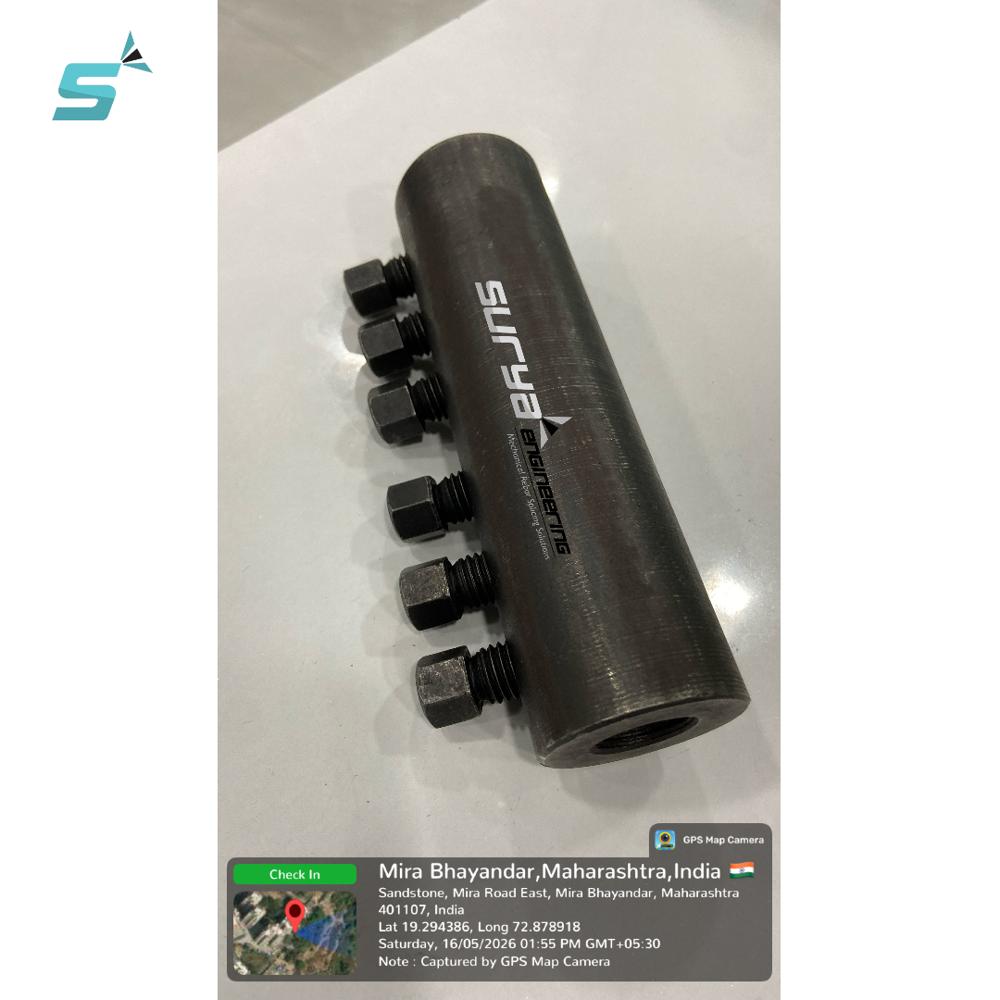
MBT Rebar Coupler
An MBT Rebar Coupler is a mechanical connector used to join two reinforcing steel bars (rebars) in reinforced concrete construction. It is particularly useful when the bars cannot conveniently be joined using a conventional threaded connection, or when a project requires a mechanical splice without preparing threads on the bar ends.
I'll explain it from an engineering, manufacturing, and buyer's perspective, using general mechanical and construction principles rather than copying website descriptions. Exact dimensions, torque requirements, strength ratings, and approved applications depend on the particular coupler design and must be verified against its technical documentation.
What is an MBT Rebar Coupler?
An MBT-type coupler generally uses a steel connecting sleeve with specially designed internal components and shear bolts. The bars are inserted into opposite ends of the coupler, and the bolts are tightened to secure the connection.
In common shear-bolt designs, the bolt tips engage with the reinforcing bars. The bolts are tightened until their heads shear off at a designed torque. This provides a defined installation endpoint, although it does not by itself prove that the completed splice meets the required tensile strength.
The key difference: A conventional threaded rebar coupler relies on prepared threads to transfer force, whereas an MBT-type shear-bolt coupler can engage the bar directly without requiring the bar ends to be threaded.
Not every mechanical coupler marketed under a similar name has the same internal design, so the precise construction should be checked for the model being purchased.
Main components of an MBT Rebar Coupler
1. Steel sleeve or body
The outer body holds the connection components in position and helps transfer force between the two reinforcing bars. Its dimensions, strength, and internal geometry influence the connection's performance.
2. Internal gripping elements
Serrated saddles or equivalent gripping features engage with the reinforcing bars. Their geometry helps resist bar movement under tensile loading.
3. Lock-shear bolts
Special bolts apply the force needed to engage the gripping mechanism. In a break-off-head design, the heads shear at a predetermined torque.
4. Reinforcing bars
These are the two steel bars being connected. Bar diameter, rib pattern, steel grade, surface condition, and insertion depth can all affect connection performance.
How does an MBT Coupler work?
Step 1: Insert the bars
Position the two rebars inside opposite ends of the coupler according to the specified insertion depth.
Step 2: Tighten the bolts
Tightening applies force to the internal gripping mechanism and engages it with the bars.
Step 3: Secure the connection
The engaged components resist relative movement between the bars and the coupler body.
Step 4: Verify installation
For a break-off-head design, confirm that all required bolt heads have sheared off and complete any additional checks required by the installation procedure.
Why would a construction buyer choose an MBT Coupler?
|
Buyer consideration
|
Practical advantage
|
|
No bar-end threading
|
Can reduce preparation work when a compatible threadless design is used.
|
|
Restricted working space
|
Useful where rotating long rebars or operating threading equipment is difficult.
|
|
Existing reinforcement
|
Can help connect fixed bars during structural repair, extension, or retrofit work.
|
|
Reduced lap length
|
A mechanical splice can replace an overlapping splice where the structural design permits it.
|
|
Installation verification
|
Break-off bolt heads provide a visible indication of the tightening endpoint.
|
|
Site productivity
|
May simplify installation by reducing specialised bar-end preparation equipment.
|
These advantages are conditional. An MBT coupler can be bulkier than other splice systems, requires access to its bolts, and may cost more per connection than some alternatives. The best option depends on labour, equipment, reinforcement congestion, and project requirements.
Where is an MBT Rebar Coupler useful?
High-rise buildingsJoining reinforcement in columns, walls, and other structural members where bar congestion or restricted access makes conventional splicing difficult.
Bridges and infrastructure
Connecting reinforcement in bridge piers, retaining structures, and other concrete infrastructure when the specified splice system is approved for the application.
Foundations and basements
Joining reinforcement where access, congestion, or the need to extend existing bars makes a mechanical connection practical.
Repair and retrofittingConnecting new reinforcement to existing bars when the bar condition, available length, anchorage, and structural design allow the selected coupler to be used.
MBT Coupler vs. Threaded Rebar Coupler
A functional comparison based on the connection mechanism, not a comparison of specific manufacturers.
|
Feature
|
MBT-type shear-bolt coupler
|
Threaded coupler
|
|
Bar-end preparation
|
Usually no threading required
|
Matching threads must be prepared or provided
|
|
Connection method
|
Mechanical gripping through bolts and internal features
|
Engagement between matching threads
|
|
Special equipment
|
Depends on model and installation procedure
|
Depends on threading method and coupler design
|
|
Fixed bars
|
Often useful where bar rotation is restricted
|
Depends on the threaded system and installation arrangement
|
|
Visual installation check
|
Break-off heads on applicable designs
|
Thread engagement and specified inspection checks
|
|
Main quality concern
|
Grip, bolt installation, insertion depth, and sleeve integrity
|
Thread quality, engagement length, and connection integrity
|
Neither system is automatically stronger. Strength and suitability must be established from the particular design's testing and the project's structural requirements.
The most important technical concept
A mechanical splice must transfer the force in one reinforcing bar to the other without unacceptable slip or premature failure. In an MBT-type design, that depends on the interaction between the bolt force, gripping features, bar surface, sleeve, and installation quality.
A coupler that is easy to install is not necessarily suitable for every structural application. Before specifying it for a column, beam, seismic connection, or other critical structural element, verify its performance against the applicable design requirements.
FAQ's of Mbt Rebar Coupler:
Q: How is the MBT Rebar Coupler installed?
A: The MBT Rebar Coupler features a mechanical installation process utilizing its bolted coupler design, enabling easy and secure connections between standard-sized rebars on-site.
Q: What materials are used in manufacturing the MBT Rebar Coupler?
A: This coupler is manufactured from high-quality mild steel with a galvanized surface, ensuring longevity and superb corrosion resistance.
Q: When can I expect shipment and delivery of the MBT Rebar Coupler?
A: Once your order is confirmed, shipment takes place promptly-delivery times will be provided based on your location, with both domestic and export markets efficiently served.
Q: Where can I use the MBT Rebar Coupler?
A: It is designed for construction applications, effectively joining rebars in reinforced concrete frameworks, making it suitable for various structural projects.
Q: What are the main benefits of using the MBT Rebar Coupler?
A: Main benefits include impeccable durability, easy installation, corrosion resistance, and compliance with standard rebar sizes, resulting in reliable structural connections.
Q: How does the sample policy work for this product?
A: Clients can request product samples prior to placing bulk orders, allowing them to assess the coupler's quality and ensure it meets their project requirements.



 Send Inquiry




 Send Inquiry

 Send Inquiry
 Send SMS

 English
 Spanish
 French
 German
 Italian
 Chinese (Simplified)
 Japanese
 Korean
 Arabic
 Portuguese
