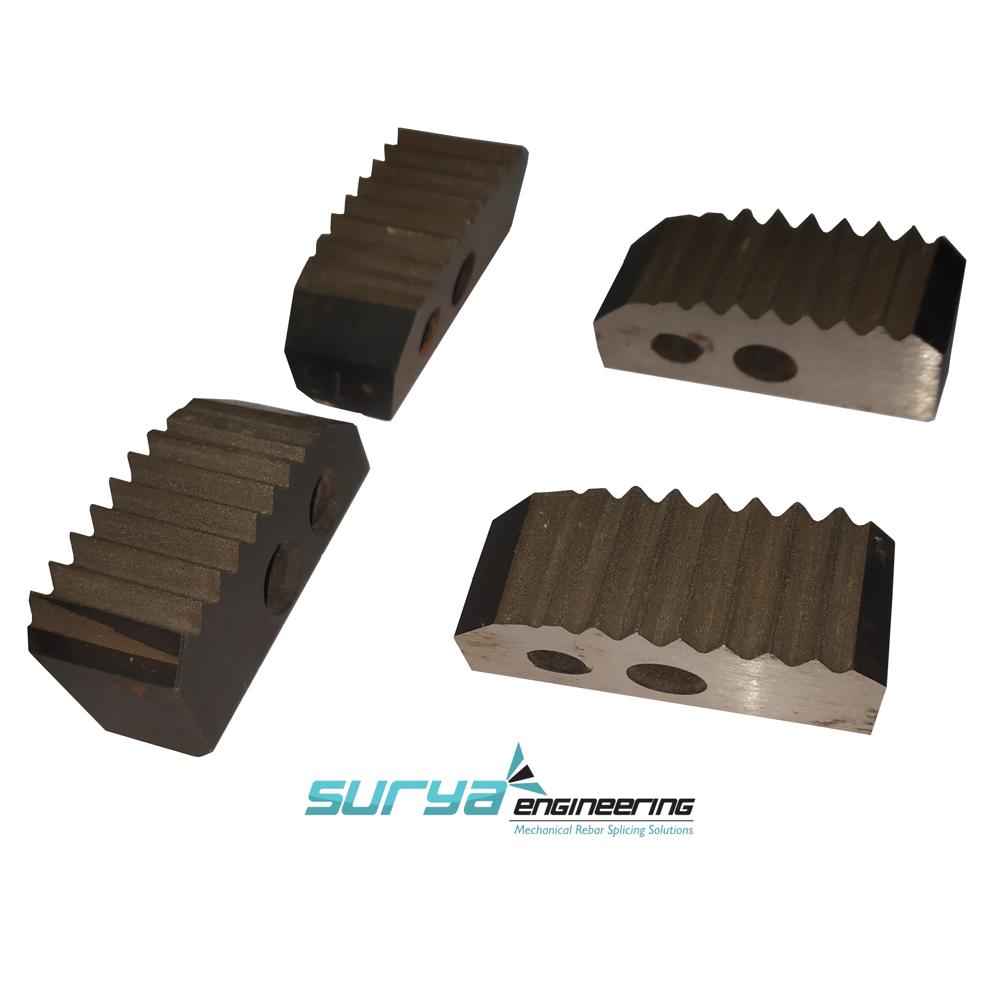
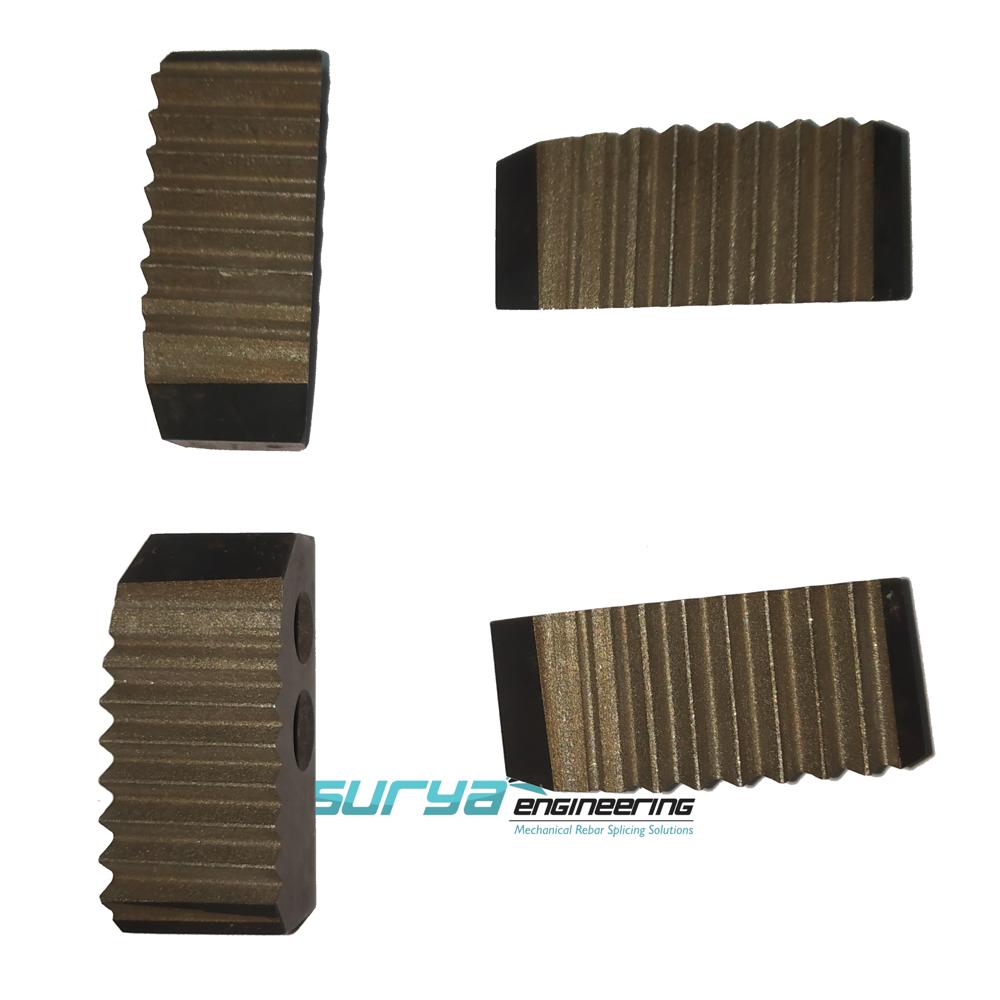
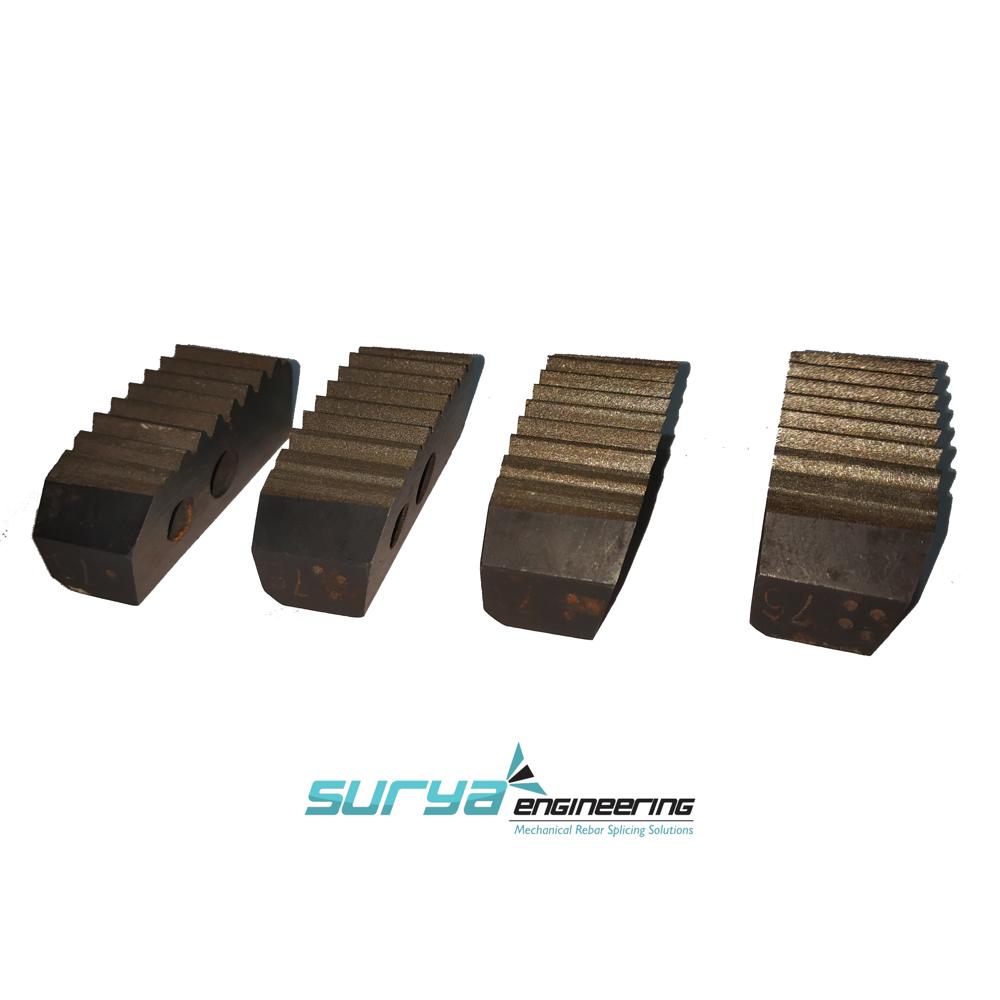
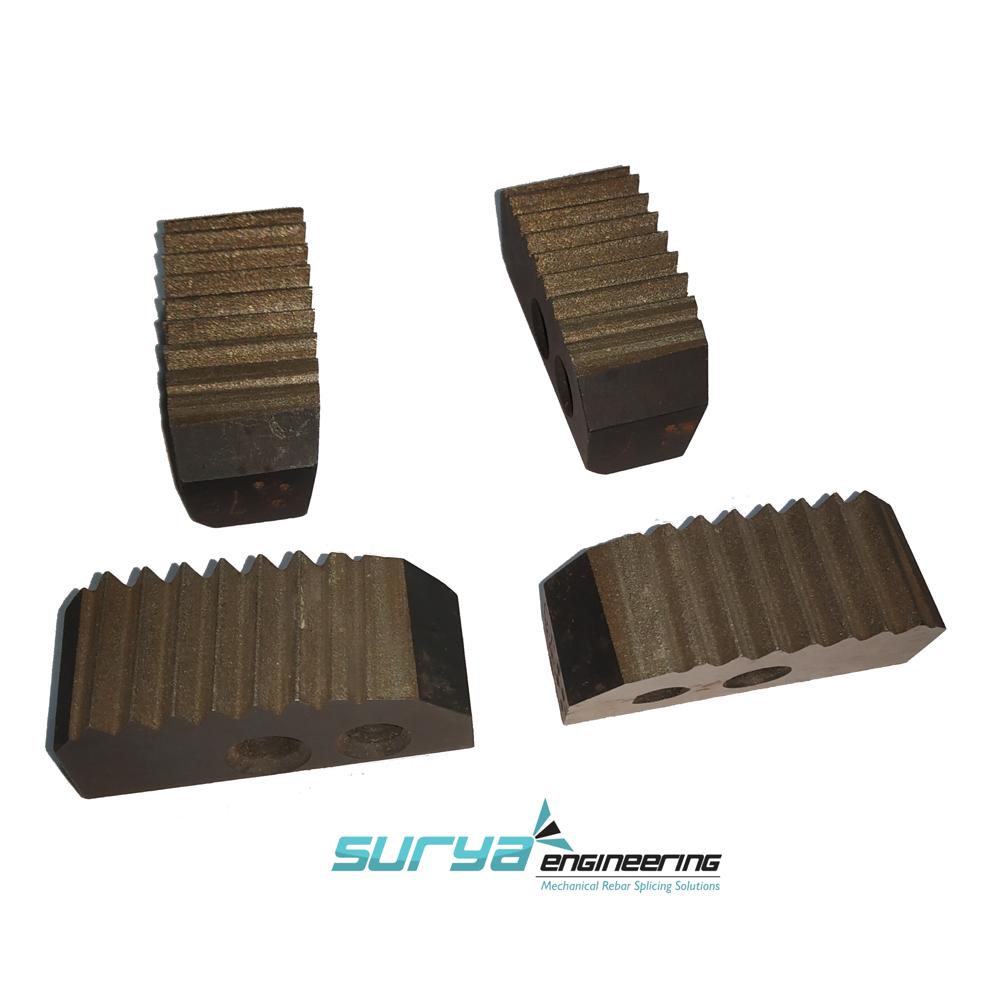
Surya Engineering BST Machine Chaser
What It Is
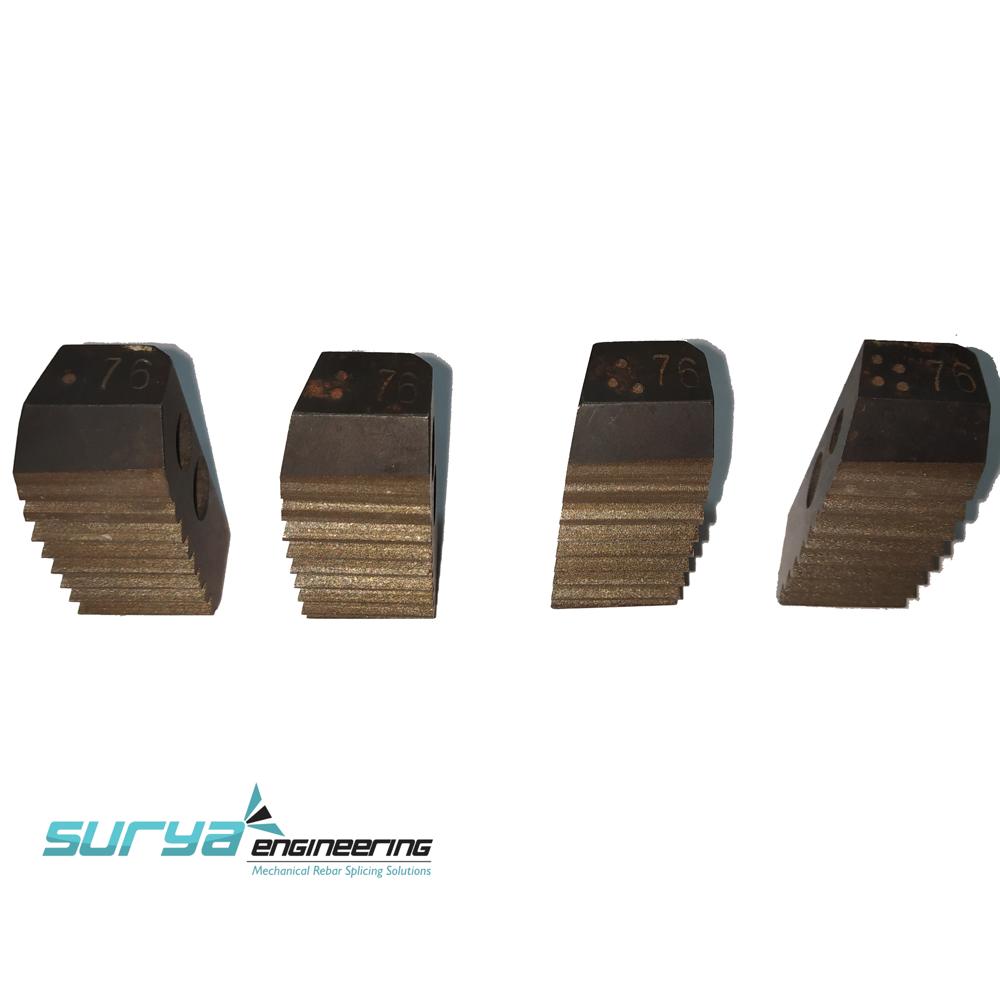
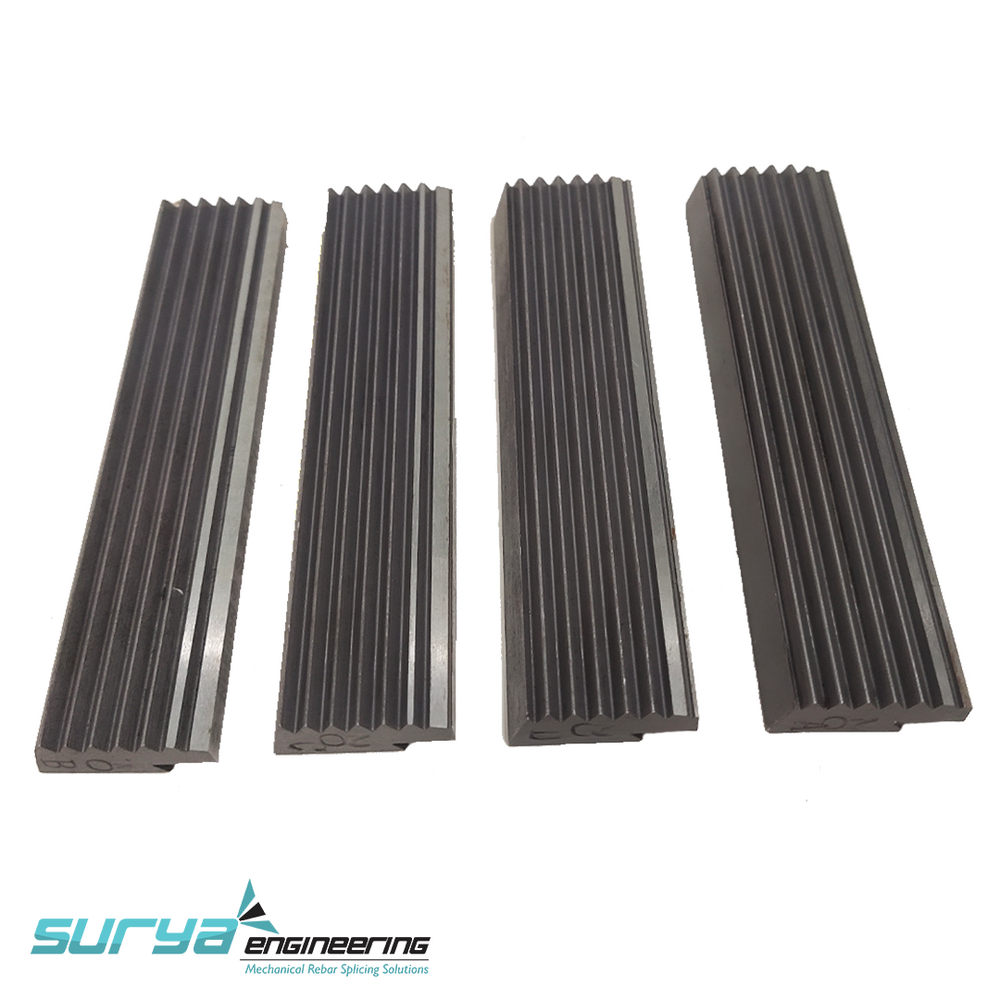
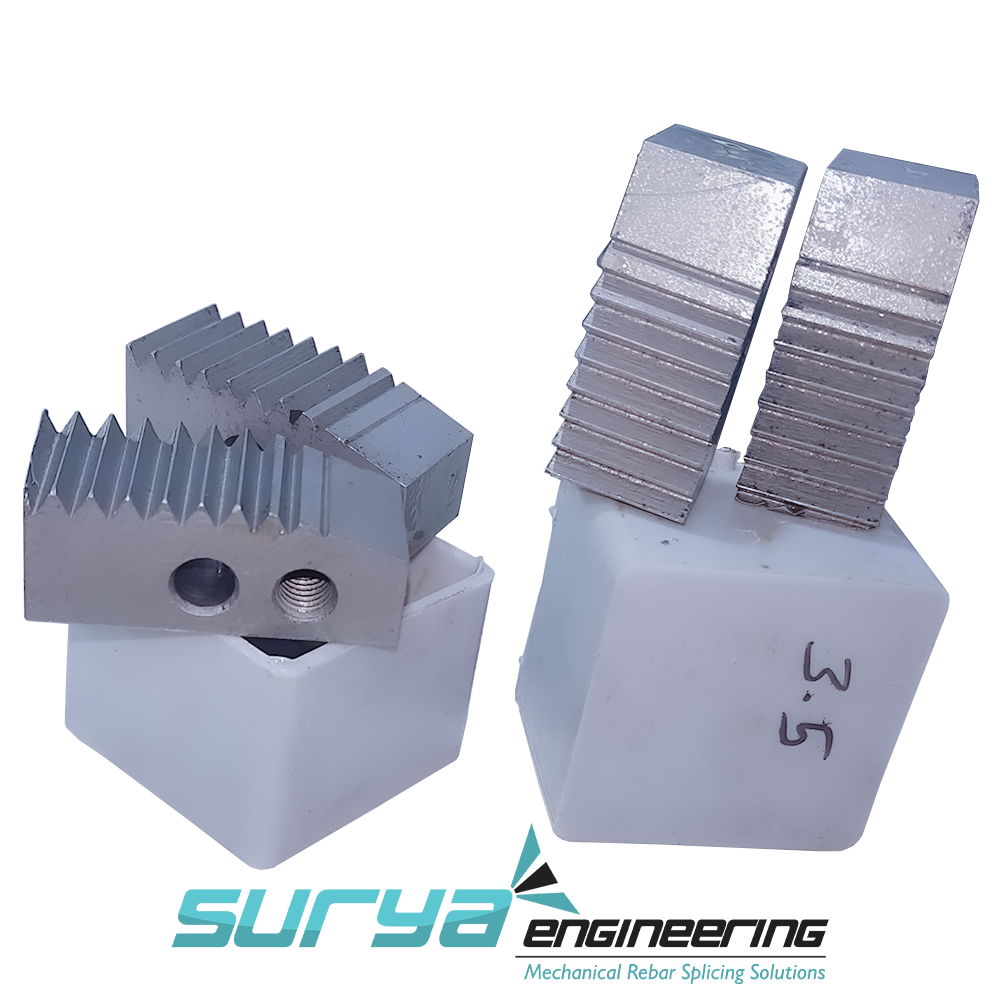
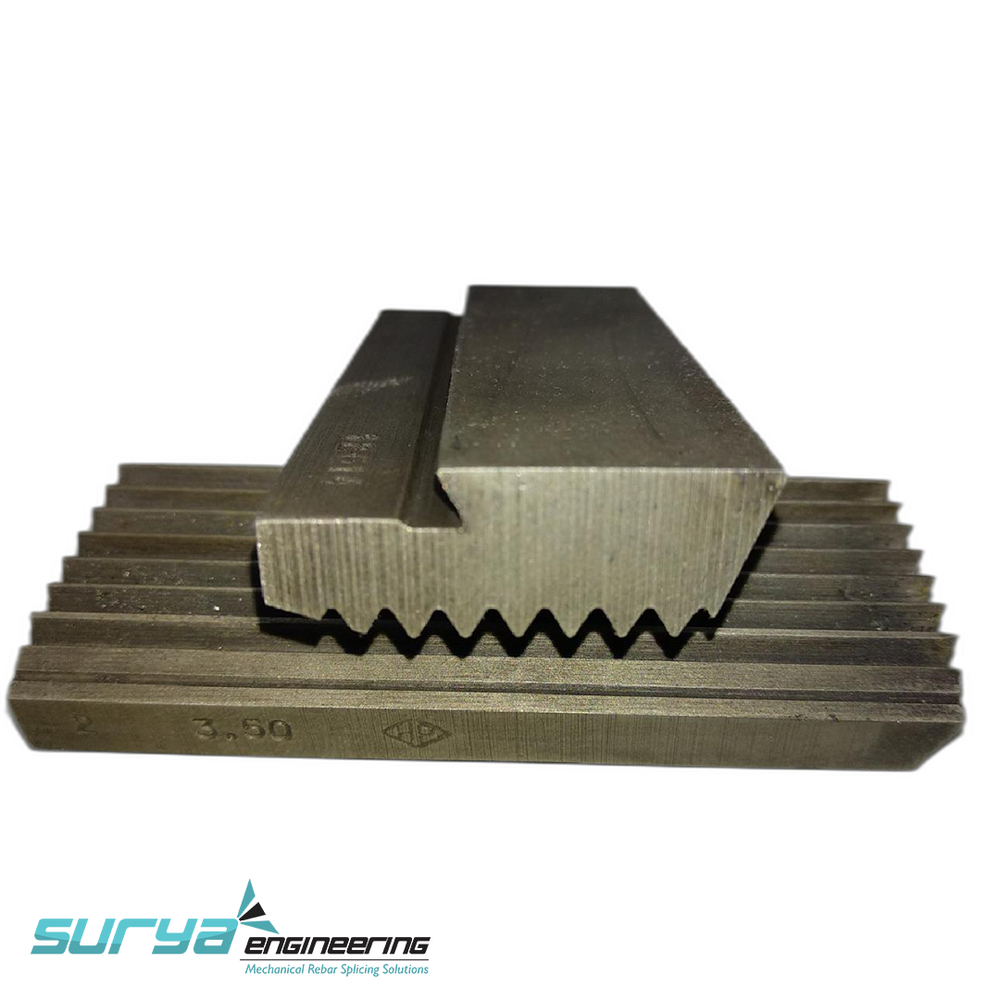
A chaser (also called a thread chaser or die chaser) is the actual cutting tool used inside the die head of a pipe or bolt threading machine. Rather than a single solid die, threading machines use a set of multiple chasers (typically 4 for pipe dies, sometimes 25) that are mounted radially in a die head. Together they form a complete thread profile and cut the external thread on a pipe, rod, or bolt as it rotates or as the die head is fed over it.
What is a Chaser?
A chaser is a multi-toothed cutting tool (insert/blade) that is mounted into a die head of a threading machine. Unlike a solid die that cuts a thread in one pass, chasers are typically used in sets of four (sometimes 2, 5, or 6) and work together to progressively cut threads on the workpiece. Each chaser has a series of teeth arranged in a specific pattern to shape the thread profile.
Construction and Material
Materials Used:
- High-Speed Steel (HSS) Most common; good for general-purpose threading of mild steel pipes.
- High-Speed Steel with Cobalt (HSS-Co) Better heat and wear resistance; used for harder materials like stainless steel.
- Carbide-Tipped Chasers For high-production environments and hard materials.
- Alloy Steel Economical option for softer materials.
Key Parts of a Chaser
- Cutting teeth ground to the thread profile (60 for NPT/BSPT/UNC, 55 for BSP/Whitworth).
- Chamfer / lead the first 12 teeth are tapered to allow the chaser to start cutting progressively and reduce initial load.
- Throat angle the chamfer angle on the entry side that distributes cutting among the leading teeth.
- Rake angle the angle of the cutting face; it is adjusted for different materials (positive rake for soft steel, lower rake for stainless or brass).
- Relief / clearance ground behind the cutting edge so only the edge contacts the work and friction is minimized.
- Body / shank the portion that seats in the die head slot and is clamped by the cover plate or locking mechanism.
- Taper (for pipe chasers) NPT/BSPT chasers are ground to produce the standard 1:16 pipe taper (1 per side).
Types of Chasers
| Type |
Use |
| Tangential chasers |
Mounted tangentially; teeth are on the end, long tool life because they can be reground many times. |
| Radial chasers |
Mounted pointing toward the center; most common in pipe threading die heads. |
| Circular chasers |
Disc-shaped, used in self-opening die heads on turret lathes and automatic machines. |
| Pipe chasers (NPT, BSPT) |
Taper thread for pipes plumbing, gas, fire protection. |
| Bolt chasers (UNC, UNF, Metric, BSW) |
Straight thread for rods and bolts. |
| Receding chasers |
Used in receding (NPT) die heads where the chasers gradually move outward to form the taper. |
| Stainless-steel chasers |
Special geometry (lower rake, extra-sharp edges) for threading stainless pipe. |
| Coated chasers |
Titanium-nitride coated for longer life and less built-up edge.
|
Common Sizes
Threading machine chasers are available in various pipe size ranges:
- 1/8" to 3/4" (small size set)
- 1" to 2" (standard set)
- 2-1/2" to 4" (large size set)
- 4" to 6" (heavy-duty applications)
Popular machines using these chasers include Ridgid 300, 535, 1224, Rex, Rothenberger, and Asada threading machines.
How It Works
- The pipe is clamped in the chuck and rotated by the machine.
- The die head, loaded with the chaser set, is pushed onto the pipe end by the carriage.
- The chamfered leading teeth bite in, and the thread pitch of the chaser self-feeds the head along the pipe.
- Cutting oil is flooded continuously to cool, lubricate, and flush chips.
- For taper threads, when the correct length is reached, the die head opens automatically (trip mechanism), retracting the chasers.
- The die head is backed off and the finished thread is inspected with a ring gauge.
Advantages of Using Chasers
- High precision and consistent thread quality
- Longer tool life compared to solid dies
- Resharpenable can be reground multiple times
- Interchangeable one die head can accommodate chasers for different sizes
- Faster threading compared to manual dies
- Better chip evacuation due to open design.
Maintenance and Care
- Regular Cleaning Remove chips and oil residue after each use.
- Proper Lubrication Always use high-quality threading oil during operation.
- Correct Installation Match numbered chasers (1-2-3-4) to corresponding slots.
- Sharpening Regrind cutting faces when teeth become dull.
- Storage Store in a dry place to prevent corrosion.
- Inspection Check for chipped teeth, cracks, or excessive wear before use.
Common Problems and Causes
| Problem |
Possible Cause |
| Rough threads |
Dull chasers, insufficient oil, wrong RPM |
| Torn threads |
Worn chasers, wrong chaser type, hard material |
| Oversized threads |
Worn chasers, improper die head setting |
| Undersized threads |
New chasers not properly adjusted |
| Chaser breakage |
Overloading, hard material, incorrect installation |
Applications
- Plumbing Threading water and gas pipes
- Oil & Gas Industry Threading casing and tubing
- Construction Steel pipe fabrication
- Fire Fighting Systems Sprinkler pipe threading
- HVAC Systems Ductwork and piping
- Industrial Manufacturing Bolt and stud production
if you have any enquire Send Inquiry or Contact on surya engineering
FAQ's of BST Machine Chaser:
Q: How does the BST Machine Chaser ensure precise threading on rebar?
A: The BST Machine Chaser is engineered with high-strength D2 material and a rectangular design, delivering precise and consistent threading results, especially for rebar applications.
Q: What are the primary applications for this machine chaser?
A: This machine chaser is primarily used for threading on rebar in construction and infrastructure projects, supporting professionals who require reliable and durable threading tools.
Q: Where is the BST Machine Chaser manufactured and distributed from?
A: The BST Machine Chaser is expertly manufactured in India and is distributed globally, available to exporters, importers, distributors, and manufacturers alike.
Q: When can I expect a sample to be shipped after placing a request?
A: Samples are shipped promptly once your request is processed and in accordance with our sample policy, ensuring minimal waiting time for your evaluation.
Q: What are the payment terms available for purchasing the BST Machine Chaser?
A: Flexible payment terms are offered to accommodate various business needs, including options tailored for both bulk and sample purchases.
Q: What are the benefits of using a gilt-edged, D2-grade chaser?
A: Using a gilt-edged, D2-grade chaser provides excellent wear resistance, high strength, and longevity, resulting in lower tool expenditure and increased productivity.



 Send Inquiry




 Send Inquiry

 Send Inquiry
 Send SMS

 English
 Spanish
 French
 German
 Italian
 Chinese (Simplified)
 Japanese
 Korean
 Arabic
 Portuguese
