About Suspended Platform
What is a Suspended Platform?
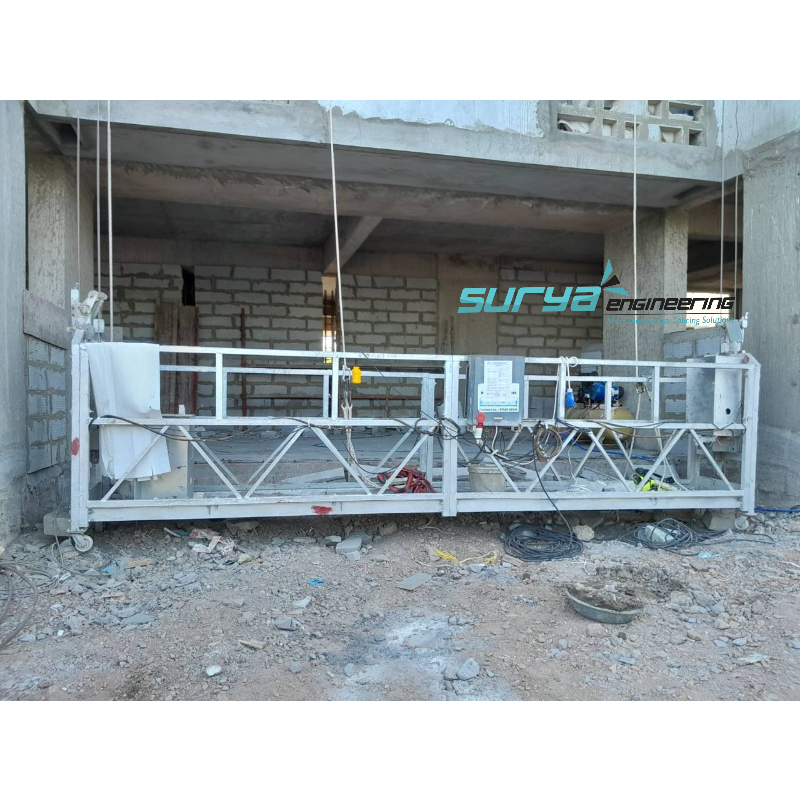
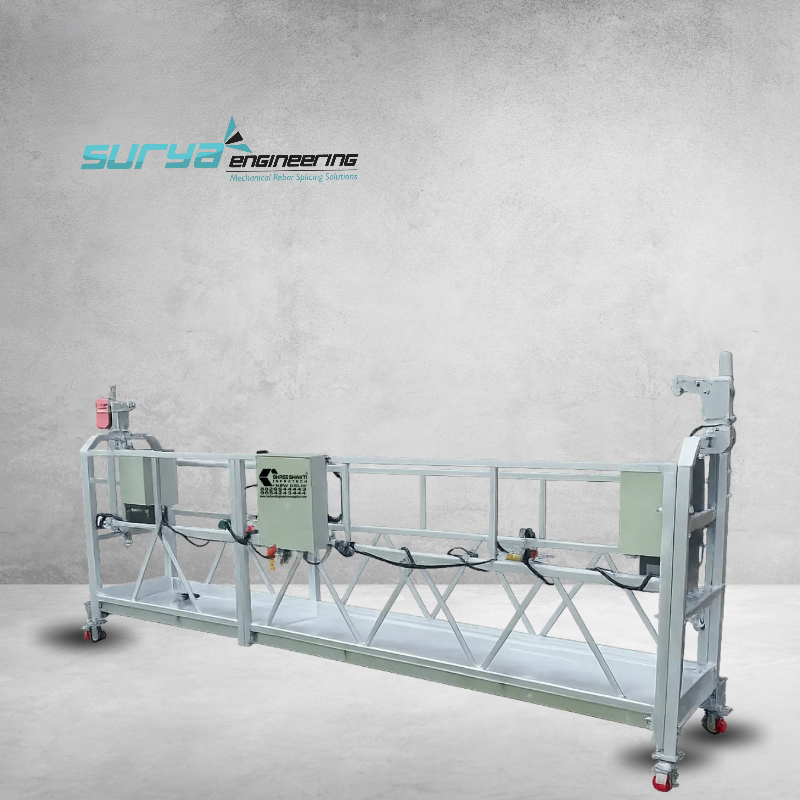
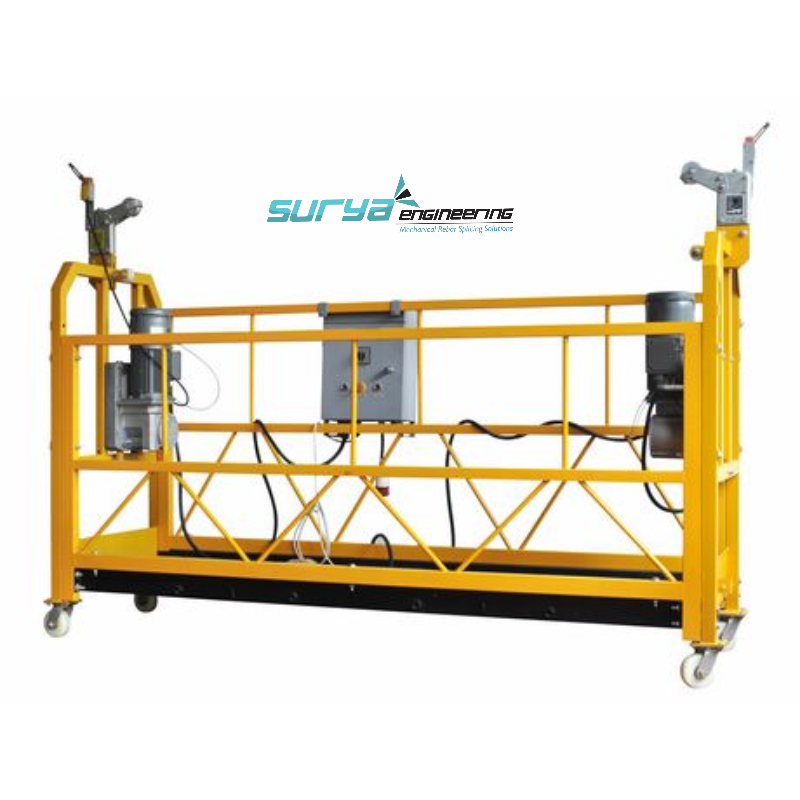
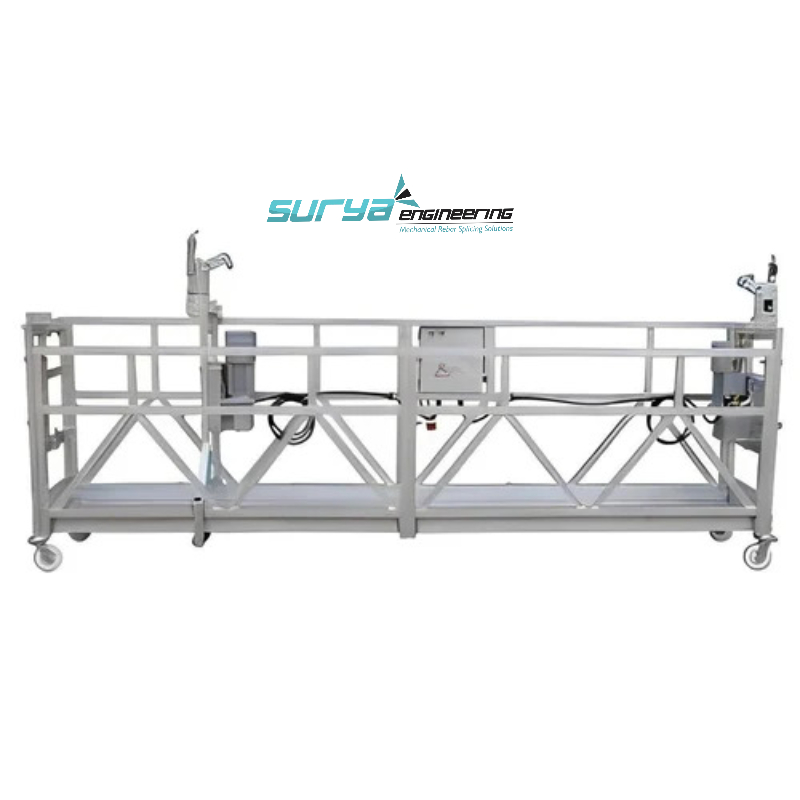
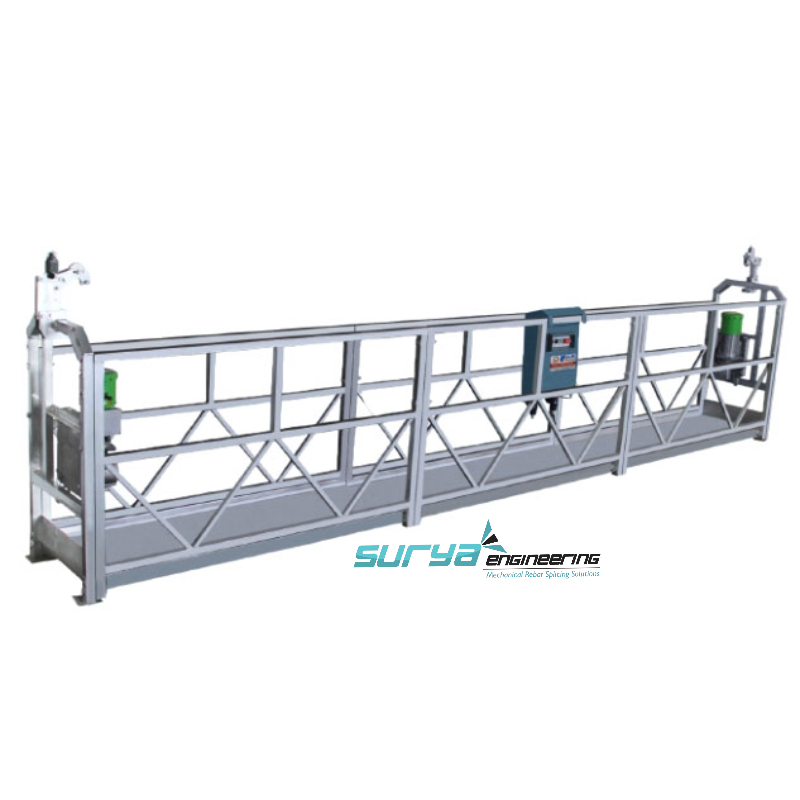
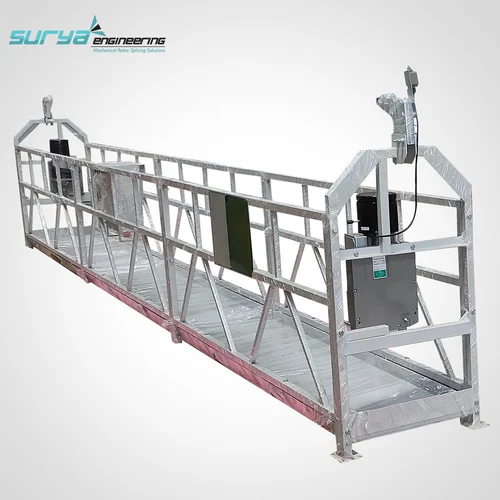
A Suspended Platform is a temporary elevated working platform suspended from the roof or top of a structure using wire ropes and suspension mechanisms. The platform can be raised or lowered using electric hoists, allowing workers to safely access different levels of a building without requiring conventional scaffolding.
Suspended platforms are widely used for exterior construction, painting, cleaning, repairs, glazing, and maintenance work on high-rise buildings.
Why is a Suspended Platform Used?
Traditional scaffolding systems can be time-consuming, expensive, and less flexible for tall structures. Suspended platforms offer a safer and more efficient alternative.
Key Reasons for Using Suspended Platforms
- Safe access to high-rise structures
- Faster installation compared to scaffolding
- Reduced labor costs
- Easy vertical movement
- Increased worker productivity
- Cost-effective maintenance solution
- Suitable for difficult-to-access areas
- Improved project efficiency
- Enhanced workplace safety
Classification of Suspended Platforms
Manual Suspended Platform
Operated manually using mechanical lifting systems.
Electric Suspended Platform
Powered by electric hoists for smooth vertical movement.
ZLP Series Suspended Platform
The most commonly used suspended access platform for construction and faade applications.
Customized Suspended Platform
Designed for special industrial, bridge, chimney, and infrastructure projects.
Curved Suspended Platform
Suitable for circular or uniquely shaped structures.
Applications of Suspended Platforms
Building Construction
- External plastering
- Painting work
- Cladding installation
- Glass faade fixing
Building Maintenance
- Window cleaning
- Faade inspection
- Repair and renovation work
Infrastructure Projects
- Bridges
- Dams
- Flyovers
- Chimneys
Industrial Applications
- Power plants
- Refineries
- Petrochemical facilities
- Manufacturing plants
Commercial Buildings
- Shopping malls
- Hotels
- Office towers
- Airports
Installation Procedure
Step 1: Roof Inspection
Inspect the building roof and determine suspension locations.
Step 2: Suspension Mechanism Setup
Install suspension brackets and counterweight systems.
Step 3: Wire Rope Installation
Fix high-strength galvanized steel wire ropes securely.
Step 4: Platform Assembly
Assemble the platform sections according to project requirements.
Step 5: Hoist Installation
Mount electric hoists and safety locks.
Step 6: Electrical Connections
Connect control panels and power supply systems.
Step 7: Safety Inspection & Trial Run
Perform load testing and operational checks before use.
IS Testing Standards & Quality Requirements
Suspended Platforms in India are generally designed, manufactured, and tested in accordance with applicable safety and lifting equipment standards.
Relevant Standards
- IS 3696 (Part 1 & 2) Safety Code for Scaffolds and Ladders
- IS 4573 Continuous Hot-Dip Zinc Coating on Steel Articles
- IS 6594 Safety Requirements for Cranes and Hoisting Equipment
- Applicable provisions under Building & Construction Safety Regulations
Quality Testing Includes
- Load Capacity Testing
- Wire Rope Strength Testing
- Hoist Performance Testing
- Safety Lock Testing
- Platform Stability Verification
- Electrical Safety Inspection
- Emergency Brake Testing
- Structural Integrity Assessment
Advantages of Suspended Platforms
Enhanced Safety
Equipped with safety locks, wire ropes, and emergency braking systems.
Cost Effective
Eliminates the need for extensive scaffolding systems.
Faster Project Completion
Quick installation and operation improve productivity.
Easy Mobility
Allows smooth vertical movement across building elevations.
Versatile Applications
Suitable for construction, maintenance, and industrial projects.
Reduced Labor Requirement
Requires fewer resources than traditional access methods.
Space Saving
Occupies minimal ground space around the building.
High Durability
Manufactured using premium-grade steel and components.
Why Choose Surya Engineering?
Surya Engineering is a leading manufacturer and supplier of suspended access systems in India.
Our Strengths
High-Quality Manufacturing
Heavy-Duty Steel Construction
Advanced Safety Features
Reliable Electric Hoists
Easy Installation & Operation
Competitive Pricing
Technical Support & Training
Genuine Spare Parts Availability
Customized Solutions Available
Pan India Service Network
Pan India Supply Network
Surya Engineering supplies Suspended Platforms across:
Mumbai, Pune, Thane, Nashik, Nagpur, Ahmedabad, Surat, Vadodara, Rajkot, Bengaluru, Mysuru, Hyderabad, Chennai, Coimbatore, Delhi, Noida, Gurugram, Faridabad, Jaipur, Jodhpur, Indore, Bhopal, Lucknow, Kanpur, Chandigarh, Ludhiana, Kolkata, Durgapur, Kochi, Visakhapatnam, Vijayawada, Bhubaneswar, Raipur, Ranchi, Patna, Guwahati and all major cities across India.
Suspended Platform Manufacturer India, Suspended Platform Supplier Mumbai, Gondola System Manufacturer, ZLP Suspended Platform India, Building Maintenance Unit Supplier, Construction Suspended Platform, Electric Suspended Platform Manufacturer, High Rise Access Platform India, Faade Maintenance Equipment, Suspended Cradle Platform Supplier, Gondola Manufacturer India, Suspended Working Platform Mumbai, Construction Access Equipment India, Surya Engineering Mumbai.
Versatility for Industry and ConstructionDesigned to cater to industrial and construction requirements, this suspended platform offers dependable support for tasks like painting and material handling. The durable aluminum conductor and steel-reinforced structure ensure operational efficiency and reliability, making it suitable for use by distributors, exporters, importers, manufacturers, and traders alike.
Reliable Materials and Enhanced SafetyConstructed with stranded aluminum conductors and insulated using ETEE, PE, and PTFE, the platform guarantees excellent electrical and mechanical performance. The steel shield and core reinforce structural stability, while the jacket's black color provides UV resistance and a professional look. This key combination of materials helps maintain safety in various environments.
FAQ's of Suspended Platform:
Q: How is the suspended platform installed for industrial or construction use?
A: Installation typically involves securing the platform using the provided steel core and shield mechanisms. It must be anchored appropriately at the work site, following safety protocols, to ensure stability and safe load-bearing during operations.
Q: What are the main benefits of using this platform in painting and industrial applications?
A: The platform is optimized for painting and industrial tasks, offering reliability, a high load capacity of 200 kg, and excellent resistance to corrosion and electrical faults due to its insulation materials. Its portable 3-meter length and robust aluminum and steel construction provide both safety and efficiency.
Q: When should the suspended platform be used in a project?
A: This platform is suitable for use during tasks that require elevated support, such as painting, maintenance, or overhead installation in industrial and construction settings. Its design is ideal when strength, durability, and reliable insulation are required.
Q: Where can the suspended platform be stored when not in use?
A: For optimal longevity, store the platform at or around 43F (6C), away from excess moisture and direct sunlight. Ensure the area is dry and secure to prevent any potential damage to the insulation or metal components.
Q: What process should be followed for cleaning and maintaining the platform?
A: After each use, inspect and clean the platform with a mild detergent and water, ensuring all paint residues and industrial debris are removed. Regular maintenance checks on the insulation, connectors, and steel components will extend its lifespan and maintain safety standards.
Q: Can the platform be customized for different connector colors or dimensions?
A: Currently, connectors are available in white and yellow colors, and the standard dimensions are 200*12*60 mm with a length of 3 meters. For further customization requirements, it's advisable to contact the manufacturer or supplier directly.


 Send Inquiry




 Send Inquiry

 Send Inquiry
 Send SMS

 English
 Spanish
 French
 German
 Italian
 Chinese (Simplified)
 Japanese
 Korean
 Arabic
 Portuguese
