About Steel Bar Bender
What Is a Bar Bending Machine?
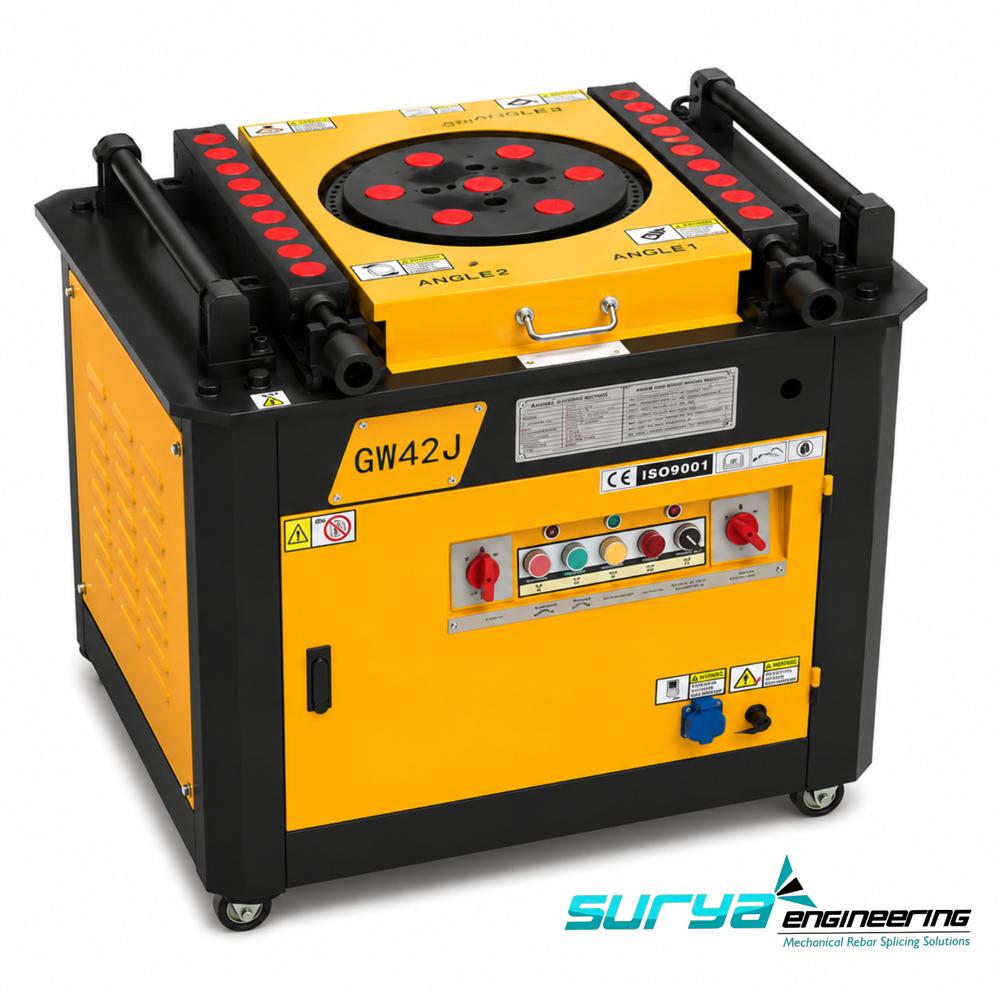
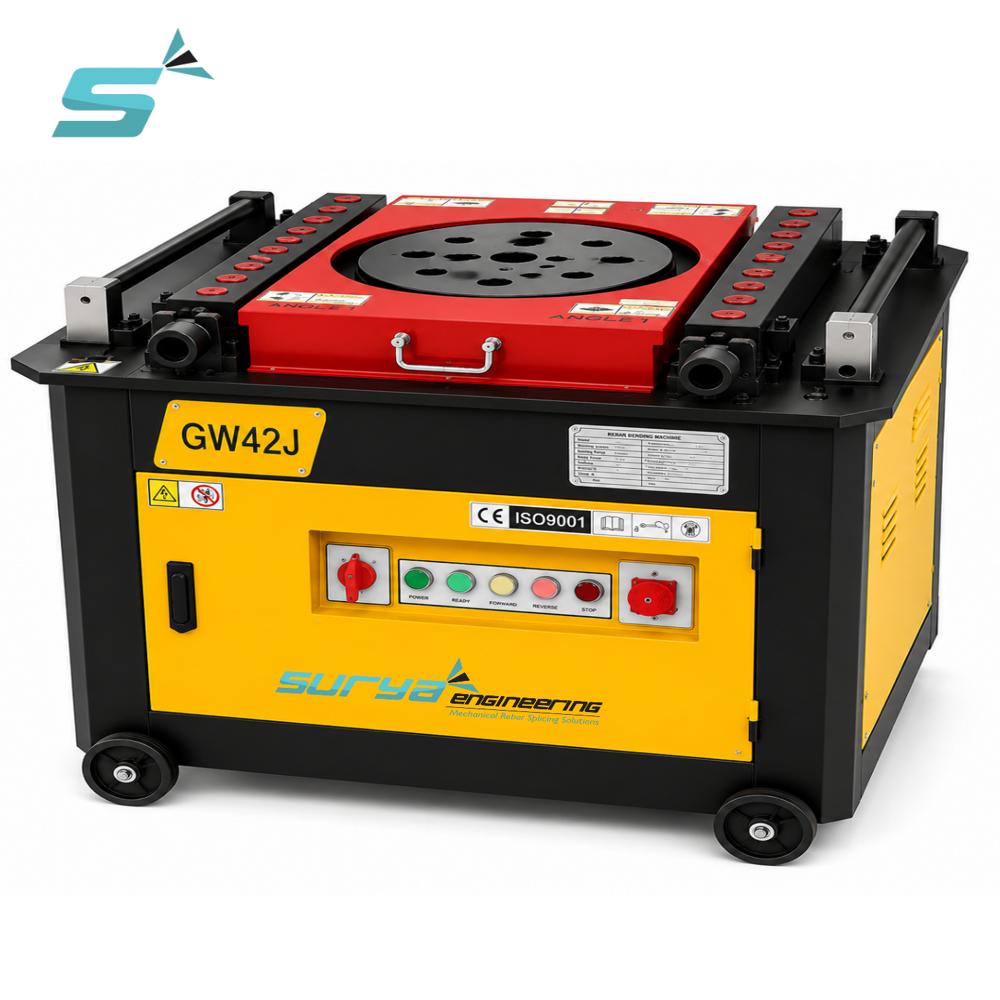
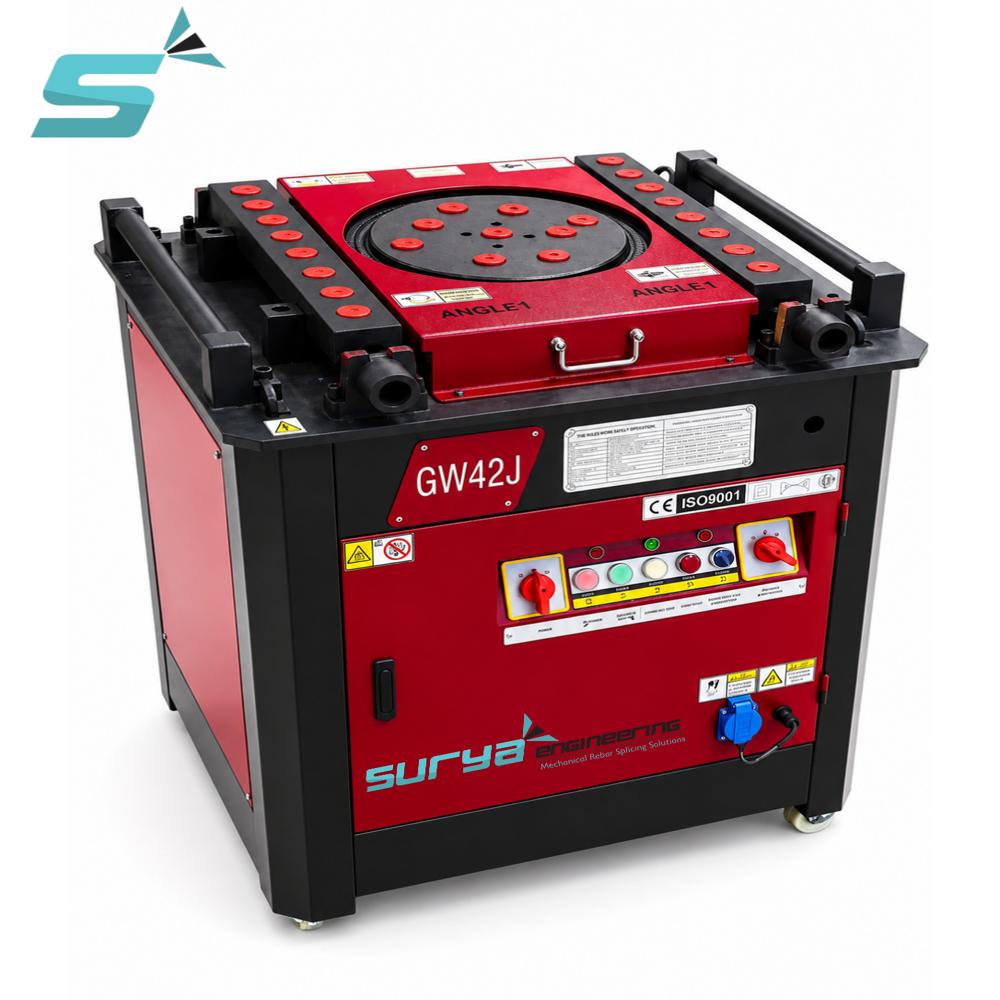
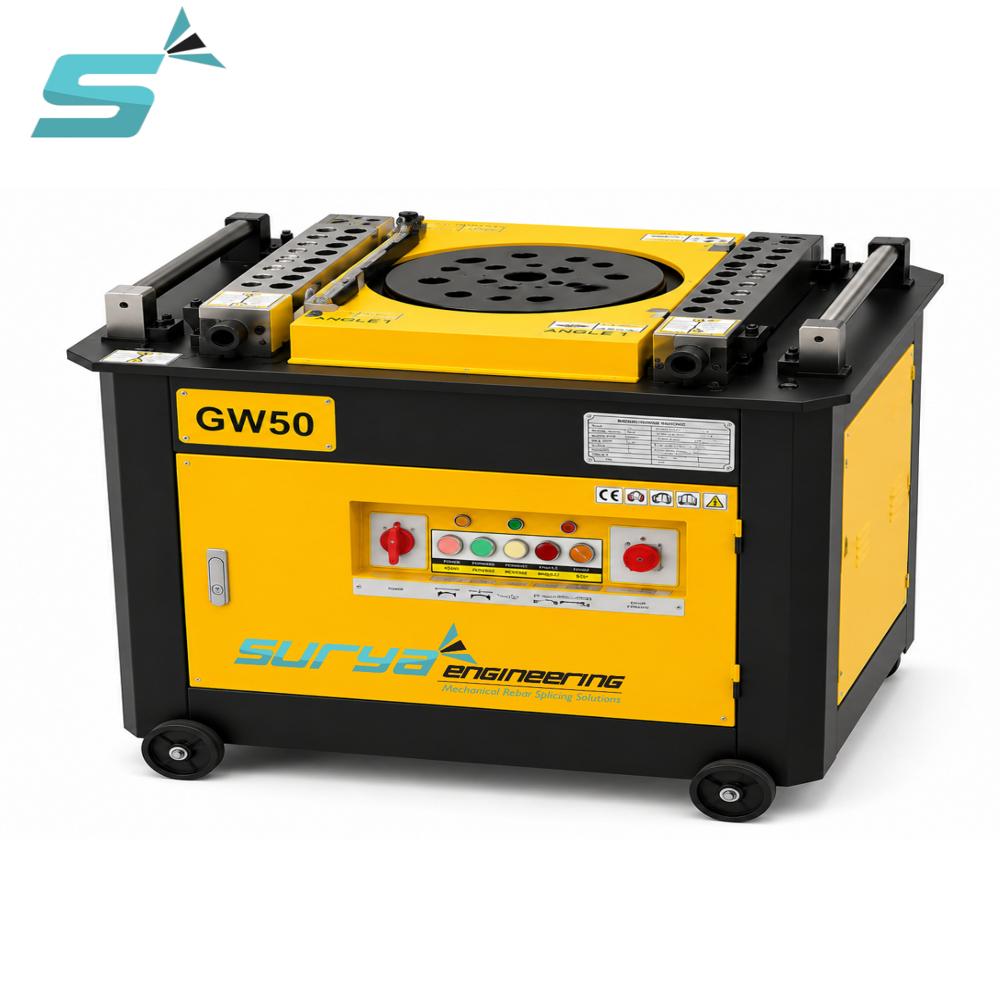
A Bar Bending Machine is a construction and industrial machine designed to bend TMT bars, reinforcement steel bars, and rebars into specific angles and shapes according to construction requirements. It is widely used in residential buildings, commercial projects, bridges, highways, industrial structures, and infrastructure development.
The machine helps contractors, construction companies, steel fabricators, and reinforcement bar processing units achieve accurate and consistent bending results while reducing manual effort and processing time.
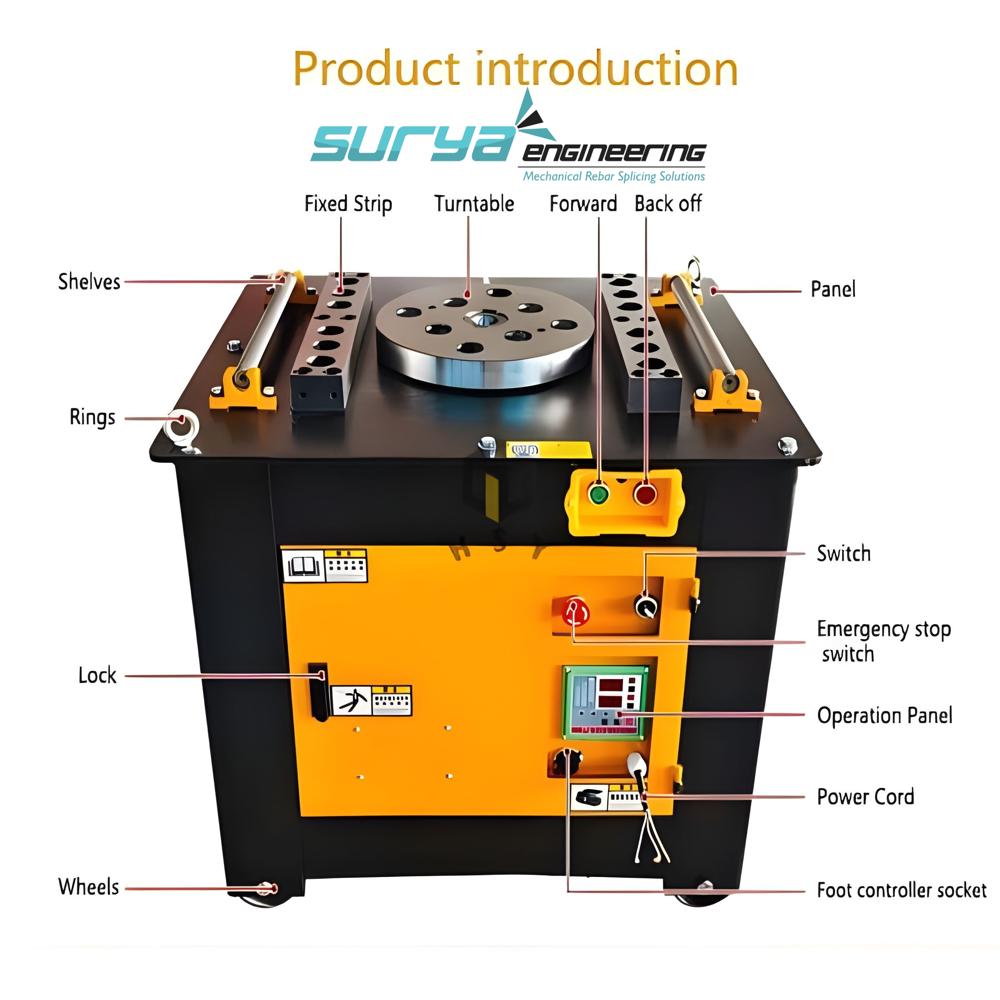
Unlike manual bending methods, a bar bending machine uses a powered bending mechanism, a bending disc, a central pin, and suitable bending pins to bend reinforcement bars to the required angle. Depending on the machine model, operators can perform common bending operations such as 45, 90, 135, and 180 bends.
How Does a Bar Bending Machine Work?
A bar bending machine operates by applying controlled mechanical force to a reinforcement bar placed on the bending platform.
The typical working process includes:
-
Bar Placement: The TMT bar or rebar is positioned on the machine's bending disc between the central pin and bending pin.
-
Angle Selection: The required bending angle is selected using the machine's control system or angle-setting mechanism, depending on the model.
-
Bending Operation: The motor-driven mechanism rotates the bending disc and applies force to bend the bar.
-
Angle Control: The bending operation stops at the selected angle or when the operator stops the machine, depending on the control system.
-
Bar Removal: The finished reinforcement bar is removed and checked against the required dimensions and bending specifications.
Key Features of a Bar Bending Machine
-
Accurate Bar Bending: Designed to bend reinforcement bars to specified angles for construction applications.
-
High Productivity: Supports faster processing of reinforcement steel compared with manual bending methods.
-
Heavy-Duty Construction: Industrial models may feature a robust steel body and reinforced bending components for demanding working conditions.
-
Consistent Results: Helps maintain uniform bending angles across repeated production operations.
-
Operator-Friendly Controls: Depending on the model, controls may include manual switches, foot pedals, angle selectors, or automatic stopping mechanisms.
-
Versatile Applications: Suitable for bending TMT bars and rebars used in different reinforced concrete structures.
-
Reduced Manual Effort: Minimizes the physical effort required for repetitive steel bar bending.
-
Workshop and Site Use: Available in different configurations for construction sites, fabrication workshops, and rebar processing facilities.
Types of Bar Bending Machine Models
1. Portable Bar Bending Machine
Designed for construction sites and smaller reinforcement jobs where easy transportation and compact size are important.
-
Best for: Small and medium projects
-
Operation: Electric or manual, depending on model
-
Main benefit: Easy transportation and setup
2. Heavy-Duty Bar Bending Machine
Built for regular bending of reinforcement bars in demanding construction and steel fabrication environments.
-
Best for: Large construction projects
-
Operation: Generally electric
-
Main benefit: Suitable for repetitive bending operations
3. Automatic Bar Bending Machine
Uses an automated control system to perform bending operations with reduced manual intervention.
-
Best for: High-volume rebar processing
-
Operation: Automatic or programmable
-
Main benefit: Consistent production and reduced operator effort
4. CNC Bar Bending Machine
Uses computer numerical control to produce programmed bends. Some models are designed specifically for stirrups and complex bar shapes.
-
Best for: Industrial rebar processing facilities
-
Operation: Computer-controlled
-
Main benefit: Repeatable, programmed bending
5. Manual Bar Bending Machine
Uses a manually operated mechanism to bend reinforcement bars.
Why Is a Bar Bending Machine Necessary?
1. Accurate Bending
Helps bend TMT bars and reinforcement steel to the required angles and shapes according to construction drawings.
2. Saves Time
Processes reinforcement bars faster than many manual methods, especially when large quantities are required.
3. Reduces Manual Effort
Makes repetitive bending easier for construction workers and steel fabricators.
4. Consistent Bending
Helps produce repeatable shapes for beams, columns, slabs, foundations, and other reinforced concrete structures.
Is a Bar Bending Machine compulsory?
|
Project type
|
Is a machine necessary?
|
|
Small house construction
|
Not always; manual methods may be sufficient for limited work
|
|
Multi-storey buildings
|
Usually beneficial
|
|
Bridges and highways
|
Highly beneficial for large quantities of reinforcement
|
|
Large construction companies
|
Often essential for productivity
|
|
Rebar fabrication factories
|
Generally important for efficient production
|
Bar Bending Machine Power Consumption
|
Machine type
|
Typical motor power (illustrative)
|
Electricity used per hour at full rated load
|
|
Small electric machine
|
1.52.2 kW
|
1.52.2 units
|
|
Medium-capacity machine
|
34 kW
|
34 units
|
|
Heavy-duty machine
|
5.57.5 kW
|
5.57.5 units
|
|
Industrial automatic machine
|
7.515 kW or more
|
7.515 units or more
|
One electricity unit = 1 kWh. These are illustrative ranges, not verified specifications for a particular model.
Example: Electricity cost calculation
Suppose your machine has a 4 kW motor, runs for 5 hours, and your electricity tariff is 8 per unit.
-
Power consumption at full rated load: 4 kW
-
Operating time: 5 hours
-
Electricity used: 4 5 = 20 units
-
Estimated electricity cost: 20 8 = 160 per day
Actual consumption may be lower because the motor does not necessarily run at full load continuously.
Bar Bending Machine Maintenance Guide
1. Daily Maintenance
-
Clean dust, steel particles, and debris from the machine.
-
Inspect the bending pins and bending disc for wear.
-
Check the power cable, switches, and emergency stop.
-
Look for unusual noise or vibration.
2. Lubrication
-
Lubricate bearings and moving parts as specified by the manufacturer.
-
Check gearbox oil levels where applicable.
-
Use the recommended lubricant and replacement intervals.
3. Motor and Electrical Maintenance
-
Inspect the motor and electrical connections.
-
Keep ventilation openings free of dust.
-
Check for overheating, damaged insulation, or loose connections.
-
Have electrical faults inspected by a qualified technician.
4. Mechanical Inspection
-
Check gears, bearings, shafts, and fasteners.
-
Inspect bending pins and the disc for cracks or deformation.
-
Replace worn or damaged components when required.
Why Choose Surya Engineering for Bar Bending Machines?
Surya Engineering focuses on industrial and construction-related machinery and equipment. When evaluating a bar bending machine from Surya Engineering, buyers should consider the machine's verified bending capacity, construction quality, operational requirements, and suitability for their reinforcement processing needs.
The right machine can help construction companies, contractors, and steel fabricators improve productivity, achieve consistent bends, and streamline reinforcement steel preparation.
Contact Surya Engineering to discuss your required bar diameter, steel grade, bending angles, production volume, and machine configuration.
FAQ's of Steel Bar Bender:
Q: How does the Steel Bar Bender SEBBM01 ensure user safety during operation?
A: The SEBBM01 is equipped with a safety cover and includes a foot switch for hands-free operation, minimizing the risk of accidental contact during use.
Q: What applications is the SEBBM01 best suited for?
A: This Steel Bar Bender excels in construction, steel fabrication workshops, and infrastructure projects where reliable, high-strength bar bending is needed.
Q: Where can I use the bar bender considering its portability?
A: The SEBBM01 features movable wheels, allowing effortless transportation within factories, construction sites, and various industrial locations.
Q: What benefit does the manual lever control offer over automated systems?
A: Manual lever control enables operators to have precise command over the bending process, granting flexibility for customized bending angles up to 30 degrees.
Q: How should the bar bender be maintained for optimal performance?
A: Regular lubrication, inspection of hydraulic and electric components, and keeping the safety cover and foot switch in optimal condition will ensure long-term, matchless performance.
Q: What are the main export markets for this Steel Bar Bender?
A: The primary export markets for the SEBBM01 include Africa, Asia, and the Middle East, catering to a broad range of industrial clients.


 Send Inquiry


 Send Inquiry

 Send Inquiry
 Send SMS

 English
 Spanish
 French
 German
 Italian
 Chinese (Simplified)
 Japanese
 Korean
 Arabic
 Portuguese
