
Talk to us
08045811615
Talk to us
08045811615
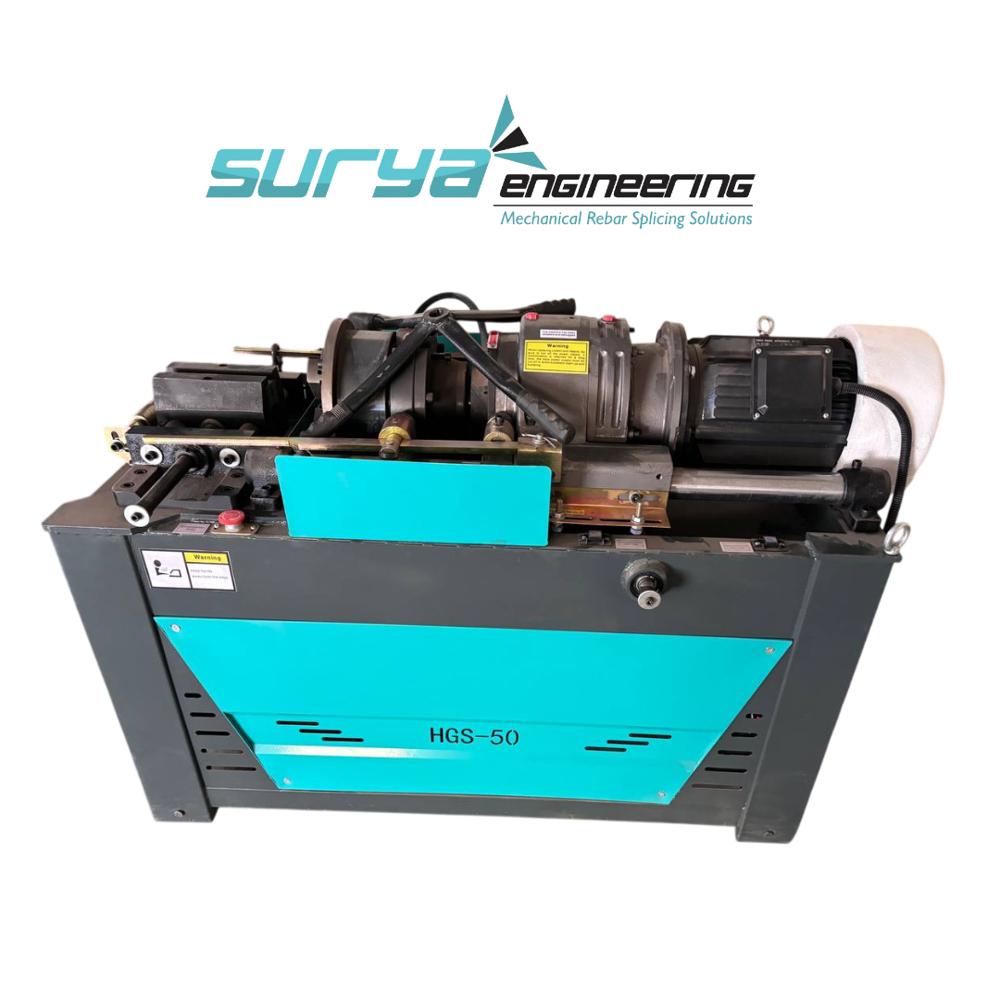
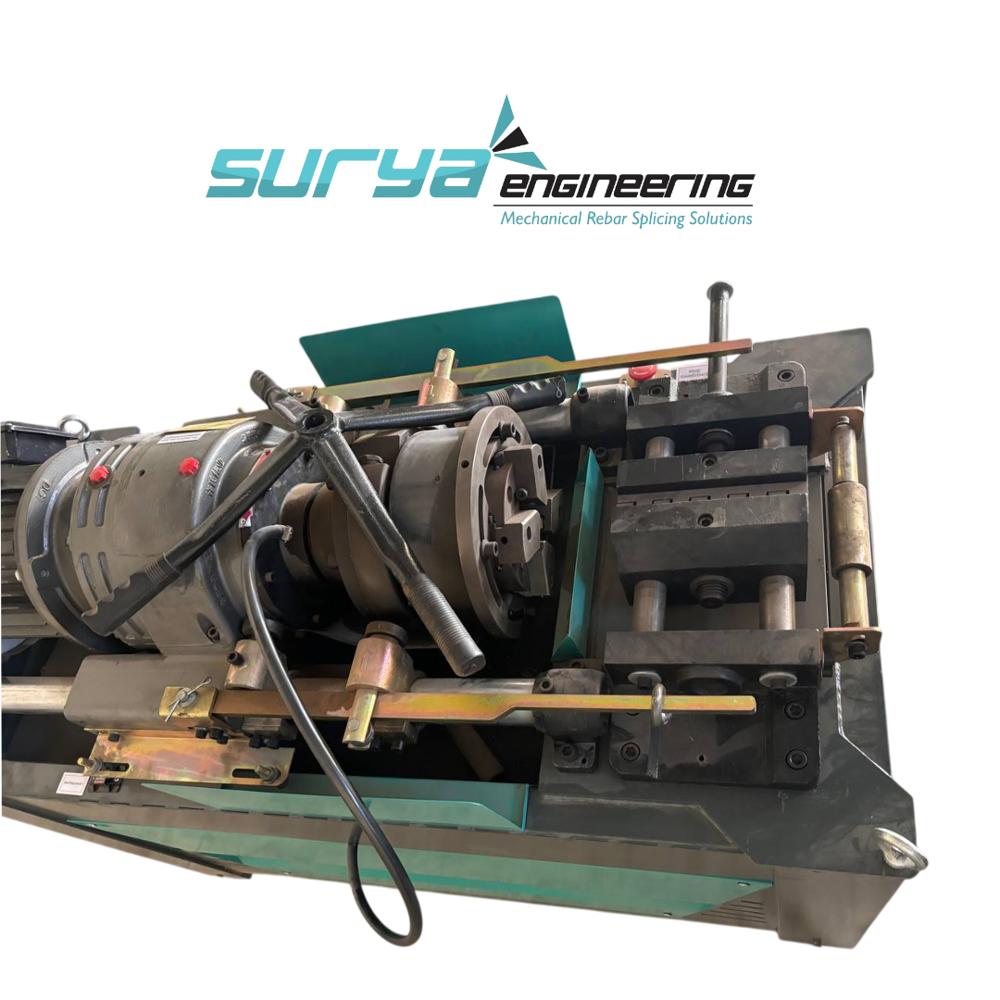
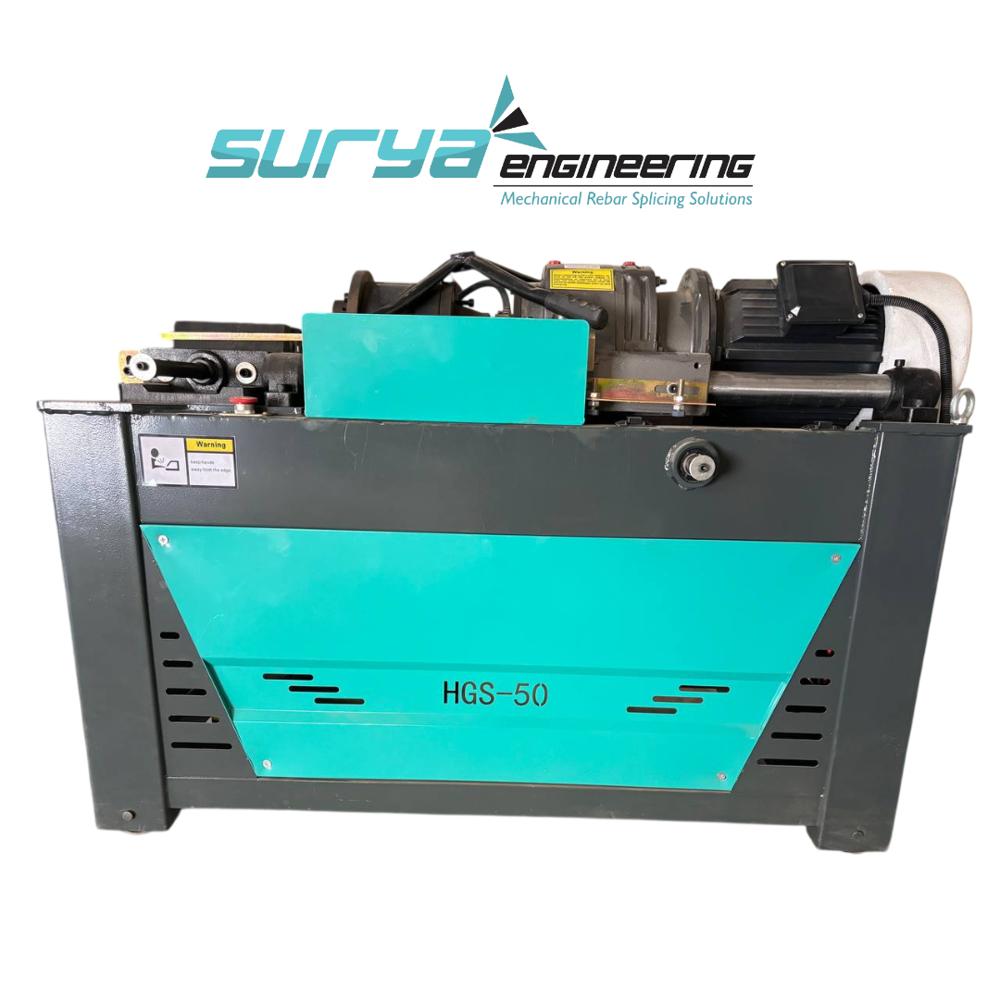
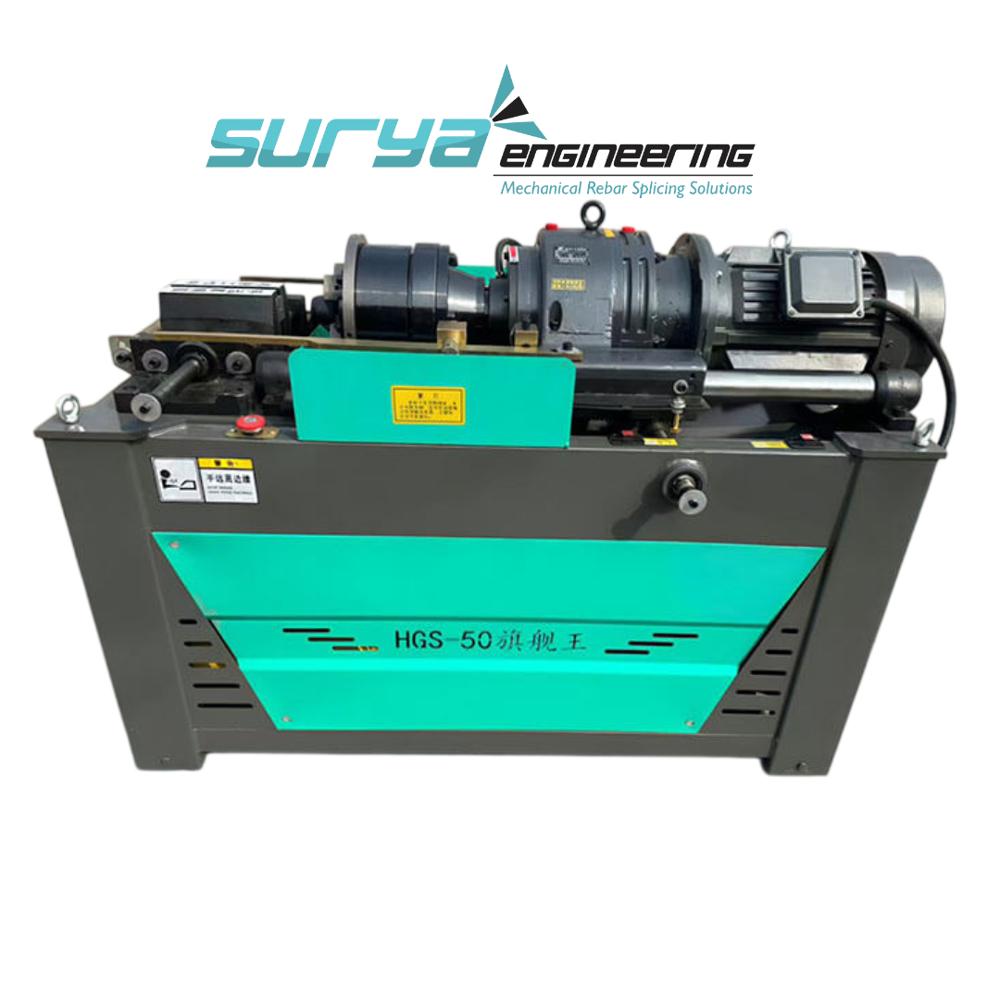
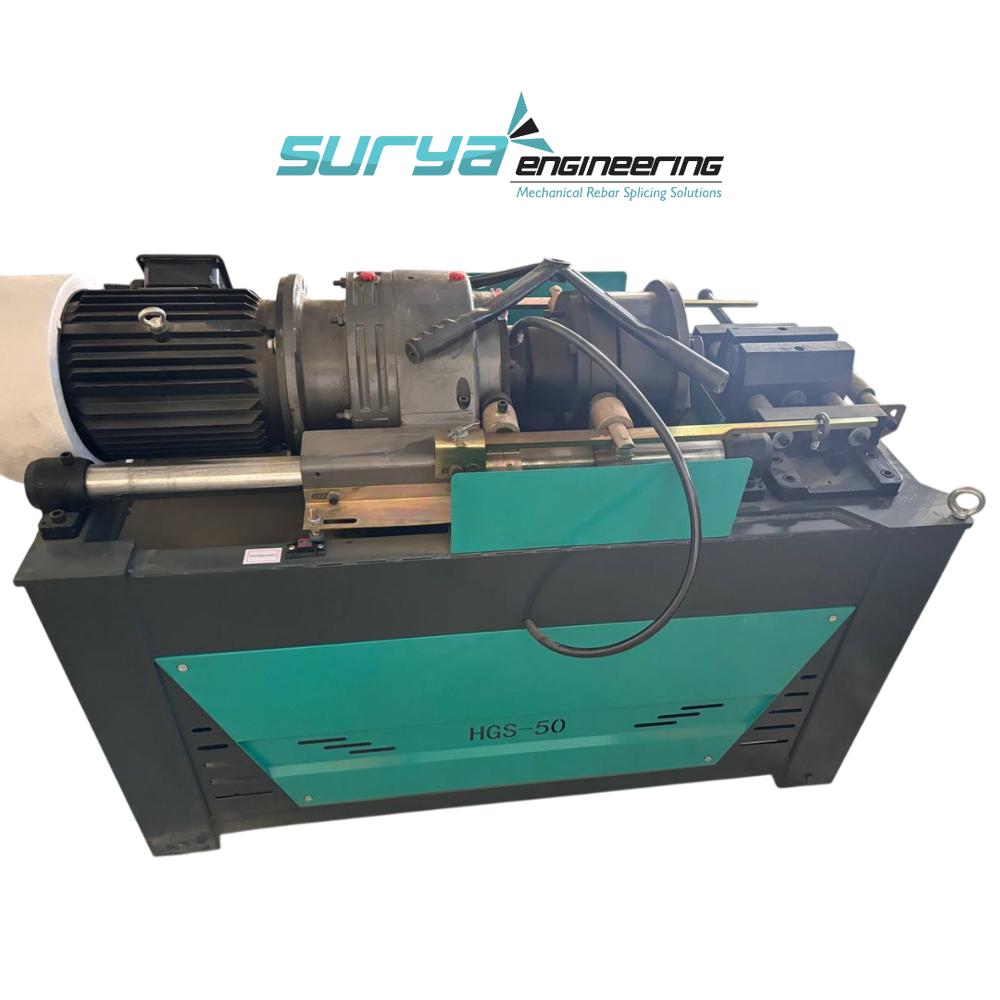
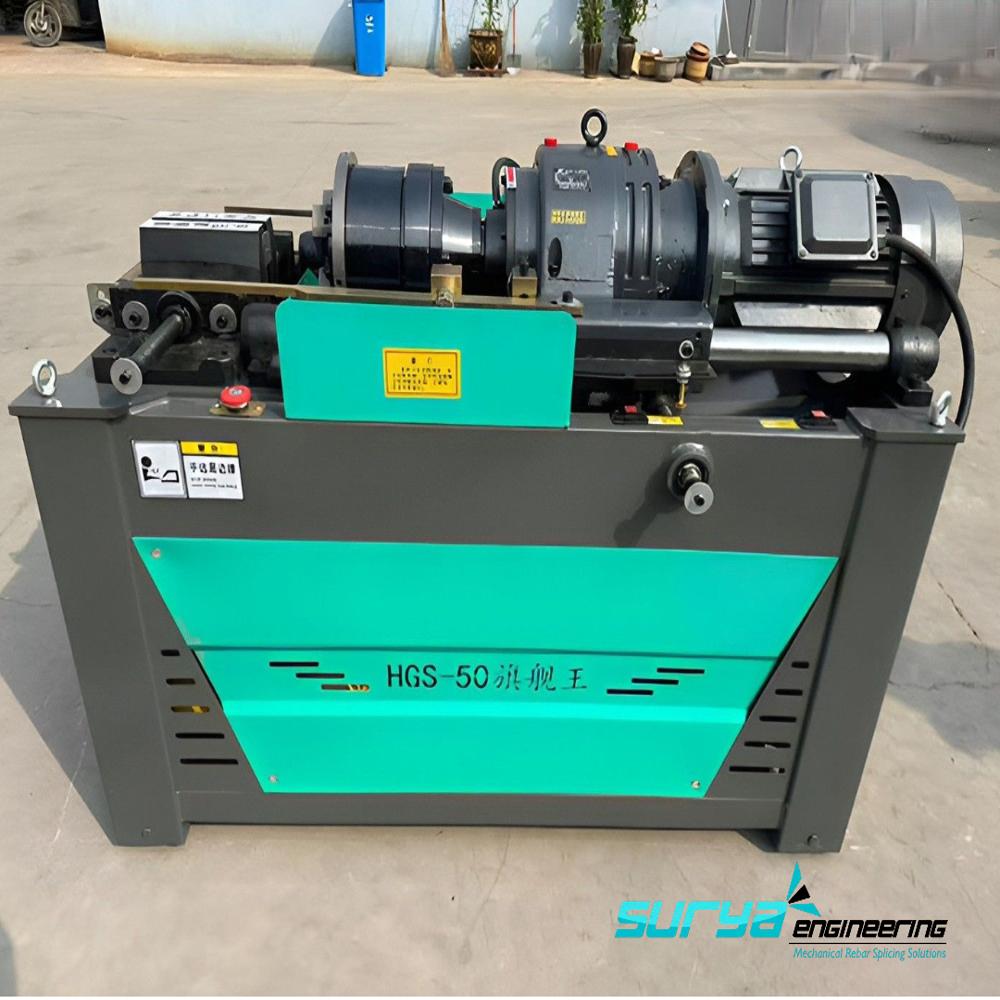

A Heavy Duty Rebar Threading Machine is a specialized construction machine used to prepare threaded ends on reinforcement bars for mechanical rebar coupler connections.
A Heavy Duty Rebar Threading Machine is an industrial-grade machine designed to create straight threads on ribbed reinforcement bars, including TMT bars, for use with compatible mechanical couplers.
The machine holds the reinforcement bar securely and processes the required section using a controlled threading operation. Depending on the machine design, the ribbed portion may first be prepared before the thread is rolled onto the bar.
The result is a threaded rebar end that can be connected with a matching rebar coupler.
Large construction projects can require thousands of mechanically connected reinforcement bars. Preparing every bar manually is slow, inconsistent, and physically demanding.
A heavy-duty threading machine provides a more organized way to process reinforcement bars repeatedly. It can help contractors maintain consistent thread quality while improving the speed of rebar fabrication.
Heavy-duty rebar threading machines are commonly used in:
The basic working process involves securely holding the reinforcement bar and processing its end to create a straight thread.
A typical operation involves:
The exact process varies according to the machine model and threading system.
TMT bars have a ribbed surface that improves their bond with concrete. When these bars are used with mechanical couplers, their ends need to be prepared appropriately for the selected connection system.
A heavy-duty rebar threading machine for TMT bars is designed to process the required bar end and create a compatible thread.
Before using the machine, it should be installed on a suitable, stable surface with sufficient space for handling long reinforcement bars.
A general setup includes:
The exact installation requirements depend on the machine model and manufacturer.
Choosing a heavy-duty machine should be based on the actual rebar processing requirements of the project.
Consider:
If the machine will operate for long hours, reliability, cooling, tooling availability, and after-sales support become particularly important.
Large infrastructure projects often require a high volume of reinforcement steel to be prepared within strict construction schedules.
For example, a metro project or high-rise building may require mechanically connected reinforcement bars across multiple structural sections. A heavy-duty rebar threading machine allows the fabrication team to process threaded bar ends systematically instead of relying on slow manual preparation.
This can help maintain a smoother reinforcement workflow and reduce delays caused by insufficient threading capacity.
The main difference is generally the intended workload and construction.
A standard rebar threading machine may be suitable for moderate threading requirements, while a heavy-duty rebar threading machine is intended for demanding, high-volume applications.
Heavy-duty models may offer:
Buying a rebar threading machine is not just about checking the machine name or motor power. The important question is whether the machine will handle your bar sizes, daily production, thread requirements, and coupler system without creating unnecessary downtime.
Before purchasing a Heavy Duty Rebar Threading Machine, buyers should look at the following points.
Daily production is one of the first things a contractor should consider.
Instead of asking only about the machine's maximum bar diameter, ask the supplier:
Actual production can vary depending on the machine model, operator experience, bar diameter, thread length, and working conditions. Therefore, asking for a practical production estimate is more useful than relying only on a theoretical maximum.
A machine should match the reinforcement bars used on your project.
For example, if your project mainly uses 20 mm, 25 mm, 32 mm and 40 mm TMT bars, make sure the machine can process all of these sizes without requiring unsuitable modifications.
Before buying, confirm:
Minimum bar diameter: ______ mm
Maximum bar diameter: ______ mm
Commonly used bar sizes: ______ mm
This simple check can prevent purchasing a machine that does not match your actual reinforcement requirements.
This is one of the most important questions that is often overlooked.
The machine should produce a thread that is compatible with the rebar coupler system being used on the project.
Before ordering the machine, confirm:
The machine, tooling, and coupler system should be compatible.
Not every project requires the same thread length.
The required threaded length depends on the selected coupler and connection design.
Ask the supplier whether the machine can produce the required thread length consistently for your specific application.
This matters when a project uses several reinforcement diameters.
A machine that requires a long setup process every time the bar size changes can reduce productivity.
Ask about:
A straightforward changeover can save considerable time during large reinforcement fabrication jobs.
Threading rollers are working components and eventually require replacement.
Before buying, ask:
Spare-part availability is often more important than the initial machine price when the equipment is being used continuously.
For a construction company, downtime can be expensive.
Before purchasing, find out:
A slightly higher initial investment can make sense if it comes with dependable technical support and readily available spare parts.
Check the electrical requirements before bringing the machine to the site.
Confirm:
This is particularly important when the machine will be moved between different construction sites.
This is a very useful question for buyers.
If possible, ask the manufacturer or supplier to process a sample using the same type and diameter of reinforcement bar that you use on your project.
Then inspect:
A real sample can tell you much more than a product brochure.
Don't judge the finished thread only by looking at it.
A basic quality check can include:
Visual inspection:
Look for damaged, incomplete, irregular, or contaminated threads.
Dimensional inspection:
Check the required thread length and relevant dimensions.
Coupler fit:
Verify that the threaded bar fits the specified compatible coupler correctly.
Repeatability:
Check several processed bars rather than testing only one.
For structural applications, inspection and acceptance should follow the project's engineering requirements and applicable standards.
The purchase price is only one part of the total cost.
Buyers should also consider:
| Cost | What to Check |
|---|---|
| Machine | Initial purchase price |
| Tooling | Rollers and threading components |
| Electricity | Motor power and operating hours |
| Maintenance | Lubrication and service |
| Spare parts | Availability and cost |
| Labour | Number of operators required |
| Downtime | Service response time |
| Training | Operator training and setup |
| Transportation | Moving the machine between sites |
A machine with a low purchase price may not necessarily be the lowest-cost option over several years.
Before placing an order for a Heavy Duty Rebar Threading Machine, ask the supplier:
1. What is the exact minimum and maximum rebar diameter?
2. What thread profile does the machine produce?
3. What is the maximum practical threading length?
4. What is the expected production rate for my bar sizes?
5. Which rollers are included with the machine?
6. What is the price and availability of replacement rollers?
You can estimate the required daily production before buying.
Required bars per day = Total threaded bars required Available working days
For example, if a project requires 12,000 threaded bars and the fabrication team has 20 working days available:
12,000 20 = 600 bars per day
The next step is to compare this requirement with the machine's realistic production capacity, while allowing additional time for setup, bar handling, inspection, maintenance, and interruptions.

Price:
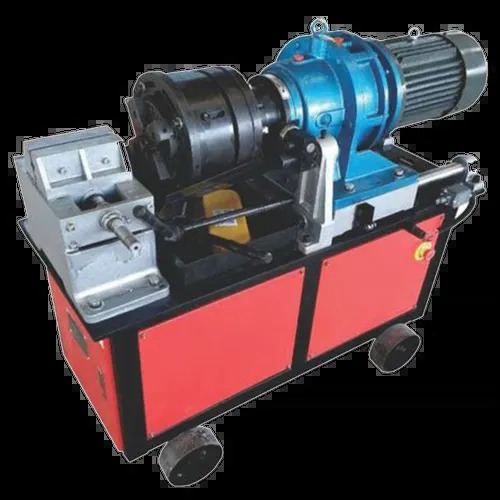
Price 300000 INR / Piece
Minimum Order Quantity : 1 Piece
Capacity : 1640mm
Product Type : TMT Bar Threading Machine
Material : Other, Steel
General Use : Threading of TMT Rebars
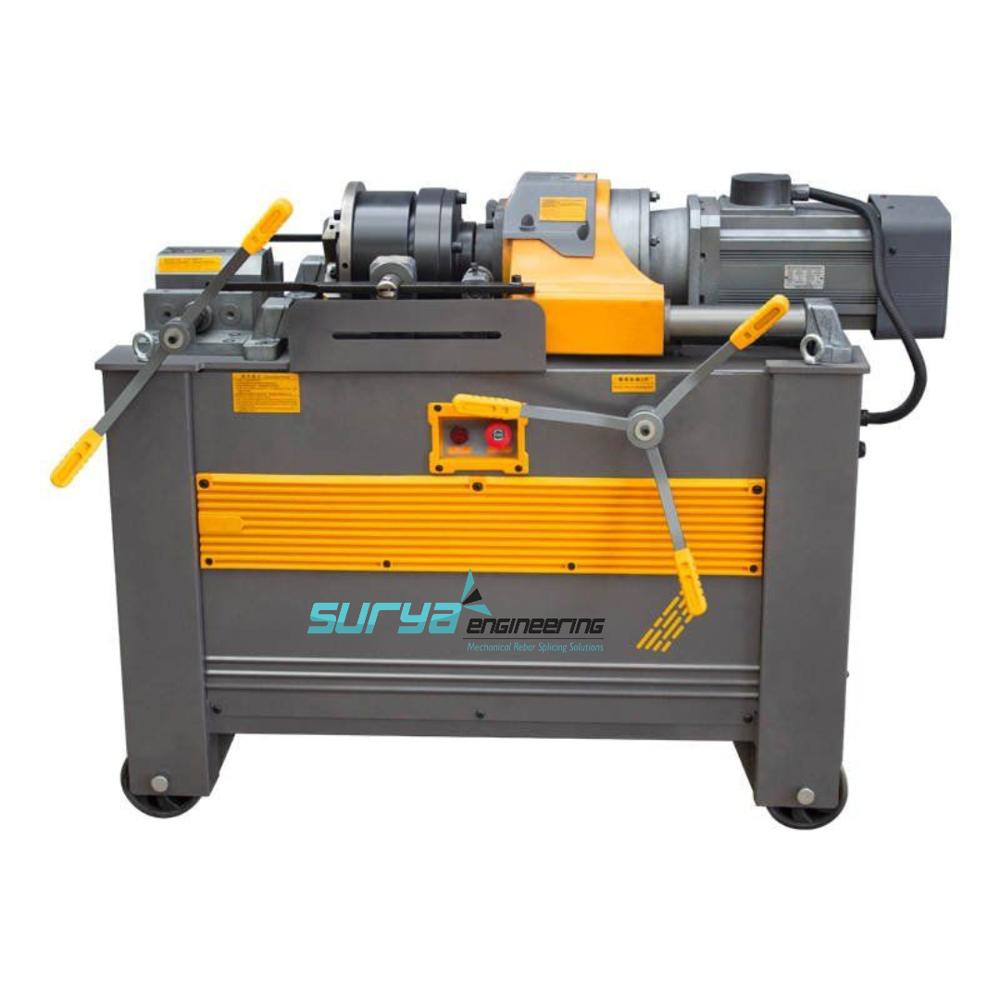
Price 93000.00 INR / Piece
Minimum Order Quantity : 1 Piece
Capacity : 16mm to 40 mm (16mm 45 mm) m3/hr
Product Type : Rebar Thread Rolling Machine / Bar Threading Machine
Material : Carbon Steel
General Use : Rebar Splicing, Parallel Threading for Couplers
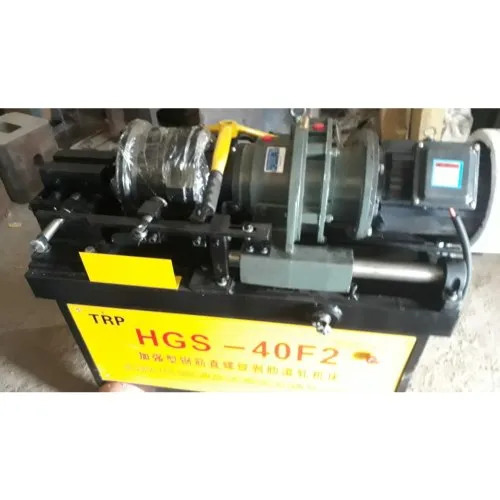
Price 799399 INR / Piece
Minimum Order Quantity : 1 Piece
Capacity : 40mm
Product Type : Automatic Rebar Threading Machine
Material : Other, Alloy Steel
General Use : Construction
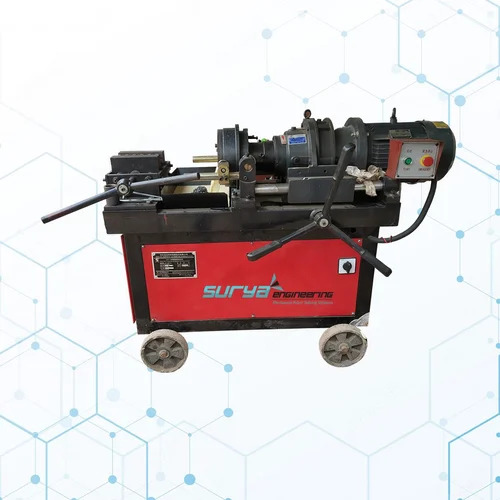
Price 290000 INR / Piece
Minimum Order Quantity : 1 Piece
Capacity : 1640mm
Product Type : Bar Threading Machine
Material : Other, Heavy Duty Steel
General Use : Construction





 Send Inquiry
 English
 Spanish
 French
 German
 Italian
 Chinese (Simplified)
 Japanese
 Korean
 Arabic
 Portuguese