What is a Rebar Coupler?
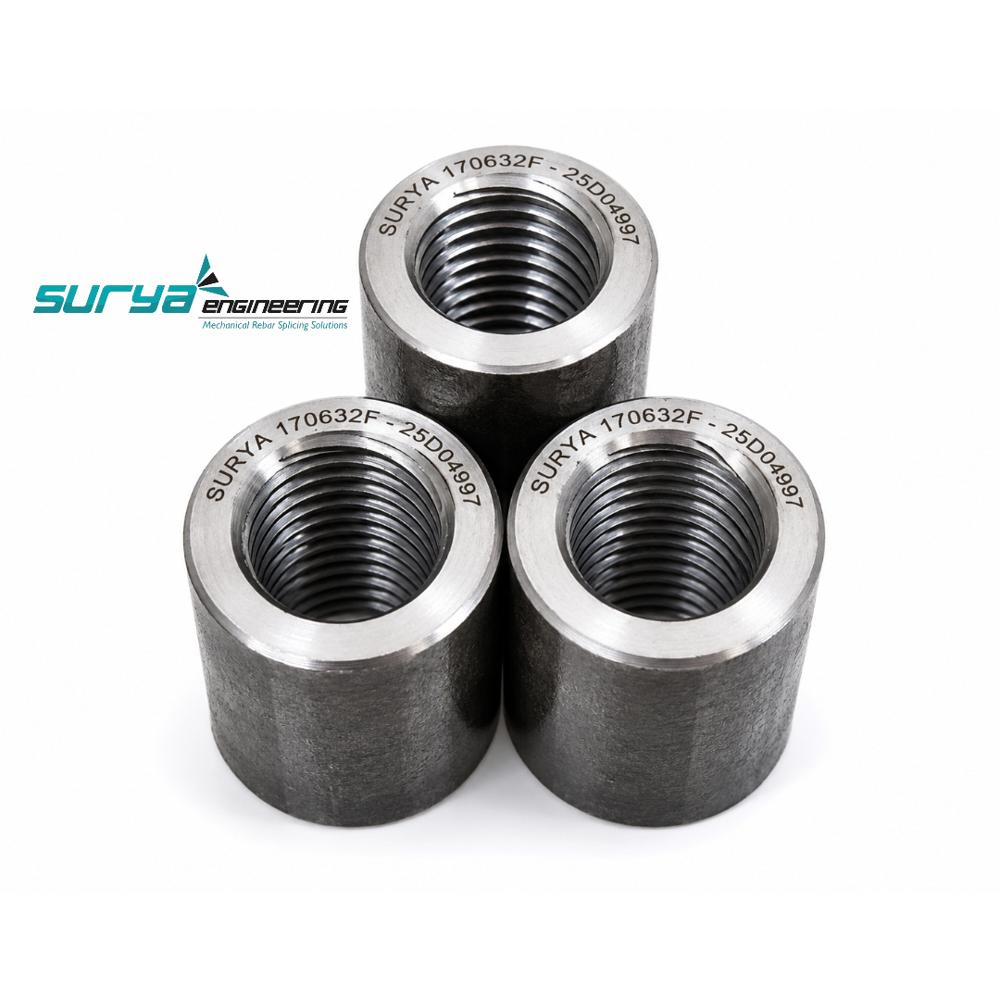
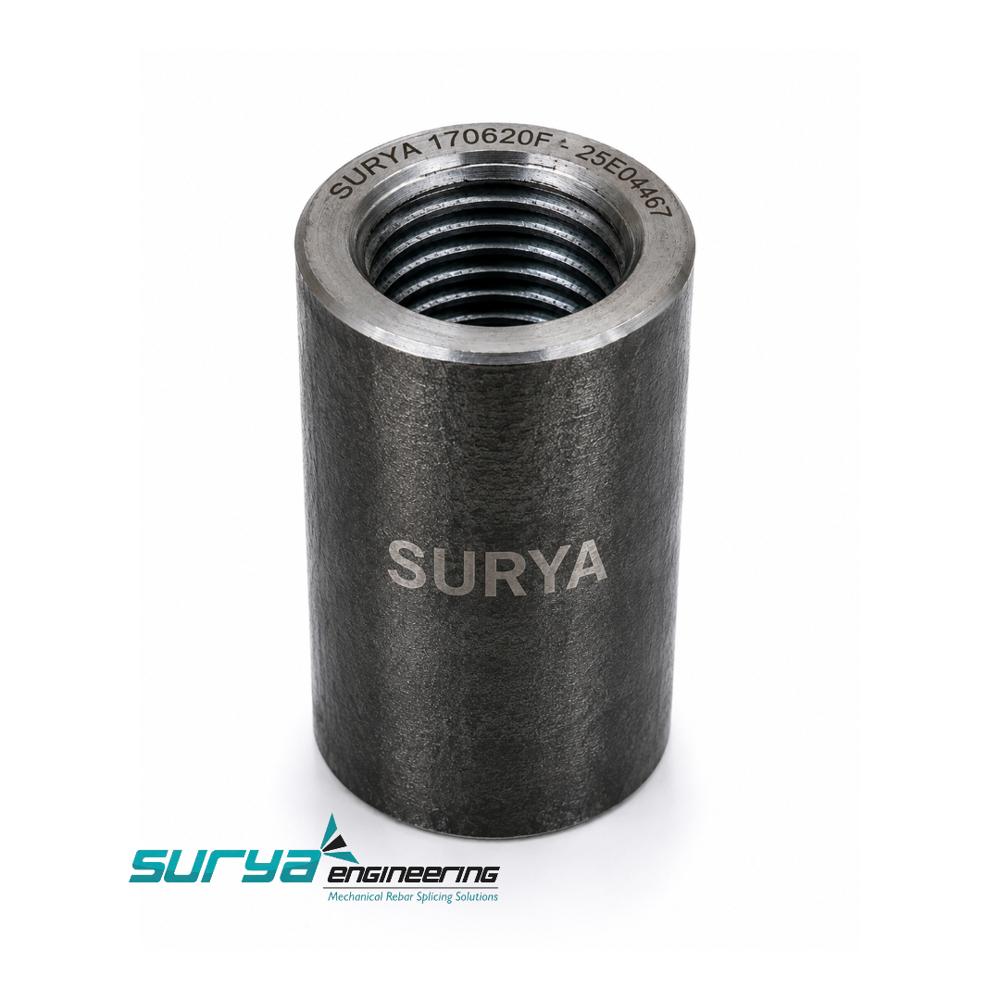
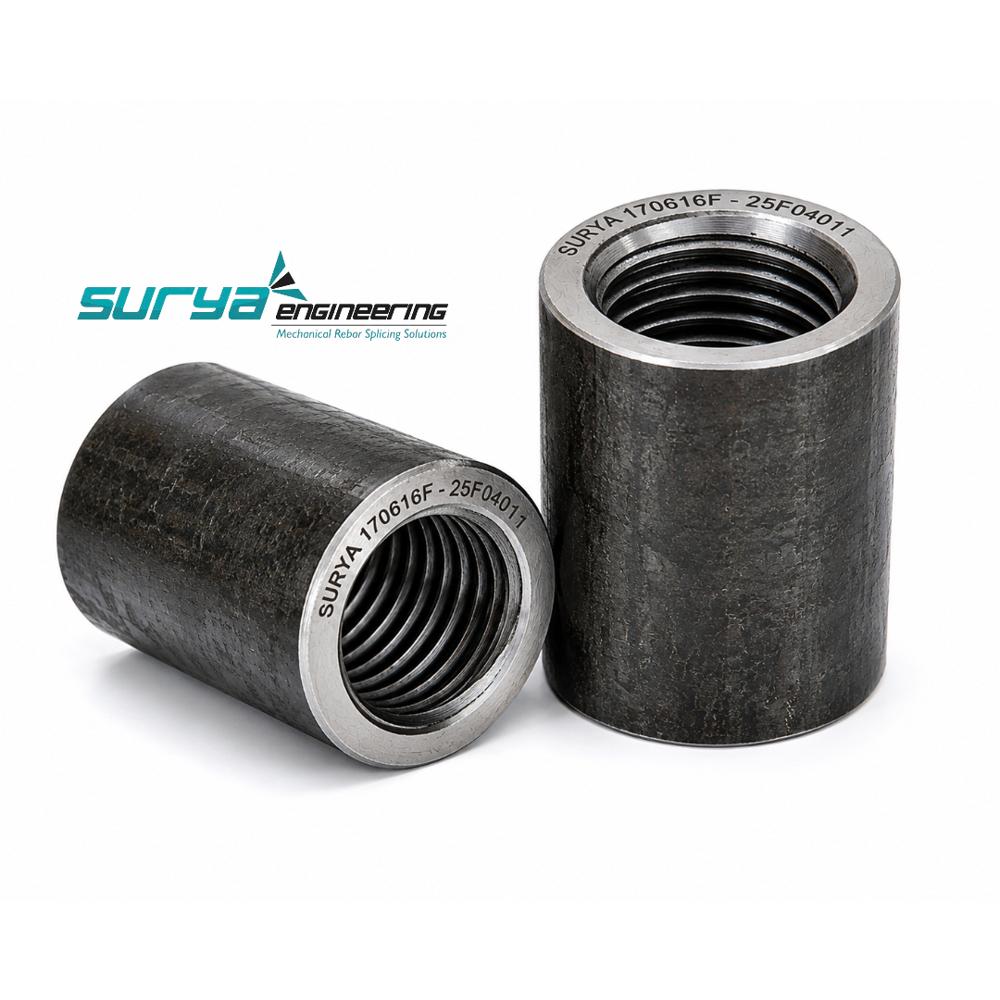
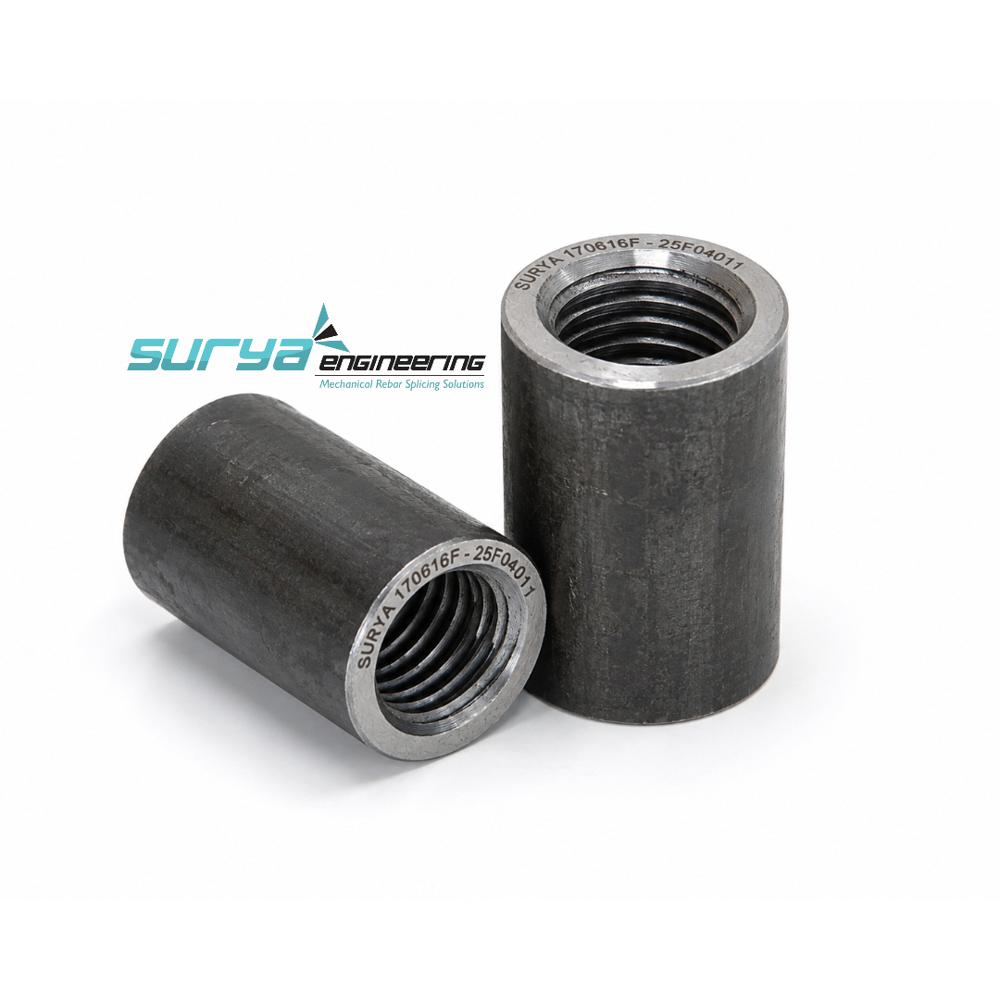
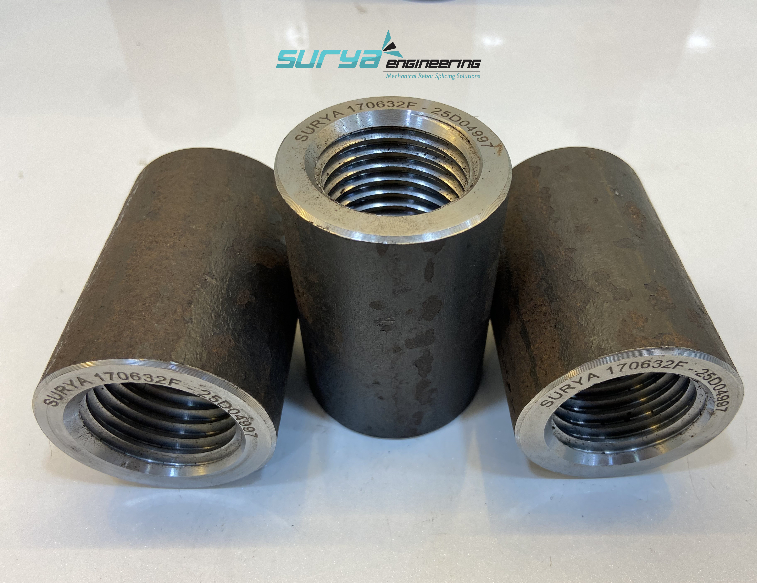
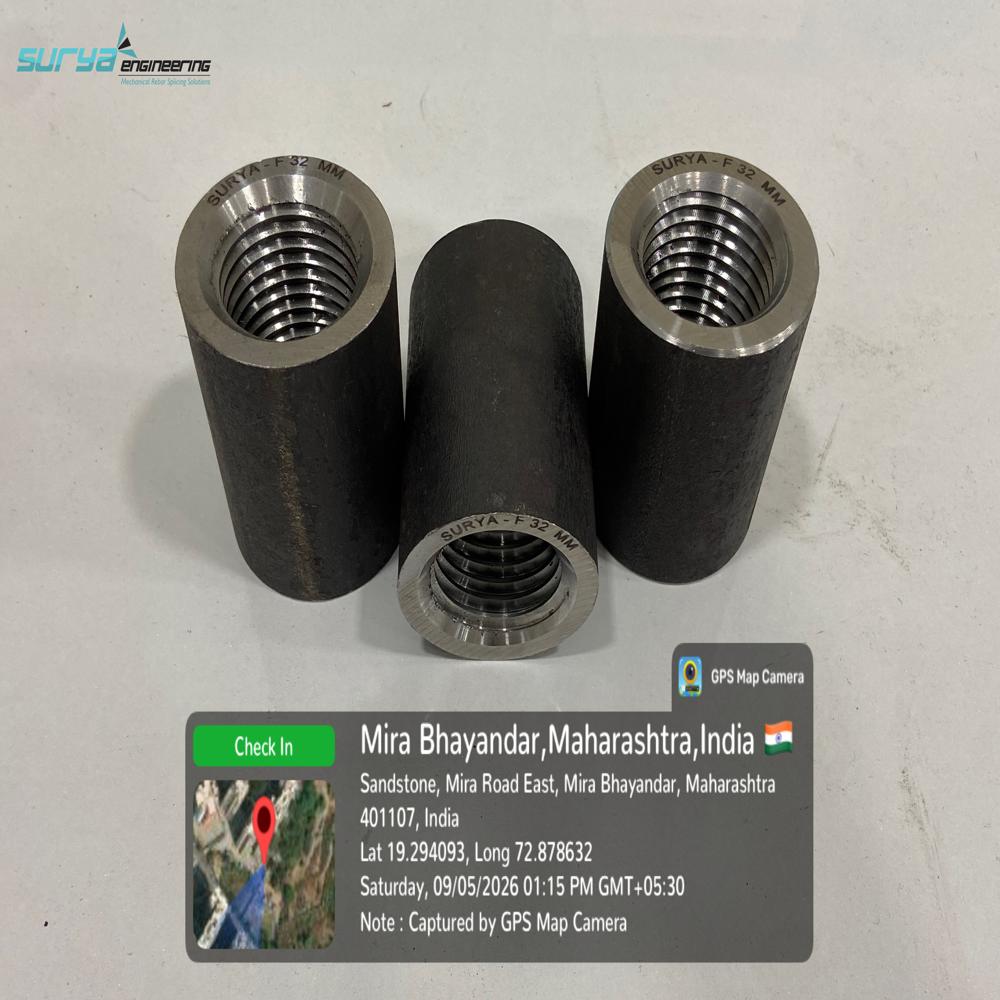
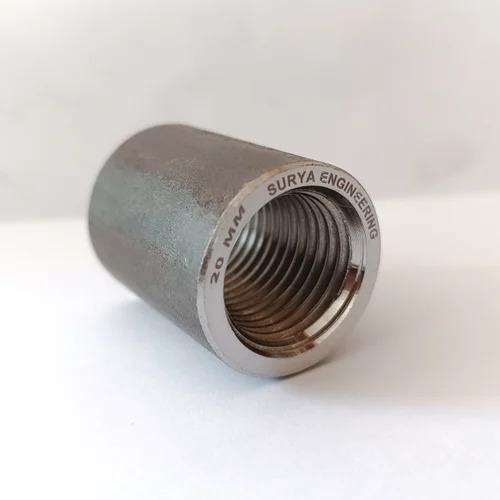
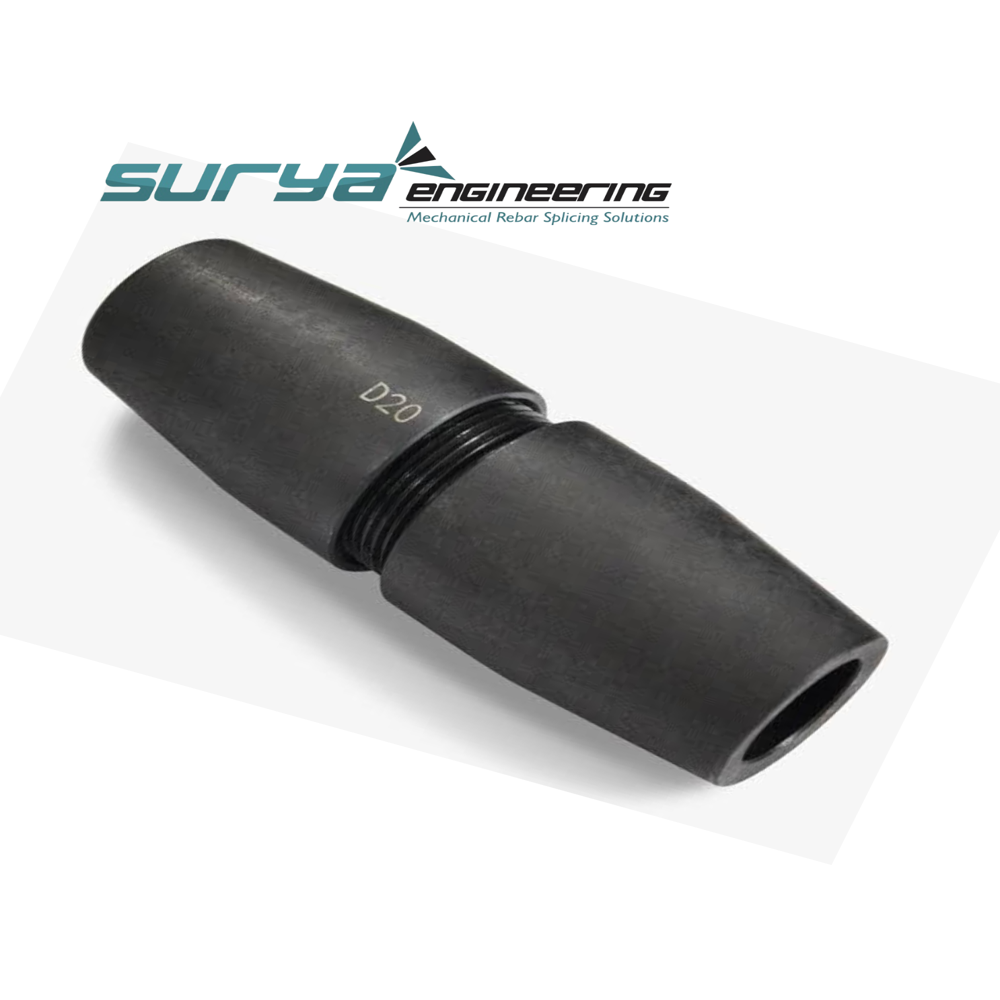
A Rebar Coupler is a high-strength mechanical connector used to join two reinforcement (TMT) bars end-to-end without overlapping them.
Instead of using conventional lap splicing, the reinforcement bars are mechanically connected through precision threads or other approved mechanical systems.
This connection transfers tensile and compressive loads directly between bars, resulting in stronger, safer, and more efficient reinforced concrete (RCC) structures.
What is the Rebar Coupler Price in India?
There is no fixed price for a rebar coupler because it depends on several technical and commercial factors.
Major Factors Affecting Rebar Coupler Price
1. Bar Diameter
Larger bar diameters require bigger couplers and more material.
Examples:
- 12 mm
- 16 mm
- 20 mm
- 25 mm
- 28 mm
- 32 mm
- 36 mm
- 40 mm
2. Material Grade
Higher-quality steel offers better strength, durability, and machining accuracy, which influences pricing.
3. Manufacturing Process
Precision CNC-machined couplers generally cost more than standard-machined products due to tighter tolerances and better performance.
4. Coupler Type
Different types have different manufacturing complexities:
- Parallel Thread Coupler
- MBT Coupler
- Reducer Coupler
- Position Coupler
- Transition Coupler
- Upset Thread Coupler
5. Order Quantity
Bulk purchases generally reduce the cost per piece.
6. Surface Finish
Special coatings or corrosion-resistant finishes may increase the overall price.
7. Quality Standards
Couplers manufactured and tested according to IS 16172:2023 may involve additional quality assurance processes that influence pricing.
Why Use Rebar Couplers?
Traditional lap splicing has several limitations, including increased steel usage and reinforcement congestion.
Rebar couplers provide several advantages:
- Eliminates lap splicing
- Saves reinforcement steel
- Reduces congestion
- Improves concrete flow
- Faster installation
- High tensile strength
- Better structural performance
- Suitable for seismic zones
- Lower labor costs
- Improved quality control
Classification of Rebar Couplers
1. Parallel Thread Coupler
The most commonly used coupler for RCC structures.
Applications:
- Residential buildings
- Commercial buildings
- Bridges
- Infrastructure projects
2. MBT Coupler
Used where threading cannot be performed.
Applications:
- Repair works
- Existing structures
- Retrofit projects
3. Reducer Coupler
Connects reinforcement bars of different diameters.
Example:
4. Position Coupler
Used where reinforcement bars cannot rotate during installation.
Ideal for:
- Beam-column joints
- Congested reinforcement areas
5. Transition Coupler
Used for connecting different bar grades or sizes while maintaining structural continuity.
6. Upset Thread Coupler
Bar ends are cold forged before threading, preserving the parent bar strength.
Suitable for:
- Heavy-duty structures
- High-load applications
Applications of Rebar Couplers
Rebar couplers are widely used in:
- High-rise buildings
- Commercial complexes
- Residential projects
- Metro rail construction
- Flyovers
- Railway bridges
- Dams
- Airports
- Marine structures
- Water treatment plants
- Power plants
- Industrial buildings
- Tunnels
- Smart city projects
- Precast concrete structures
Installation Procedure
Proper installation ensures optimum performance.
Step 1
Cut the reinforcement bars squarely.
Step 2
Prepare accurate threads using a threading machine.
Step 3
Clean the threaded ends.
Step 4
Inspect threads using gauges.
Step 5
Install the coupler on the first bar.
Step 6
Align the second bar.
Step 7
Tighten until both bars meet inside the coupler.
Step 8
Perform the final inspection.
IS Testing Standards
In India, IS 16172:2023 specifies the requirements for mechanical reinforcement couplers used with steel bars conforming to IS 1786.
Common quality tests include:
Tensile Strength Test
Ensures the mechanical splice can develop the required tensile strength.
Slip Test
Measures axial displacement at the splice under load.
Cyclic Tensile Test
Assesses the performance of the coupler under repeated loading.
Fatigue Test
Evaluates durability under cyclic loading, especially for applications subject to repeated stress.
Dimensional Inspection
Verifies thread accuracy, dimensions, and manufacturing tolerances.
Material Verification
Confirms the chemical and mechanical properties of the coupler material.
Advantages of Rebar Couplers
Compared to conventional lap splicing, rebar couplers provide:
- Lower steel consumption
- Reduced reinforcement congestion
- Faster construction
- High tensile performance
- Better concrete compaction
- Consistent load transfer
- Improved durability
- Lower overall project cost
- Reduced labor requirement
- Reliable quality
- Easy inspection
- Long service life
- Excellent seismic performance
Why Choose Surya Engineering?
Surya Engineering is a trusted manufacturer of Rebar Couplers in India, supplying reliable reinforcement splicing solutions for construction and infrastructure projects.
Our Strengths
- Premium-quality steel construction
- Precision CNC machining
- High dimensional accuracy
- Manufactured for multiple bar sizes
- Quality-tested products
- Strong and reliable mechanical performance
- Competitive pricing
- Timely delivery across India
- Technical support for installation
- Suitable for residential, commercial, industrial, and infrastructure projects
Industries We Serve
- Construction Companies
- Infrastructure Contractors
- Metro Rail Projects
- Government Projects
- Bridge Construction
- Industrial Plants
- EPC Contractors
- Real Estate Developers
- Power Plants
- Precast Manufacturers
Frequently Asked Questions (FAQs)
What is the price of a Rebar Coupler in India?
The price depends on factors such as bar diameter, coupler type, material grade, manufacturing quality, and order quantity. Contact Surya Engineering for a customized quotation based on your project requirements.
Which factors affect the Rebar Coupler price?
Bar size, steel grade, machining process, surface finish, quantity ordered, and compliance with quality standards all influence the final cost.
Why are Rebar Couplers better than lap splicing?
They reduce steel consumption, minimize reinforcement congestion, improve concrete placement, and provide reliable mechanical load transfer.
Which Indian Standard applies to Rebar Couplers?
Mechanical rebar couplers are covered under IS 16172:2023, while the reinforcement bars are generally manufactured in accordance with IS 1786.
Can Rebar Couplers be used in seismic areas?
Yes. Properly designed and tested mechanical couplers are widely used in earthquake-resistant structures because they provide dependable load transfer and structural continuity.
Rebar Coupler Price, Rebar Coupler Price in India, Mechanical Rebar Coupler Price, TMT Bar Coupler Price, Rebar Coupler Manufacturer India, Mechanical Coupler Supplier, Reinforcement Coupler Price, Threaded Rebar Coupler, Parallel Thread Coupler, MBT Coupler, Reducer Coupler, Position Coupler, Mechanical Splice, IS 16172 Rebar Coupler, Construction Coupler, RCC Coupler, Steel Bar Coupler, Surya Engineering Rebar Coupler, Best Rebar Coupler Manufacturer India, Buy Rebar Coupler India.










 Send Inquiry
 English
 Spanish
 French
 German
 Italian
 Chinese (Simplified)
 Japanese
 Korean
 Arabic
 Portuguese