
Talk to us
08045811615
Talk to us
08045811615
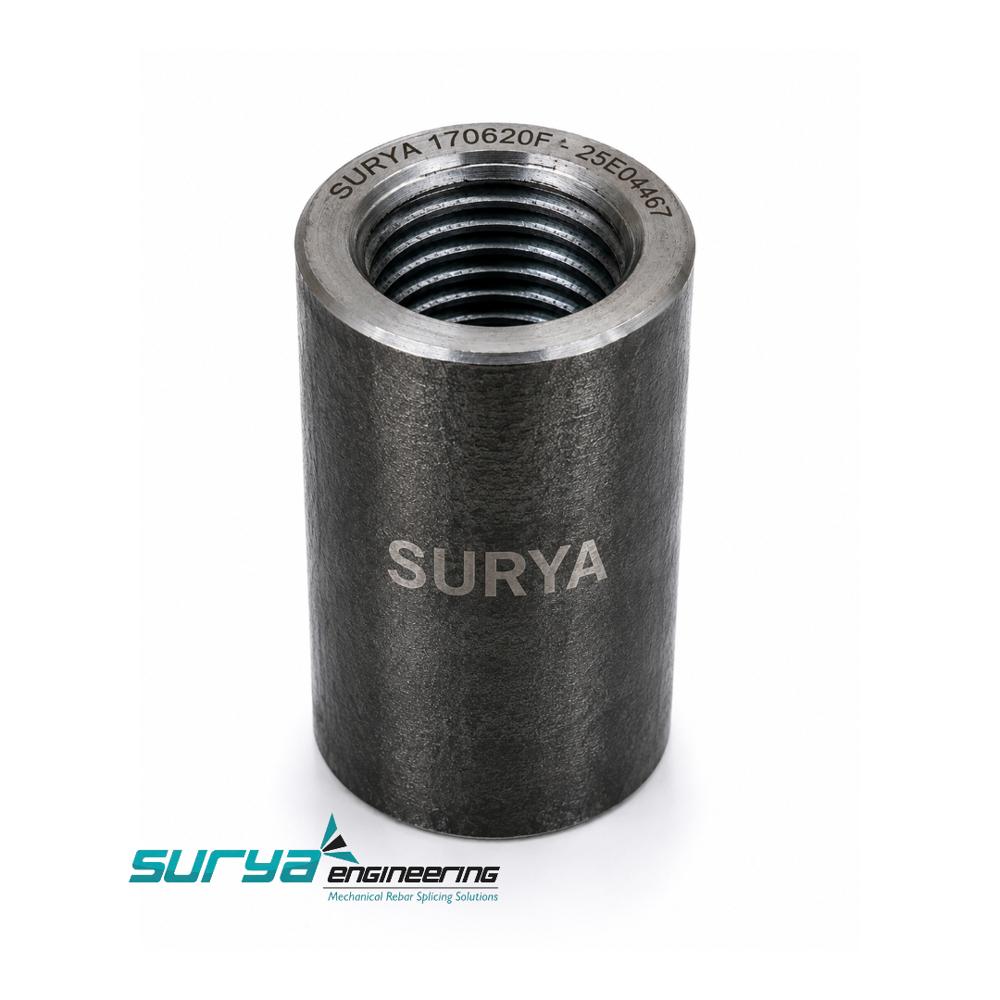
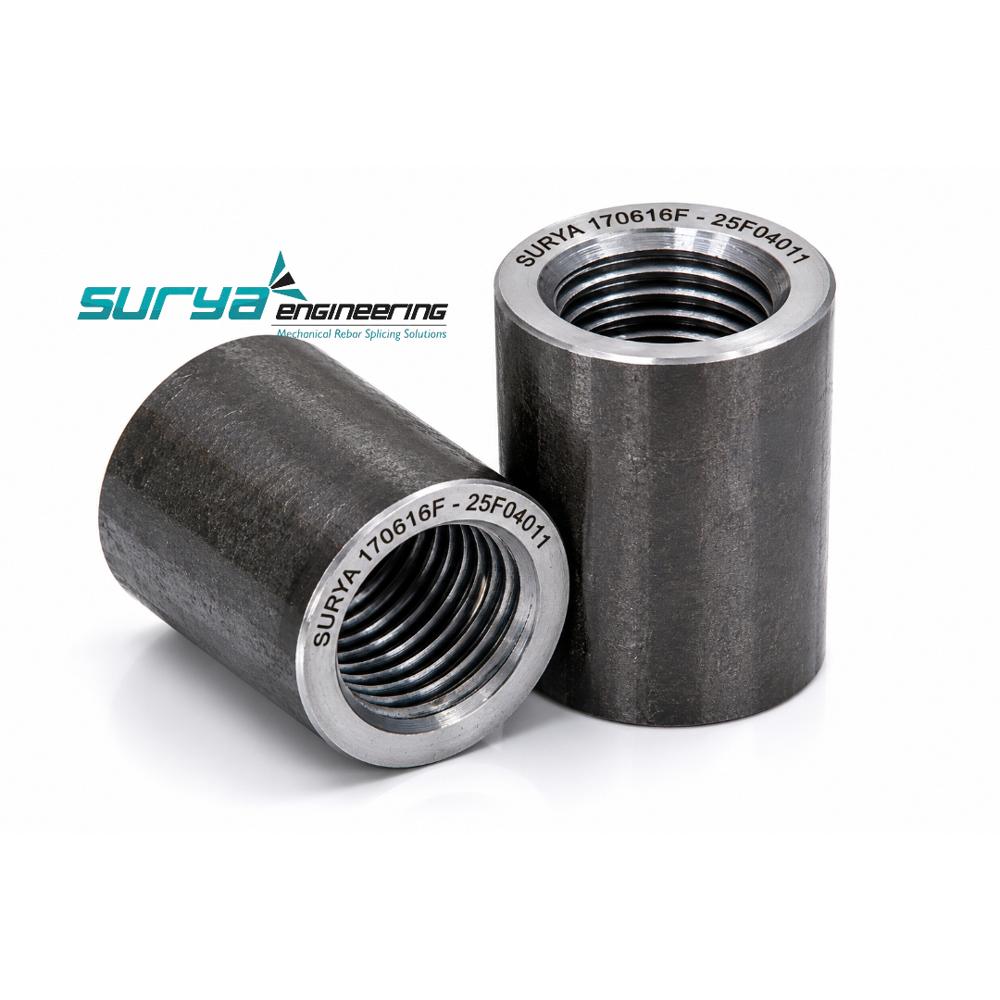
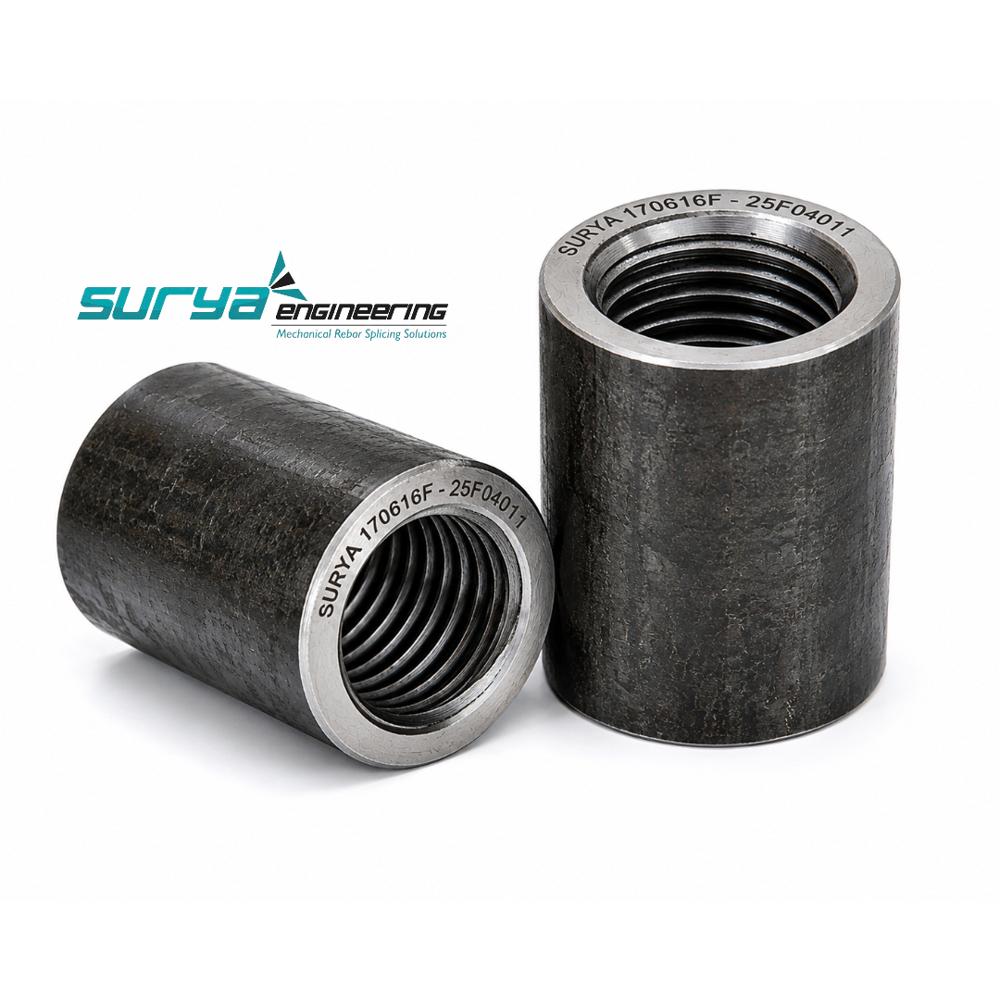
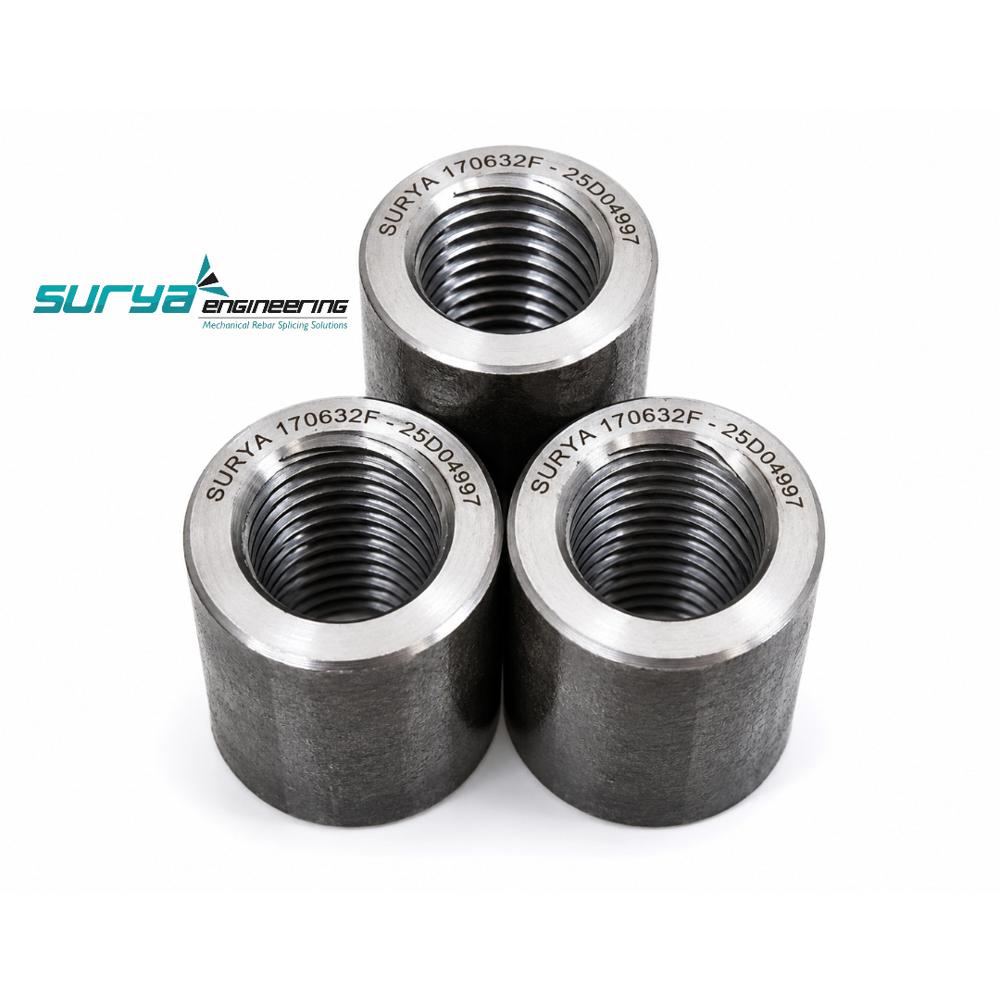
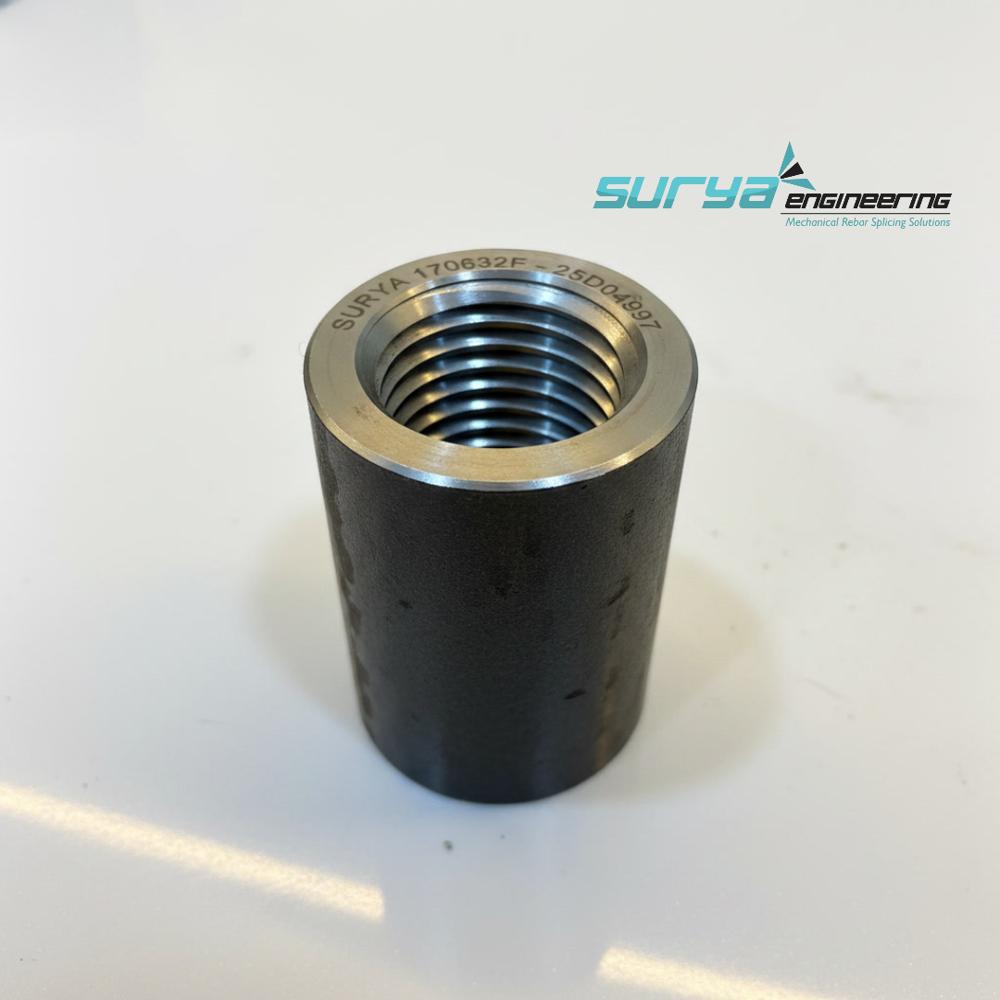
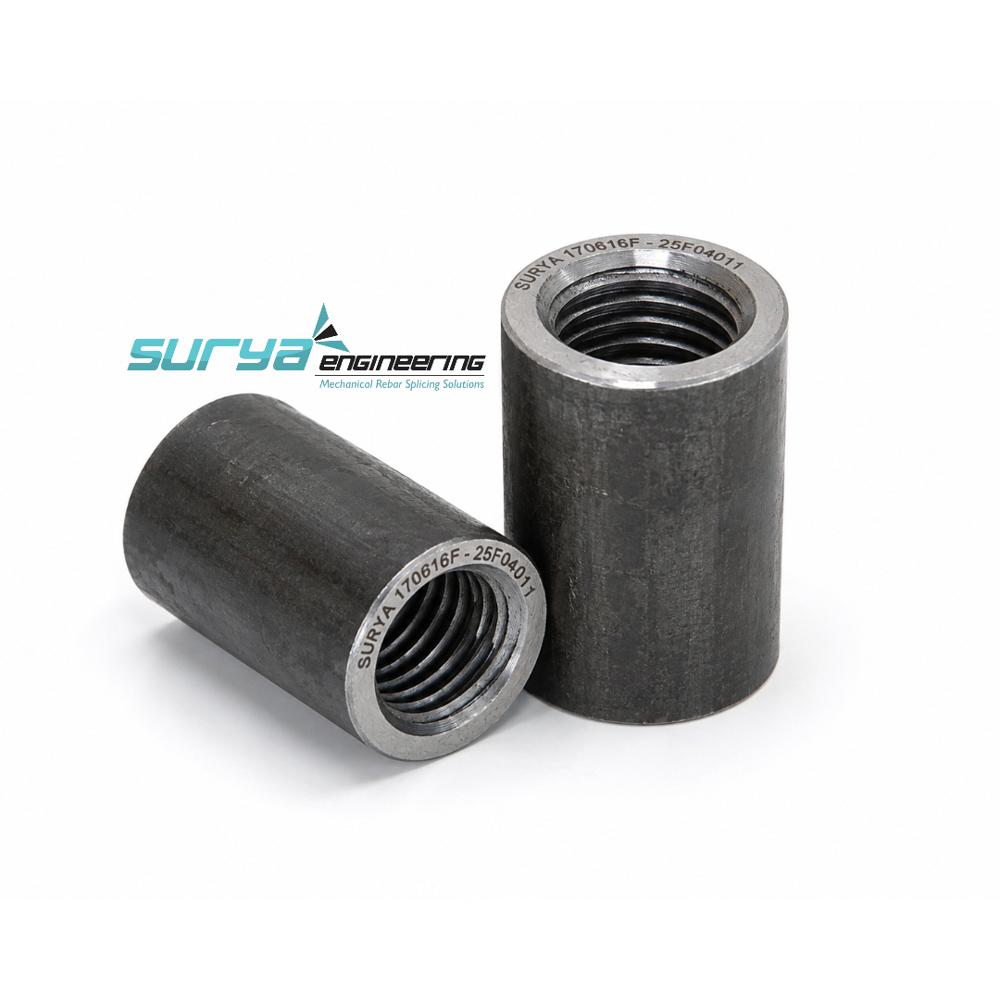

The construction industry is rapidly moving toward faster, stronger, and more economical reinforcement joining methods. One of the biggest innovations replacing traditional lap splicing is the Rebar Coupler, also known as a Mechanical Rebar Coupler.
A Rebar Coupler is a high-strength steel connector used to mechanically join two reinforcing steel (TMT) bars end-to-end without overlapping (lap splicing).
Instead of providing long lap lengths, both reinforcement bars are threaded or mechanically prepared and connected using a precision-machined coupler.
The coupler transfers tensile and compressive loads directly from one reinforcement bar to another, maintaining structural continuity and ensuring high load-bearing performance. Mechanical couplers are covered under IS 16172:2023 for reinforcement bar splices in concrete construction.
Traditional lap splicing creates several construction challenges:
A mechanical rebar coupler eliminates these problems by providing a compact and efficient connection.
Major reasons for using Rebar Couplers include:
The working principle is simple.
The load is transferred directly through steel-to-steel contact instead of depending upon concrete bonding as in lap joints.
According to industry practice and BIS classifications, the common types include:
The most commonly used coupler.
Suitable for:
Advantages
Before threading, the bar end is cold forged (upset) to increase the diameter.
Benefits
Uses tapered threads for mechanical locking.
Applications
Used where threading cannot be performed.
Advantages
Connects reinforcement bars of different diameters.
Example
Applications
Used where neither reinforcement bar can rotate.
Applications
Designed for joining reinforcement bars of different grades or sizes while maintaining load transfer.
Rebar couplers are extensively used in:
Proper installation is essential for achieving full structural performance.
Cut the reinforcement bar squarely.
Prepare threads using an approved threading machine.
Clean the threaded portion.
Check thread quality using gauges.
Screw the coupler completely onto the first bar.
Bring the second bar into alignment.
Rotate and tighten until both bars meet inside the coupler.
Perform final inspection.
In India, reinforcement couplers are governed by IS 16172:2023 Reinforcement Couplers for Mechanical Splices of Steel Bars in Concrete Specification, applicable to bars conforming to IS 1786.
Typical performance evaluations include:
Verifies that the coupled joint develops the required tensile strength.
Measures axial displacement (slip) across the mechanical splice under load.
Assesses repeated loading performance.
Evaluates performance under earthquake-type loading.
Checks durability under repeated service loads, particularly for Class H couplers.
Confirms dimensional accuracy and thread tolerances.
Ensures the coupler material meets specified mechanical properties.
Compared to conventional lap joints, rebar couplers offer:
| Feature | Rebar Coupler | Lap Splicing |
|---|---|---|
| Steel Consumption | Low | High |
| Reinforcement Congestion | Minimal | High |
| Concrete Compaction | Easy | Difficult |
| Installation | Fast | Time-consuming |
| Structural Strength | Excellent | Depends on lap length |
| Material Cost | Optimized on large projects | Higher steel usage |
| Quality Control | Better | Difficult |
Surya Engineering is a trusted Rebar Coupler Manufacturer in India, supplying precision-engineered reinforcement splicing solutions for residential, commercial, industrial, and infrastructure projects.
A Rebar Coupler is a mechanical connector that joins two reinforcement bars without lap splicing, providing a strong and reliable connection.
They reduce steel consumption, minimize reinforcement congestion, improve concrete placement, and provide consistent mechanical performance.
The current Indian specification is IS 16172:2023, which covers requirements and performance tests for reinforcement couplers used with bars conforming to IS 1786.
They are widely used in high-rise buildings, bridges, tunnels, metros, dams, power plants, industrial structures, and other RCC projects.
Common systems are available for reinforcement bars from 12 mm to 40 mm, depending on the coupler design and project requirements.
Rebar Coupler, Mechanical Rebar Coupler, Reinforcement Coupler, Threaded Rebar Coupler, TMT Bar Coupler, Mechanical Splice, Rebar Coupler Manufacturer India, Rebar Coupler Supplier, IS 16172 Rebar Coupler, Parallel Thread Coupler, MBT Coupler, Reducer Coupler, Position Coupler, Construction Coupler, Reinforcement Splicing, Surya Engineering Rebar Coupler, Mechanical Splicing System, RCC Coupler, Steel Bar Coupler, Threaded Coupler India.

Price:
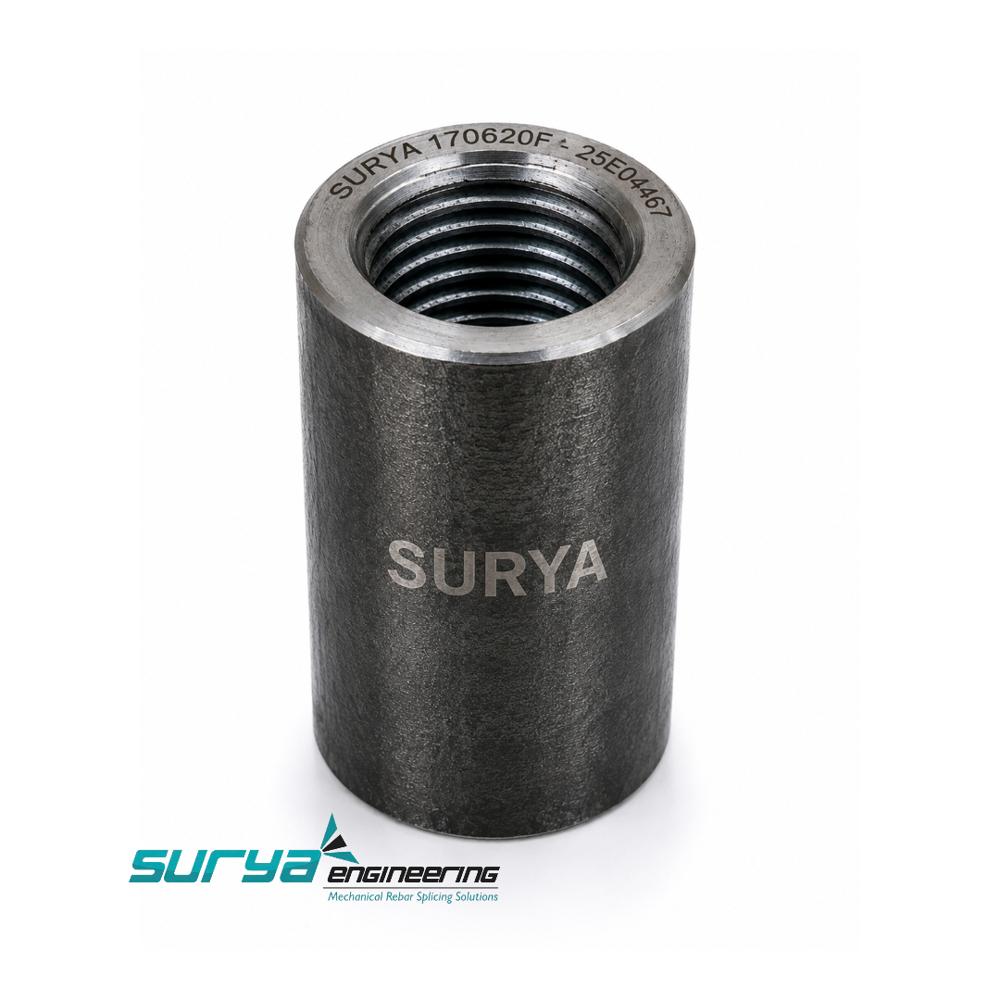
Price 30.00 INR / Piece
Minimum Order Quantity : 99 Pieces
Color : Black
Application : constraction,TMT joint,Bridge
Material : EN8D
Usage : constraction,TMT joint,Bridge

Price 60.0 INR / Piece
Minimum Order Quantity : 12 Pieces
Color : Black
Application : Constarction,Briadge,TMT Joint
Material : EN8D
Usage : Constarction,Briadge,TMT Joint
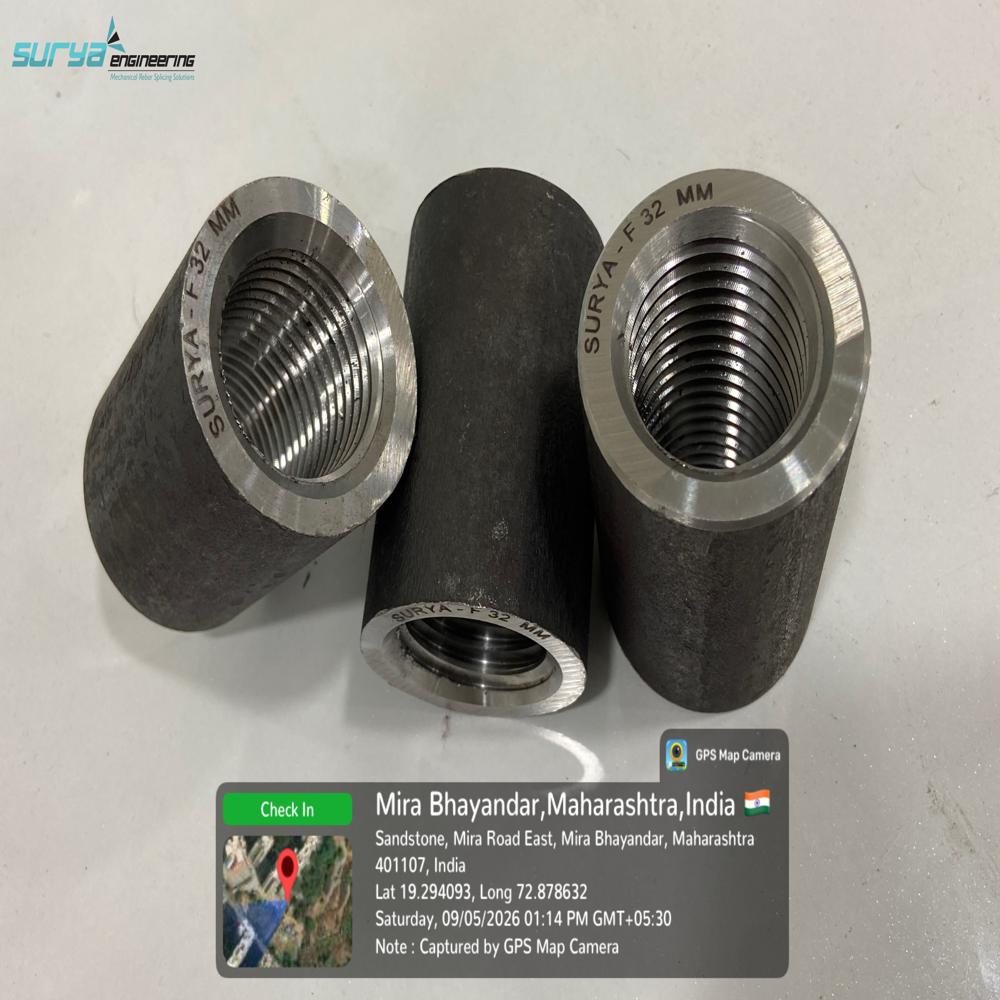
Price 75.0 INR / Set
Minimum Order Quantity : 10 Pieces
Color : Black
Application : TMT, Rebar
Material : EN8D
Usage : TMT Joint
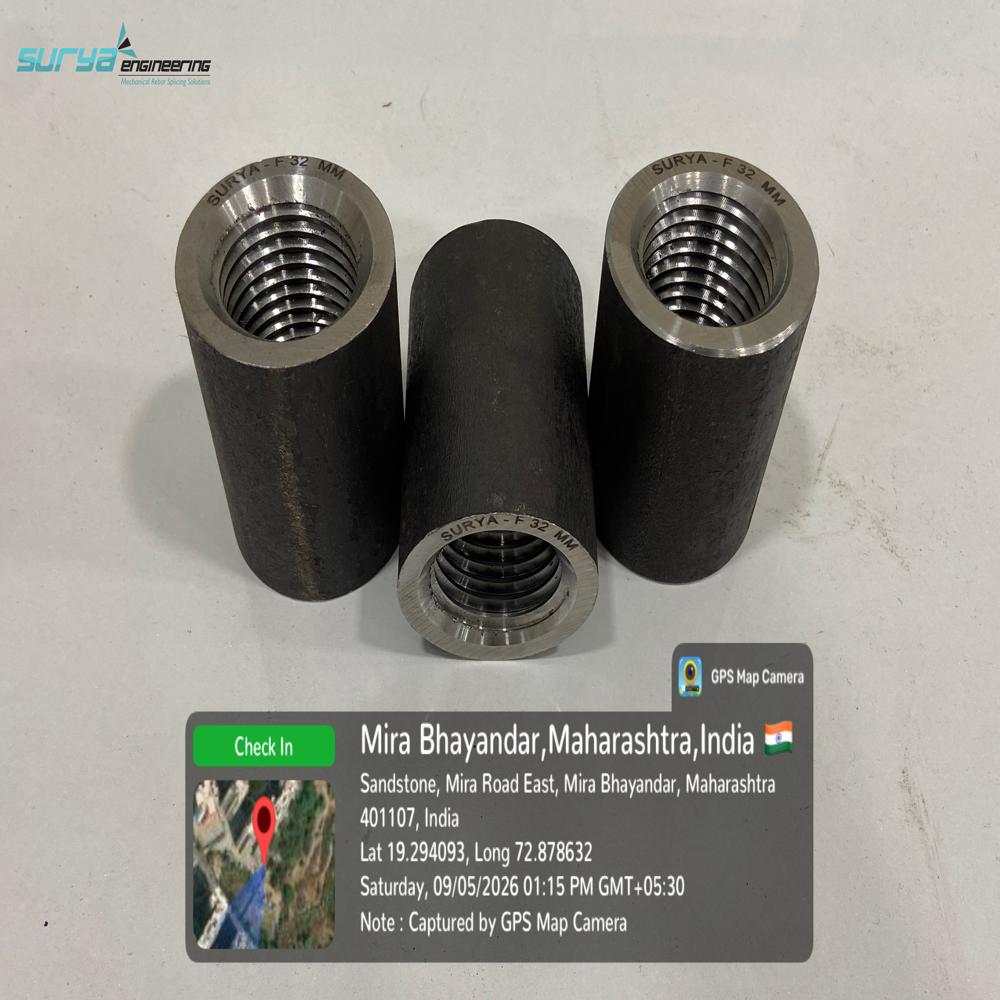
Price 130.0 INR / Piece
Minimum Order Quantity : 10 Pieces
Color : Steel / Manufacturer Standard
Application : RCC Construction / Reinforcement Splicing
Material : HighStrength Steel
Usage : TMT / Reinforcement Bars






 Send Inquiry
 English
 Spanish
 French
 German
 Italian
 Chinese (Simplified)
 Japanese
 Korean
 Arabic
 Portuguese