About TMT Bar Cold Forging Machine
Whast is Rebar Cold Forging Machine?
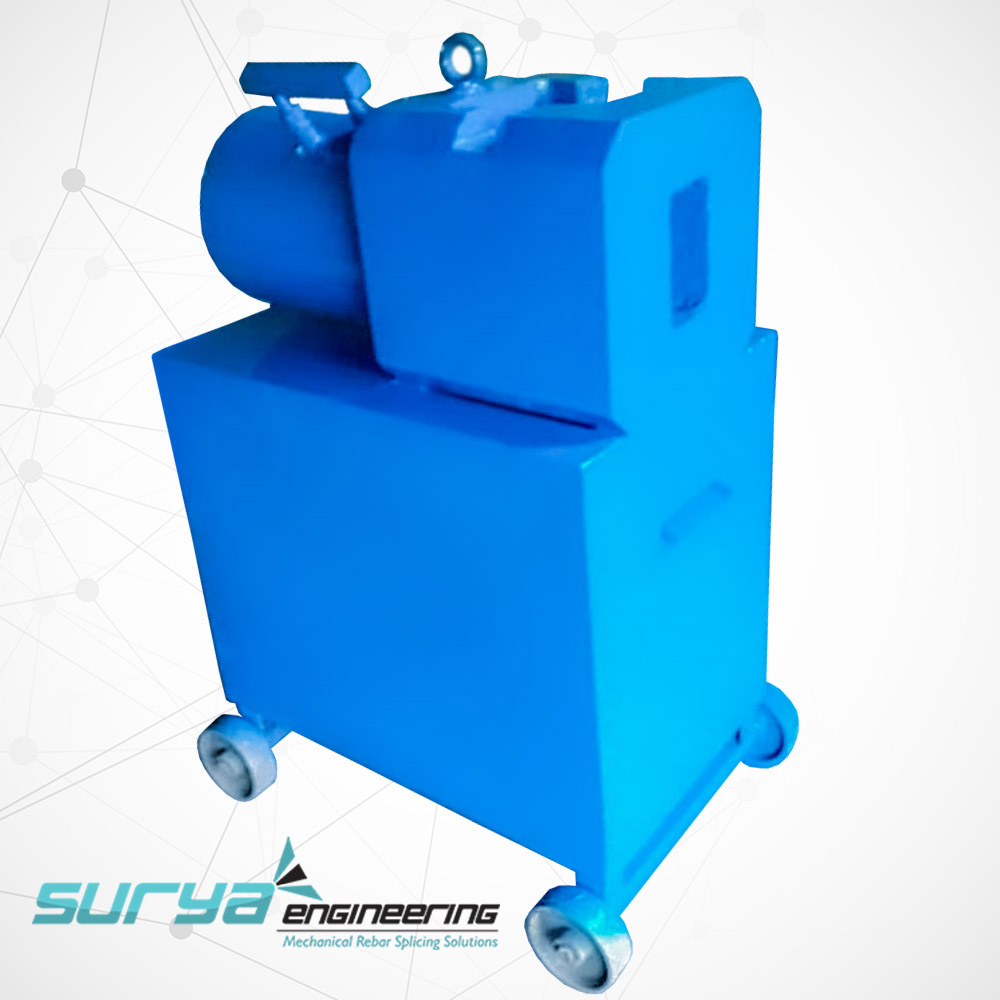
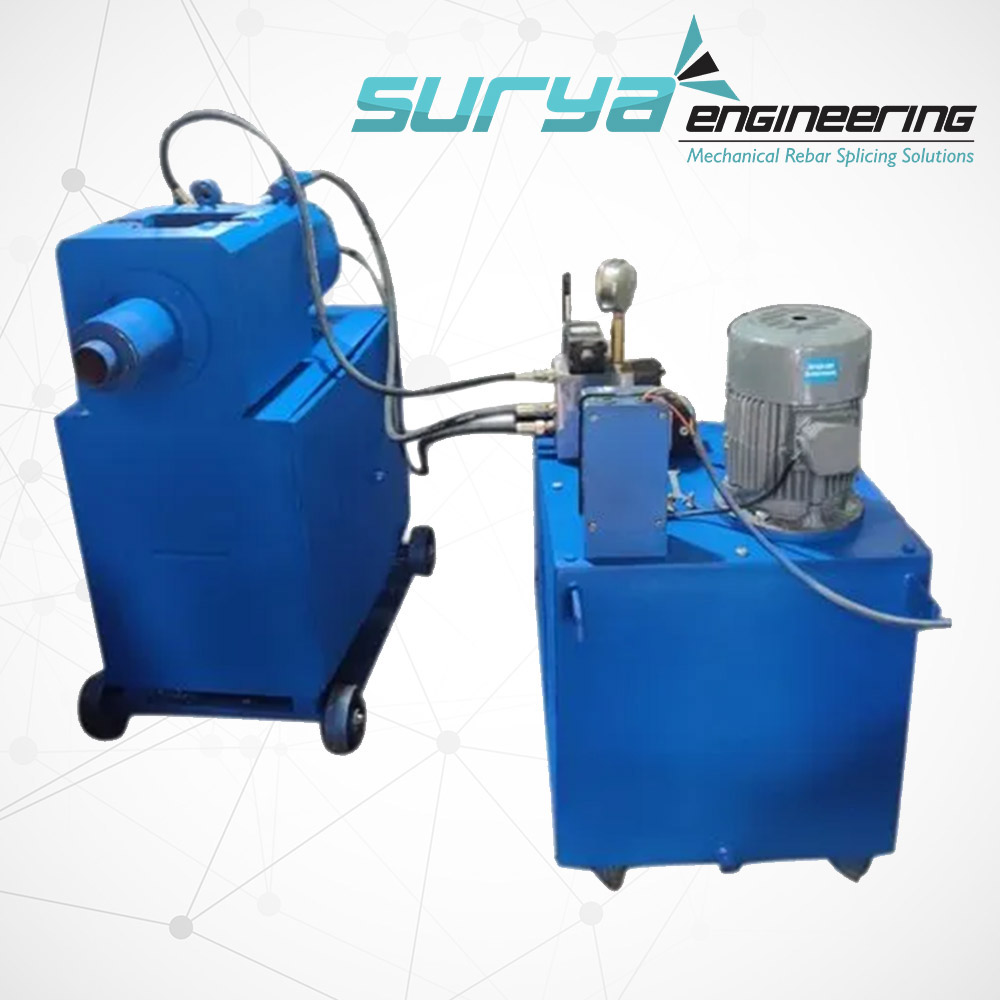
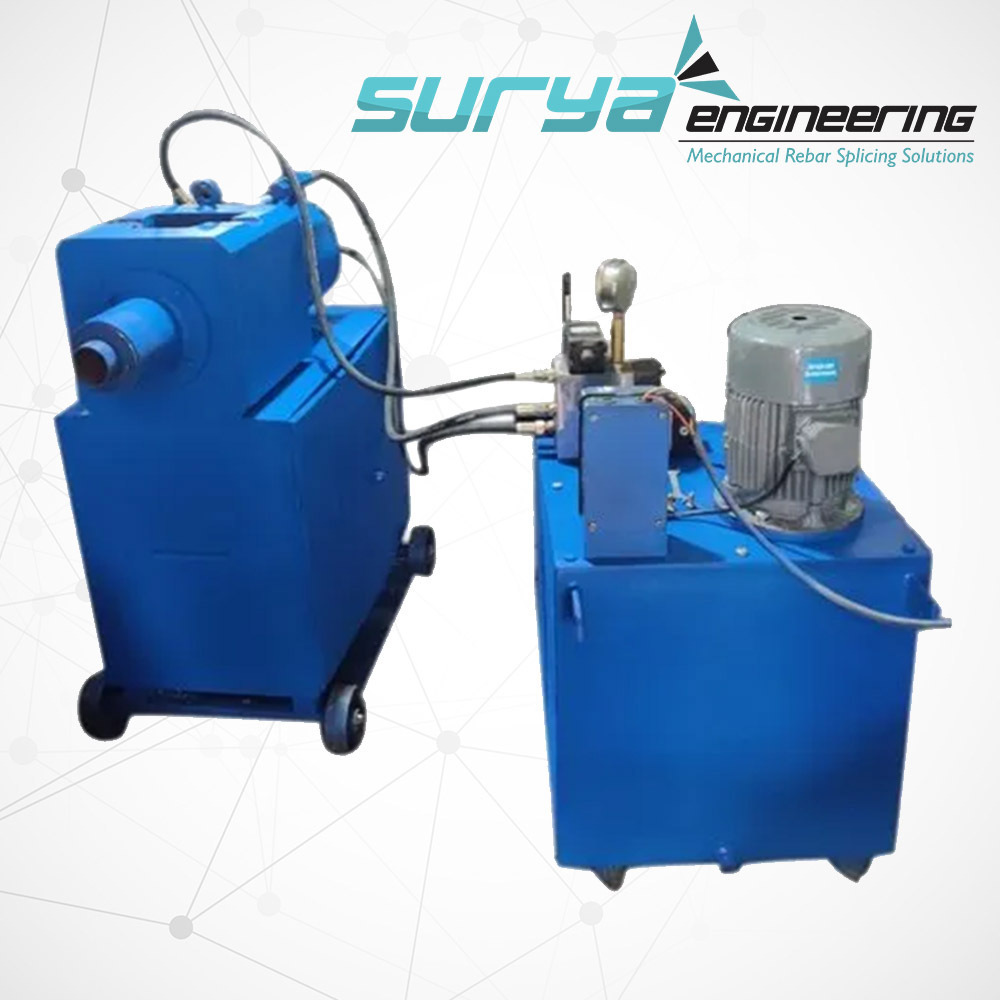
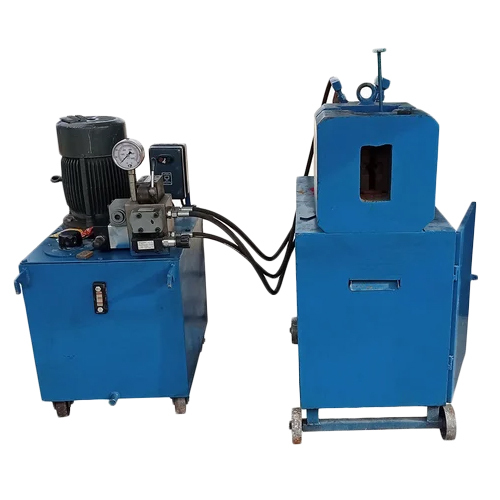
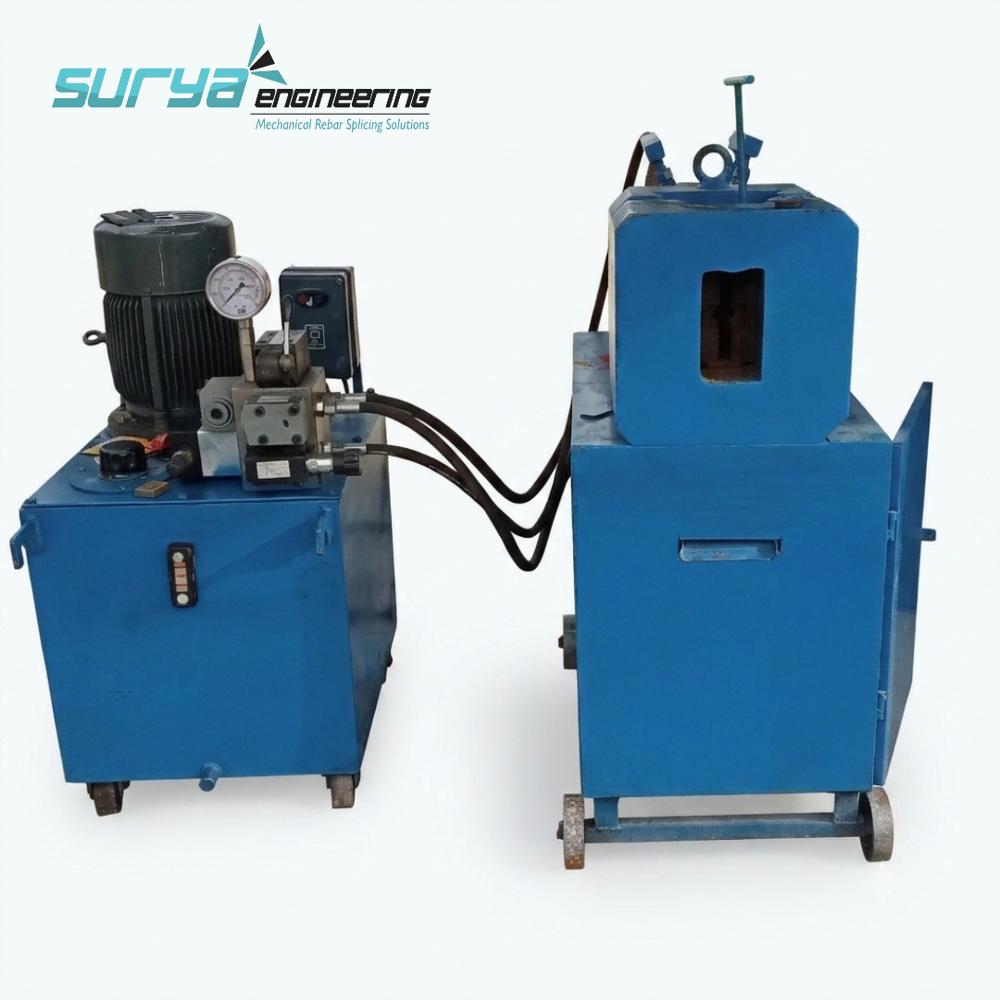
A rebar cold forging machine (also called a rebar upsetting or forging machine) is a tool used in rebar processing to plastically deform the end of a steel reinforcing bar (rebar) at room temperature. It uses high pressure (typically a hydraulic press) to bulge or upset the tip of the bar, increasing its diameter without heating. This creates a hardened, enlarged bar end that can be threaded or coupled.
Why used Rebar Cold Forging Machine?
- Stronger splices: Cold-forged ends yield coupler joints with very high tensile and shear strength (often exceeding the original bar strength).
- Consistency and safety: Unlike welding, cold forging is a controlled, repeatable process with no flames, reducing on-site risks.
- Efficiency: It speeds up rebar connection work (avoiding lengthy welding or lapping) and minimizes scrap metal.
Hydraulic Configuration: Single vs. Double Cylinder
The hydraulic architecture is the primary differentiator in machine performance and stability. Single-cylinder machines are generally lighter and more portable, making them suitable for on-site operations where mobility is prioritized. Double-cylinder machines, however, provide more balanced force distribution and are often utilized for larger diameter bars (above 32mm) where the resistance to deformation is substantial.
|
Feature
|
Single Cylinder Machine
|
Double Cylinder Machine
|
|
Typical Weight
|
1000 kg
|
1500 kg
|
|
Motor Power
|
7.5 KW
|
7.5 KW
|
|
Max Pressure
|
80 MPa
|
30 MPa (Higher flow/stability)
|
|
Dimensions
|
1020 x 500 x 935 mm
|
1250 x 850 x 1650 mm
|
|
Primary Use
|
General construction
|
High-volume industrial processing
|
Automation and Control Systems
The evolution of machine control has led to several levels of automation that directly impact production efficiency and labor requirements :
- Manual/Traditional Presses: These require the operator to manage clamping, upsetting, and releasing cycles through manual levers. While cost-effective, they are prone to variability in forging quality.
- CNC/Fully Automated Lines: These integrated systems combine cutting, upsetting, and threading into a single CNC-controlled workflow. Such machines are capable of real-time defect detection and automated parameter adjustment based on rebar hardness.
Applications Across the Construction Spectrum
Rebar cold forging is not limited to specialized projects; it has become a staple in modern civil engineering where structural safety and space optimization are paramount.
- High-Rise and Urban Construction
- Bridge and Infrastructure Engineering
- Subterranean and Seismic Applications.
Cold Forging Process as per IS 16172:2023
The standard specifies the following process:
Step 1: Cutting of Rebar
- Bars must be cut perpendicular to the axis
- Disc cutting and gas cutting are not permitted
Step 2: Cold Forging
- Hydraulic forging enlarges the bar end
- Cross-sectional area after threading must not be less than the parent bar
- Double cold forging is not allowed
Step 3: Threading
- Threads are created according to coupler design
- GO and NO-GO gauges are used for inspection
Step 4: Proof Load Testing
- Each threaded end undergoes proof load testing
- Load generally equals 80% of specified yield strength
Step 5: Coupler Installation
- Threaded rebars are connected using couplers
- Proper torque and alignment are ensured
|
Component
|
Technical Specification
|
|
Phase/Voltage
|
3 Phase / 415 Volts
|
|
Frequency
|
50/60 Hz
|
|
Circuit Protection
|
MCB and ELCB Mandatory
|
|
Earthing
|
Protective Body Earthing Required
|
|
Switch Height
|
0.6m to 1.9m above service level
|
Step 6: Final Inspection
- Visual inspection checks cracks and thread quality
- Thread protection caps are used during transportation .
-
Operational Maintenance and Lifecycle Management
Daily Maintenance Checklist
The operator or team leader is responsible for daily checks before and after shifts to prevent minor issues from escalating :
1. Hydraulic Inspection: Check fluid levels in the tanks and top up as needed. Inspect all hoses and pipelines for leaks or bulging.
2. Safety Verification: Test the emergency stop switch and safety interlocks for responsiveness.
3. Mechanical Alignment: Ensure the bending spindle and central axis are aligned within 0.5mm.
4. Cleaning: Remove metal shavings and debris from the die area to prevent scoring and wear.
Advantages
|
Metric
|
Lap Splicing
|
Mechanical Splicing (Forged)
|
|
Rebar Wastage
|
10% 15% extra material
|
0% overlap wastage
|
|
Congestion
|
High (Doubles steel volume)
|
Low (End-to-end)
|
|
Installation Speed
|
Moderate (Complex tying)
|
Fast (Simple screwing)
|
|
Labor Skill
|
Low (But requires calculation)
|
Specialized (Machine operated)
|
|
Cost Savings
|
Baseline
|
Up to 70% for $\ge 32$mm bars
|


 Send Inquiry




 Send Inquiry

 Send Inquiry
 Send SMS

 English
 Spanish
 French
 German
 Italian
 Chinese (Simplified)
 Japanese
 Korean
 Arabic
 Portuguese
