
Talk to us
08045811615
Talk to us
08045811615
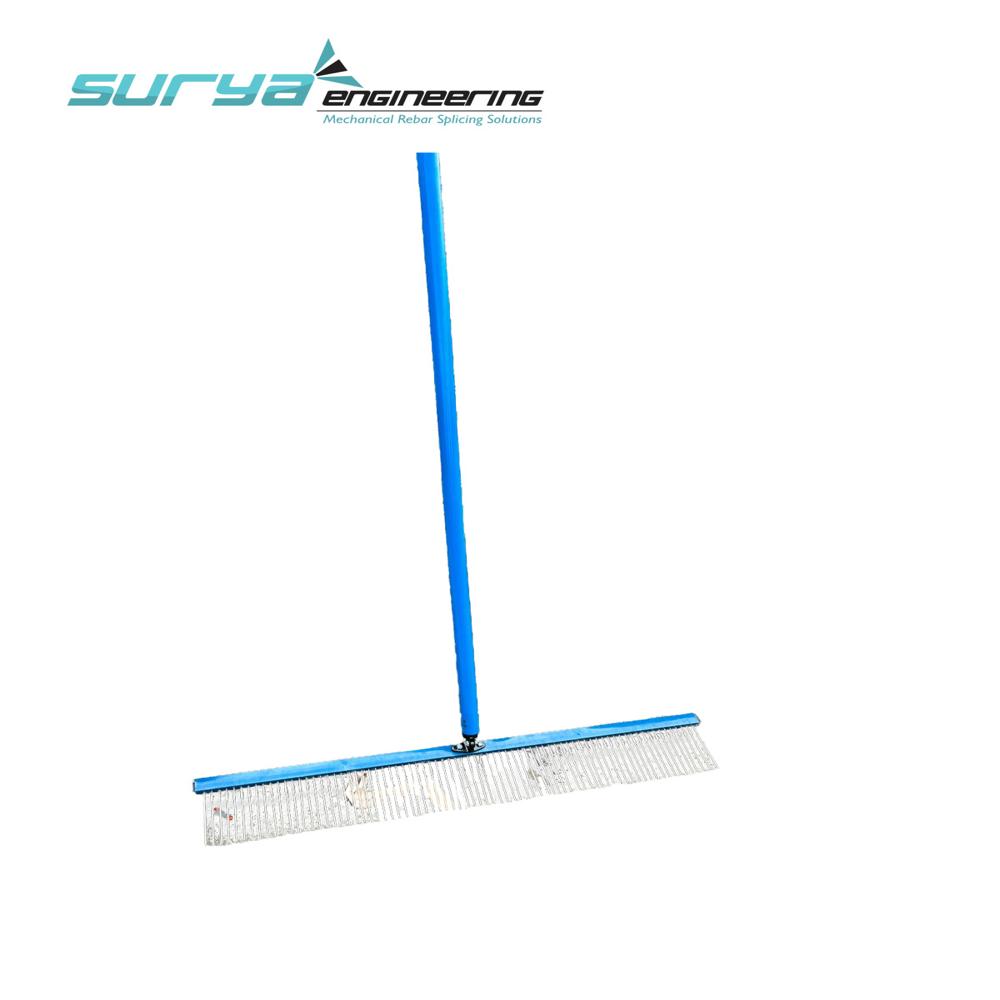
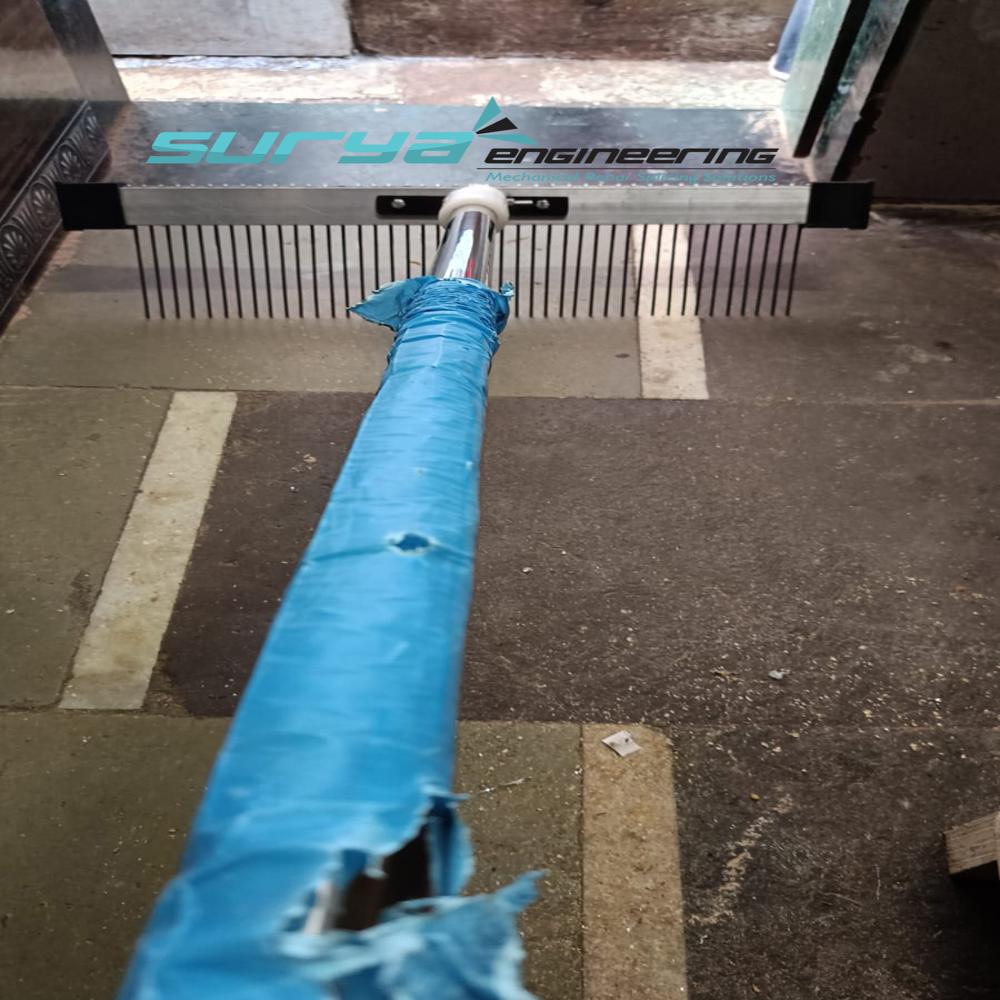
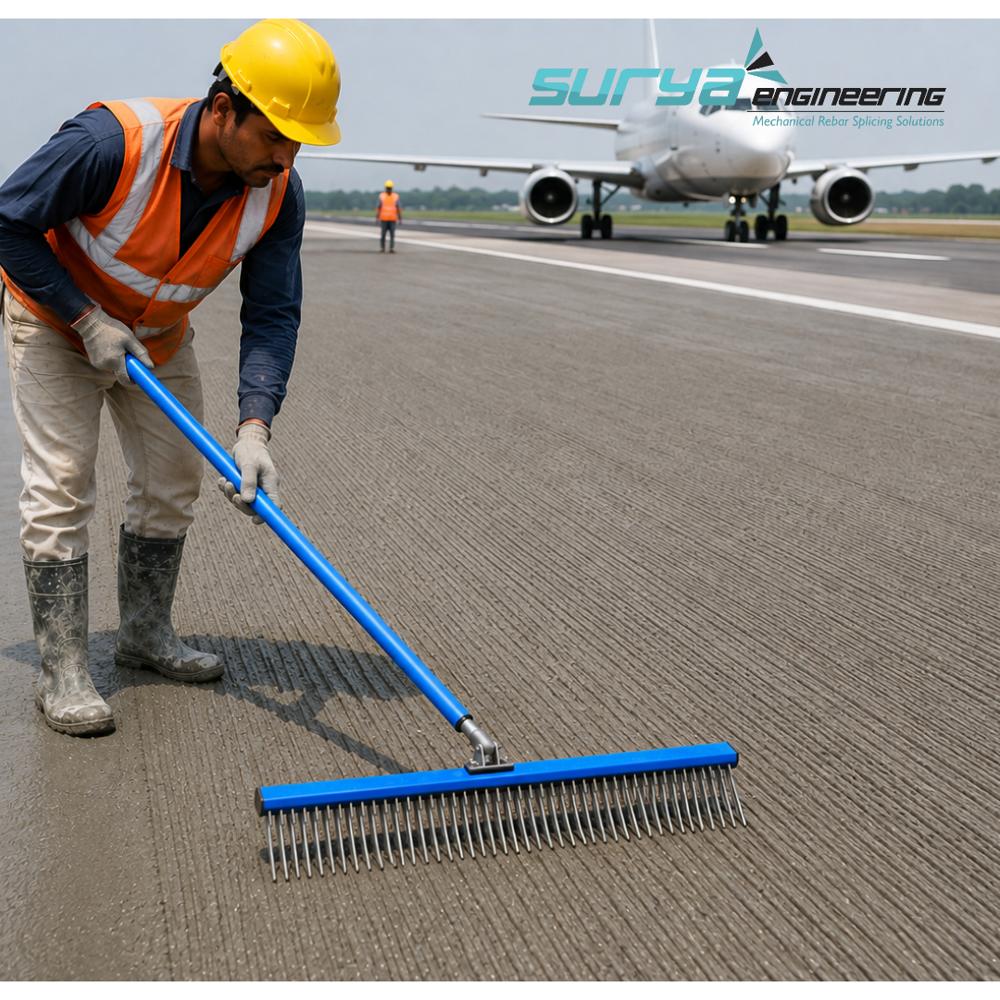
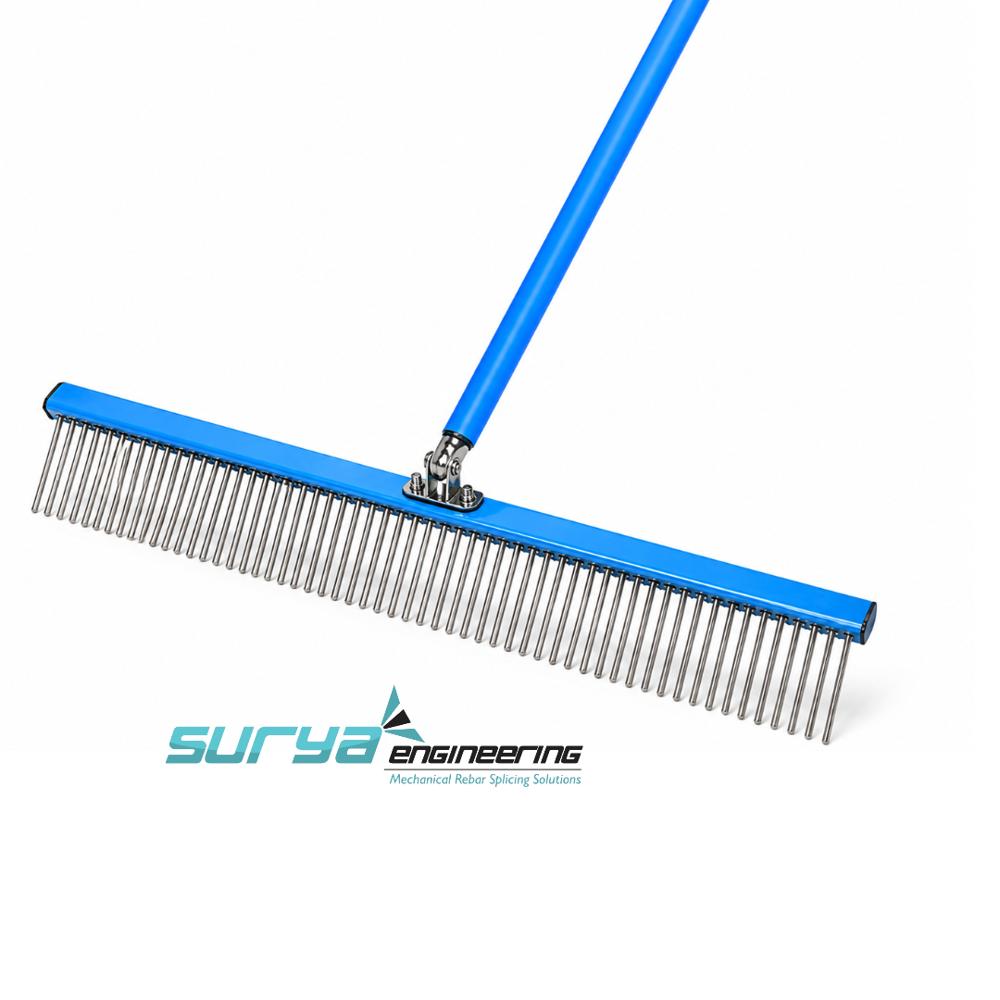
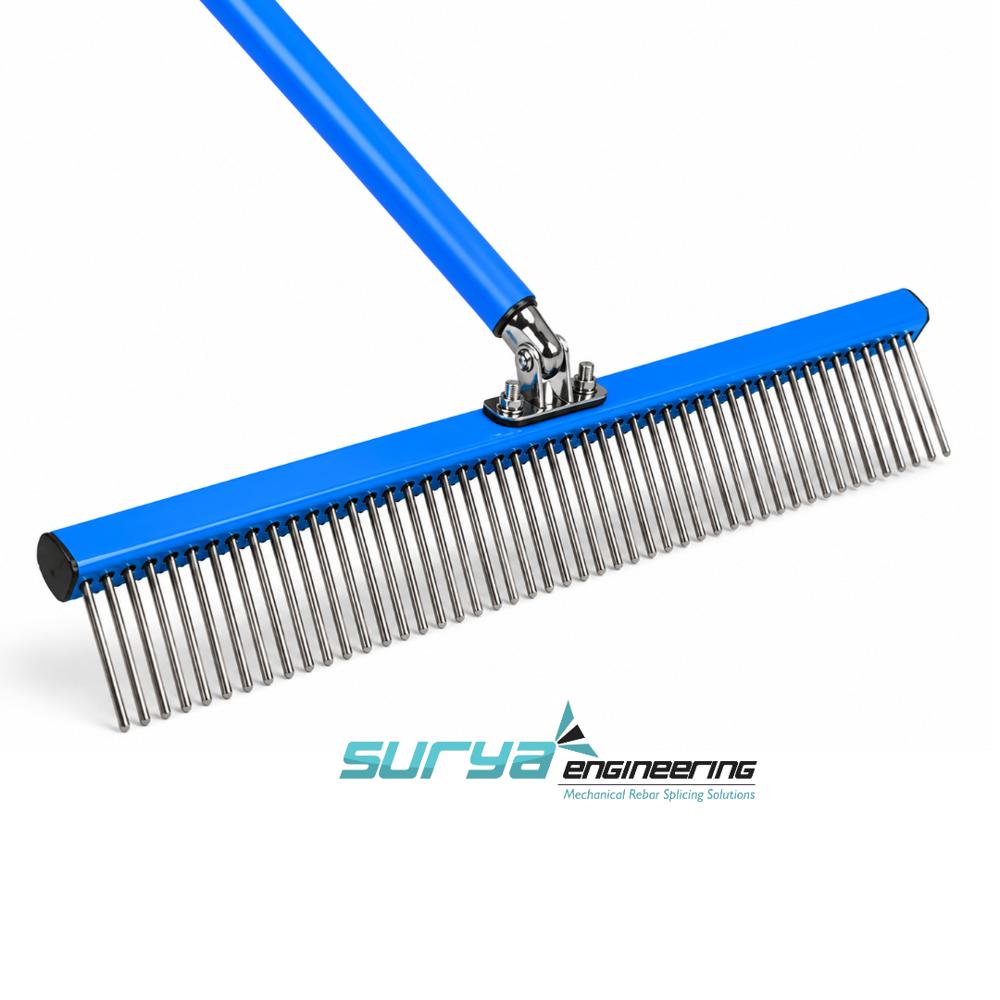
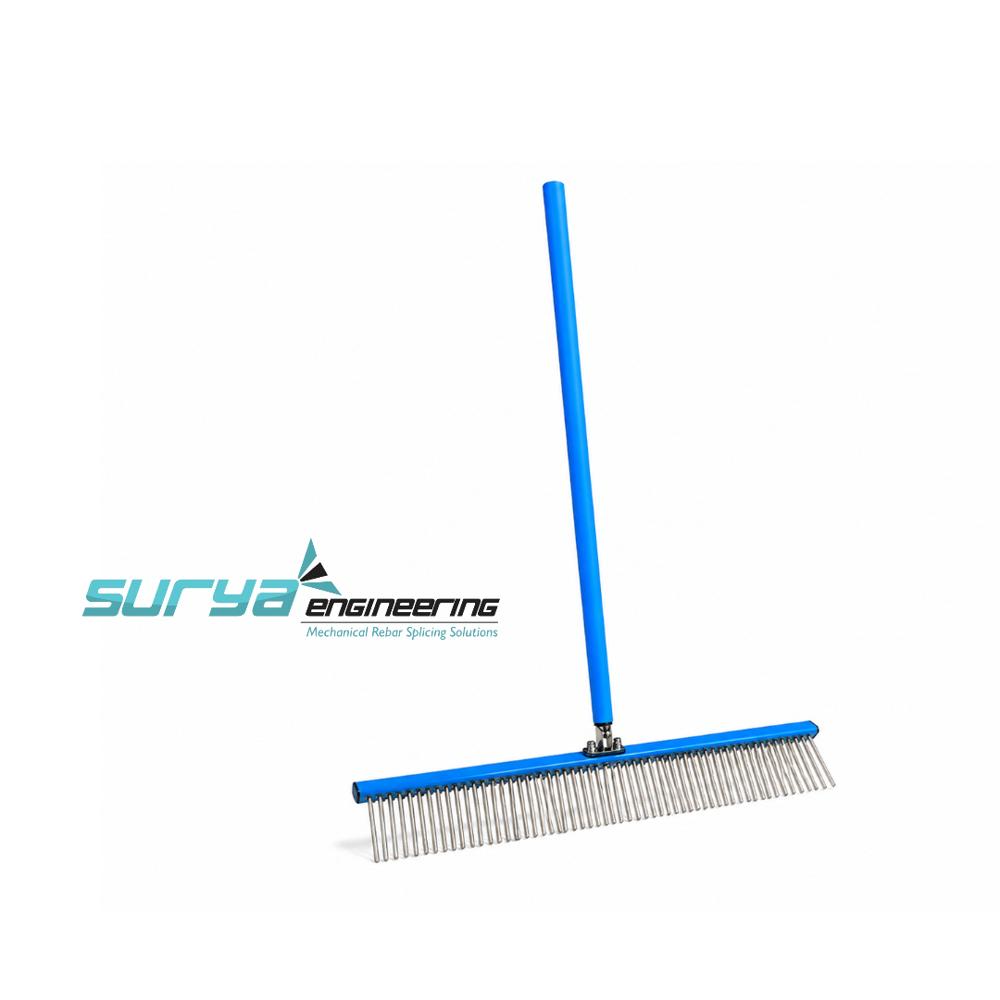

A Texturing Brush is a specialized construction tool used to create a consistent surface texture on freshly finished concrete. It is mainly used in road construction, concrete pavements, highways, airport pavements, industrial roads, and other infrastructure projects where surface friction and skid resistance are important.
After concrete is placed, leveled, and finished, the surface may be too smooth for the required pavement performance. A texturing brush creates controlled grooves across the fresh concrete surface, giving it a more textured finish and improving the interaction between vehicle tyres and the pavement.
A Texturing Brush is a construction finishing tool fitted with a series of bristles designed to create grooves or texture in freshly placed concrete.
The brush is moved across the concrete surface while the concrete is still workable. As the bristles pass over the surface, they form a controlled pattern of grooves.
Depending on the project requirements, texturing can be carried out in a longitudinal or transverse direction.
The main purpose of a texturing brush is to create a suitable surface texture on concrete pavement.
It can be used for:
The texturing brush creates the final "interface" between the pavement and the tire (or shoe). The grooves it creates have to be just rightdeep enough to provide drainage for years, but shallow enough to provide a comfortable, quiet ride.
Here's the brutal truth: You can put the most beautiful, perfectly textured finish on a slab, but if the ground underneath that slab (the subgrade) isn't properly compacted and stable, it doesn't matter.
If the subgrade settles, the slab will crack and fault at the joints. All that beautiful, consistent texturing work will be interrupted by massive cracks and potholes. The texture brush does its job on the surface, but its effectiveness depends entirely on the foundation holding everything up.
A smooth concrete pavement can provide less surface friction, particularly when water is present. Texturing creates small grooves that change the surface profile and can help improve tyre grip.
The grooves can also provide pathways for water to move away from the immediate tyre contact area, depending on the texture design and pavement conditions.
For this reason, surface texturing is an important finishing operation on many concrete pavement projects.
Texturing brushes are commonly used in:
Texturing is carried out after the concrete has been placed, compacted, leveled, and finished to the required condition.
Once the surface reaches the appropriate consistency, the texturing brush is moved across the concrete using controlled and consistent movement.
The bristles create a series of grooves in the surface. These grooves form the required texture pattern.
The timing of texturing is critical. If the concrete is too soft, the grooves may become too deep or irregular. If the concrete has become too stiff, the brush may not create the required texture effectively.
Texturing brushes can be used to create different groove directions.
Longitudinal Texturing
The grooves run generally parallel to the direction of traffic. This method may be specified for certain concrete pavement applications.
Transverse Texturing
The grooves run generally perpendicular to the direction of traffic. It is another common approach where specified by the pavement design.
The right brush depends on the required pavement texture and project conditions.
Before selecting a concrete texturing brush, consider:
Concrete highways experience continuous traffic and need reliable surface characteristics throughout their service life.
A texturing brush for highway construction helps create the specified surface grooves on freshly finished PQC. When the brush is used at the right stage and with the correct technique, it can help produce a consistent pavement texture suitable for the project's requirements.
Airport pavements have demanding requirements for surface condition and friction. The texturing method must therefore be selected according to the applicable airport pavement specifications.
Where brush texturing is specified, a suitable concrete texturing brush can help produce a controlled and uniform surface pattern.
Surya Engineering supplies concrete finishing and construction tools for road contractors, infrastructure companies, builders, and construction professionals.
If you are looking for a Texturing Brush manufacturer or supplier in India, the product should be selected according to the required pavement texture, brush dimensions, bristle characteristics, texturing method, and project specifications.
Whether you are working on a highway, concrete road, airport pavement, industrial road, or another infrastructure project, choosing the appropriate texturing brush can help achieve a more consistent concrete surface finish.
For product specifications, available sizes, bristle options, and application guidance, contact Surya Engineering with your project requirements.
What is a Texturing Brush?
A Texturing Brush is a specialized construction tool used to create controlled grooves on freshly finished concrete pavement.
What is a concrete texturing brush used for?
It is used to create surface texture on concrete roads and pavements, helping improve surface roughness and tyrepavement interaction.
Where are texturing brushes used?
They are commonly used on highways, concrete roads, airport pavements, industrial roads, and other infrastructure projects.
What is the difference between longitudinal and transverse texturing?
Longitudinal texturing creates grooves generally parallel to traffic, while transverse texturing creates grooves generally perpendicular to traffic.
When should a concrete pavement be textured?
Texturing should be carried out when the concrete has reached the appropriate consistency specified for the project. The exact timing depends on the concrete mix, weather, and site conditions.
Can a texturing brush be used for PQC?
Yes. Texturing brushes are commonly used for Pavement Quality Concrete where brush texturing is specified.
How do you maintain a concrete texturing brush?
Clean concrete from the bristles immediately after use, inspect the brush regularly, and replace worn or damaged components when necessary.

Price:
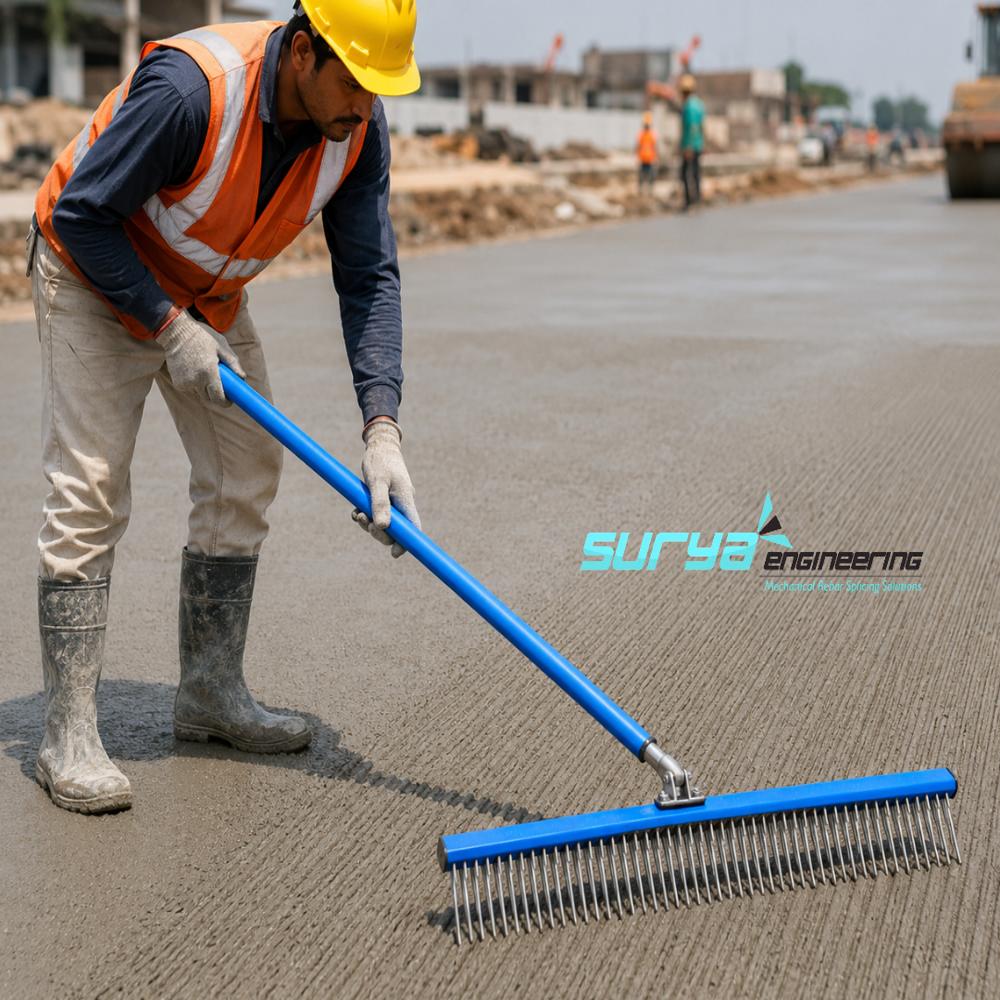
Price 1000.0 INR / Piece
Minimum Order Quantity : 1 Piece
Bristle Color : Metallic Silver / Black Steel
Size : Standard 3 Feet (900 mm) / 4 Feet (1200 mm)
Brush Shape : Other
Usage : Concrete Pavement Texturing, Highway Tining, Road Construction, Skid Resistance Grooving
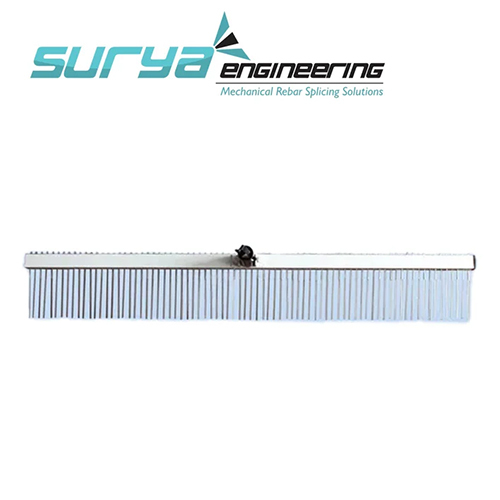
Price 650 INR / Piece
Minimum Order Quantity : 10 Pieces
Bristle Color : White
Size : 2ft,3 ft, 4 ft
Brush Shape : Other, Rectangle
Usage : Industrial





 Send Inquiry
 English
 Spanish
 French
 German
 Italian
 Chinese (Simplified)
 Japanese
 Korean
 Arabic
 Portuguese