
Talk to us
08045811615
Talk to us
08045811615
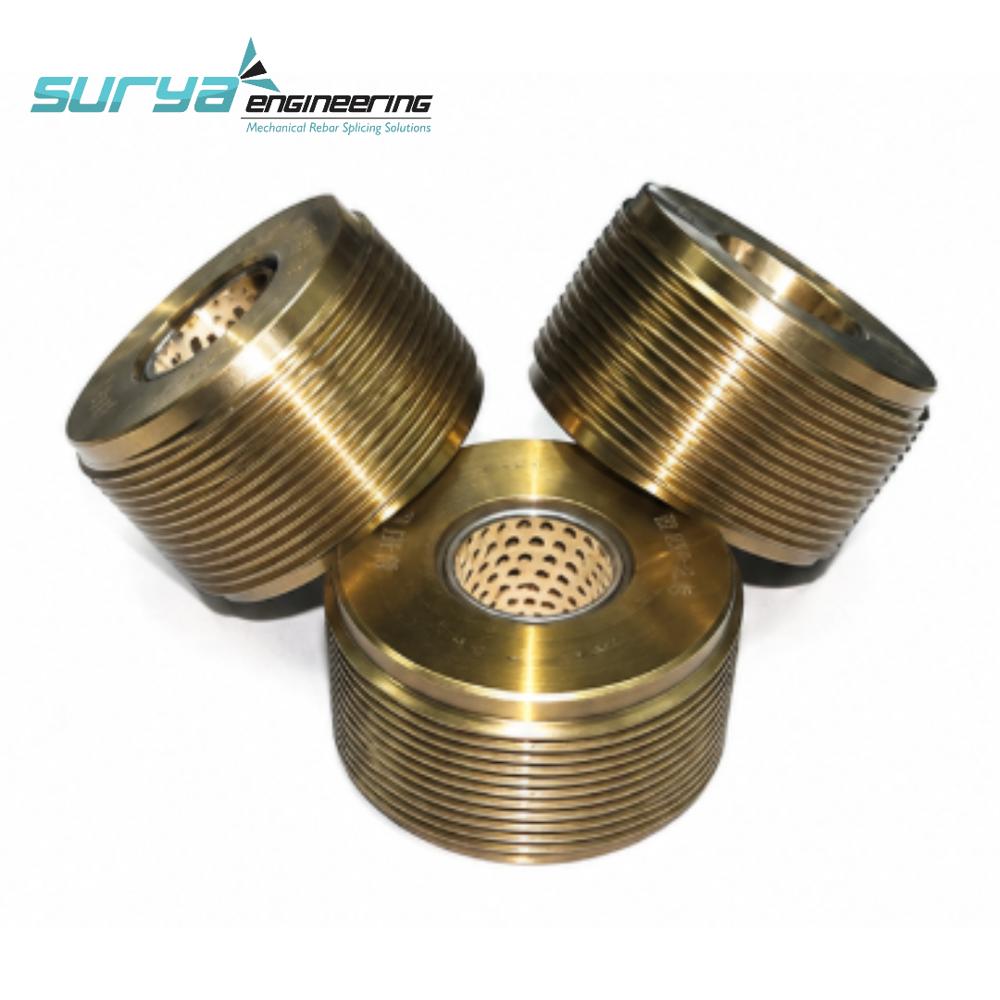
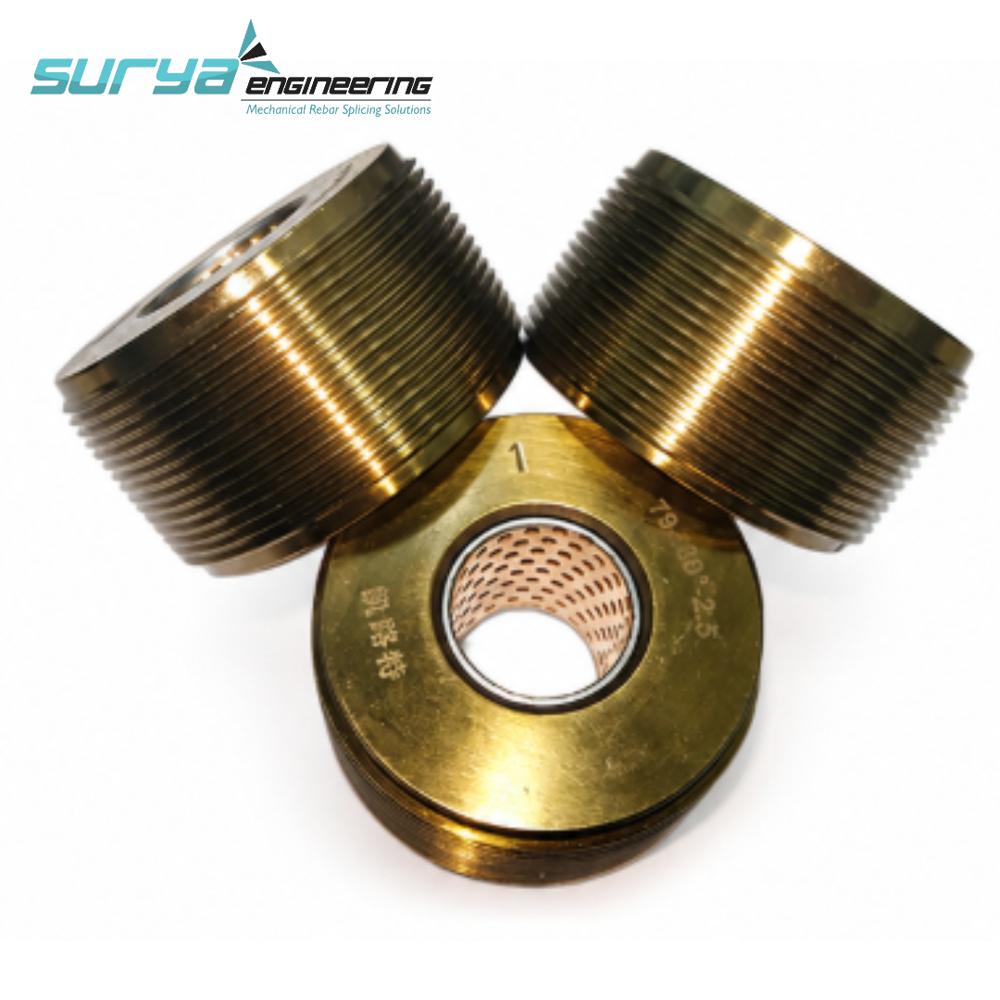
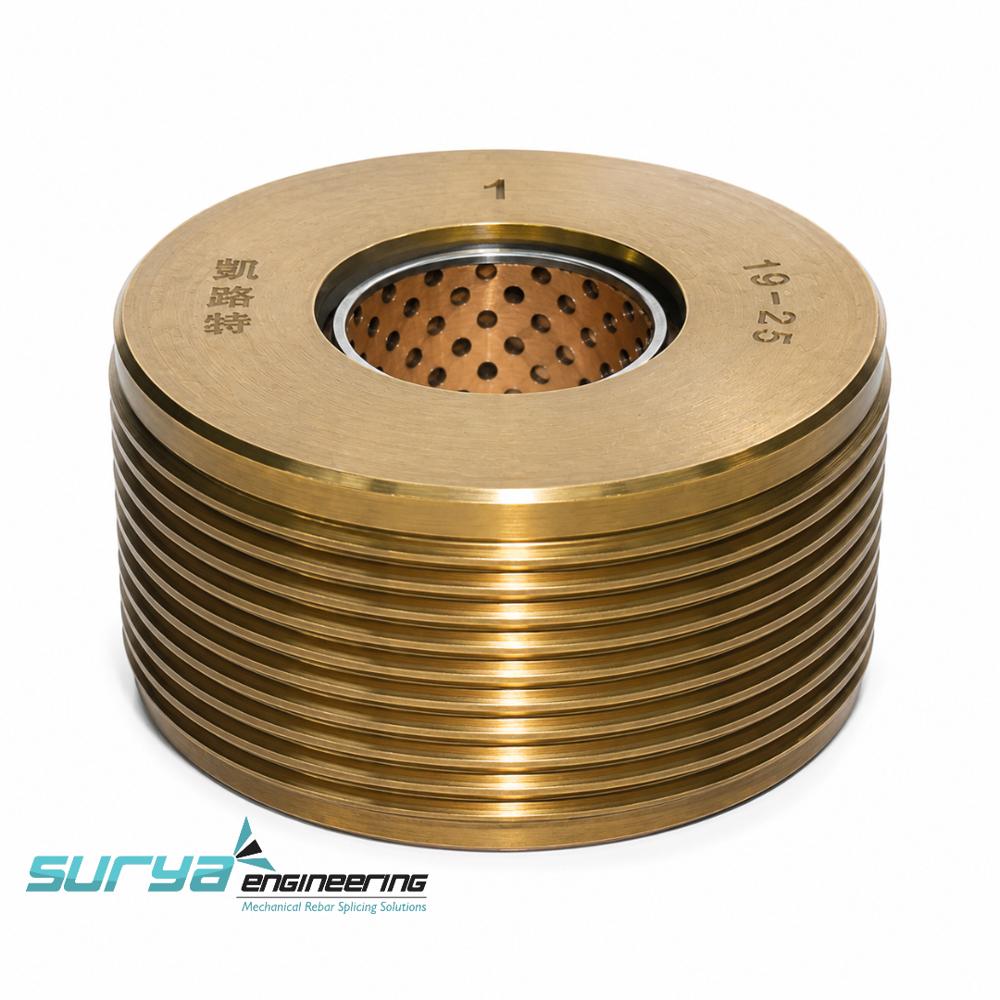
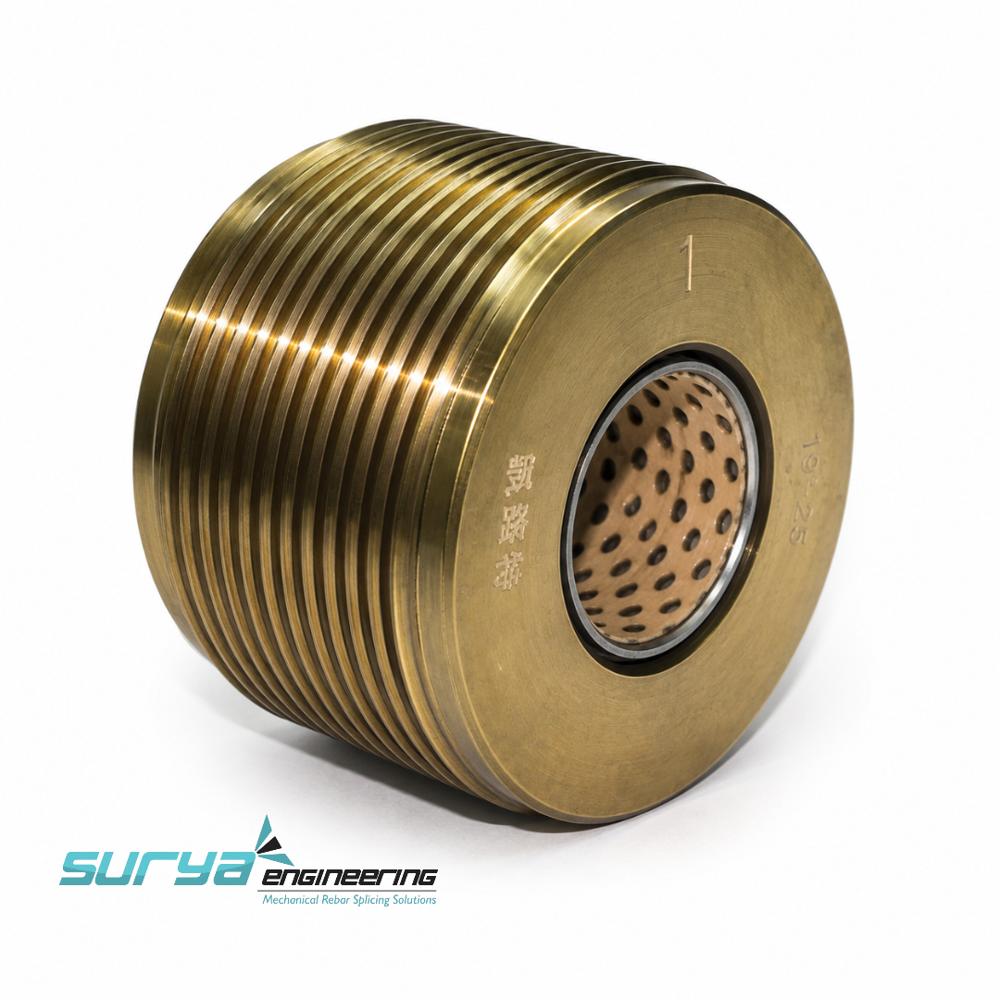
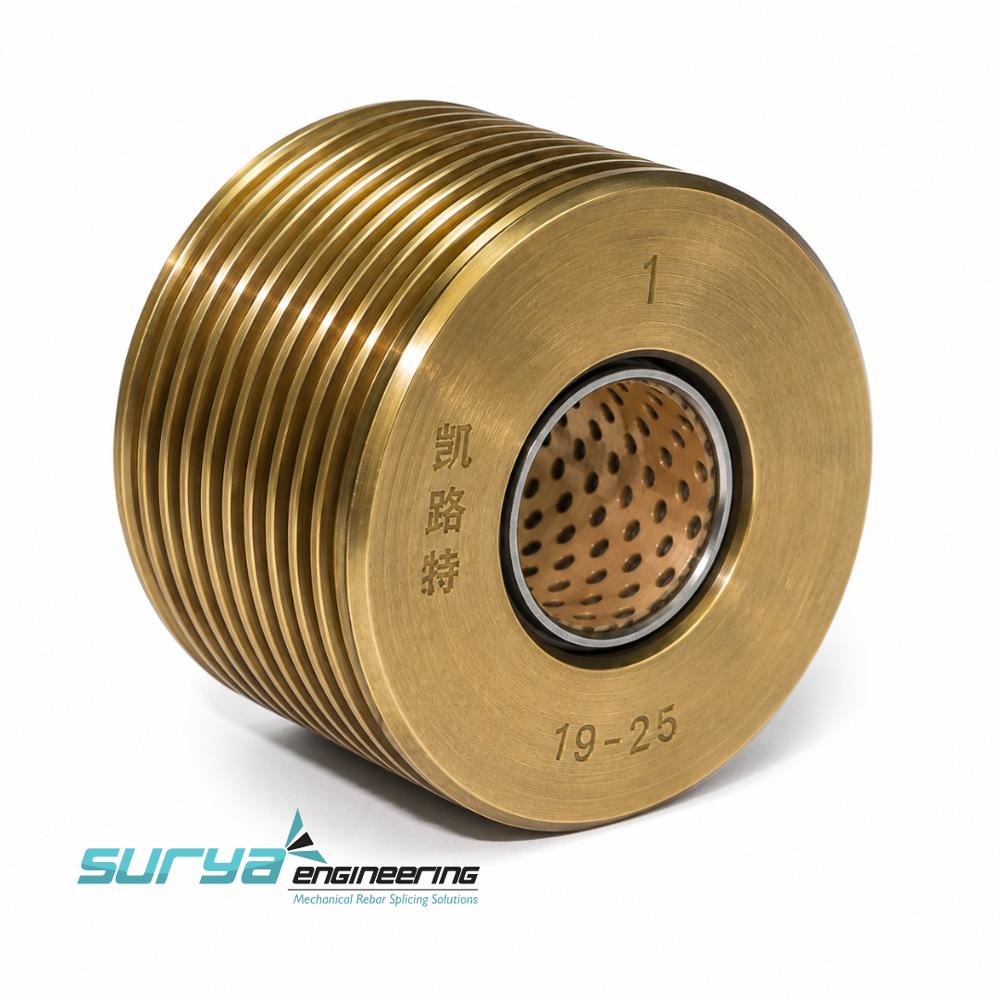
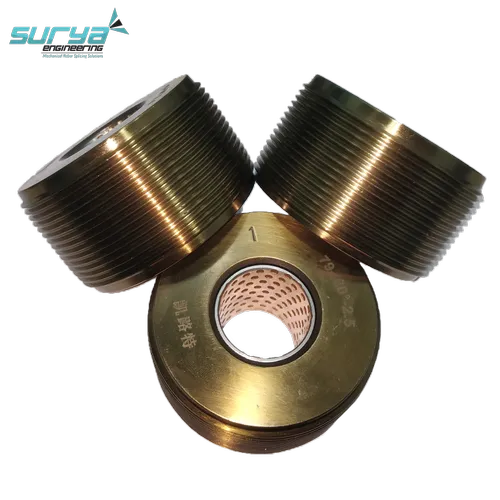

When reinforcement bars are joined using mechanical couplers, the thread on the bar has to be properly formed. A Rebar Threading Rolling Die is one of the key tooling components used for this process.
Unlike a conventional threading chaser, which cuts material away from the bar, a rolling die forms the thread by applying controlled pressure. The die works with a Rebar Thread Rolling Machine and helps produce the required thread profile on the prepared end of the TMT bar.
Surya Engineering, Mumbai, manufactures and supplies rebar threading rollers, rolling dies and rebar processing equipment for construction and reinforcement applications across India. Its current product range includes Roll Thread Machine Threading Dies, Rebar Threading Rollers and CDRG rebar roll-threading products.
A Rebar Threading Rolling Die is a precision-machined tool used to form threads on the end of a reinforcement bar.
The die is installed in a thread rolling machine. During operation, the bar is positioned between the rolling tooling and pressure is applied while the die and bar move relative to each other. The steel material is displaced into the required thread shape.
In simple words:
Thread Cutting Chaser cuts material to make the thread
Thread Rolling Die forms the thread by pressure
This makes a rolling die different from the chasers used in conventional rebar thread-cutting machines.
A properly selected die should match the rebar diameter, thread pitch, thread profile and machine configuration.
The main purpose of a rolling die is to create a consistent external thread on a TMT bar for a compatible mechanical rebar coupling system.
It is particularly useful when a fabrication unit or construction project needs to process a large number of threaded rebars.
A rolling die can help with:
The final thread quality still depends on the machine, die, rebar preparation, settings and inspection process.
The process is fairly simple.
First, the end of the TMT bar is prepared according to the selected threading system. The bar is then placed in the thread rolling machine.
The correct rolling die is fitted according to the required bar diameter and thread specification.
When the machine starts, controlled pressure is applied between the rolling tooling and the bar. The steel flows into the shape of the die profile and forms the external thread.
After the rolling operation is complete, the threaded portion is inspected.
The basic process is:
TMT Bar End Preparation Die Installation Thread Rolling Inspection Coupler Installation.
These two products are often confused because both are used to produce threads.
A rolling die forms the thread through pressure and material displacement.
A chaser cuts the thread by removing material from the bar.
So the simple difference is:
Rolling Die = Thread Forming
Chaser = Thread Cutting
Surya Engineering lists these as separate product categories, including Rebar Threading Rollers, CDRG rollers, BST Machine Chasers and other threading tools.
Rolling dies can be classified according to their application, machine design and thread requirements.
Designed for forming threads on reinforcement bars used in mechanical coupling systems.
Used when the finished thread is required to remain parallel along the threaded section.
Rolling tooling is selected according to the rebar diameter and the machine's tooling arrangement.
Used when the existing die becomes worn or damaged and needs to be replaced without replacing the complete machine.
These are manufactured with controlled dimensions and surfaces so the die can form a repeatable thread when used with the correct machine setup.
Rebar threading rolling dies are mainly used in reinforcement processing and mechanical rebar splicing.
Typical applications include:
The rolling die is only one part of the complete connection system.
A typical process is:
Rebar Preparation Thread Rolling Thread Inspection Coupler Second Rebar.
There is no single replacement period that applies to every application.
Tool life depends on factors such as:
Surya Engineering's currently published Roll Thread Machine Threading Die information includes the following product details:
| Specification | Published Details |
|---|---|
| Product | Roll Thread Machine Threading Die |
| Material | D2 Steel |
| Diameter | 2830 mm |
| Height | 10 mm |
| Width | 10 mm |
| Length | 10 mm |
| Dimensions | 4580 mm |
| Technique | Surface Polished |
| Product Type | Roll Thread |
| Application | Threading Die |
| Surface | Smooth Polished |
| Feature | Polished, Bright, Threaded |
| Shape | Round |
| Maintenance | Low Required |
This section needs to be explained carefully.
There is no single Indian Standard specifically for a "Rebar Threading Rolling Die." The rolling die is a machine-tool component, while Indian Standards relevant to the complete rebar mechanical splicing system apply to the reinforcement bar and coupler.
IS 1786:2008 covers high-strength deformed steel bars and wires used for concrete reinforcement. The standard covers grades including Fe 415, Fe 415D, Fe 500, Fe 500D, Fe 550, Fe 550D and Fe 600.
A properly selected rolling die offers several practical benefits.
Once the machine is correctly set, the die can produce repeatable threads during production.
The rolling process can produce a smooth thread surface when the die and machine are correctly matched.
Unlike a cutting chaser, the rolling process primarily forms the thread through material displacement.
Rolling dies are useful when large quantities of threaded reinforcement bars are required.
A worn die can generally be replaced without replacing the complete threading machine.
The resulting thread can be used with a compatible coupler when the finished dimensions and performance requirements are satisfied.
Rolling dies are designed specifically for use with appropriate rebar thread rolling machines and reinforcement applications.
Surya Engineering, Mumbai, manufactures and supplies rebar processing equipment and threading tools, including Rebar Threading Rollers, Roll Thread Machine Threading Dies, CDRG rollers and other rebar threading products.
What is a Rebar Threading Rolling Die?
A Rebar Threading Rolling Die is a tooling component used in a thread rolling machine to form external threads on reinforcement bars.
What is a rebar rolling die used for?
It is used to form threads on TMT/rebar ends for compatible mechanical rebar coupler systems.
What is the difference between a rolling die and a chaser?
A rolling die forms the thread through pressure and material displacement, while a chaser cuts the thread by removing material.
What material is Surya Engineering's Roll Thread Machine Threading Die made from?
Surya Engineering's published product specification lists D2 Steel.
What are the published dimensions of the die?
The listed product specifies 2830 mm diameter, 10 mm height, 10 mm width and 10 mm length, with dimensions listed as 4580 mm. Confirm the exact model before ordering.
What is the IS standard for a rebar threading rolling die?
There is no single dedicated IS standard specifically for the rolling die. IS 1786:2008 covers reinforcement steel, while IS 16172:2023 covers mechanical reinforcement couplers and their applicable performance tests.

Price:





 Send Inquiry