About Rebar Bending Machine
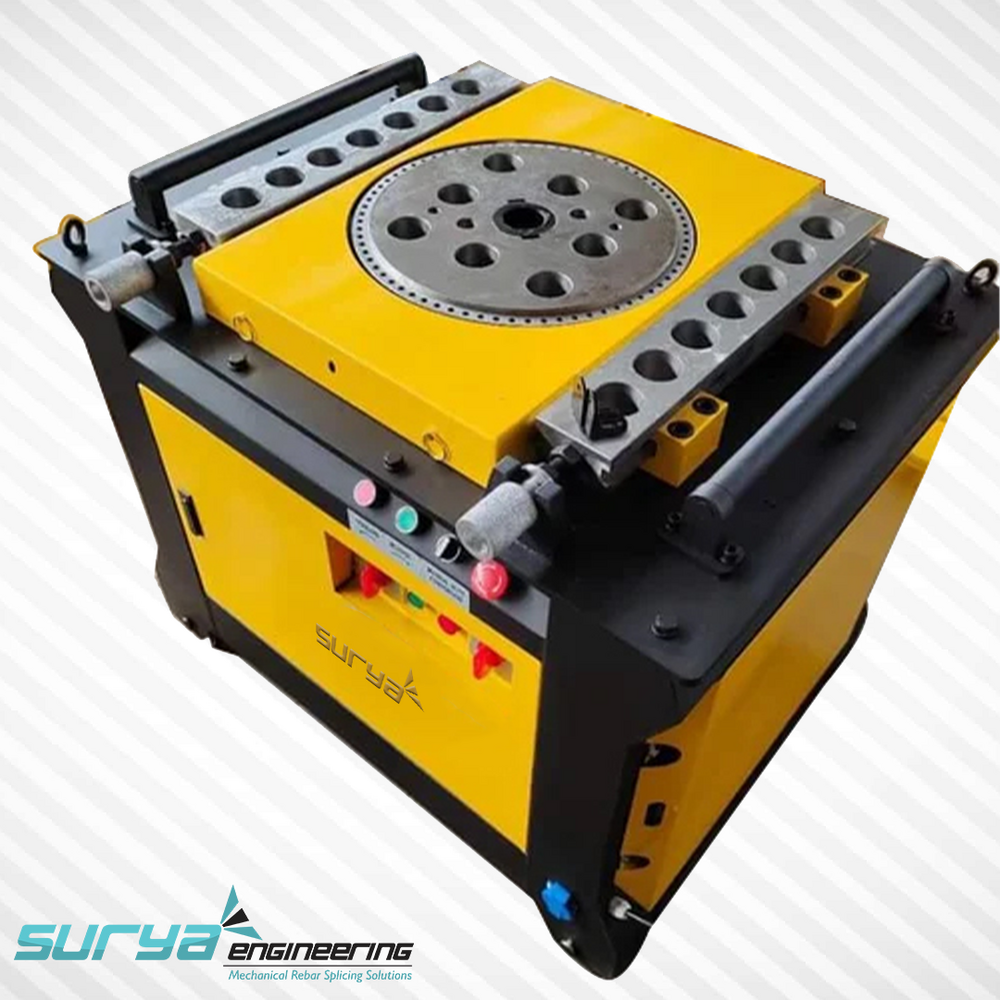
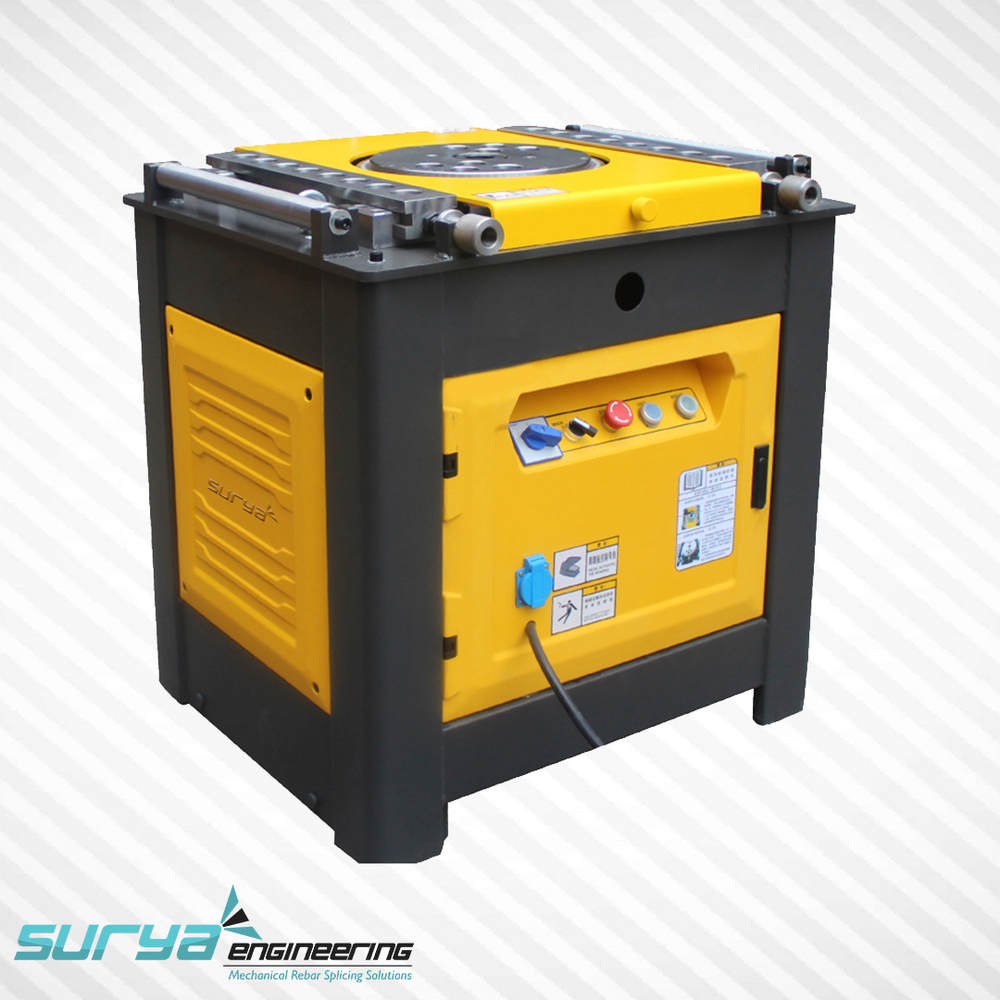
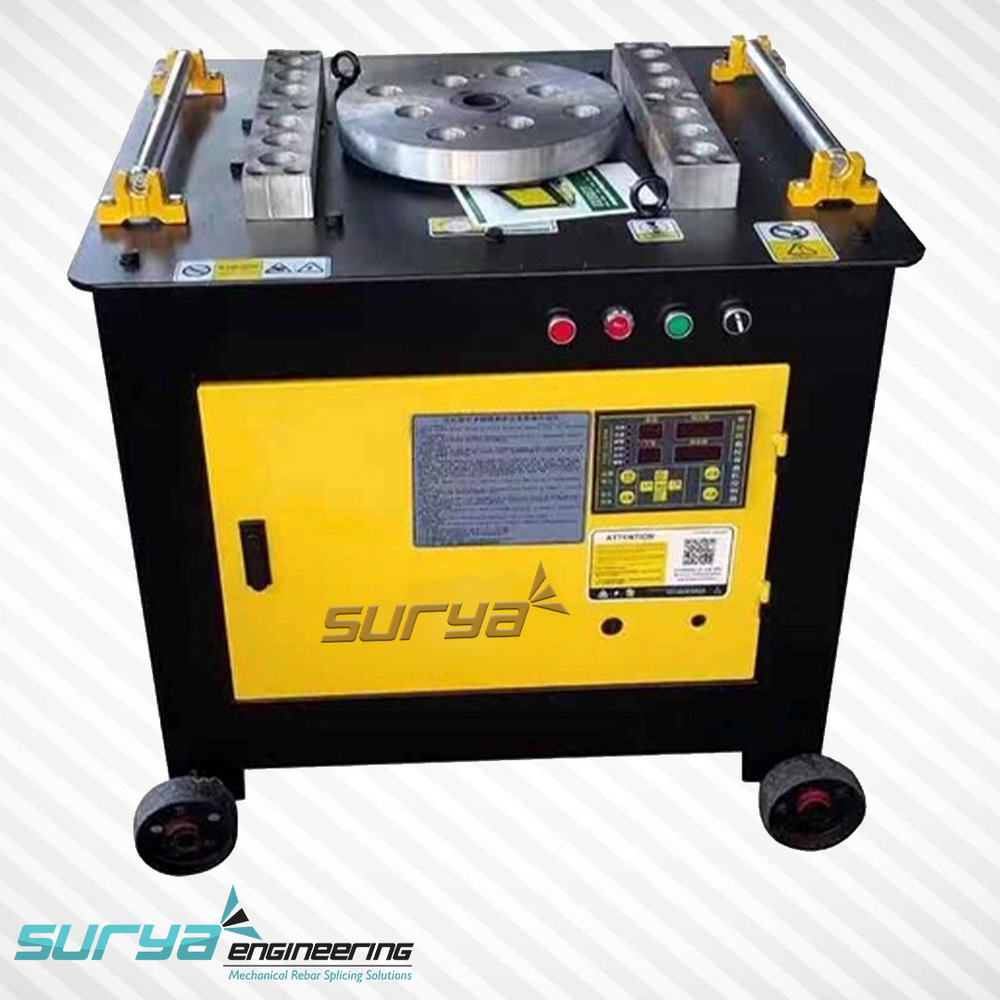
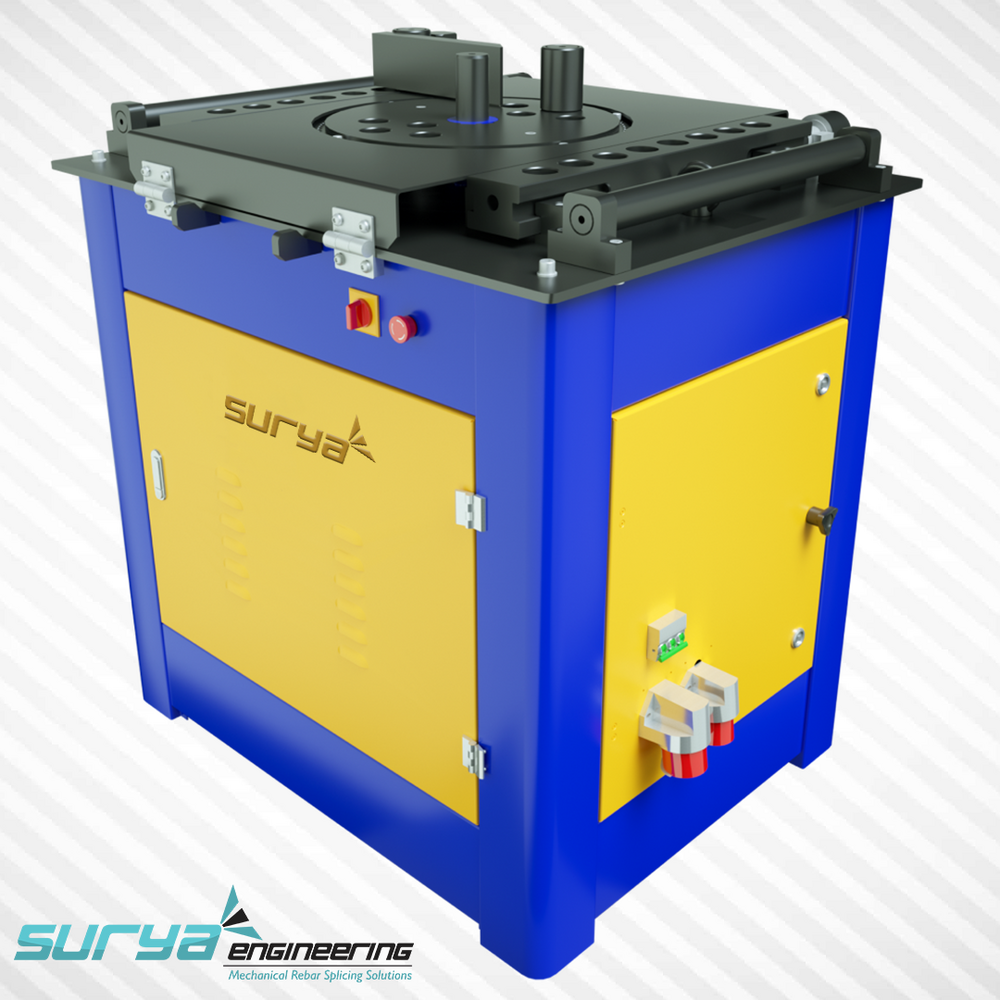
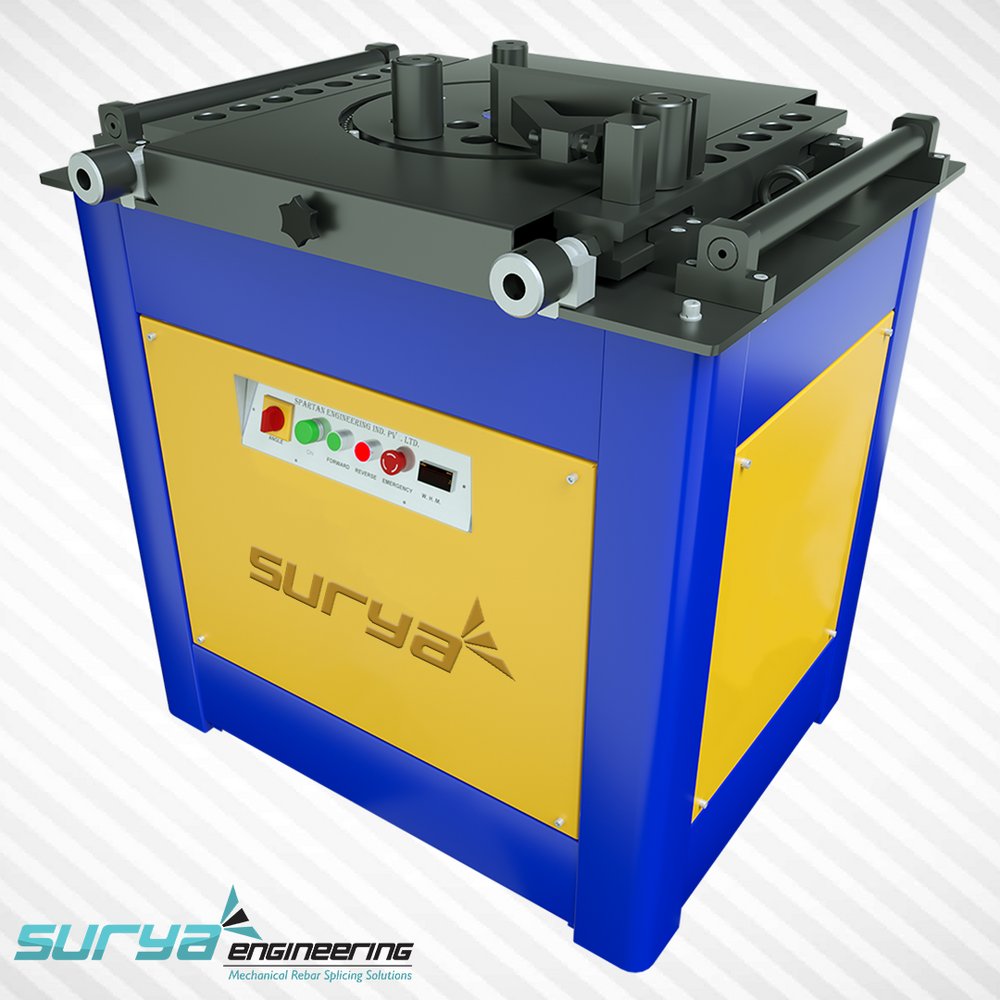
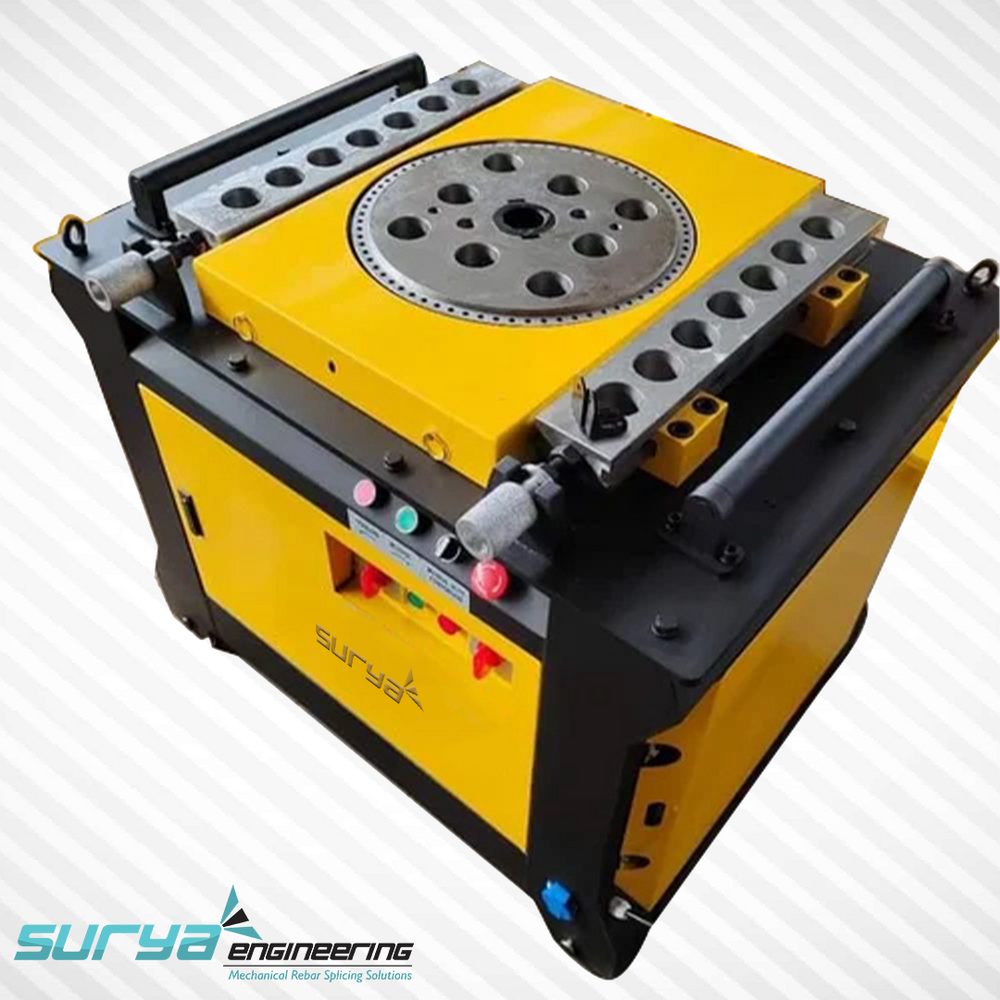
A Bar Bending Machine is a heavy-duty industrial tool designed to bend steel bars, rebar, rods, and metal profiles into precise shapes and angles required for construction, manufacturing, and infrastructure projects. Essential for reinforcing concrete structures, this machine ensures accuracy, efficiency, and safety in bending operations, replacing labor-intensive manual methods. It is widely used in construction sites, workshops, and factories to produce stirrups, U-hooks, spirals, and custom bends for beams, columns, and slabs.
Key Features:
-
High Precision Bending:
-
Robust Construction:
-
Versatile Operation:
-
Manual, semi-automatic, or fully CNC-controlled models.
-
Compatible with round, square, flat, and TMT bars.
-
Safety Mechanisms:
-
Emergency stop buttons, protective guards, and overload sensors.
-
Compliance with CE, ISO, and OSHA safety standards.
-
Ease of Use:
Applications:
-
Construction: Bending rebar for concrete reinforcement in buildings, bridges, and highways.
-
Manufacturing: Creating metal frames, grilles, and decorative elements.
-
Infrastructure: Bending steel for pipelines, tunnels, and railway tracks.
-
Precast Concrete: Forming stirrups and cages for prefabricated structures.
Technical Specifications:
-
Bending Capacity: 6 mm50 mm (varies by model).
-
Bending Speed: 1030 bends per minute (CNC models).
-
Power Supply: 3-phase electric motor (5 HP15 HP) or hydraulic drive.
-
Dimensions: Compact to industrial sizes (portable or stationary).
-
Weight: 500 kg2,000 kg (depending on capacity).
Benefits:
-
Time & Labor Savings: Automates complex bending tasks, reducing manual effort by 7080%.
-
Material Efficiency: Minimizes rebar waste with precise measurements.
-
Consistency: Ensures uniform bends for structural integrity.
-
Cost-Effective: Low maintenance and long-lasting components.
-
Scalability: Suitable for small workshops to large-scale construction sites.
Versatile Bending for Construction ProjectsThis rebar bending machine accommodates diverse construction needs, efficiently bending MS steel rods for pillars, beams, and foundations. Its adaptable angle setting ensures precise application for different project requirements, saving time and reducing manual effort.
Durable Build and High CapacityEngineered to support rigorous industrial use, the machine's 600 kg weight and robust MS steel construction promise exceptional durability. The substantial build translates to a longer service life and consistent operation, making it ideal for continuous work in demanding environments.
FAQ's of REBAR BENDING MACHINE:
Q: How does the semi-automatic REBAR BENDING MACHINE operate?
A: The semi-automatic REBAR BENDING MACHINE works by positioning the MS steel rod into its designated slot, where the machine applies force to bend the rebar to the desired angle. Operators control certain steps, combining automation for efficiency with manual input for precise customization.
Q: What is the primary usage of this rebar bending machine?
A: This machine is primarily used in construction projects for bending steel rebar, which is essential for reinforcing concrete in structures such as columns, beams, and slabs.
Q: When should the REBAR BENDING MACHINE be used on a construction site?
A: The machine should be used whenever there is a need to shape or customize steel rods for reinforcement before or during the concrete pouring process, ensuring all rebar is properly bent to engineering specifications.
Q: Where is the REBAR BENDING MACHINE manufactured, and where is it available?
A: This machine is manufactured in China and is available in India through various distributors, exporters, importers, and manufacturers specializing in construction machinery.
Q: What is the process for setting bending angles on this machine?
A: Operators can adjust the bending angle using the machine's manual controls, ensuring the steel rebar is bent precisely as needed for the specific requirements of the construction project.
Q: What are the benefits of using this semi-automatic machine compared to manual bending?
A: Using the semi-automatic machine increases productivity, enhances accuracy, reduces labor strain, and ensures consistent results, improving overall construction quality and efficiency.

 Send Inquiry


 Send Inquiry

 Send Inquiry
 Send SMS

 English
 Spanish
 French
 German
 Italian
 Chinese (Simplified)
 Japanese
 Korean
 Arabic
 Portuguese
