
Talk to us
08045811615
Talk to us
08045811615
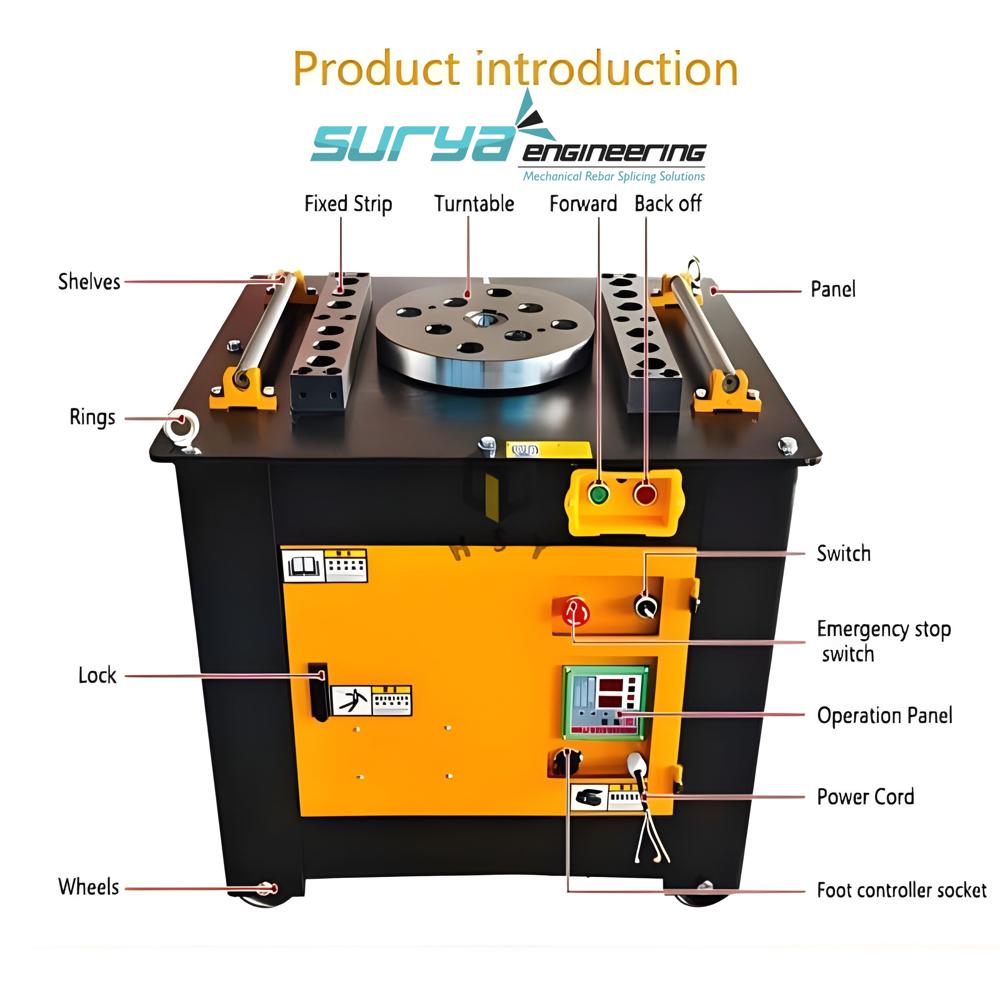
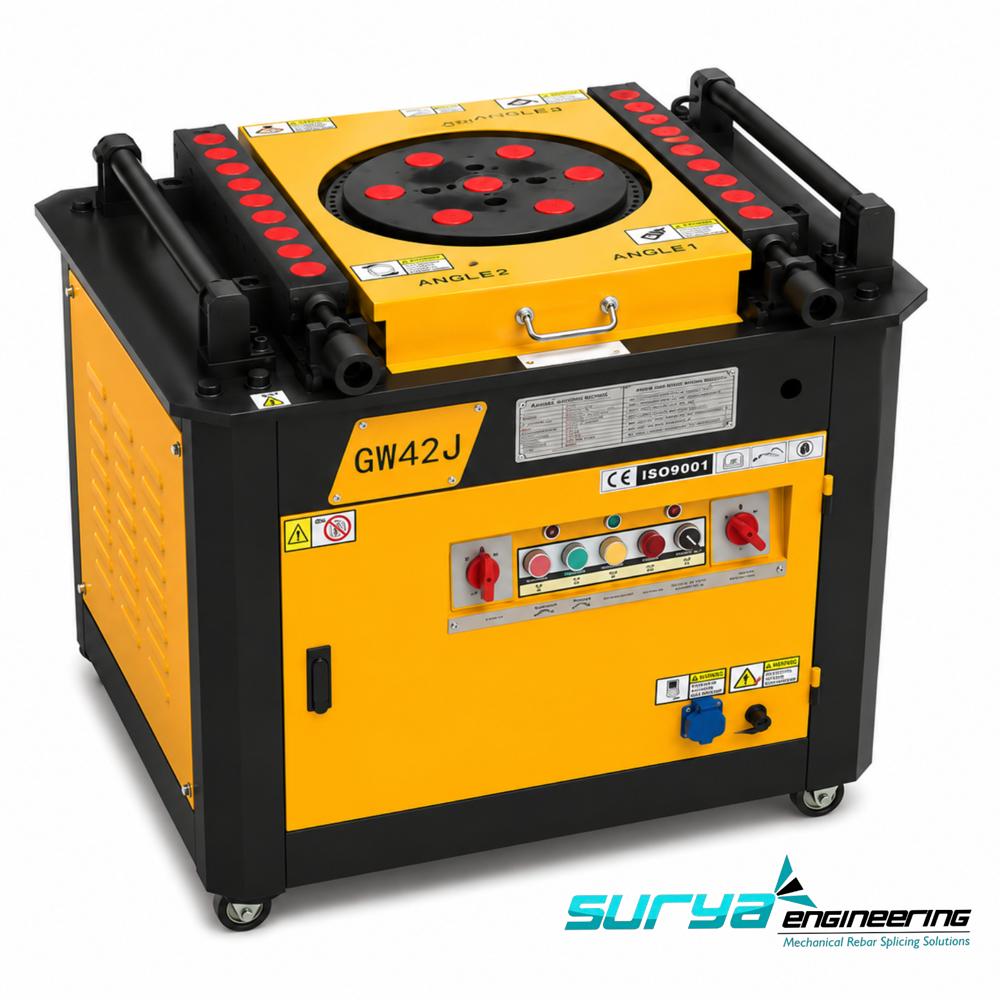
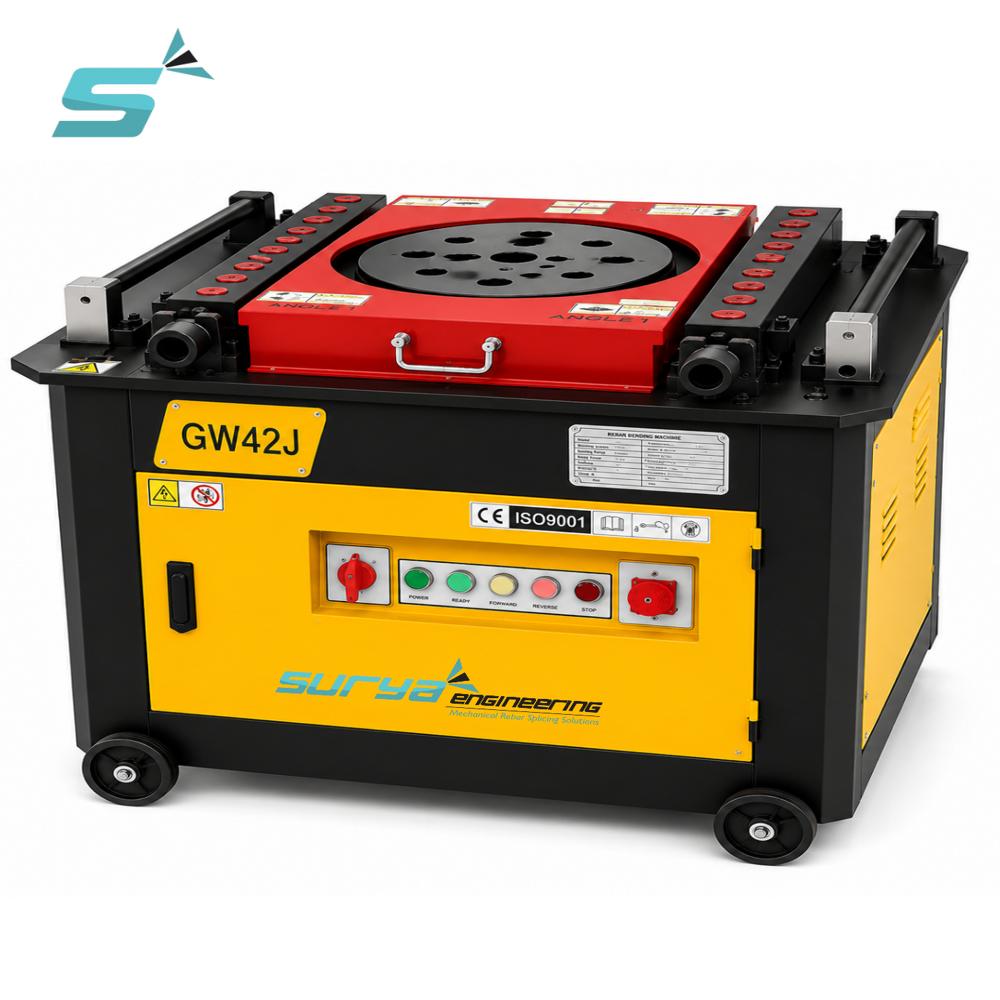
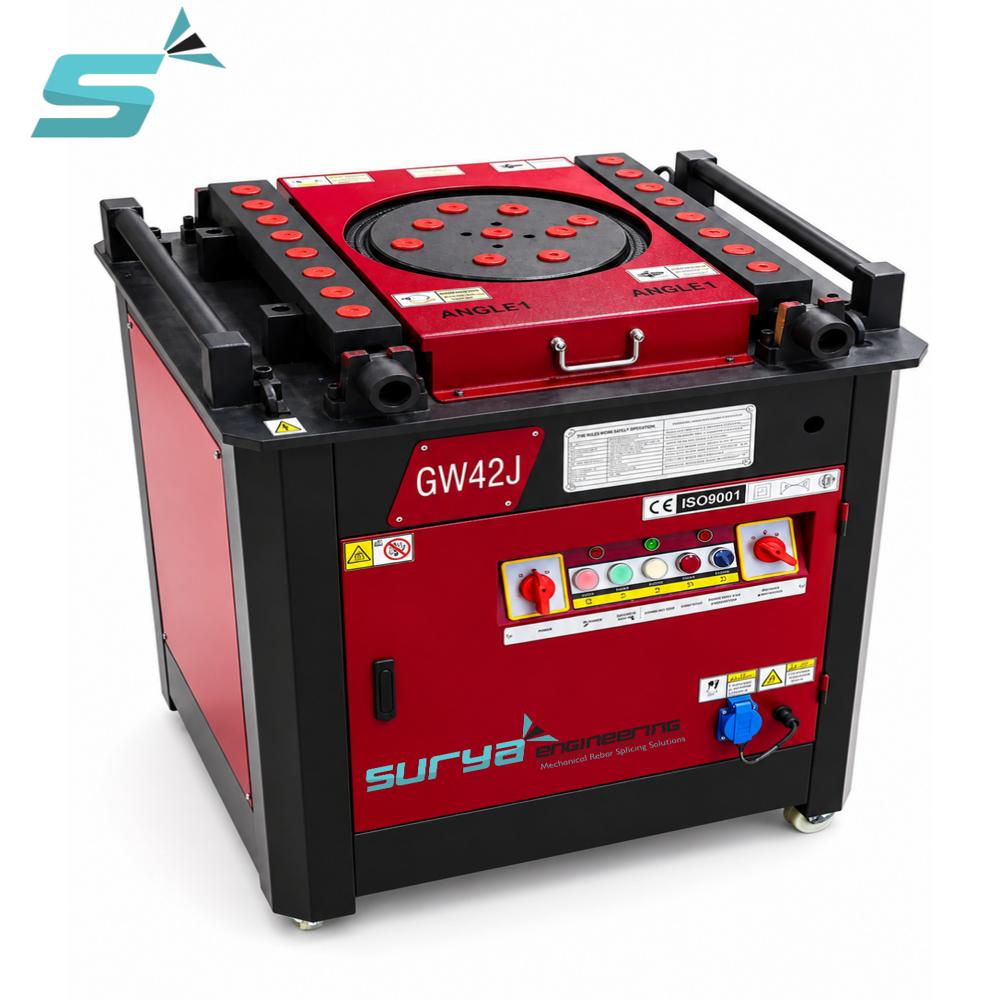

Surya Engineering is a manufacturer and supplier of rebar couplers designed to connect reinforcing steel bars in reinforced concrete construction. Our mechanical rebar couplers provide an alternative to conventional lap splicing, helping construction teams manage reinforcement connections where reduced congestion, efficient steel utilisation, and reliable mechanical load transfer are important.
A rebar coupler, also known as a mechanical splice coupler, joins two reinforcing bars through a purpose-designed mechanical connection. Depending on the selected system, the connection may use parallel threads, tapered threads, or a bolted locking arrangement.
Unlike conventional lap splicing, a mechanical coupler can connect bars end to end without requiring the same overlapping reinforcement length. This can help reduce congestion in heavily reinforced columns, shear walls, pile caps, and foundation structures.
At Surya Engineering, we focus on providing rebar couplers suited to the requirements of modern reinforced concrete construction. Material selection, dimensional accuracy, thread quality, and compatibility with the specified reinforcement are important considerations when manufacturing a mechanical splice component.
Our listed rebar coupler range covers bar diameters from 12 mm to 40 mm. Available configurations and dimensions depend on the selected model and application.
Reduced reinforcement congestion
In heavily reinforced structural elements, overlapping bars can occupy valuable space and make concrete placement more difficult. Mechanical couplers can reduce overlapping reinforcement at designated splice locations, helping maintain a more organised reinforcement arrangement.
Efficient use of reinforcement steel
Lap splices require additional bar length according to the structural design. Where an approved mechanical splice replaces a lap, some of this additional length may be avoided. The actual steel savings depend on bar diameter, lap length, splice locations, coupler dimensions, and the reinforcement schedule.
Consistent mechanical connections
A properly specified and installed coupler provides a defined connection between reinforcing bars. Relevant performance requirements may include tensile strength, ductility, slip resistance, and cyclic or fatigue performance where required.
Practical reinforcement assembly
Mechanical couplers can simplify bar connections in situations where long bars are difficult to handle or reinforcement is congested. The installation benefit depends on the coupling type, available tools, bar preparation, and site conditions.
Flexibility across reinforcement sizes
Different coupler configurations can accommodate different bar diameters and installation arrangements. Transition couplers can connect different bar sizes when the selected system is designed and approved for that combination.
Threaded rebar couplers connect reinforcement bars through matching threads prepared according to the specified coupling system. They are suitable for applications where controlled bar-end preparation and correct thread engagement can be achieved.
Cold-forged coupler systems use a controlled forming process to prepare the bar end or coupling component, depending on the design. The suitability of the process depends on the material, geometry, manufacturing procedure, and required mechanical performance.
Parallel thread couplers use threads with a constant diameter along the threaded section. The specified thread dimensions, pitch, and engagement must be compatible with the selected reinforcement connection system.
Taper thread couplers use matching tapered threads to establish the mechanical connection. Correct thread geometry and engagement are important for achieving the intended performance.
Bolted couplers use a specially designed locking mechanism to secure the reinforcement bars. Depending on the product design, they can be useful where conventional threaded bar-end preparation is unsuitable or where the installation conditions favour a bolted connection.
The appropriate coupler should be selected according to the approved structural design, reinforcement details, installation conditions, and required test performance.
The following details are important when selecting a rebar coupler for a construction project.
| Specification | Details |
|---|---|
| Product | Mechanical Rebar Coupler |
| Available bar diameter range | 12 mm to 40 mm, according to the listed range |
| Material | Specified carbon steel or other approved material, depending on model |
| Manufacturing process | According to the selected product design |
| Thread configuration | Parallel thread, tapered thread, or other specified system |
| Surface finish | As specified for the selected model |
| Connection type | Standard, positional, transition, or bolted, where available |
| Tensile performance | To be verified against the applicable product and project requirements |
| Installation | According to the approved product-specific procedure |
| Quality documentation | Applicable test reports, material records, and inspection documents |
For mechanical rebar couplers, quality assessment should cover the complete splice system rather than the coupling sleeve alone.
For projects in India, IS 16172:2023 is an important reference for reinforcement couplers used in mechanical splices. IS 1786 covers the relevant requirements for high-strength deformed steel bars and wires used for concrete reinforcement. Depending on the project location and specification, other applicable standards may also be required.
The buyer should verify the relevant test reports and approvals for the actual coupler system, including the specified bar diameter and reinforcement grade. Tests may include tensile strength, slip, ductility, thread disengagement, and cyclic or fatigue performance where required by the applicable specification.
Our rebar coupler solutions are intended for consideration in a wide range of reinforced concrete construction projects.
High-rise buildings: Connecting reinforcement in columns, shear walls, and structural cores.
Commercial and residential construction: Supporting reinforcement connections in reinforced concrete frames.
Bridges and flyovers: Joining reinforcement in piers, abutments, and other concrete components.
Metro and infrastructure projects: Supporting mechanical reinforcement connections where specified.
Industrial structures: Connecting reinforcement in heavy foundations and structural elements.
Pile foundations and pile caps: Providing mechanical connections according to the approved reinforcement design.
Precast concrete construction: Supporting specified reinforcement connection arrangements between components.

Price:

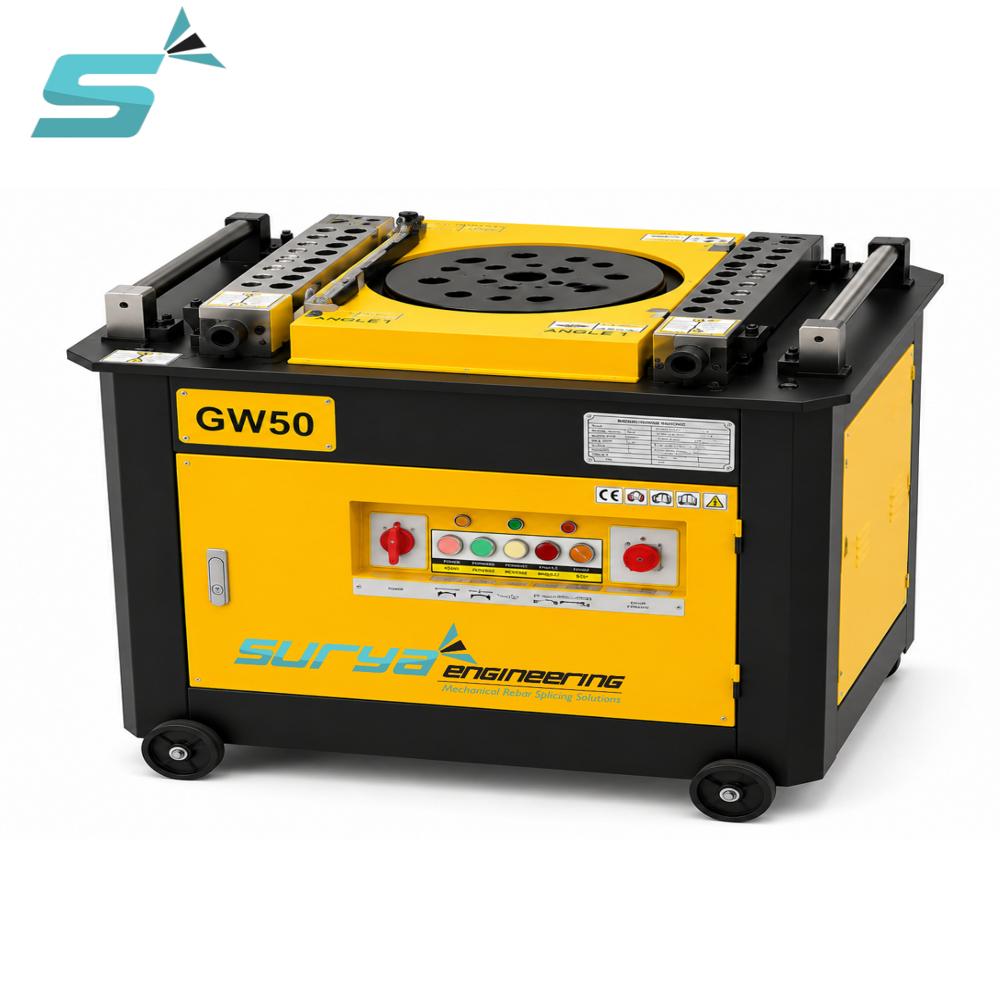
Price 77000 INR / Piece
Minimum Order Quantity : 1 Piece
Power : 5 Hp
Color : Industrial Yellow/Black
Phase : Three Phase
Automation : Manual

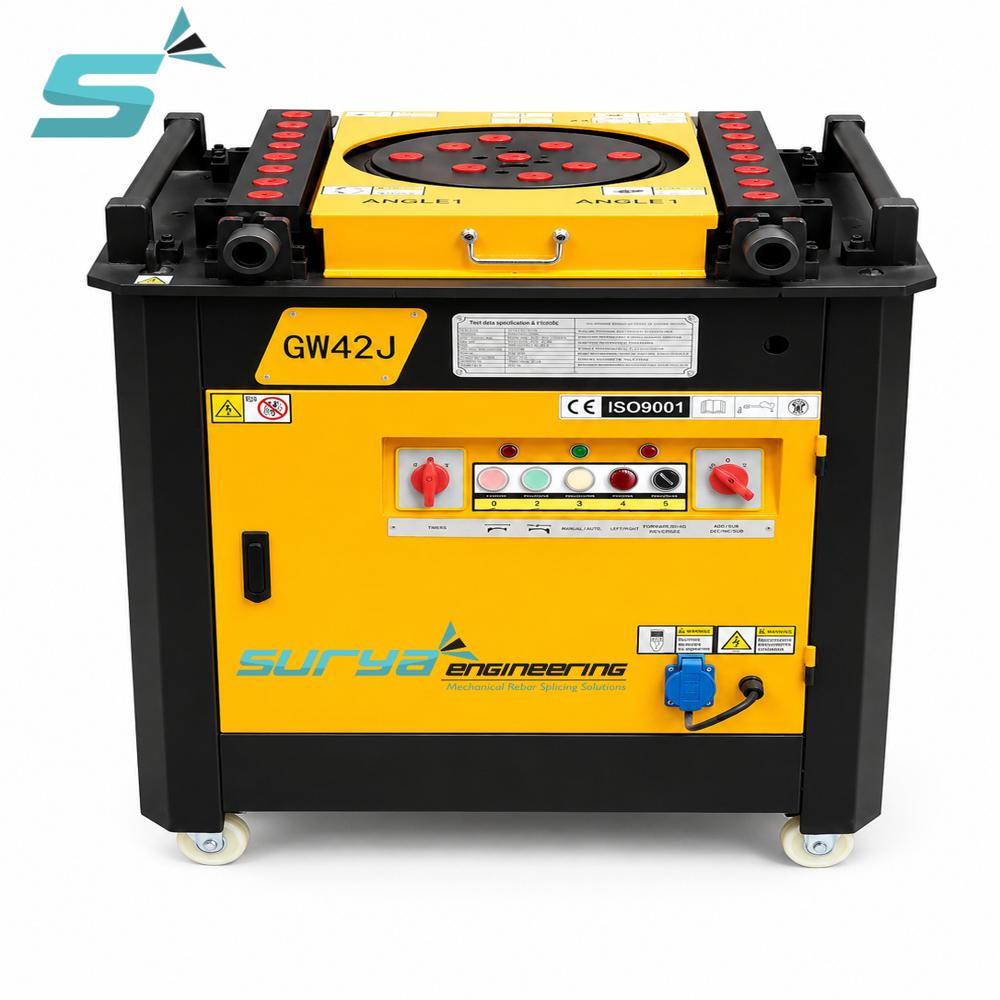
Price 38000 INR / Piece
Minimum Order Quantity : 1 Piece
Power : Electric
Color : Yellow
Phase : Three Phase
Automation : Automatic

Price 65000 INR / Piece
Minimum Order Quantity : 1 Piece
Power : 5 Hp
Color : Yellow/Black
Phase : Three Phase
Automation : Automatic

Price 70000 INR / Piece
Minimum Order Quantity : 1 Piece
Power : 5 Hp Electric Motor
Color : Industrial Blue
Phase : Three phase
Automation : Manual




 Send Inquiry
 English
 Spanish
 French
 German
 Italian
 Chinese (Simplified)
 Japanese
 Korean
 Arabic
 Portuguese
